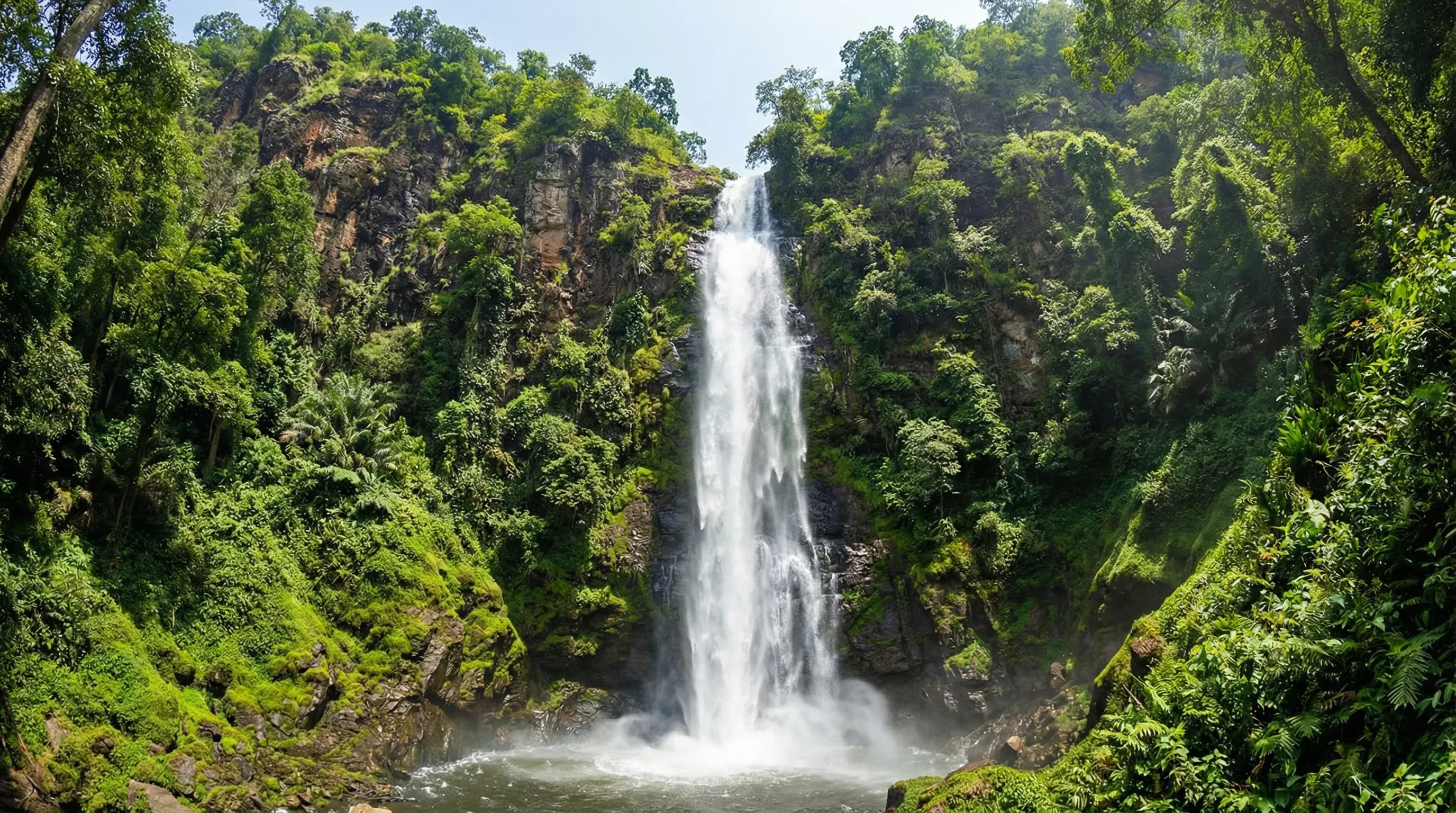

Volta Region (waterfalls, mountains)
Where mountains touch the sky and waterfalls roar ⛰️💦
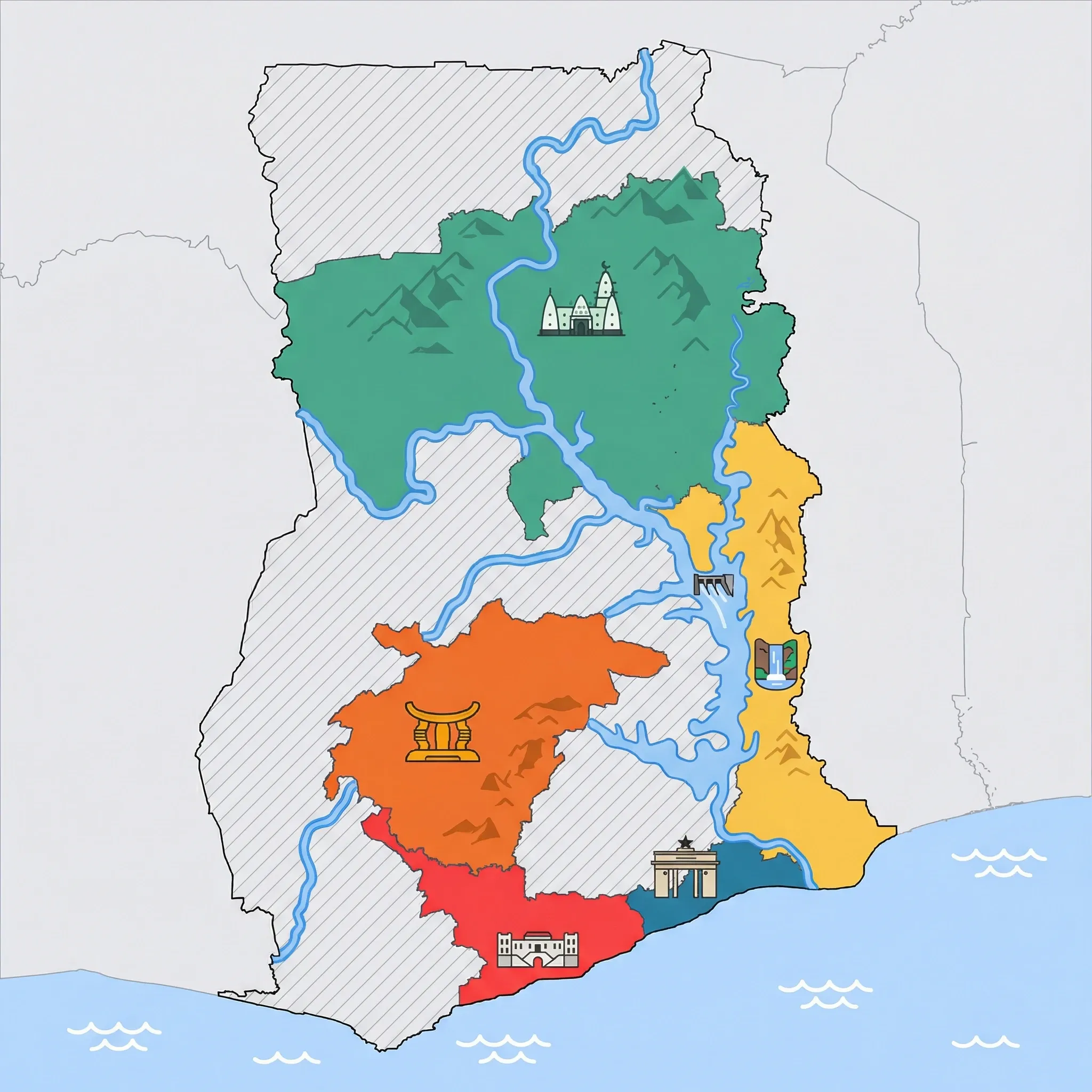
Click a region to explore
The Volta Region offers a dramatic change of scenery from the rest of Ghana. Here, the flat coastal plains give way to rolling green hills, deep valleys, and the highest mountains in the country. For active families, this is the most rewarding region to visit. The air is cooler, the landscape is greener, and the vibe is distinctively laid-back. It feels like an escape into nature. The region is home to the Ewe people, known for their unique kente weaving (distinct from the Ashanti style) and their fascinating voodoo (Vodun) spirituality, although the latter is often less visible to the casual tourist.
This is a destination for hikers and swimmers. The infrastructure is less developed than in Accra or Kumasi, meaning roads can be bumpy and travel times longer than they look on a map, but the reward is unspoiled beauty. Children love the sense of jungle adventure here—crossing wooden bridges, spotting monkeys in sanctuaries, and swimming in the pools beneath massive waterfalls. It is a place to unplug; Wi-Fi can be spotty, encouraging families to connect with the outdoors. The pace is slow, dictated by the sunrise and the terrain. Whether you are climbing Mount Afadjato or just picnicking by the Volta River, the region offers a serene backdrop for family bonding.
Key Attractions
The absolute must-see is Wli Waterfalls. It is the highest waterfall in West Africa and a sight that leaves children in awe. The walk to the lower falls is flat, shaded, and takes about 45 minutes—perfectly manageable for most kids (even toddlers in carriers). Thousands of fruit bats cling to the cliffs, creating a spectacular show when they take flight. For families with teenagers seeking a challenge, the hike to the upper falls is steep and strenuous but offers incredible views.
Further north lies Kyabobo National Park. This is for the truly adventurous family. It is remote and receives fewer tourists, offering a "Jurassic Park" feel with its rugged terrain and bike trails. Closer to the main tourist hubs, the Tafi Atome Monkey Sanctuary (not linked, but notable) allows kids to interact with wild Mona monkeys who are considered sacred by the villagers. The friendly monkeys will often jump onto your shoulder if you have a banana, making for an unforgettable photo op.
Practical Advice
Visit during the rainy season (June-October) to see the waterfalls at their most powerful, but be prepared for slippery paths. The dry season makes hiking easier. Bring plenty of cash, as ATMs are scarce outside the regional capital, Ho.
Food & Drink
Typical meal times: Lunch is 12:00 pm to 2:00 pm. Dinner is usually early, around 6:00 pm to 8:00 pm, as rural areas quiet down after dark.
Typical meal costs: This is an affordable region. Meals at guest houses cost GH₵ 60–120 (approx. $3.50–7.50 USD / €3.40–7 EUR). Street food is extremely cheap.
Dietary requirements: The Ewe cuisine is distinct. Vegetarian options like "Red Red" are common. Spiciness levels can be high, so always ask for "mild" for children.
Signature dishes:
- Akple with Fetri Detsi – Fermented corn and cassava dough (grayish in color) served with a slimy but delicious okra soup.
- Abolo – A sweet, steamed corn dumpling that tastes a bit like cornbread, often eaten with small fried fish (one man thousand).
- Red Red – Fried plantains served with a stew of black-eyed beans and red palm oil; a family favorite that is not spicy unless pepper is added.
Why this score?
With the highest mountains in the country and numerous trekking paths through the lush Agumatsa Wildlife Sanctuary, this region offers Ghana's best hiking opportunities. The physical demand of reaching the upper falls or summiting Mt. Afadjato provides a good moderate adventure level for active travelers.
Why this score?
Health services in the Volta Region are concentrated in Ho, where facilities are basic and generally serve the local population's primary needs. Travelers should be prepared for very limited emergency response times and a lack of English-speaking international-grade medical services in the rural mountain areas.
Why this score?
The Volta Region is a popular weekend getaway for resident expats and domestic tourists seeking nature and outdoor recreation. While it boasts iconic sites like Wli Waterfalls, it remains a niche destination on the international market, lacking the mass appeal of Ghana's coastal heritage sites.

The Volta Region is very budget-friendly. Entry fees for waterfalls and sanctuaries are minimal (usually under GH₵ 50). Simple but clean guesthouses cost GH₵ 300–600 (approx. $19–38 USD / €17–35 EUR) per night. High-end lodges near the river can go up to GH₵ 1,500 (approx. $95 USD / €88 EUR).

Getting Here & Around
Getting Here
- Driving – The drive from Accra to Ho or Hohoe takes 3–5 hours. The road is scenic, winding through the Akosombo area and crossing the famous Adomi Bridge.
- Bus – STC and private minibuses run from Accra to Ho and Hohoe daily.
- Tro-tro – Available but often uncomfortable for the winding mountain roads. A private car is highly recommended for reaching sites like Wli Waterfalls.
Getting Around
- Taxi/Car – You will need a vehicle to move between attractions, which are often 30-60 minutes apart. Taxis can be hired for the day.
- Okada – Motorcycle taxis are common in the mountains but are generally unsafe for families and not recommended.
- Walking – Once at a site like Kyabobo National Park, your feet are your main transport!
No airports in this region. See the country flight map for nearby connections.

Packing List
Trails to waterfalls can be rocky, slippery, and uneven; flip-flops are dangerous here.
The spray from Wli Waterfalls is powerful and will soak regular backpacks and electronics.
The pool bottoms at waterfalls are rocky and sharp.
If visiting monkey sanctuaries, bringing your own fruit ensures interaction (though buy locally to support villagers).
Mandatory physical document checked before you even leave the plane.
Frequent power cuts ("Dumsor") mean you need backup for phones/fans.
Street lighting is inconsistent and power outages can happen at night.
Essential during Harmattan season (Dec-Mar) when air is thick with dust.
Exchange bureaus often reject notes that are old, torn, or marked.

Activities & Best Times

Hiking, wildlife, outdoor exploration, ecotourism
Features West Africa's highest waterfalls and peaks, offering immersive trekking and primate encounters in lush highland ecosystems. Peak months are ideal for hiking, though early rains in May and June provide the most dramatic waterfall displays.

Urban tourism, museums, historical sites, architecture
Offers authentic immersion into Ewe culture through traditional Kente weaving villages and unique community-led wildlife sanctuaries like Tafi Atome. Best visited in the dry season when rural village roads are most accessible and cultural activities are in full swing.

Sport tourism, fitness activities, active recreation
Boasts significant infrastructure for active tourism, including managed hiking trails to Mount Afadjato and the Amedzofe canopy walkway. Conditions are optimal in the dry season to avoid slippery terrain and ensure safe conditions for mountain activities.

Beach resorts, marine activities: diving, snorkelling, kite surfing, wind surfing, sailing
The Keta coastline provides authentic, uncrowded Atlantic beaches and significant lagoon ecosystems for birdwatching and coastal walks. Visitors should prioritize the dry harmattan months when the humidity is lower and the sea is generally calmer.

Scenic drives, countryside tours, route-based travel
The climb to Amedzofe and the drive along the Volta Lake offer dramatic mountain vistas and lush tropical scenery. Travel is best during dry months to ensure safe passage on winding mountain passes and clear views of the valleys.




Public Holidays & Calendar Next 12 months
Public holidays, festivals, cultural celebrations, and seasonal natural phenomena coming up in Volta Region (waterfalls, mountains) over the next 12 months.
Loading holidays and events...

Travel Advisory
All major agencies maintain a baseline advisory for travellers to exercise increased vigilance across Ghana, primarily due to crime and regional security threats. While the country is generally stable, specific regional warnings and demographic-based risks necessitate higher awareness than standard travel.
Safety Topics
Traveller Advice (3 groups)

There are reports of sexual assault and harassment targeting women. Crimes often occur at night or in secluded spots; travellers should avoid walking alone after dark.

Visitors should avoid travel between cities after dark due to highway robberies. Be extremely cautious at beaches as coastal currents are powerful and often lack lifeguards.

Same-sex intimacy is criminalized and can lead to imprisonment. Recent legislative efforts have increased hostile rhetoric, discrimination, and the risk of targeted violence or extortion.
Agency Summaries
Safety concerns are higher than in New Zealand, driven by rising crime rates including armed robbery and kidnapping. Terrorism risks are elevated near the northern borders.
While general travel is permitted, the UK advises against all but essential travel to the Bawku Municipal area. There is a notable threat of terrorism in northern border areas and frequent demonstrations in cities.
Irish citizens are urged to be cautious, particularly regarding political gatherings and civil unrest. Comprehensive travel insurance and early visa application are strongly recommended.
Increased caution is advised nationwide due to crime and specific threats against women and LGBTQ+ travellers. There is a higher risk of civil unrest and crime in the northern border regions near Burkina Faso and Côte d'Ivoire.
Travellers should remain highly vigilant due to safety and security concerns, including petty and violent crime. There is a specific warning regarding increased risks for the 2SLGBTQI+ community due to legislative developments.
Heightened vigilance is required because of the risk of violent crime. Terrorism is a significant concern in the north, and local curfews are active in several regions due to security incidents.
Information is provided for general guidance only and does not constitute travel, safety, medical, or legal advice. Conditions may change. Users are responsible for independently verifying information before travel.