
North Greenland (very remote)
The true high Arctic where dogs outnumber people 🐕🛷
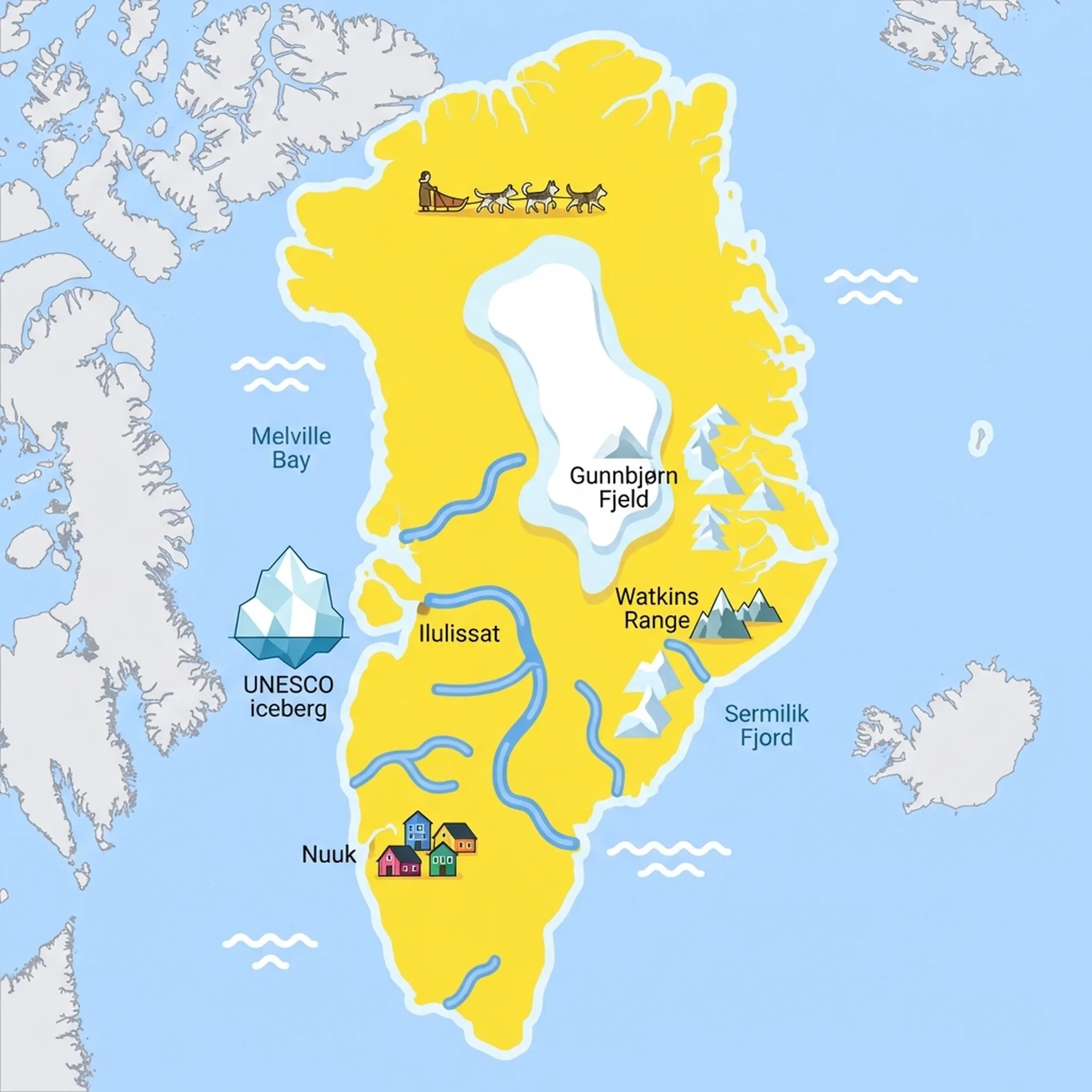
Click a region to explore
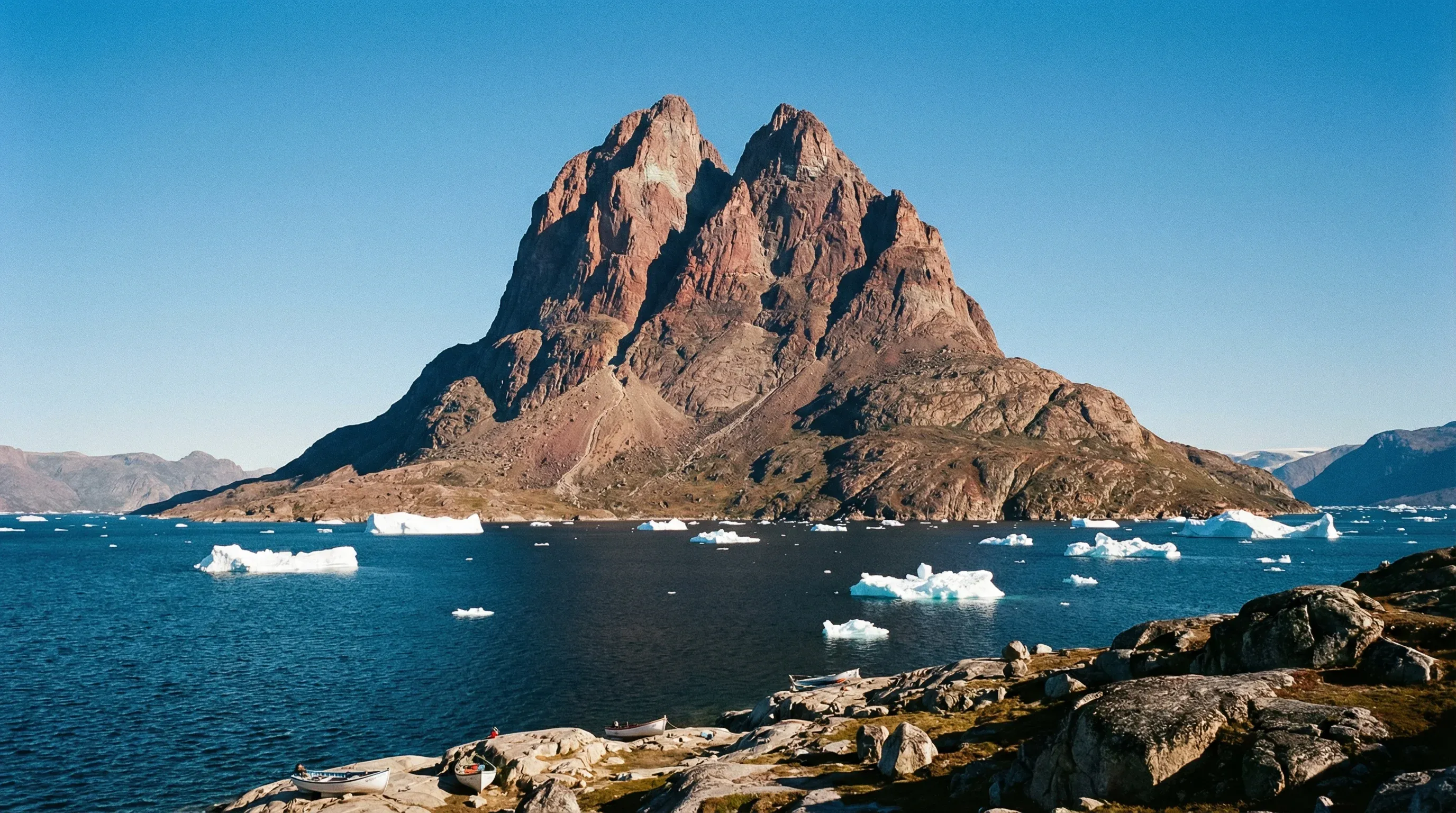
North Greenland is not for the casual traveler, but for families with a spirit of exploration, it offers rewards that are hard to match anywhere else on the planet. This is the "real" Greenland in the eyes of many locals—a place where dog sledding is not just a tour activity but a primary mode of winter transport, and where traditional hunting culture is vibrantly alive. The landscape is dominated by the spectacular Uummannaq Fjord, often cited as one of the most beautiful fjord systems in the world. The climate here is high Arctic; it is drier and more stable than further south, often resulting in brilliantly clear blue skies that contrast sharply with the icebergs.
The town of Uummannaq is located on a small island, overshadowed by the dramatic, heart-shaped Uummannaq Mountain. Legend says that a piece of your heart will remain here forever when you leave, summoning you back. For children, the town has a magical claim to fame: it is considered the home of Santa Claus in Danish tradition, complete with a turf hut "Santa's Castle" that can be visited. The lifestyle here is slower and more communal. Families visiting will see sled dogs chained outside nearly every home (keep children at a safe distance!) and racks of fish drying in the sun. It provides a powerful educational experience about how humans adapt to extreme environments. While the vast Northeast Greenland National Park technically falls into the northern geographic definitions, it is virtually inaccessible to tourists; the Uummannaq region is the accessible heart of the north.
Key Attractions
The visual anchor of the region is Uummannaq Mountain. While climbing it is for technical mountaineers only, its presence looms over every activity, creating a stunning backdrop for photos and family walks around the island. The island itself is small enough to explore on foot, with rocky coves and viewpoints that look out over the iceberg-filled ocean.
A boat tour into the Uummannaq Fjord is the primary excursion. The fjord is teeming with icebergs and marine life, including whales in the summer. Tours often stop at the "Desert," a unique area with yellow sand and rare minerals that looks entirely out of place in the Arctic. Another highlight for kids is the visit to Santa’s Cabin (Julemandens Hytte), a traditional turf hut located a short hike outside of town. It’s a whimsical touch in a rugged landscape that helps connect younger children to the destination.
Practical Advice
Travel here requires patience. Flights are weather-dependent and involve helicopter transfers. The best time for families is summer (July–August) for boat tours or March–April for dog sledding on sea ice. Facilities are basic; do not expect luxury hotels. Wi-Fi is often slow or non-existent, making this a true digital detox.
Food & Drink
Typical meal times:
Meal times are standard (Lunch 12:00 pm – 1:00 pm, Dinner 6:00 pm – 7:30 pm), but restaurants are very few. You will likely eat at your guesthouse or hotel.
Typical meal costs:
Dining options are limited to one or two places in Uummannaq. A dinner costs 150–250 DKK (approx. $22–36 USD / €20–33 EUR). Prices in the local grocery store (Pissifik or Pilersuisoq) are high due to air freight.
Dietary requirements:
Very difficult. Fresh vegetables are rare and expensive. Vegetarian options are virtually non-existent in restaurants unless pre-arranged. Families with allergies or specific diets MUST bring their own staple foods.
Signature dishes:
- Mattak – Raw whale skin with a thin layer of blubber. It is a vitamin C powerhouse and a chewy, nutty treat offered to honored guests.
- Reindeer Soup – A hearty, warming broth filled with chunks of reindeer meat, potatoes, and carrots, perfect after a cold boat ride.
- Catfish – Known locally as wolf-fish, this ugly but delicious fish has firm, lobster-like meat and is a staple in the north.
Why this score?
This region includes the vast Northeast Greenland National Park, an area of extreme wilderness with no permanent human inhabitants and no infrastructure. Survival here requires expedition-level planning, specialized gear, and the ability to endure months of total darkness or 24-hour sun.
Why this score?
Outside of the tiny settlement of Uummannaq, there are virtually no medical services across thousands of square miles. Emergency response times are measured in days rather than hours, and the environment is extremely hostile for anyone requiring medical support.
Why this score?
Tourism in the far north is almost non-existent, consisting primarily of specialized researchers and a handful of intrepid travelers visiting Uummannaq. The logistical challenges and lack of commercial flight frequency keep visitor numbers at a global minimum.

This is one of the most expensive regions due to the complex logistics. Accommodation is scarce, typically costing 1,500–2,200 DKK (approx. $215–315 USD / €200–295 EUR) per night for basic rooms. The flights and helicopter transfers to reach the region will likely be the largest line item in the budget. Supermarket prices are 20-40% higher than in Nuuk.

Getting Here & Around
Getting Here
- Airports – You must fly to Qaarsut Airport (JQA) from Ilulissat. From Qaarsut, a scheduled helicopter service takes you the final 15 minutes to the Uummannaq heliport.
- Helicopter – The helicopter ride from Qaarsut offers breathtaking aerial views of the Uummannaq Fjord and is an adventure in itself.
- Boat – In summer, it is sometimes possible to charter boats from nearby settlements, but the helicopter is the standard scheduled transport.
Getting Around
- Walking – Uummannaq town is small and best explored on foot, though it is steep and rocky. Strollers are difficult to use; carriers are recommended.
- Boat – The only way to leave the island in summer. Local hunters and small tour operators run charters into the Uummannaq Fjord.
- Dog Sled – In winter (February–April), dog sleds are real transport vehicles here, crossing the frozen sea ice between settlements.
No airports in this region. See the country flight map for nearby connections.
Official Links

Packing List
If hiking or boating outside the main town, cell service is non-existent.
Even in July, the temperature can drop near freezing, especially on the water.
Weather delays are common and internet is limited; bring non-digital entertainment for kids.
Card machines rely on internet which can fail; small local artists/sellers prefer cash.
Arctic mosquitoes in summer (June-August) are incredibly aggressive and can ruin hikes without face protection.
The midnight sun means 24-hour daylight in summer; thick curtains aren't always guaranteed in accommodation.
Essential for spotting whales, seals, and muskoxen from the shore or ferry decks.
The combination of dry Arctic air and intense sun reflection off the ice causes rapid chapping and sunburn.
It is customary to remove outdoor boots when entering homes and many hostels/lodges; floors can be cold.
Wind and splash protection is vital for zodiac boat tours, even on sunny days, to keep kids warm and dry.

Activities & Best Times

Hiking, wildlife, outdoor exploration, ecotourism
North Greenland represents one of Earth's last truly wild frontiers, featuring the spectacular Uummannaq Fjord, Heart Shaped Mountain, and some of the largest icebergs in the Arctic. The extreme remoteness and pristine wilderness quality place this region among the world's top adventure destinations, warranting an 'excellent' rating.

Urban tourism, museums, historical sites, architecture
Authentic Inuit heritage preserved in remote settlements like Uummannaq and Upernavik, centered around historic museums and landmark churches. Visitation is concentrated in July-August when coastal transport is reliable and museum facilities are most accessible.
Beach resorts, marine activities: diving, snorkelling, kite surfing, wind surfing, sailing
Unique Arctic coastal scenery with 'Santa's Bay' providing a surreal, iceberg-dotted shoreline experience for boat tours and photography. Peak summer (July-August) offers the only feasible window for coastal recreation before ice and extreme cold return.

Sport tourism, fitness activities, active recreation
Challenging Arctic hiking trails like the Kuannit and Santa Claus House routes offer rugged, self-sufficient exploration for experienced families. Activity is restricted to the brief July-August thaw; snow and dangerous temperatures render trails impassable the rest of the year.




Public Holidays & Calendar Next 12 months
Public holidays, festivals, cultural celebrations, and seasonal natural phenomena coming up in North Greenland (very remote) over the next 12 months.
Loading holidays and events...

Travel Advisory
Greenland is considered a very safe destination with low crime and high political stability. While the U.S. maintains an elevated caution level due to environmental and logistical challenges in the Arctic, the consensus among international agencies is that standard safety awareness is sufficient for most travellers. The primary risks are environmental rather than human-made.
Safety Topics
Traveller Advice (2 groups)

Those planning expeditions into remote areas must be entirely self-sufficient. Search and rescue operations can take several days to reach isolated sites. It is essential to travel with professional guides and carry high-grade communication equipment and survival gear.

Greenland is generally a safe and welcoming destination. Same-sex relationships and marriage are legally recognized and socially accepted.
Agency Summaries
Greenland is generally safe with low crime levels. Travellers should be aware of specific local regulations, such as the illegality of importing whale products into the UK or EU, and note that Greenland maintains its own entry requirements separate from the Schengen Area.
Safety conditions are stable with a low crime rate. The primary concerns involve environmental hazards associated with Arctic travel, such as unpredictable weather, potential avalanches, and the isolation of remote territories where emergency response is limited.
The overall risk to safety is minimal. Travellers are reminded that medical and evacuation facilities are scarce in the Arctic region, necessitating comprehensive insurance coverage.
General safety is high, but visitors should prepare for Arctic conditions. Adventure seekers are encouraged to check equipment and local forecasts carefully, as rescue operations in remote areas can be challenging and delayed.
Increased caution is advised due to extreme weather conditions and the significant limitation of emergency and search and rescue services outside of major settlements. Consular assistance for citizens is extremely restricted in this region.
The security environment is comparable to Ireland. The main risks are environmental, including extreme cold and the vast distances between populated areas which hinder search and rescue efforts.
Information is provided for general guidance only and does not constitute travel, safety, medical, or legal advice. Conditions may change. Users are responsible for independently verifying information before travel.