
Nuuk & Southwest
From urban cool to Viking ruins and green valleys 🏙️🐑
Click a region to explore
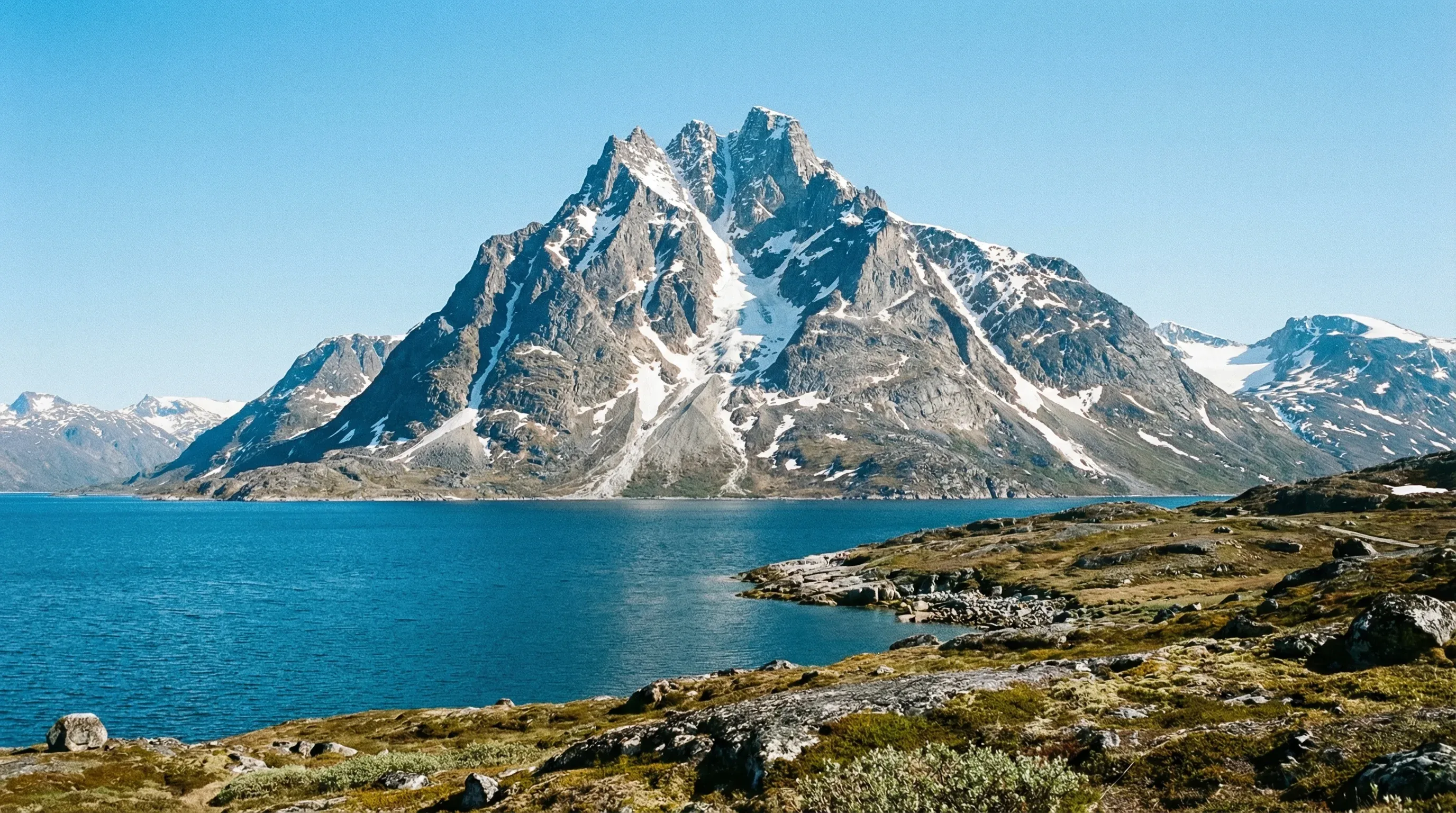
The Southwest region, encompassing the capital Nuuk and the greener southern tip, challenges the stereotypical image of Greenland as solely a land of ice. Nuuk is a vibrant, growing micro-metropolis where families can enjoy excellent coffee, visit shopping centers, and swim in award-winning indoor pools, all while being minutes away from the wilderness. It is the cultural heart of the nation. A rainy day here isn't a disaster—you can take the kids to the Katuaq Cultural Center to see a movie or explore the fascinating mummies at the Greenland National Museum & Archives. The contrast is striking: glass-fronted buildings reflect the ancient fjord, and you might spot a seal in the harbor while eating a hot dog.
Further south, the landscape softens into what looks like a rugged version of Scotland or Norway. This is the "South Greenland" region, famous for its sub-arctic agriculture and Norse history. It is the only place in Greenland where you will see sheep grazing in green fields. For history-loving families, this area is a goldmine. You can walk through the Kujataa UNESCO World Heritage Site, visiting the very spots where Erik the Red settled. The ruins of Hvalsey Church Ruins are the best-preserved Norse buildings in Greenland and offer a tangible connection to the Vikings who vanished from these shores centuries ago. The hiking here is less technical and more family-friendly than the steep north, with marked trails connecting sheep farms where you can sometimes stay overnight.
Key Attractions
In Nuuk, the Greenland National Museum & Archives is essential. It houses the Qilakitsoq mummies (four women and a six-month-old child from the 15th century), which are incredibly well-preserved and fascinating for older children. Just down the road, the Nuuk Art Museum offers a look at how locals interpret their world through carving and painting. The Katuaq Cultural Center, with its undulating wooden architecture inspired by the Northern Lights, is the city's living room and a great place for lunch.
In the South, the must-see is Igaliku (Garðar). Accessible by a gentle hike from the boat landing, this village of stone houses sits on the ruins of the Viking bishopric. It is incredibly picturesque and safe for children to run around. Across the fjord, the Qassiarsuk (Brattahlíð) open-air museum features reconstructed Viking longhouses and a turf church, allowing kids to step inside history. A boat trip to the Hvalsey Church Ruins is also a highlight, standing in the stone shell of a church whose last recorded wedding was in 1408.
Practical Advice
Nuuk is a year-round destination, but the South is best visited in summer (June–September) when the boat transfers are frequent and the grass is green. Nuuk has a comprehensive bus system and taxis. In the South, travel is by boat between towns and settlements. The South is known for the "fovn" wind—warm, strong gusts—so secure loose items.
Food & Drink
Typical meal times:
Nuuk functions like a European city: Lunch 11:30 am – 1:30 pm, Dinner 6:00 pm – 9:00 pm. Cafés are open all day.
Typical meal costs:
Nuuk has the widest range of prices. A café meal is 100–150 DKK (approx. $14–22 USD / €13–20 EUR). Fine dining can reach 500+ DKK per person. In the South, hotel dinners are usually fixed price around 200–300 DKK (approx. $29–43 USD / €27–40 EUR).
Dietary requirements:
Excellent in Nuuk. You will find Thai food, burgers, steakhouses, and fusion cuisine with plenty of vegetarian and gluten-free choices. In the South, options are more limited to what the guesthouses serve (often lamb or fish), but they can usually adapt if warned.
Signature dishes:
- Greenlandic Lamb – Exclusive to the South, the free-roaming sheep feed on wild thyme and berries, giving the meat a unique, tender flavor.
- Muskox Burger – A popular choice in Nuuk's cafés, offering a safe way for kids to try local game meat.
- Redfish – A common catch in the deep fjords, served pan-fried with skin on.
Why this score?
Adventure here is found in the deep Nuuk Fjord system and the sheep-farming hills of the south, which offer excellent hiking and fishing. The presence of the capital city and paved roads in small pockets makes the experience less rugged than the northern or eastern coasts.
Why this score?
Nuuk is home to Queen Ingrid’s Hospital, the national referral center, which offers the highest level of care in Greenland including some specialist departments. While it is the best facility in the country, it still lacks the comprehensive capabilities of a major European or North American medical hub.
Why this score?
While Nuuk is the political and transport heart of Greenland, it functions more as a gateway and business hub than a pure tourist destination. The southwest attracts some history enthusiasts for its Norse ruins, but it lacks the iconic iceberg density that drives higher traffic to Disko Bay.

While still expensive by global standards, this region offers more variety. Nuuk has budget hostels and luxury apartments. A family meal in Nuuk can be cheaper than in remote areas due to competition, around 100–140 DKK (approx. $14–20 USD / €13–19 EUR) for a burger. Boat transfers in the South add up; a transfer from Narsarsuaq to Qaqortoq costs about 700 DKK (approx. $100 USD / €95 EUR) per adult.

Getting Here & Around
Getting Here
- Airports – Nuuk (GOH) is the main international hub with expanding runways for direct flights. Narsarsuaq (UAK) is the gateway to the South.
- Ferry – The Sarfaq Ittuk ferry connects Qaqortoq, Narsaq, and Nuuk. It is a reliable way to travel between the South and the Capital if you have time.
- Boat Transfers – In the South, the Kujataa region relies on Blue Ice Explorer or Disko Line boats to move between the airport at Narsarsuaq and towns like Qaqortoq.
Getting Around
- Public Transport – Nuuk has a yellow bus system (Nuup Bussii) that is cheap and reliable, great for getting to the swimming pool or museum.
- Walking – Nuuk is spread out, but the center is walkable. In the South, walking on gravel roads (the "King's Road" to Igaliku) is the main way to get from harbors to villages.
- Boat – Essential for visiting the Hvalsey Church Ruins or crossing the fjord to Qassiarsuk.
No airports in this region. See the country flight map for nearby connections.
Official Links

Packing List
The South is greener but also wetter; trails in Igaliku and Qassiarsuk can be boggy.
It is customary to remove outdoor shoes when entering homes, hostels, and some museums.
Nuuk has a fantastic public swimming pool (Malik) and the South has hot springs at Uunartoq.
The sun in the South can be surprisingly strong, and there is little shade on the hiking trails.
Arctic mosquitoes in summer (June-August) are incredibly aggressive and can ruin hikes without face protection.
The midnight sun means 24-hour daylight in summer; thick curtains aren't always guaranteed in accommodation.
Essential for spotting whales, seals, and muskoxen from the shore or ferry decks.
The combination of dry Arctic air and intense sun reflection off the ice causes rapid chapping and sunburn.
It is customary to remove outdoor boots when entering homes and many hostels/lodges; floors can be cold.
Wind and splash protection is vital for zodiac boat tours, even on sunny days, to keep kids warm and dry.

Activities & Best Times

Hiking, wildlife, outdoor exploration, ecotourism
Features world-class Arctic wilderness immersion, including major hiking trails in Flower Valley and unique farm-stays in Igaliku. Tourism is concentrated in the brief summer window when trails are clear of snow and wildlife is active.

Urban tourism, museums, historical sites, architecture
Home to the UNESCO-listed Hvalsey Church ruins and a vibrant modern capital in Nuuk with high-quality museums. The summer peak allows for boat transfers to remote archaeological sites that are inaccessible during the frozen winter months.

Sport tourism, fitness activities, active recreation
Offers significant trekking infrastructure, notably the multi-day route between Narsarsuaq and Igaliku and the Store Malene trails. These demanding routes require the stable weather and long daylight found in July and August.

Beach resorts, marine activities: diving, snorkelling, kite surfing, wind surfing, sailing
Coastal recreation focuses on boat-based exploration of the Nuuk Fjord system and Narsaq shoreline rather than swimming. Peak summer months provide ice-free waters and necessary light for marine-based sightseeing.

Learning experiences, scientific sites, historical education
The Greenland National Museum offers destination-level insights into Arctic archaeology and Inuit culture, including the famous mummies. It is best visited during the summer months when regional transport infrastructure is fully operational.

Winter sports, ski resorts, snow activities
The Sisorarfiit-Nuuk resort offers authentic local skiing experiences with reliable snow, though facilities are modest by international standards. Late winter provides the best combination of snow depth and sufficient daylight hours.

Amusement parks, family entertainment venues
The Malik Swimming Pool is an architecturally significant aquatic center providing family recreation in an extreme environment. It serves as a secondary attraction for families visiting during the primary summer tourist season.

Attractions (12 total)



Public Holidays & Calendar Next 12 months
Public holidays, festivals, cultural celebrations, and seasonal natural phenomena coming up in Nuuk & Southwest over the next 12 months.
Loading holidays and events...

Travel Advisory
Greenland is considered a very safe destination with low crime and high political stability. While the U.S. maintains an elevated caution level due to environmental and logistical challenges in the Arctic, the consensus among international agencies is that standard safety awareness is sufficient for most travellers. The primary risks are environmental rather than human-made.
Safety Topics
Traveller Advice (2 groups)

Those planning expeditions into remote areas must be entirely self-sufficient. Search and rescue operations can take several days to reach isolated sites. It is essential to travel with professional guides and carry high-grade communication equipment and survival gear.

Greenland is generally a safe and welcoming destination. Same-sex relationships and marriage are legally recognized and socially accepted.
Agency Summaries
Greenland is generally safe with low crime levels. Travellers should be aware of specific local regulations, such as the illegality of importing whale products into the UK or EU, and note that Greenland maintains its own entry requirements separate from the Schengen Area.
Safety conditions are stable with a low crime rate. The primary concerns involve environmental hazards associated with Arctic travel, such as unpredictable weather, potential avalanches, and the isolation of remote territories where emergency response is limited.
The overall risk to safety is minimal. Travellers are reminded that medical and evacuation facilities are scarce in the Arctic region, necessitating comprehensive insurance coverage.
General safety is high, but visitors should prepare for Arctic conditions. Adventure seekers are encouraged to check equipment and local forecasts carefully, as rescue operations in remote areas can be challenging and delayed.
Increased caution is advised due to extreme weather conditions and the significant limitation of emergency and search and rescue services outside of major settlements. Consular assistance for citizens is extremely restricted in this region.
The security environment is comparable to Ireland. The main risks are environmental, including extreme cold and the vast distances between populated areas which hinder search and rescue efforts.
Information is provided for general guidance only and does not constitute travel, safety, medical, or legal advice. Conditions may change. Users are responsible for independently verifying information before travel.