
Basse-Terre
Where emerald rainforests meet black sand beaches and volcanic wonders 🌋
Click a region to explore
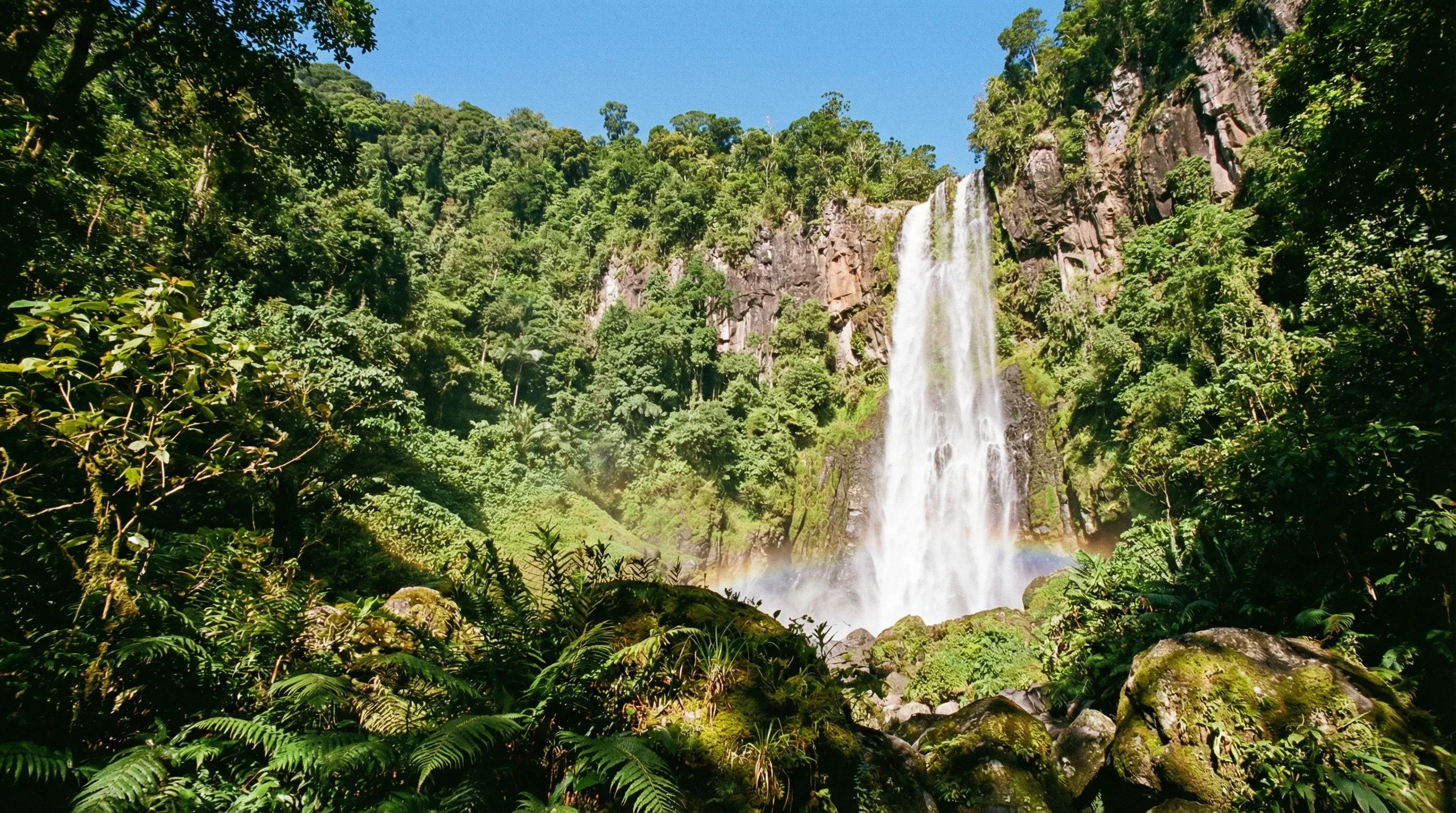
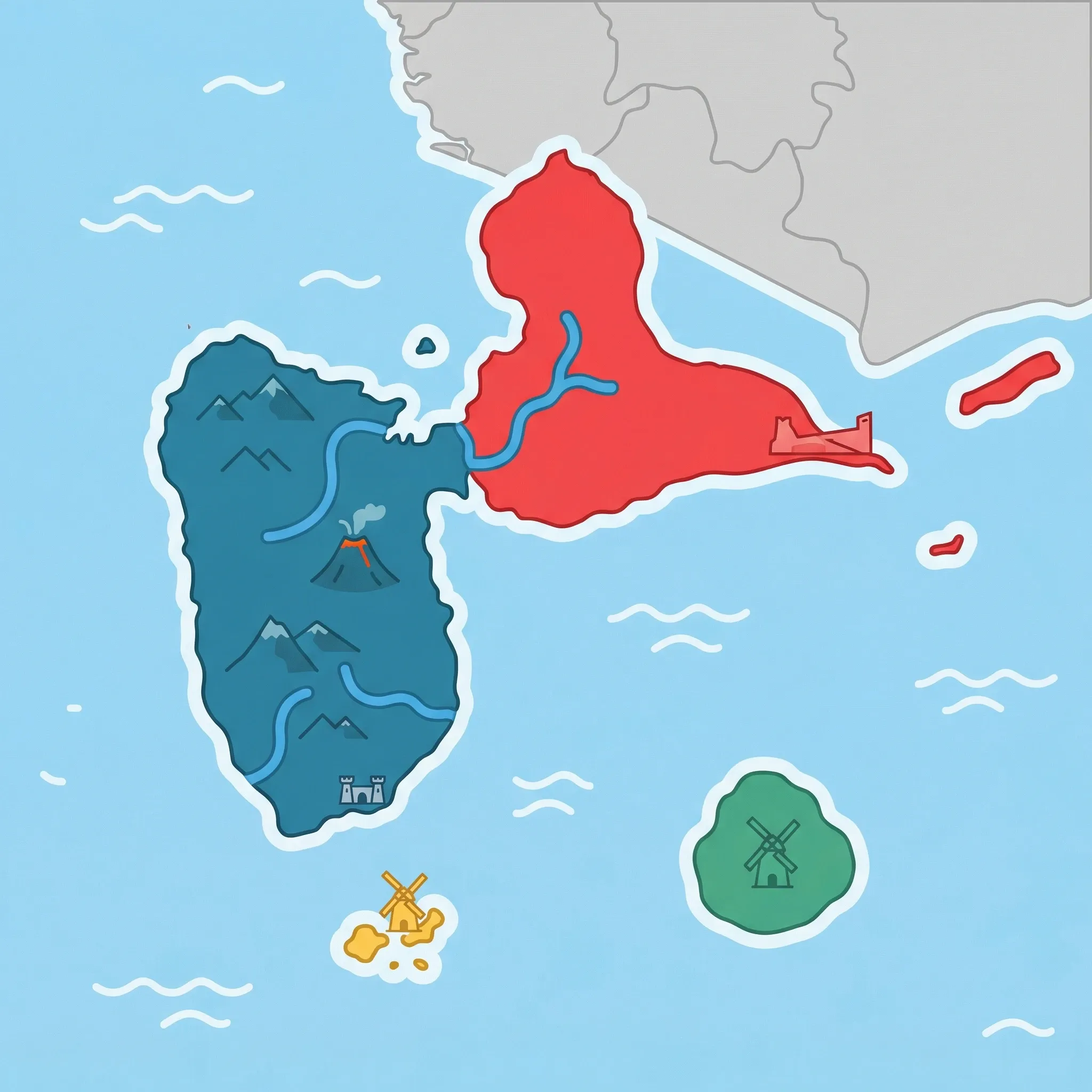
Basse-Terre is the majestic, mountainous western wing of Guadeloupe's butterfly shape, defining the archipelago's reputation for dramatic tropical beauty. Unlike its flat eastern neighbour, this region is a lush playground of dense rainforests, thundering waterfalls, and volcanic peaks that scrape the clouds. For families who love nature over nightlife and adventure over lounging, Basse-Terre is the ultimate destination. The air here is cooler and fresher, scented with humid earth and tropical flowers, and the landscape is dominated by the looming silhouette of the volcano. It feels like a prehistoric garden, where giant ferns line the winding roads and waterfalls cascade directly into roadside pools.
Culturally, the pace here is slower and more rural. The villages clinging to the coastlines, such as Deshaies and Bouillante, offer a glimpse into authentic Creole life without the heavy resort feel of Grande-Terre. Children will be fascinated by the changing colours of the beaches—ranging from golden hues in the north to striking volcanic black sands in the south. While the terrain is rugged, the infrastructure is excellent, allowing families to drive deep into the jungle on paved roads to access picnic spots and easy hiking trails suitable for little legs. It is a region that encourages exploration, sparking children's imaginations with stories of pirates, volcanoes, and deep-sea creatures.
Key Attractions
The crown jewel of the region is undoubtedly La Soufrière Volcano. While the summit hike is challenging, the lower trails and the Bains Jaunes thermal pools offer a sulphur-scented adventure that kids find thrilling. For a more relaxing but equally immersive nature experience, the Jardin Botanique de Deshaies is world-class; it was the former estate of comedian Coluche and features a flamingo pond and an interactive lorikeet aviary that is a guaranteed hit with children. Water lovers must visit the Réserve Cousteau at Malendure Beach. Here, families can take glass-bottom boats to see turtles and coral without needing to dive, or rent kayaks to paddle to the Pigeon Islands. History comes alive at Fort Delgrès, a massive stone fortification with cannons overlooking the sea, providing a tangible lesson in the island's colonial past.
Practical Advice
The best time to visit is during the dry season (December to May), though the rainforest remains humid year-round. Rain showers are frequent but short-lived—pack light rain macs. Renting a car is non-negotiable here, as public transport is sparse and attractions are spread out. Roads can be steep and winding (the Route de la Traversée is spectacular but curvy), so prepare motion sickness remedies if your children are sensitive. Accommodation tends to be smaller guesthouses (gîtes) rather than large all-inclusive resorts.
Food & Drink
Typical meal times: Lunch is typically served from 12:00 pm to 2:30 pm. Dinner service usually starts around 7:00 pm and can end relatively early in rural areas, around 9:30 pm.
Typical meal costs: Sit-down meals are European-priced. A main course costs €15–25 (approx. $16–27 USD / £13–21 GBP). Street food like bokits costs €5–8 (approx. $5.50–8.50 USD / £4–7 GBP).
Dietary requirements: Vegetarian options are available but can be limited to side dishes (gratin) in traditional places. Gluten-free is difficult as bread and fried fritters are staples. Seafood is ubiquitous, so mention shellfish allergies immediately.
Signature dishes:
- Bokit – A fry-bread sandwich filled with saltfish, chicken, or cheese, perfect for a cheap family lunch.
- Colombo de Poulet – A mild, yellow curry chicken dish heavily influenced by Indian indentured workers, usually safe for kids' palates.
- Ouassous – Large freshwater crayfish caught in the local rivers, often served grilled with garlic butter.
Why this score?
Dominated by the La Soufrière volcano and dense rainforests, this region offers the archipelago's most rugged terrain. Families can engage in significant hiking, waterfall trekking, and world-class diving at the Cousteau Reserve, though most areas remain accessible via maintained trails.
Why this score?
The region is served by the Centre Hospitalier de Basse-Terre, which provides reliable emergency and general care under French standards. While it is well-equipped for most incidents, the most complex medical cases are typically transferred to the larger university hospital on Grande-Terre.
Why this score?
Basse-Terre is a significant draw for nature enthusiasts and fans of the series 'Death in Paradise,' but it has less resort density than neighboring Grande-Terre. It primarily attracts eco-tourists and day-trippers from the main cruise ports, maintaining a steady but moderate flow of international visitors.

Basse-Terre offers a range of options but is generally mid-range. Accommodation in gîtes (vacation rentals) is better value than hotels, averaging €80–150 (approx. $85–160 USD / £70–125 GBP) per night. Dining can be affordable if you stick to 'Lolos' (roadside shacks) where meals are €10–15 (approx. $11–16 USD / £8.50–13 GBP), while fine dining in Deshaies runs higher.

Getting Here & Around
Getting Here
- Airports – The main gateway is Pointe-à-Pitre International Airport (PTP) located on Grande-Terre. From there, it is a 45–60 minute drive across the bridge to reach Basse-Terre.
- Driving – The region is connected to Grande-Terre by two bridges over the Rivière Salée. The main road (N1) runs along the coast, while the scenic Route de la Traversée (D23) cuts through the mountains.
- Ferry – Ferries from other islands arrive at the Gare Maritime in the town of Basse-Terre or Trois-Rivières.
Getting Around
- Car – Essential. The region is mountainous with winding roads. A car with good horsepower is recommended for the steep inclines near La Soufrière Volcano.
- Bus – The 'Karu’lis' network operates, but service is infrequent and not reliable for tourists on a schedule.
- Walking – Excellent for designated trails like the trace near Chutes du Carbet (Second Fall Trail), but not a viable mode of transport between towns due to lack of sidewalks and distances.
No airports in this region. See the country flight map for nearby connections.
Official Links

Packing List
Essential for rocky volcanic beaches and river walking near waterfalls.
The roads are extremely winding and mountainous; vital for sensitive kids.
Sudden tropical downpours are common even on sunny days in the rainforest.
The 'liquid sunshine' in the mountains is frequent and unpredictable.
Guadeloupe uses standard French plugs (220V). US/UK devices will not fit without an adapter.
Dengue fever is a risk. You need tropical-strength repellent for evenings and rainforest hikes.
Single-use plastic bags are banned in supermarkets; you must bring your own or buy expensive reusable ones.
The ferry channels to Les Saintes and Marie-Galante are notoriously rough; kids will likely need this.
English is not widely spoken outside major hotels. A translation app helps with menus and directions.

Activities & Best Times

Hiking, wildlife, outdoor exploration, ecotourism
A premier global ecotourism destination featuring the La Soufrière volcano and protected rainforests of the National Park. Drier months are essential for safe hiking on volcano trails and visiting the numerous waterfalls.

Urban tourism, museums, historical sites, architecture
Offers a rich tapestry of French-Caribbean history through the colonial architecture of Basse-Terre and the impressive Fort Delgrès. Cultural vibrancy peaks during the winter months and the early-year carnival period.

Scenic drives, countryside tours, route-based travel
The Route de la Traversée is internationally celebrated as one of the Caribbean's premier rainforest drives, cutting through Parc National. This is a signature experience that should be rated higher than Grande-Terre's unnamed coastal circuits.

Sport tourism, fitness activities, active recreation
Exceptional for active families due to world-class canyoning, volcano trekking, and technical diving. Success for these high-adrenaline activities depends on the stable weather and calmer sea conditions of the dry season.

Learning experiences, scientific sites, historical education
Features significant discovery centers like the Maison de la Forêt and the Ecomusée de la Guadeloupe that highlight unique island ecosystems. These facilities are most accessible during the peak tourism window with stable weather.

Spa retreats, wellness centers, peaceful getaways
Authentic relaxation experiences are provided by natural volcanic hot springs like Bains Jaunes and thermal baths. The cooler air temperatures of the dry season make the thermal waters particularly enjoyable for wellness seekers.
Beach resorts, marine activities: diving, snorkelling, kite surfing, wind surfing, sailing
While Basse-Terre has some beaches (Deshaies, Grande Anse), it is primarily known for mountains, rainforest, and volcanic landscapes - not beaches. The beaches are secondary attractions and mostly volcanic black sand. Travelers seeking beach holidays would choose Grande-Terre or Les Saintes.

Events, celebrations, seasonal attractions
Dominated by the highly authentic Carnival of Guadeloupe, which features unique music and traditional parades. The activity is highly seasonal, centered around the weeks leading up to Ash Wednesday.
Amusement parks, family entertainment venues
Le Domaine de Valombreuse provides pleasant outdoor family entertainment but is small-scale compared to international theme parks. Best visited when tropical rains are less frequent to enjoy the gardens and play areas.

Attractions (15 total)



Public Holidays & Calendar Next 12 months
Public holidays, festivals, cultural celebrations, and seasonal natural phenomena coming up in Basse-Terre over the next 12 months.
Loading holidays and events...

Travel Advisory
The majority of major international agencies classify Guadeloupe as a destination requiring only standard safety awareness, similar to many Western countries, though minor crime and seasonal weather risks exist.
Safety Topics
Traveller Advice (5 groups)

Take extra precautions when moving alone at night. Avoid unlit or isolated areas, including beaches after sunset.

When scuba diving, verify the credentials of operators and ensure oxygen equipment is available. Confirm that your insurance covers specific high-risk water activities.

While generally accepted as an overseas department of France, travellers should review general safety guidelines for solo and independent travel.

Infrastructure and services for those with limited mobility generally follow French regulations but may be more limited in rural or mountainous areas.

Maintain standard vigilance against petty theft and avoid carrying large amounts of cash. Secure comprehensive insurance and monitor local weather during hurricane season.
Agency Summaries
Most visits are trouble-free. Standard security vigilance is recommended. Be aware of the risks of petty crime in tourist hotspots and ensure comprehensive travel insurance is in place.
There is no specific travel warning in place. New Zealanders are advised to secure medical insurance that includes evacuation. Be cautious of insect-borne diseases and tap water safety during your stay.
Travelers should maintain standard safety awareness. While major violence is uncommon, petty theft like pickpocketing and bag-snatching is the primary concern for visitors. There is a higher risk of crime at night in certain areas, particularly in the historic center of Pointe-à-Pitre. Additionally, the territory frequently experiences water shortages and rationing.
Ireland advises an elevated level of vigilance due to risks associated with crime and health concerns, specifically mosquito-borne illnesses. Travelers should remain aware of their surroundings and monitor local news outlets.
The U.S. recommends standard safety measures for travel to the French West Indies, including Guadeloupe. Visitors are encouraged to monitor local updates and have contingency plans for emergencies.
Travel is generally safe, but common sense precautions are necessary. Avoid visiting isolated spots and beaches after dark. Be aware of the global threat of terrorism, though no recent incidents have occurred locally. Diving schools and road conditions follow French standards, but extra care is advised.
Information is provided for general guidance only and does not constitute travel, safety, medical, or legal advice. Conditions may change. Users are responsible for independently verifying information before travel.