
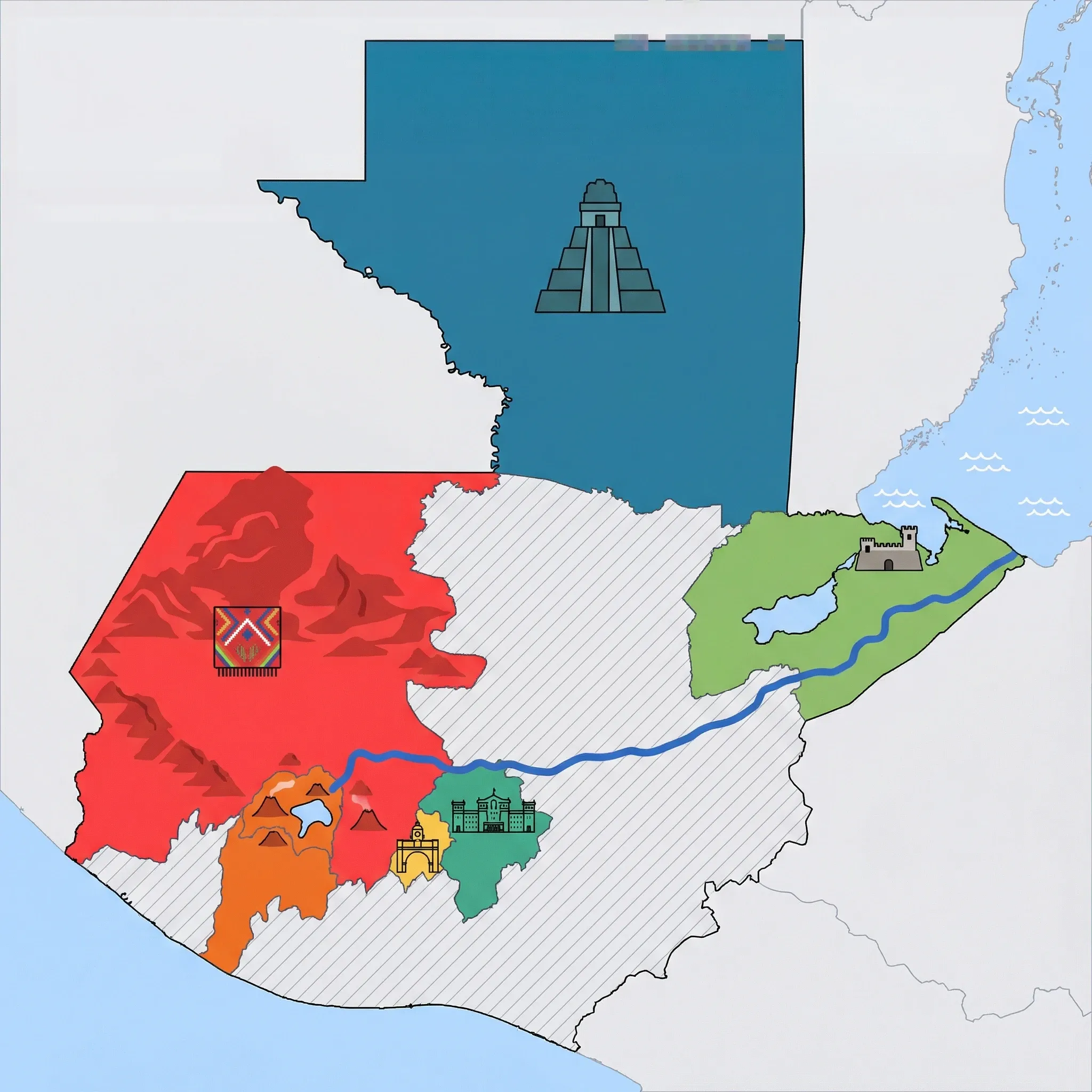
Click a region to explore
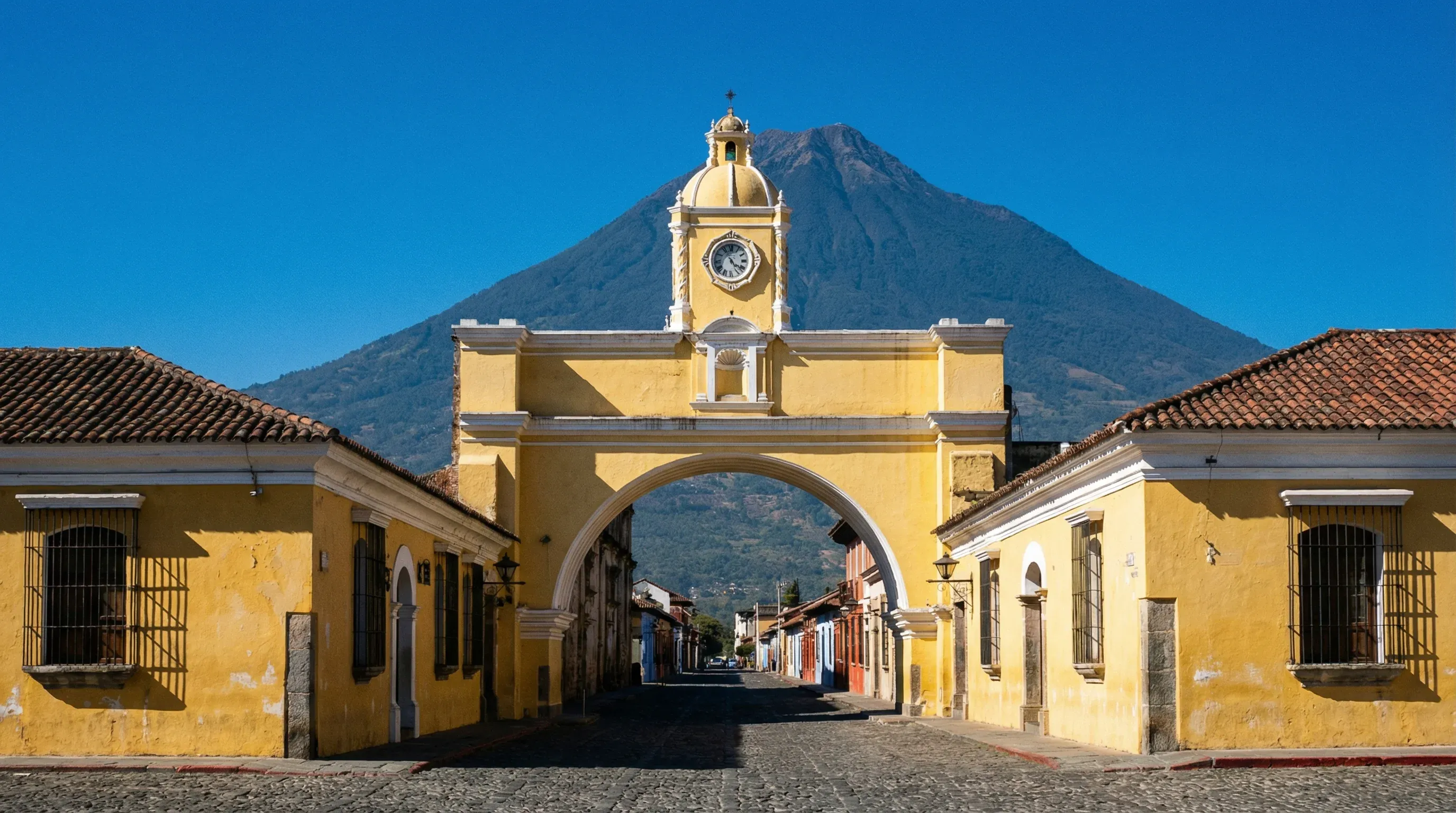
Antigua is the crown jewel of Guatemalan tourism and arguably the most family-friendly destination in the country. Nestled in a valley guarded by three imposing volcanoes—Agua, Fuego, and Acatenango—the city feels like a living museum where history is vibrant rather than stuffy. The grid-pattern streets are lined with candy-colored buildings and ruinous convents that have been turned into gardens, offering plenty of safe, enclosed spaces for children to explore. The climate is described as the "Land of Eternal Spring," meaning days are usually warm and pleasant, though evenings can get crisp.
For families, Antigua offers a gentle introduction to Central America. It is walkable, safe during the day, and packed with amenities ranging from chocolate-making workshops to rooftop restaurants. The atmosphere is relaxed; you can spend hours watching the world go by in Central Park while kids chase pigeons or buy handmade wooden toys from local vendors. While the cobblestones can be bumpy for strollers, the sensory experience of the bustling plazas and the smell of fresh corn tortillas make it a memorable playground for young travelers.
Key Attractions
The city's history is best explored through its "romantic ruins." The Convent of Capuchinas is a favorite for children because of its unique circular tower and dark underground crypts that feel like secret passages. Above the city, Hobbitenango is an absolute must-visit; this "Hobbit-style" eco-park offers archery, axe throwing (for older kids), and giant swings with views over the valley. Back in town, the Santa Catalina Arch isn't just a photo op; on clear days, the Volcán Agua frames perfectly behind it. If visiting during Easter, the Holy Week (Semana Santa) processions feature massive, intricate carpets made of colored sawdust that will captivate children with their artistry, though the crowds can be intense.
Practical Advice
The best time to visit is the dry season (November to April). Weekends are crowded with day-trippers from the capital; visit popular spots on weekdays for a calmer experience. Strollers with large, rugged wheels are essential for the cobblestones, though baby carriers are often easier.
Food & Drink
Typical meal times: Breakfast is hearty, served 7:00 am to 10:00 am. Lunch is the main meal from 12:00 pm to 2:00 pm, and dinner is usually 6:30 pm to 8:30 pm.
Typical meal costs: A mid-range family meal costs Q250–400 (approx. $32–52 USD / €30–48 EUR). Street food snacks are Q10–25 (approx. $1.30–3.20 USD / €1.20–3.00 EUR).
Dietary requirements: Antigua is very international. Vegetarian, vegan, and gluten-free options are abundant in nearly every café. Staff are accustomed to tourist needs and allergies.
Signature dishes:
- Pepián – A rich, dark stew made with roasted seeds, chilies, and meat (usually chicken), often considered the national dish. Non-spicy versions are great for kids.
- Rellenitos – Sweet mashed plantain balls filled with black beans and chocolate, fried and dusted with sugar.
- Desayuno Típico – The classic breakfast of scrambled eggs, black beans, fried plantains, cream, and tortillas.
Why this score?
The region offers moderate adventure through accessible volcano trekking, such as the popular hike to roast marshmallows on Pacaya. While the surrounding terrain is rugged, the city itself provides a highly developed and comfortable environment for families. It serves as a base for adventure rather than being a wilderness destination itself.
Why this score?
Antigua features several private clinics and pharmacies that cater specifically to the international expat and tourist communities. While major surgeries are usually referred to the capital, the local infrastructure handles minor emergencies and routine care with English-speaking staff. It is among the most reliable medical environments for travelers in the country.
Why this score?
As a UNESCO World Heritage site and the primary tourism hub of Guatemala, this region sees a heavy and consistent flow of international travelers. The city's preserved colonial architecture and proximity to active volcanoes make it a world-class draw for both culture and soft adventure. It is arguably the most famous destination in Central America north of Panama.

Antigua is pricier than the rest of Guatemala but offers good value compared to North America. Boutique family hotels range from Q750–1,500 (approx. $95–190 USD / €90–180 EUR). A coffee and pastry break will cost around Q40–60 (approx. $5–8 USD / €4.50–7 EUR). Entry fees for ruins are generally low, around Q40 (approx. $5 USD / €4.50 EUR) per person.

Getting Here & Around
Getting Here
- Airports – Fly into La Aurora International Airport (GUA) in Guatemala City. Antigua is a 45–60 minute drive away.
- Shuttles – Shared tourist shuttles run directly from the airport to Antigua hotels, safer and more comfortable than public buses.
- Driving – Connected via the CA-1 highway. Traffic leaving Guatemala City can be heavy in the late afternoon.
Getting Around
- Walking – The historic center is compact and best explored on foot, though the cobblestones are uneven.
- Tuk-tuks – Three-wheeled mototaxis are fun for kids and perfect for short hops across town. Negotiate the price before boarding.
- Ride-hailing – Uber is available and reliable for reaching outlying attractions like Hobbitenango.
No airports in this region. See the country flight map for nearby connections.
Official Links

Packing List
Standard umbrella strollers will break on the uneven, large cobblestones.
Fireworks (bombas) are set off frequently at odd hours for celebrations.
Evenings get surprisingly chilly despite the tropical latitude.
Helpful for minor tummy troubles when adjusting to local water/food.
Required for swimming in eco-sensitive areas like Lake Atitlán and Semuc Champey to protect water quality.
Roads to Lake Atitlán and Lanquín are incredibly winding and mountainous; essential for kids in shuttles.
The Highlands (Antigua/Atitlán) get surprisingly cold at night and in the early morning, often dropping below 10°C.
Street lighting is poor in uneven cobbled streets, and power outages can occur in smaller villages.
Essential for rocky volcanic shores at Lake Atitlán and slippery limestone pools at Semuc Champey.

Activities & Best Times

Hiking, wildlife, outdoor exploration, ecotourism
Antigua serves as a premier global hub for volcano trekking, featuring the iconic overnight hike to Acatenango with views of erupting Fuego. Optimal conditions occur during the dry season (Nov-Apr) when clear skies provide the dramatic volcanic vistas families expect.

Urban tourism, museums, historical sites, architecture
A UNESCO World Heritage site renowned for its preserved Spanish Colonial architecture, cobblestone streets, and sophisticated culinary scene. While peak visitation aligns with the dry season and Holy Week, the city's museums and heritage sites remain accessible and vibrant throughout the year.

Sport tourism, fitness activities, active recreation
Offers internationally recognized high-altitude mountain biking trails and strenuous volcano ascents for active families. Peak months avoid the heavy highland rains that make technical trails and steep volcanic ash slopes difficult and unsafe.

Learning experiences, scientific sites, historical education
Features specialized museums focusing on regional history, jade production, and pharmacy history that offer meaningful cultural insights. These facilities provide consistent year-round educational value, though they are most frequently visited during the primary dry-season tourism window.

Scenic drives, countryside tours, route-based travel
The highland routes and coffee circuits offer stunning vistas of the volcanic landscape and traditional villages. Driving is best during the dry season (Nov-Apr) to ensure road safety and clear views, as heavy rains in June and September can impact mountain road conditions.

Events, celebrations, seasonal attractions
Home to the world-renowned Semana Santa (Holy Week) celebrations, featuring elaborate sawdust carpets and processions. While peak interest is centered on March and April, the end-of-year holiday traditions also attract international visitors seeking authentic cultural immersion.

Spa retreats, wellness centers, peaceful getaways
The region offers access to natural thermal baths and high-end boutique hotels with wellness facilities, though it is not a primary global wellness destination. These sites are most pleasant during the cooler, drier months from November to April.




Public Holidays & Calendar Next 12 months
Public holidays, festivals, cultural celebrations, and seasonal natural phenomena coming up in Antigua Guatemala over the next 12 months.
Loading holidays and events...

Travel Advisory
Five out of six major agencies recommend exercising a high degree of caution or increased vigilance. While popular tourist destinations remain open, pervasive violent crime and frequent political demonstrations necessitate a high level of situational awareness.
Safety Topics
Traveller Advice (3 groups)

While same-sex relationships are legal, social acceptance varies significantly. Individuals may encounter discrimination or hostility in more conservative or rural regions.

Female travellers should avoid walking alone, particularly after dark or in isolated areas, due to reports of sexual assault and harassment. Conservative dress and travelling in groups are recommended.

Travellers should ensure their passports are valid for at least six months upon entry. It is highly recommended to use only official radio-dispatched taxis and to avoid displaying signs of wealth in public.
Agency Summaries
Ireland highlights the prevalence of crime and violence throughout the country. It warns that security risks for foreigners are substantial, particularly at land borders where disruptions and illegal fee requests are common.
Australia warns of a high threat from violent crime, including carjacking and kidnapping. Travellers are advised to monitor local media closely following the declaration of a state of prevention by the Guatemalan government.
The UK advises against all but essential travel to areas near the Mexican border and specific high-crime zones in the capital. A 'State of Prevention' is currently in place, giving authorities power to restrict movements and dissolve protests.
Travellers should be extremely vigilant in Guatemala because of significant crime rates and frequent public demonstrations or roadblocks. Specific high-risk areas in Guatemala City and border regions should be avoided entirely due to elevated violence.
New Zealand advises increased caution due to the risk of violent crime and civil unrest. It specifically warns against non-essential travel to border areas with Mexico due to security concerns and the activity of armed gangs.
The U.S. government recommends reconsidering travel to Guatemala due to widespread violent crime, including armed robbery and murder. Specific regions like San Marcos and Huehuetenango are under 'Do Not Travel' warnings due to drug trafficking and gang activity.
Information is provided for general guidance only and does not constitute travel, safety, medical, or legal advice. Conditions may change. Users are responsible for independently verifying information before travel.