
Forest Region
Ancient rainforests and vine bridges in the deep south 🌳🦍
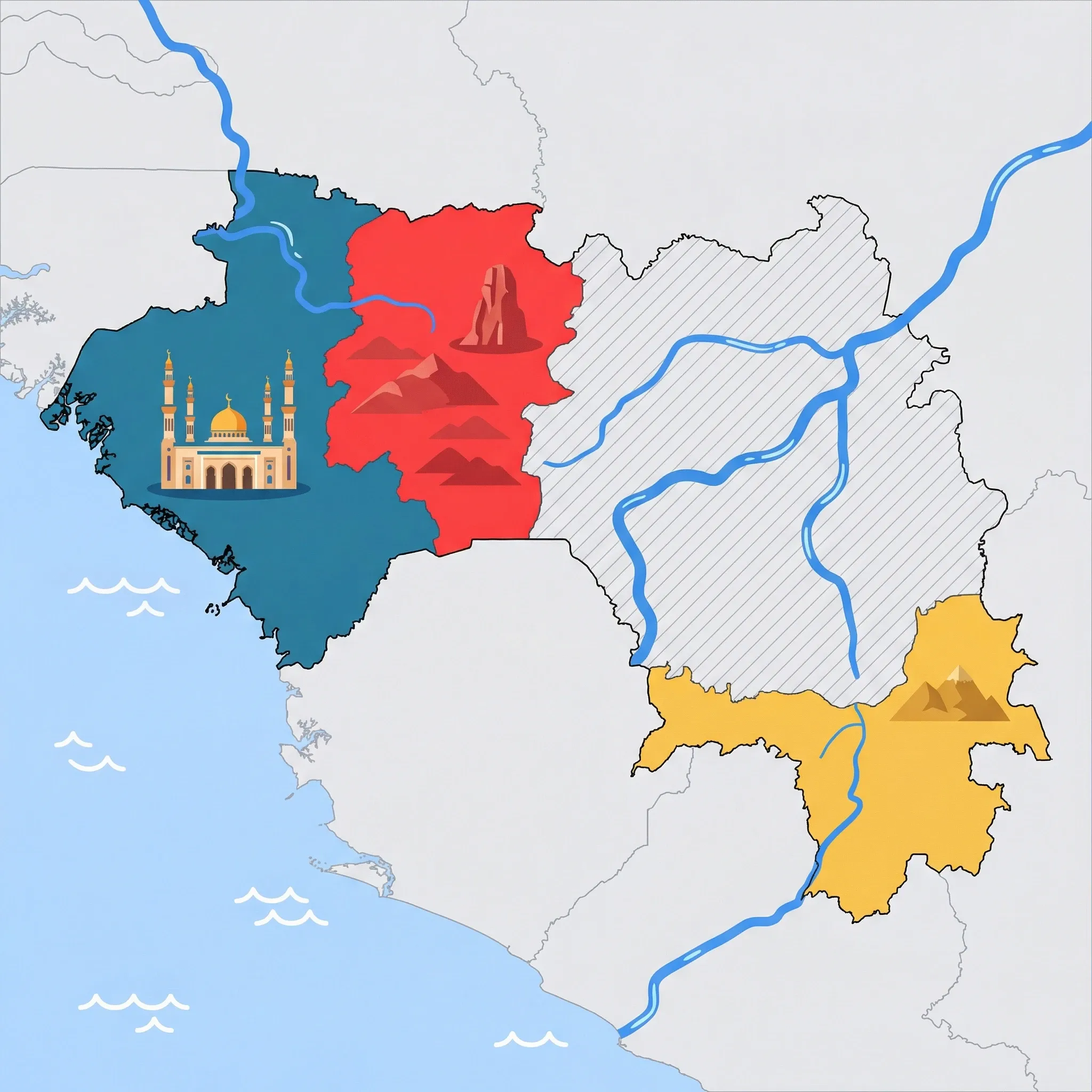
Click a region to explore
⚠️ SAFETY WARNING: Due to political volatility, proximity to unstable border regions, and limited medical infrastructure, government agencies (including CA, USA, UK, AU, IE, NZ) advise travelers to exercise a high degree of caution or reconsider travel to the Forest Region. Specifically, areas within 50km of the borders with Liberia, Sierra Leone, and Côte d'Ivoire are flagged for potential instability and crime. The security situation can change rapidly. Families are strongly urged to consult their own government's official travel advisory before considering a trip, as circumstances and risk assessments vary.
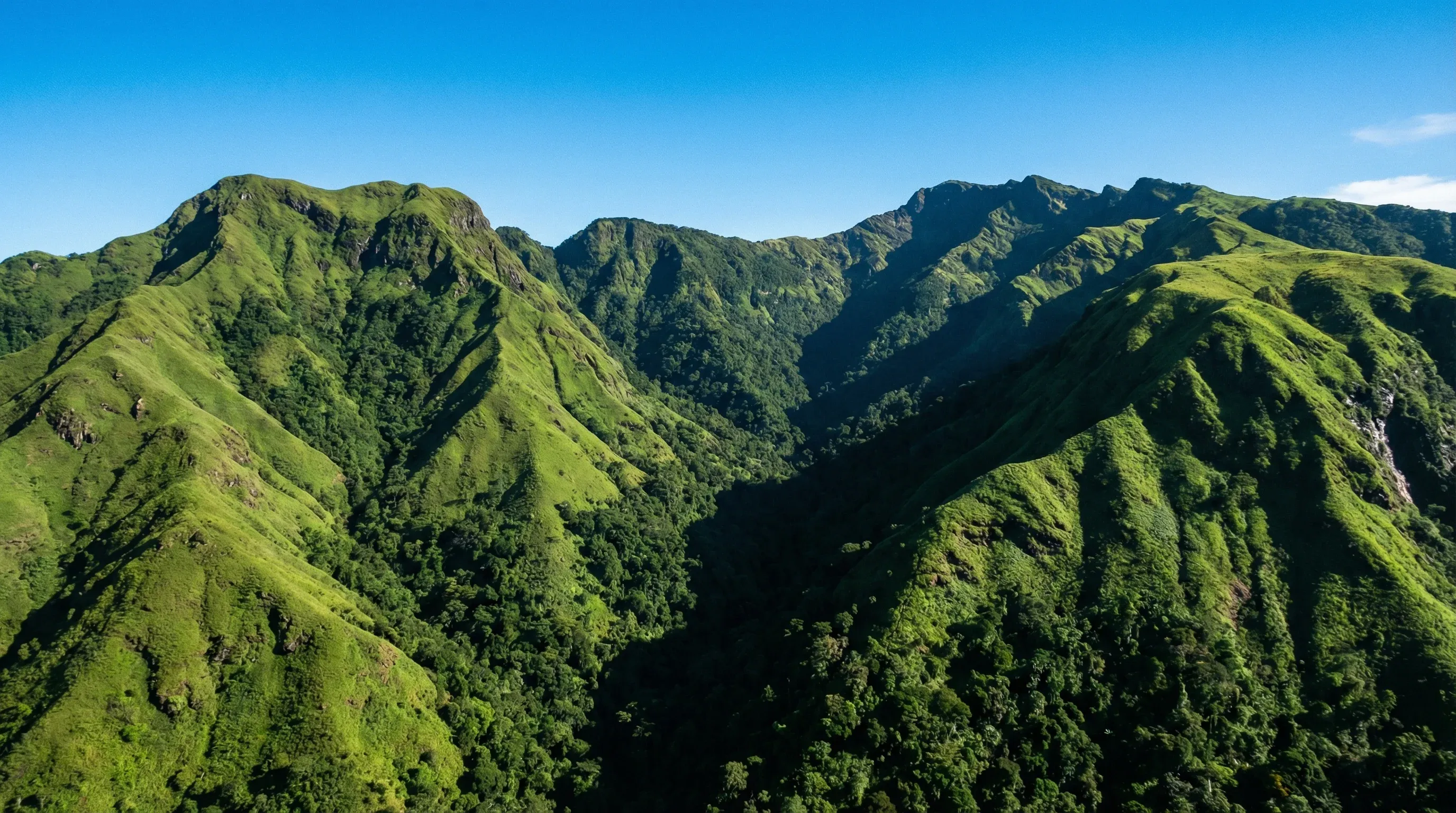
For families with older children who are experienced overlanders, the Forest Region (Guinée Forestière) offers a landscape and culture entirely distinct from the coast or the highlands. This is the green lung of Guinea, a land of dense equatorial rainforests, rolling mountains, and rich animist traditions that have survived centuries. The air here is thick and humid, the vegetation is colossal, and the pace of life is dictated by nature. It is a remote frontier that feels largely untouched by the modern world, centered around the regional capital of Nzérékoré.
The region is geographically significant as the headwaters for several major West African rivers. The landscape is dominated by the Nimba Range and the Ziama Massif, home to forest elephants, chimpanzees, and rare pygmy hippos—though spotting them requires patience and luck. Culturally, this area is famous for its intricate vine bridges (ponts de lianes), woven by initiated men in secret rituals. For teenagers interested in anthropology or biology, this region is a living classroom. However, travel here is arduous; roads are often unpaved tracks of red earth that turn to mudslides in the rain, making the journey a true expedition rather than a standard holiday.
Key Attractions
The crown jewel of the region is the Mount Nimba Strict Nature Reserve. While access to the core zone is strictly controlled to protect its unique ecosystem (including the viviparous toad found nowhere else), the surrounding areas offer breathtaking views of mist-covered peaks rising from the jungle. It is a UNESCO World Heritage site in danger, highlighting the fragility of this environment. Visiting the outskirts of the reserve provides a profound lesson in conservation for young travelers.
Nearby, the village of Bossou is famous for its population of chimpanzees that live in close proximity to humans, though interactions are regulated. The region is also the home of the sacred vine bridges, particularly over the Diani River. Crossing these swaying, hand-woven structures is a thrilling experience that kids will never forget—though it requires a steady nerve. The markets in Nzérékoré are vibrant and offer crafts distinct from the rest of Guinea, including forest masks and indigo textiles.
Practical Advice
Best Time to Visit: You must visit during the dry season (December to February). During the rains, the dirt roads to Nzérékoré and Mount Nimba become impassable mud baths, and the humidity is stifling.
Logistics: This is a remote region with very poor medical facilities. A comprehensive medical kit and evacuation insurance are non-negotiable. Travel by 4x4 is essential. Electricity is scarce outside the main town of Nzérékoré, so solar chargers are highly recommended.
Food & Drink
Typical meal times: Meals are often eaten earlier here due to the lack of electricity in villages. Lunch is 12:00 pm to 1:30 pm, dinner 6:30 pm to 8:00 pm.
Typical meal costs: Food is generally cheaper than in Conakry. A hardy local meal costs 25,000–50,000 GNF (approx. $3.00–6.00 USD / €2.70–5.40 EUR). Simple guesthouses may charge 60,000–100,000 GNF (approx. $7.00–11.50 USD / €6.50–10.80 EUR) for dinner.
Dietary requirements: Options are very limited. The diet is heavy on starch and meat/fish. Vegetarians will rely heavily on plain rice and fruit. Allergens are not monitored.
Signature dishes:
- Tô – A stiff porridge made from cassava or corn flour, served as the main calorie source, dipped into slimy but nutritious sauces.
- Sauce Graine – A rich, red soup made from the pulp of palm nuts, often cooked with smoked fish or bushmeat (caution advised regarding bushmeat).
- Foutou Banane – Mashed plantains pounded into a smooth, dough-like consistency, a favorite comfort food in the forest region.
Why this score?
This region offers a high-intensity adventure experience characterized by dense, ancient rainforests and the difficult climb of Mount Nimba. The terrain is physically demanding, road conditions are often impassable during the rainy season, and the sense of isolation from modern infrastructure is profound.
Why this score?
Medical infrastructure in the Forest Region is extremely minimal, with only basic clinics in Nzérékoré that lack essential supplies and specialized staff. For a foreign traveler, a serious medical emergency here would be critical due to the vast distance and poor road connectivity to Conakry's hospitals.
Why this score?
This is one of the least visited parts of West Africa due to its extreme distance from the capital and the logistical challenges of reaching the Liberia-Côte d'Ivoire border. Only a handful of specialized wildlife researchers and intrepid eco-tourists visit annually to see the chimpanzees of Bossou or the Mount Nimba reserve.

The Forest Region is inexpensive for daily living but expensive to access. Accommodation is basic and cheap, with guesthouses costing 150,000–350,000 GNF (approx. $17–40 USD / €16–38 EUR) per night. However, the cost of hiring a private 4x4 and driver—which is essential for safety—is high, often exceeding 1,300,000 GNF (approx. $150 USD / €140 EUR) per day plus fuel.

Getting Here & Around
Getting Here
- Driving – The drive from Conakry to Nzérékoré is an epic journey of 20+ hours (often split over two days) on mixed road conditions. A robust 4x4 is mandatory.
- Airports – Nzérékoré Airport (NZE) exists but scheduled commercial flights are extremely irregular and often suspended. Charter flights from Conakry are the only reliable air option.
- Bus – Long-distance coaches run from Conakry, but they are often overcrowded, unsafe, and not recommended for families.
Getting Around
- Car – To reach Mount Nimba Strict Nature Reserve or the vine bridges, you must have a private 4x4 with a driver who knows the terrain.
- Motorcycle Taxi – 'Moto-taxis' are the main transport within towns, but they are dangerous and not suitable for children.
- Walking – Hiking is the primary way to explore the nature reserves once you arrive at the trailheads.
No airports in this region. See the country flight map for nearby connections.

Packing List
Strictly checked at checkpoints in this border region; carry the original.
Terrain is slippery, muddy, and uneven; sneakers will not suffice in the forest.
The rainforest floor is damp and leeches are common on trekking paths.
Cell signal is non-existent in the deep forest; essential for emergency safety.
Mandatory for entry; keep it in your carry-on as you will be asked for it before immigration.
Power cuts are frequent and street lighting is non-existent in many areas outside central Conakry.
English is rarely spoken outside of high-end hotels; basic French is essential for daily interactions.
You will frequently remove shoes when entering homes, some shops, or mosques.
ATMs are unreliable outside Conakry; bring pristine, new bills to exchange.
Tap water is not safe to drink, and buying plastic bottles creates waste in a country with limited recycling.

Activities & Best Times

Hiking, wildlife, outdoor exploration, ecotourism
Home to the UNESCO-listed Mount Nimba and the rare Bossou chimpanzees, this region offers exceptional, raw wildlife encounters and rainforest immersion. Peak visitation occurs during the dry season when wildlife is easier to track and forest trails are passable.

Sport tourism, fitness activities, active recreation
Provides rugged trekking opportunities on Mount Nimba and through the Ziama Massif for active families. Infrastructure is limited to basic trails, which become dangerous and slippery during the extended rainy season.

Urban tourism, museums, historical sites, architecture
The Forest Region is primarily a natural/wilderness destination focused on Mount Nimba and Bossou chimpanzees. While it offers cultural insights into sacred forests and ethnic heritage, it lacks the urban cultural infrastructure (museums, galleries, historic architecture) that 'good' typically implies. The cultural experiences here are secondary to the primary nature/wildlife focus. 'Marginal' better reflects that cultural tourism is possible but not the region's strength.

Learning experiences, scientific sites, historical education
The Bossou Environmental Research Institute provides niche scientific appeal for families interested in primatology and conservation. Accessibility and field site visits are best managed during the driest months.

Scenic drives, countryside tours, route-based travel
The Ziama Forest Corridor and Nimba Highland drives offer spectacular scenic vistas through high-altitude rainforests. These routes require high-clearance vehicles and are virtually impassable during the peak monsoon months due to mud and washouts.



Public Holidays & Calendar Next 12 months
Public holidays, festivals, cultural celebrations, and seasonal natural phenomena coming up in Forest Region over the next 12 months.
Loading holidays and events...

Travel Advisory
Standard safety awareness is insufficient. Travellers must exercise increased vigilance due to high rates of crime, potential for sudden civil unrest, and significant infrastructure limitations.
Safety Topics
Traveller Advice (3 groups)

Same-sex relationships and acts are criminalized and socially stigmatized. Public displays of affection should be avoided to prevent legal consequences or targeted harassment.

Female travellers may encounter verbal harassment and should avoid walking alone, especially after dark. Dressing modestly in accordance with local customs is recommended to reduce unwanted attention.

Ensure access to backup supplies of food, water, and fuel as shortages are frequent. Register your travel plans with your national authorities and maintain comprehensive medical evacuation insurance.
Agency Summaries
Protests and political gatherings can occur with little warning and may become violent. Road-based crime involving armed individuals posing as security personnel is a risk. Terrorism remains a threat that could affect public spaces frequented by foreigners.
Travellers should remain extremely vigilant due to ongoing social and political instability. Public demonstrations are frequent and have the potential to escalate into violence. Health risks include cholera outbreaks and being located within the meningitis belt.
Civil unrest and political tensions create a volatile security environment. Essential services like water and fuel are subject to regular shortages. There is a high risk of banditry and kidnapping in regions bordering Mali.
Visitors should be cautious due to the lack of local diplomatic representation and the risk of civil disturbances. Comprehensive insurance is essential to cover potential medical evacuations given the limited local healthcare options.
Violent crimes, including armed robbery and carjacking, are becoming more common across the country. Tensions are particularly high in border areas, where non-essential travel should be avoided.
Heightened vigilance is advised due to prevalent crime, potential for civil unrest, and insufficient medical infrastructure. Street crimes like pickpocketing and muggings are frequent, particularly in Conakry. Nighttime travel between cities is strongly discouraged.
Information is provided for general guidance only and does not constitute travel, safety, medical, or legal advice. Conditions may change. Users are responsible for independently verifying information before travel.