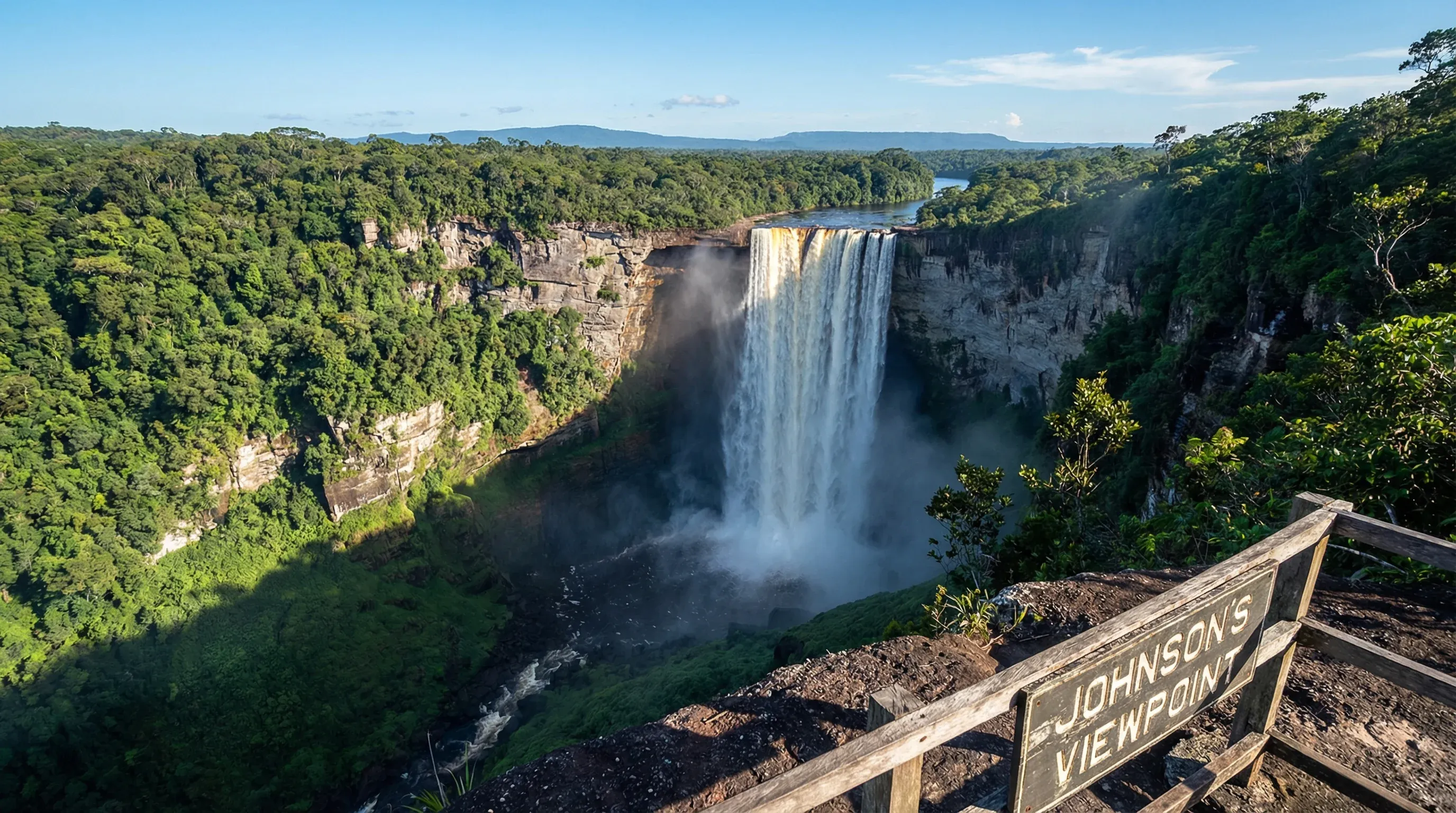

Kaieteur Falls & Interior
Home to the world's largest single-drop waterfall 🌊🌿
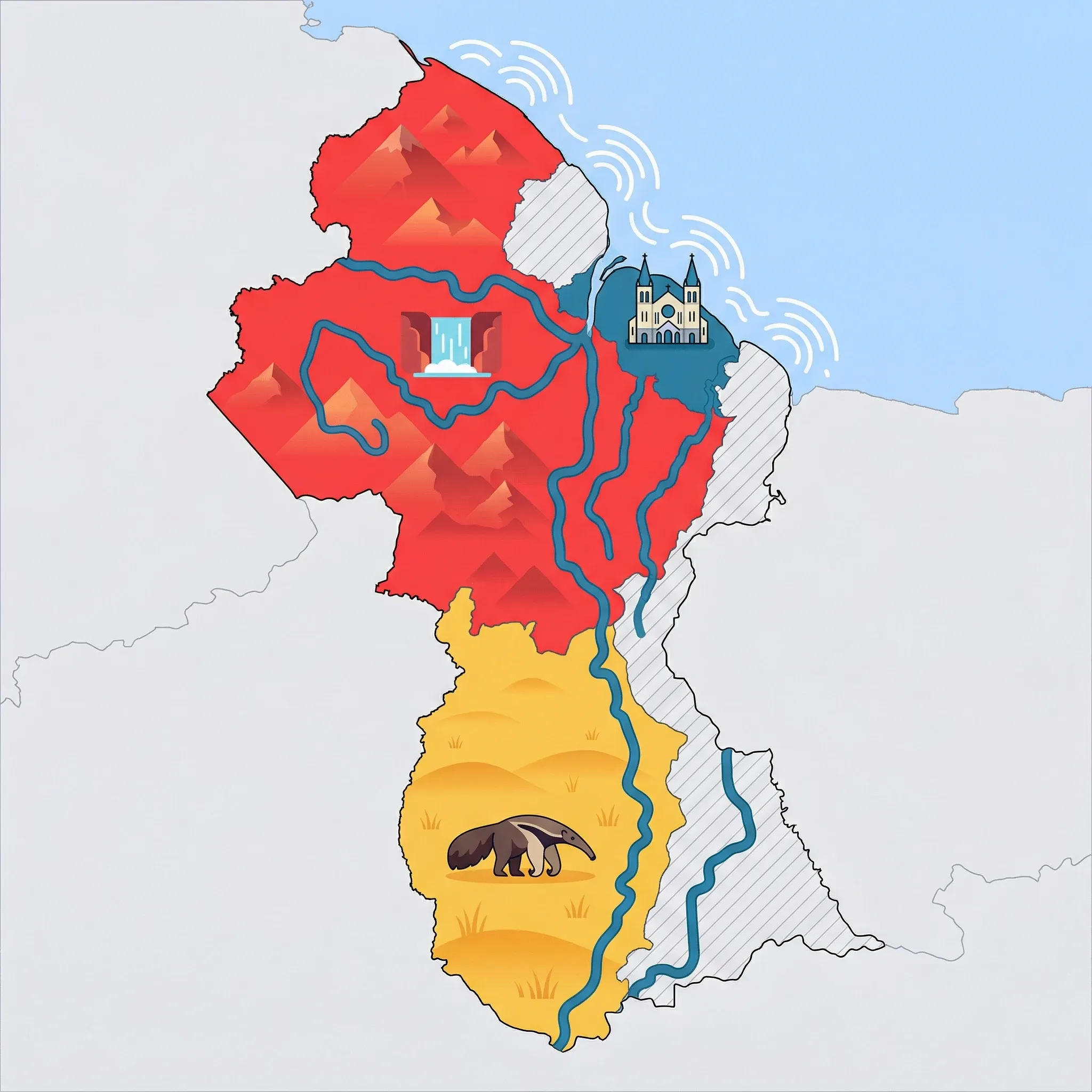
Click a region to explore
The Kaieteur Falls & Interior region represents the raw, beating heart of Guyana's wilderness. It is a place where the modern world feels incredibly distant, replaced by the roar of cascading water and the endless canopy of the Amazon rainforest. For families, this is not a typical resort holiday; it is a true adventure into one of the most pristine environments on Earth. The geography is dominated by the Pakaraima Mountains and the Potaro Plateau, creating a dramatic landscape of flat-topped mountains (tepuis) and deep, misty gorges. The climate here is humid and tropical, with frequent mists that add a mysterious allure to the jungle.
Visiting this region is a profound educational experience for children. It offers a chance to see nature untouched by mass tourism. The isolation means that facilities are basic, but the connection to nature is unparalleled. Families can spot tiny golden frogs that live their entire lives in giant bromeliads, watch swifts dive behind the curtain of falling water, and breathe air that is among the cleanest on the planet. It is a destination for families who love nature documentaries and want to step inside one.
Key Attractions
The undisputed jewel of the region is Kaieteur Falls. Five times the height of Niagara Falls, the sheer volume of water plunging 741 feet into the gorge below is a sight that leaves visitors speechless. Unlike other major world waterfalls, there are no guard rails or souvenir shops cluttering the edge; it is just you and the raw power of nature. Guides are mandatory and excellent at keeping children safe while ensuring they get the best views from the rock ledges.
Surrounding the falls is the Kaieteur National Park, a biodiversity hotspot. A guided walk here isn't just a hike; it's a biology lesson. Children will be fascinated by the carnivorous plants and the giant tank bromeliads, which host their own micro-ecosystems. If you are lucky, you might spot the Guianan Cock-of-the-rock, a brilliant orange bird that is a prize sighting for birdwatchers. The park is accessible primarily by light aircraft, making the journey itself—a flight over the endless jungle carpet—an unforgettable attraction.
Practical Advice
Access is almost exclusively by small aircraft from Georgetown (Ogle Airport). Day trips are common, but overnight stays in the park's guest house offer a magical experience. The best time to visit is post-rainy season (late August or January) when the falls are at their most powerful but the weather is clear enough for flights. Pack extremely light as planes have strict weight limits.
Food & Drink
Typical meal times: Meals are dictated by tour schedules or lodge timings. Lunch is usually 12:00 pm to 1:00 pm.
Typical meal costs: Food is almost always included in tour packages. If buying independently at a lodge, expect $3,000–5,000 GYD (approx. $14–24 USD / €13–22 EUR) for a simple meal.
Dietary requirements: Options are limited. Lodges serve set meals. Vegetarians can be accommodated if notice is given days in advance. Gluten-free travelers must bring their own supplies/snacks.
Signature dishes:
- Cassava Bread – A hard, cracker-like indigenous bread that is a staple for soaking up stews and sauces in the interior.
- River Fish Stew – Freshly caught fish from the Potaro or nearby rivers, simmered with local herbs and peppers.
- Tuma – An indigenous broth made with meat or fish and seasoned with cassava water, often served with farine.
Why this score?
Visiting this region typically involves small-plane bush flights and navigating dense Amazonian rainforest with minimal infrastructure. The environment is wild and remote, requiring visitors to be self-sufficient and prepared for extreme tropical conditions.
Why this score?
Medical facilities in the immediate vicinity of the falls and deep interior are virtually non-existent, consisting only of basic first-aid kits at park headquarters. Any significant injury or illness necessitates a costly and time-consuming emergency flight back to Georgetown.
Why this score?
This is Guyana's iconic signature attraction and the primary reason most international tourists visit the country. While visitor numbers are limited by the capacity of small aircraft, it is the most recognized natural site in the region and a staple of South American adventure itineraries.

Visiting the interior is expensive due to logistics. A day trip to Kaieteur Falls typically costs $50,000–75,000 GYD (approx. $235–350 USD / €220–330 EUR) per person. Overnight lodge stays in the interior can range from $60,000–100,000 GYD (approx. $280–470 USD / €265–440 EUR) per night, all-inclusive. Costs are high, but cover transport, guides, and meals in a remote area.

Getting Here & Around
Getting Here
- Airports – Access is via small chartered flights (Cessna or Caravan) from Eugene F. Correia International Airport (OGL) in Georgetown to the Kaieteur Falls airstrip. The flight takes approximately 1 hour.
- Tour Operators – Most families arrive via organized day tours or overnight packages which include the flight, park permits, and guides. Independent travel is logistically very difficult.
Getting Around
- Walking – Once at the airstrip, all exploration within Kaieteur National Park is on foot. Trails are relatively flat but can be slippery and uneven.
- Guide – A licensed guide is mandatory for all visitors moving around the falls and park area for safety and conservation reasons.
No airports in this region. See the country flight map for nearby connections.

Packing List
The spray from the falls creates a localized rainstorm; you will get wet near the edge.
Essential for spotting swifts behind the falls and cock-of-the-rock birds in the forest.
Humidity is extremely high; protects cameras and phones from moisture damage.
Plastic waste is strictly managed; filtered water is available at the guesthouse but bottles are not sold.
Extreme humidity can damage cameras and phones; keep electronics in sealed bags with these.
Essential for spotting caiman and nocturnal wildlife without frightening them.
Treat clothing before travel to repel ticks and chiggers, common in the savannah grass.
Protect gear during frequent river crossings and sudden tropical downpours.
The combination of tropical heat and humidity can cause rapid dehydration in children.
Even for kids, these are vital for seeing birds and monkeys high in the rainforest canopy.

Activities & Best Times

Hiking, wildlife, outdoor exploration, ecotourism
Kaieteur Falls is one of the world's most powerful waterfalls (5x Niagara's height) and a globally significant natural attraction. This is a bucket-list destination that warrants very_good rating to match international calibration standards for world-class natural features.

Sport tourism, fitness activities, active recreation
Features internationally recognized trekking routes, including the challenging overland approach to Kaieteur and the Mount Roraima ascent. These activities require specific physical preparation and are best attempted when trails are dry and river levels are safer.

Urban tourism, museums, historical sites, architecture
For consistency with Rupununi Savannah's treatment of indigenous heritage. Chenapau Village offers authentic indigenous culture but lacks the international scale or UNESCO recognition needed for 'good' rating. This aligns the classification with Rupununi's 'marginal' rating for similar cultural experiences.

Learning experiences, scientific sites, historical education
The Kaieteur National Park Visitor Centre provides scientific insights into the unique geology and ecology of the Guiana Shield. It serves as a secondary educational draw, most accessible during the dry months when park operations are at their peak.

Scenic drives, countryside tours, route-based travel
The Linden-Lethem road and Pakaraima Safari offer rugged, expedition-style driving through spectacular savannah and mountain scenery. These routes are highly seasonal, becoming difficult or impassable due to mud during the primary and secondary rainy seasons.




Public Holidays & Calendar Next 12 months
Public holidays, festivals, cultural celebrations, and seasonal natural phenomena coming up in Kaieteur Falls & Interior over the next 12 months.
Loading holidays and events...

Travel Advisory
The majority of international agencies recommend exercising a high degree of caution in Guyana. This assessment is driven by persistent levels of violent crime and limited emergency response capabilities, though specific regional tensions near the Venezuelan border also contribute to the risk profile.
Safety Topics
Traveller Advice (3 groups)

Maintain a low profile, avoid walking or driving at night, and do not resist robbery attempts. Be especially cautious when using ATMs or visiting banks.

Individuals should consult local laws and exercise discretion, as legal protections and social acceptance vary.

Female travelers should be aware of reports of sexual assault and harassment, particularly in urban areas and at night.
Agency Summaries
New Zealanders are urged to be security conscious due to high rates of violent crime, such as carjacking and sexual assault, particularly in urban environments.
Australia recommends a high level of caution due to threats of violent crime, including armed robbery and kidnapping, as well as ongoing tensions with Venezuela.
The UK provides general guidance highlighting significant crime levels and low police capacity, while noting specific risks associated with road travel and border regions.
The U.S. Department of State advises individuals to rethink travel plans to Guyana because of common violent crime and the limited capacity of local police to manage serious incidents.
Irish citizens are advised to be extremely vigilant due to high crime rates. The government notes limited consular support as there is no permanent Irish embassy in the country.
Canadian authorities suggest travelers maintain high vigilance due to elevated levels of crime across the country and a volatile security situation along the border with Venezuela.
Information is provided for general guidance only and does not constitute travel, safety, medical, or legal advice. Conditions may change. Users are responsible for independently verifying information before travel.