
Eger & Northern Highlands (wine)
Historic castles, forest trains, and underground wonders 🏰🌲
Click a region to explore
Overview
For families who love the outdoors and history, the Northern Highlands offer a refreshing escape from the flat plains. This is the 'mountainous' part of Hungary (though gentle by Alpine standards), home to the Bükk and Mátra ranges. It is a region of dense forests, fresh air, and folklore. The city of Eger is the cultural heart, famous for its baroque architecture and the legendary 1552 siege against the Ottomans. While the region is globally renowned for its wines (like Egri Bikavér or "Bull's Blood"), the family appeal lies in its "hidden" geography: underground caves, forest railways, and hilltop fortresses.
The climate here is slightly cooler than the rest of the country, making it a perfect summer retreat. Families can take narrow-gauge trains through the Bükk National Park - Szalajka Valley, spotting deer and waterfalls, or venture deep underground into the UNESCO World Heritage caves at Aggtelek. It feels wilder here; the infrastructure is good, but the vibe is rustic and close to nature. Whether you are climbing the ramparts of Hollókő Old Village or swimming in the cave baths of Miskolctapolca, the region encourages active exploration.
Key Attractions
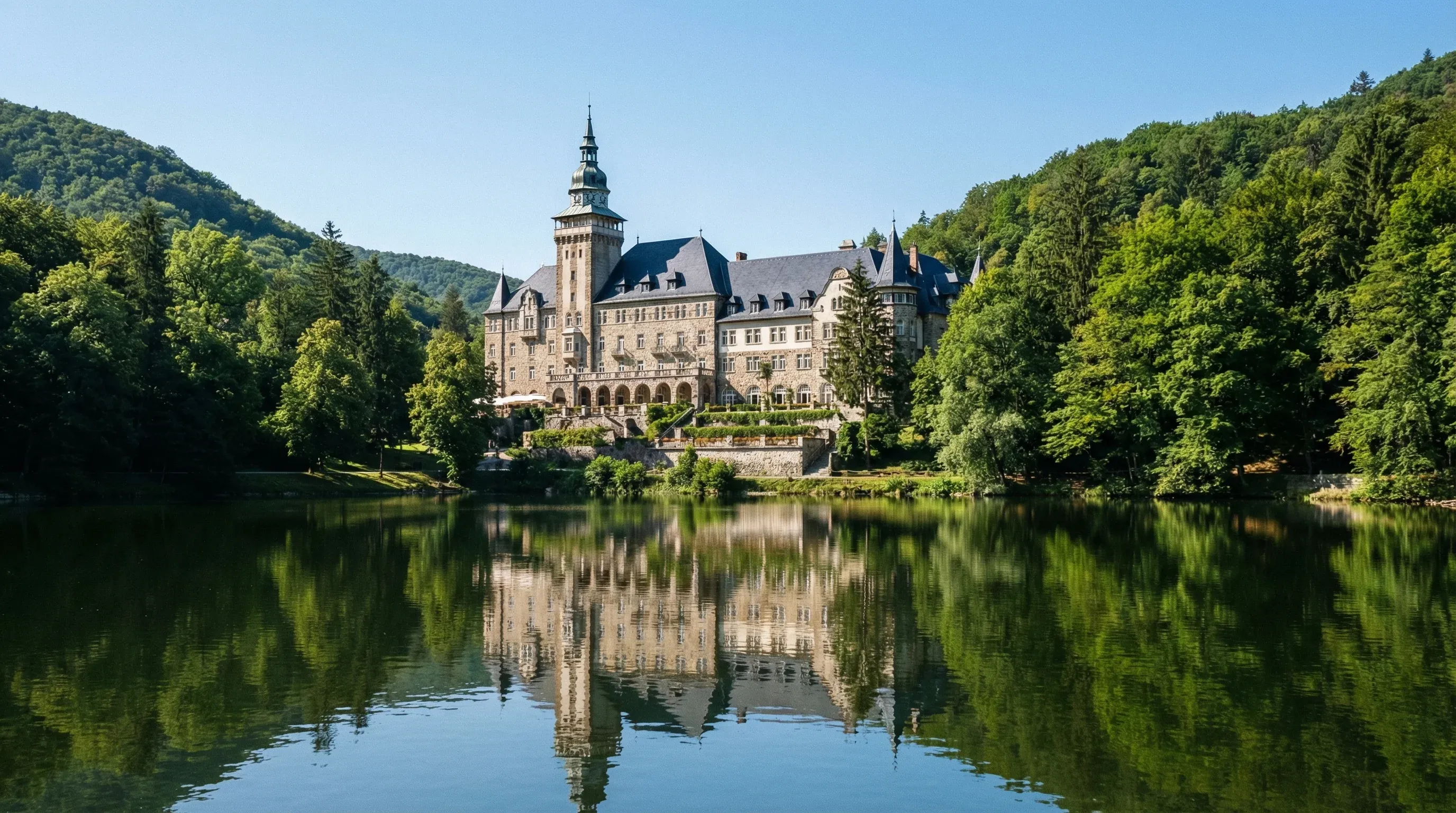
Start at Eger Castle, where interactive museums and reenactments bring the story of the Turkish siege to life—swords and cannons are always a hit with kids. For a day of nature, head to the Lillafüred Palace Hotel and Hanging Gardens; from here you can ride a forest train and explore limestone caves. If you have a car, the drive to Aggtelek National Park - Baradla Cave is mandatory; the guided tours take you into one of Europe's largest stalactite cave systems, which feels like entering another planet. For a relaxing end to the day, visit Egerszalok Salt Hill and Nostalgia Bath, where the thermal waters have created a white limestone terrace similar to Pamukkale.
Practical Advice
A car is highly recommended for this region as attractions are spread out across the hills. The best time to visit is May through September. Note that temperatures in the caves are a constant 10-12°C (50-54°F) year-round, so warm clothing is essential even in a heatwave.
Food & Drink
Typical meal times: Lunch is 12:00 pm to 2:00 pm. Dinner is 6:00 pm to 8:30 pm. Rural restaurants (Csárda) may close earlier than city venues.
Typical meal costs: Very affordable. A hearty family dinner costs 15,000–25,000 HUF (approx. $40–68 USD / €37–63 EUR). A glass of local wine is often cheaper than bottled water, around 500–900 HUF (approx. $1.35–2.50 USD / €1.25–2.25 EUR).
Dietary requirements: This is game and meat country. Vegetarians can rely on fried cheese and mushroom soup, but vegan options are scarce outside of Eger city center. Gluten-free awareness is growing but not guaranteed in small village inns.
Signature dishes:
- Palóc Soup – A sour soup made with lamb or pork, green beans, sour cream, and dill. A regional classic.
- Vargánya Pörkölt – A rich stew made from locally foraged porcini mushrooms, often served with dumplings (nokedli).
- Szilvásgombóc – Potato dumplings filled with sweet plums and rolled in cinnamon breadcrumbs.
Why this score?
Home to the Bükk and Mátra mountain ranges, the region offers the most rugged terrain in Hungary, including the country's highest peak. Adventure seekers can explore extensive cave systems like Baradla or engage in mountain sports, though the infrastructure remains accessible for families.
Why this score?
Reliable healthcare is available in regional centers like Miskolc and Eger, with decent emergency services. However, rural highland areas have limited facilities, and English proficiency among medical staff is significantly lower than in the capital.
Why this score?
This region is primarily a domestic destination, though Eger and the Tokaj wine region attract a steady stream of regional European visitors. It features 75 attractions including UNESCO sites like Hollókő, but lacks the high-volume international throughput of Budapest.

The Northern Highlands are one of the most budget-friendly regions in Central Europe. A guesthouse (Vendégház) for a family often costs just 18,000–30,000 HUF (approx. $50–82 USD / €45–75 EUR) per night. Entry fees to castles and caves are modest, typically 2,000–4,000 HUF (approx. $5.50–11 USD / €5–10 EUR) per person.

Getting Here & Around
Getting Here
- Train – InterCity trains run from Budapest-Keleti to Eger (approx. 2 hours) and Miskolc (approx. 2 hours).
- Driving – Access via the M3 motorway from Budapest. The Mátra Scenic Road (Highway 24) offers beautiful views but can be winding—take care if passengers get car sick.
Getting Around
- Car – Essential for reaching dispersed sites like Hollókő Old Village and the caves.
- Narrow-Gauge Train – Several forest railways operate here (e.g., Szilvásvárad, Lillafüred), serving as both transport and a fun activity for kids.
- Walking – The town centers of Eger and Tokaj are compact and pedestrian-only.
No airports in this region. See the country flight map for nearby connections.
Official Links

Packing List
Cave tours are 10°C (50°F) year-round, shocking in summer.
Roads in the Mátra and Bükk mountains are very winding.
Useful for exploring castle ruins and lesser-lit cave sections.
Strictly mandatory in the swimming lap pools at most thermal baths (like Széchenyi or Gellért).
Required for hygiene in thermal bath walkways; walking barefoot is often prohibited.
Ticks are common in Hungarian forests and the Buda Hills; handy for hiking families.
Towel rentals at baths can be expensive or low quality; bringing your own is cleaner and cheaper.
Essential for summer evenings, especially if staying near Lake Balaton or the Danube river.

Activities & Best Times

Hiking, wildlife, outdoor exploration, ecotourism
The Bükk and Mátra mountains offer authentic wilderness, the famous State Lipizzaner Stud Farm, and accessible forest hiking suitable for active families. Conditions are optimal from late spring through the autumn foliage season.

Urban tourism, museums, historical sites, architecture
Eger is a premier historic city with a major castle and sophisticated wine culture, complemented by the UNESCO-listed village heritage of Hollókő. The region excels in late spring and autumn when the climate is ideal for exploring historic quarters.

Sport tourism, fitness activities, active recreation
Home to major adventure parks and the National Blue Trail, the region offers high-quality infrastructure for hiking, cycling, and mountain sports. Late spring and early autumn provide the most comfortable temperatures for high-intensity movement.

Spa retreats, wellness centers, peaceful getaways
Eger and Egerszalók are established wellness hubs featuring authentic Turkish baths and unique natural salt formations. Peak demand aligns with summer leisure travel and festive winter breaks when the thermal waters are most inviting.

Scenic drives, countryside tours, route-based travel
The Mátra Scenic Road and the Tokaj-Hegyalja wine route provide beautiful landscapes and authentic rural experiences for self-drive tours. September and October are particularly stunning for the grape harvest and mountain colors.

Learning experiences, scientific sites, historical education
Facilities like the Lake Tisza Ecocentre and Bükk Observatory provide engaging learning opportunities for families, though they are secondary to the region's cultural draw. Summer offers the best access to these nature-focused discovery centers.

Winter sports, ski resorts, snow activities
Small-scale ski centers like Kékestető serve domestic needs but lack the vertical drop and infrastructure expected by sophisticated international travelers. The season is short and highly dependent on mid-winter temperatures.

Amusement parks, family entertainment venues
The region offers quality thermal adventure baths and mountain activity centers, though they serve a regional rather than global entertainment market. Best visited during summer school holidays when all outdoor facilities are fully operational.

Attractions (25 total)



Public Holidays & Calendar Next 12 months
Public holidays, festivals, cultural celebrations, and seasonal natural phenomena coming up in Eger & Northern Highlands (wine) over the next 12 months.
Loading holidays and events...

Travel Advisory
All major agencies agree that Hungary is a safe destination requiring only standard travel safety awareness and common sense precautions.
Safety Topics
Traveller Advice (3 groups)

While the capital is generally open, be aware of legislation that may restrict public displays of affection or the depiction of certain identities to minors. Some public rallies or marches may be subject to fines or facial recognition monitoring.

When visiting lakes, forests, or rural areas from spring to autumn, take precautions against ticks which can transmit encephalitis. Check for ticks immediately after outdoor activities.

Exercise caution in tourist districts and on public transport where pickpocketing is common. Avoid large political demonstrations in Budapest and verify menu prices in bars to avoid overcharging scams.
Agency Summaries
Maintain common sense vigilance. Be alert for petty crime on public transport and overcharging scams in nightlife venues. Note that the Australian Embassy in Budapest is closed; assistance is provided via Vienna.
No specific security warnings are in place. Travellers are advised to monitor local conditions and be aware of health risks such as tick-borne encephalitis in rural or wooded areas.
Travellers should maintain standard safety awareness. While Hungary is generally safe, seasonal spring flooding can occur along the Danube and Tisza rivers. Consular assistance for dual citizens may be limited.
Standard precautions are advised. Recent updates highlight specific legal regulations affecting LGBTQ+ public events and the implementation of the new European Entry-Exit System for border crossings.
General safety awareness is recommended. Travellers should stay informed about potential civil unrest in Budapest and maintain vigilance in public spaces due to the global threat of terrorism.
Hungary is classified as a safe destination. Visitors should practice typical safety habits, especially regarding petty theft in crowded Budapest tourist spots, and use only legitimate currency exchange offices.
Information is provided for general guidance only and does not constitute travel, safety, medical, or legal advice. Conditions may change. Users are responsible for independently verifying information before travel.