
Click a region to explore
Overview
Lake Balaton is the heart of the Hungarian summer. For generations, families have flocked here to cool off. The lake is vast—almost 80km long—and distinctively divided. The South Shore (Siófok, Zamárdi) is famous for its shallow water; you can walk out for hundreds of meters and the water will barely reach your waist, which is incredibly safe and relaxing for parents with toddlers. The North Shore (Balatonfüred, Tihany) features deeper water, historic towns, and volcanic hills perfect for vineyards and hiking. The water is silky and warm, often reaching 26°C (79°F) in summer.
Beyond swimming, the region is packed with activities. You can cycle the Balaton Bike Ring which circles the entire lake, rent paddle boats with slides, or explore the rich history of the uplands. Keszthely offers a cultural fix with its grand palace, while the Tihany Peninsula offers lavender fields and echo hills. It’s a very developed tourist region, meaning ice cream stands, playgrounds, and family-friendly restaurants are never more than a few minutes away.
Key Attractions
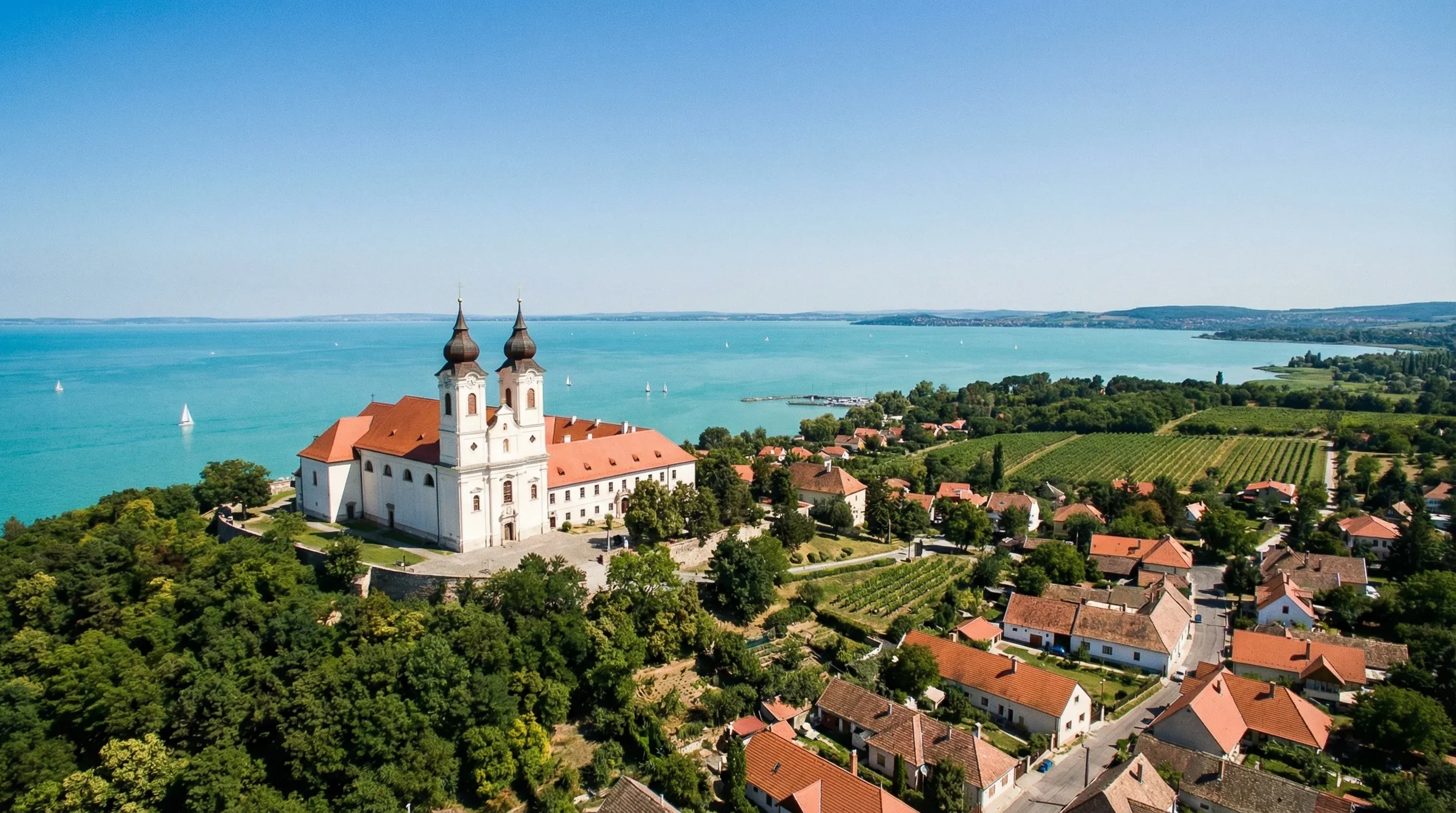
On the North Shore, the Tihany Peninsula is a must-see; kids love the echo point and the 'Levendula Ház' (Lavender House) visitor center. Nearby, the Tihany Benedictine Abbey offers sweeping views of the lake. Further west, the Tapolca Lake Cave allows families to row small boats through underground illuminated limestone tunnels—a magical experience. In Keszthely, the Festetics Palace has a carriage museum and a model railway exhibition that is a huge hit with children. For a unique swim, visit Lake Hévíz, the world's largest biologically active thermal lake, where you float among water lilies (though note the water is deep, so swim rings are essential).
Practical Advice
Summer (July-August) is peak season and can be crowded; book accommodation months in advance. Late June or early September offers great weather with fewer crowds. The South Shore is best for non-swimmers; the North Shore requires confidence in deep water or water wings. Storm warnings are taken seriously—if the storm lights flash on the shore, get out of the water immediately.
Food & Drink
Typical meal times: Beach buffets are open all day. Restaurants serve lunch 12:00 pm – 3:00 pm and dinner 6:00 pm – 9:30 pm.
Typical meal costs: Prices are higher near the water. A beach meal (fish & chips style) costs 3,000–5,000 HUF (approx. $8–14 USD / €7.50–12.50 EUR) per person. Sit-down dinner for a family: 30,000–45,000 HUF (approx. $80–125 USD / €75–115 EUR).
Dietary requirements: Beach food is often deep-fried and gluten-heavy. However, the 'Gasztro-revolution' at Balaton means many high-quality bistros now offer grilled fish, salads, and vegan options.
Signature dishes:
- Sült Hekk (Fried Hake) – Although not native to the lake, this breaded, deep-fried fish is the iconic beach meal, eaten with hands and white bread.
- Balaton Fish Soup – Similar to the southern version but often includes richer varieties of fish and pasta.
- Palacsinta – Hungarian crêpes sold at every beach stand, filled with cocoa, cottage cheese, or apricot jam.
Why this score?
Adventure is generally low-impact, consisting of sailing, lakeside cycling on the Balaton Bike Ring, and light hiking in the volcanic Balaton Uplands. The region is highly developed for mass tourism, prioritizing comfort and accessibility over rugged wilderness.
Why this score?
Medical facilities in the resort towns are well-accustomed to treating foreign tourists during the summer peak. The region is served by modern clinics and regional hospitals in Veszprém and Keszthely that offer reliable care for standard traveler needs.
Why this score?
Known as the 'Hungarian Sea,' it is a recognized European destination with heavy seasonal flows from Germany, Austria, and neighboring states. With 70 major attractions and a vast supply of holiday rentals, it is the country's secondary tourism engine after Budapest.

Balaton is the most expensive region in Hungary outside Budapest, especially in July/August. Waterfront hotels can charge premium Western European prices, often 60,000–100,000 HUF (approx. $165–275 USD / €150–250 EUR) per night. To save money, stay 2-3km inland from the lake or visit in June/September.

Getting Here & Around
Getting Here
- Driving – The M7 highway connects Budapest to the South Shore in about 1-1.5 hours. Traffic can be very heavy on Friday afternoons (outbound) and Sunday evenings (inbound).
- Train – Trains run along both shores. The South Shore line is faster; the North Shore line is slower but more scenic. The "Balaton 24" pass allows unlimited travel.
Getting Around
- Bicycle – The Balaton Bike Ring is a dedicated cycle path around the lake. It is flat and safe for families. Bikes can be rented in almost every town.
- Ferry – The ferry between Szántód and Tihany Peninsula transports cars and pedestrians, saving a huge drive around the lake.
- Local Train – Small "Dotto" tourist trains run in major towns like Balatonfüred and Siófok, connecting hotels to the beach.
No airports in this region. See the country flight map for nearby connections.
Official Links

Packing List
The lake bottom can be muddy/reedy (South) or stony (North); shoes prevent slips.
Essential culture; everyone drifts on floats for hours. Buying onsite is pricey.
Lakeside evenings can be buggy, especially near reed beds.
Strictly mandatory in the swimming lap pools at most thermal baths (like Széchenyi or Gellért).
Required for hygiene in thermal bath walkways; walking barefoot is often prohibited.
Ticks are common in Hungarian forests and the Buda Hills; handy for hiking families.
Towel rentals at baths can be expensive or low quality; bringing your own is cleaner and cheaper.

Activities & Best Times

Hiking, wildlife, outdoor exploration, ecotourism
The region offers immersive volcanic landscapes and the Balaton Uplands National Park, providing unique hiking and wildlife viewing. Peak summer is ideal for exploring the lake's ecosystems, while spring and autumn provide comfortable temperatures for trekking.

Urban tourism, museums, historical sites, architecture
Boasts high-quality cultural heritage including the Baroque Festetics Palace and the historic Tihany Abbey. Summer and early autumn offer a vibrant atmosphere and full access to galleries, while winter months see reduced visitor services and closures.

Sport tourism, fitness activities, active recreation
Home to the high-quality 200km Balaton Bike Ring and significant adventure parks like Zamárdi. Peak conditions for cycling and outdoor organized activities occur from late spring through early autumn, with infrastructure mostly closing in winter.

Spa retreats, wellness centers, peaceful getaways
Centred on the world-renowned Hévíz Thermal Lake and major thermal bath complexes like Zalakaros. While thermal waters are year-round, families typically visit during warmer months when outdoor lakeside facilities and parks are fully operational.

Scenic drives, countryside tours, route-based travel
The North Shore and Káli Basin offer scenic driving routes through vineyards and volcanic hills with lake views. Best visibility and lush countryside aesthetics are found between May and September, with winter months offering a starker, less appealing landscape.
Amusement parks, family entertainment venues
Features significant water and adventure parks such as Annagora and Zobori, which meet solid regional standards. These attractions are strictly seasonal, thriving in the warm summer months and closing or restricting access during the colder half of the year.

Learning experiences, scientific sites, historical education
Provides interesting geological and natural history at the Tapolca Lake Cave and Lavender House. While authentic, these sites are secondary to the region's main draws and lack the destination-level scale of major international educational hubs.

Events, celebrations, seasonal attractions
Driven primarily by the internationally recognized Balaton Sound electronic music festival in July. Beyond this major event, the region lacks a consistent calendar of festivals that would specifically attract global travelers over local residents.

Winter sports, ski resorts, snow activities
The Síaréna Vibe Park offers basic winter sports infrastructure for the region. It remains a marginal choice for international families compared to alpine resorts, with a very short and weather-dependent season.

Attractions (19 total)



Public Holidays & Calendar Next 12 months
Public holidays, festivals, cultural celebrations, and seasonal natural phenomena coming up in Lake Balaton over the next 12 months.
Loading holidays and events...

Travel Advisory
All major agencies agree that Hungary is a safe destination requiring only standard travel safety awareness and common sense precautions.
Safety Topics
Traveller Advice (3 groups)

While the capital is generally open, be aware of legislation that may restrict public displays of affection or the depiction of certain identities to minors. Some public rallies or marches may be subject to fines or facial recognition monitoring.

When visiting lakes, forests, or rural areas from spring to autumn, take precautions against ticks which can transmit encephalitis. Check for ticks immediately after outdoor activities.

Exercise caution in tourist districts and on public transport where pickpocketing is common. Avoid large political demonstrations in Budapest and verify menu prices in bars to avoid overcharging scams.
Agency Summaries
Maintain common sense vigilance. Be alert for petty crime on public transport and overcharging scams in nightlife venues. Note that the Australian Embassy in Budapest is closed; assistance is provided via Vienna.
No specific security warnings are in place. Travellers are advised to monitor local conditions and be aware of health risks such as tick-borne encephalitis in rural or wooded areas.
Travellers should maintain standard safety awareness. While Hungary is generally safe, seasonal spring flooding can occur along the Danube and Tisza rivers. Consular assistance for dual citizens may be limited.
Standard precautions are advised. Recent updates highlight specific legal regulations affecting LGBTQ+ public events and the implementation of the new European Entry-Exit System for border crossings.
General safety awareness is recommended. Travellers should stay informed about potential civil unrest in Budapest and maintain vigilance in public spaces due to the global threat of terrorism.
Hungary is classified as a safe destination. Visitors should practice typical safety habits, especially regarding petty theft in crowded Budapest tourist spots, and use only legitimate currency exchange offices.
Information is provided for general guidance only and does not constitute travel, safety, medical, or legal advice. Conditions may change. Users are responsible for independently verifying information before travel.