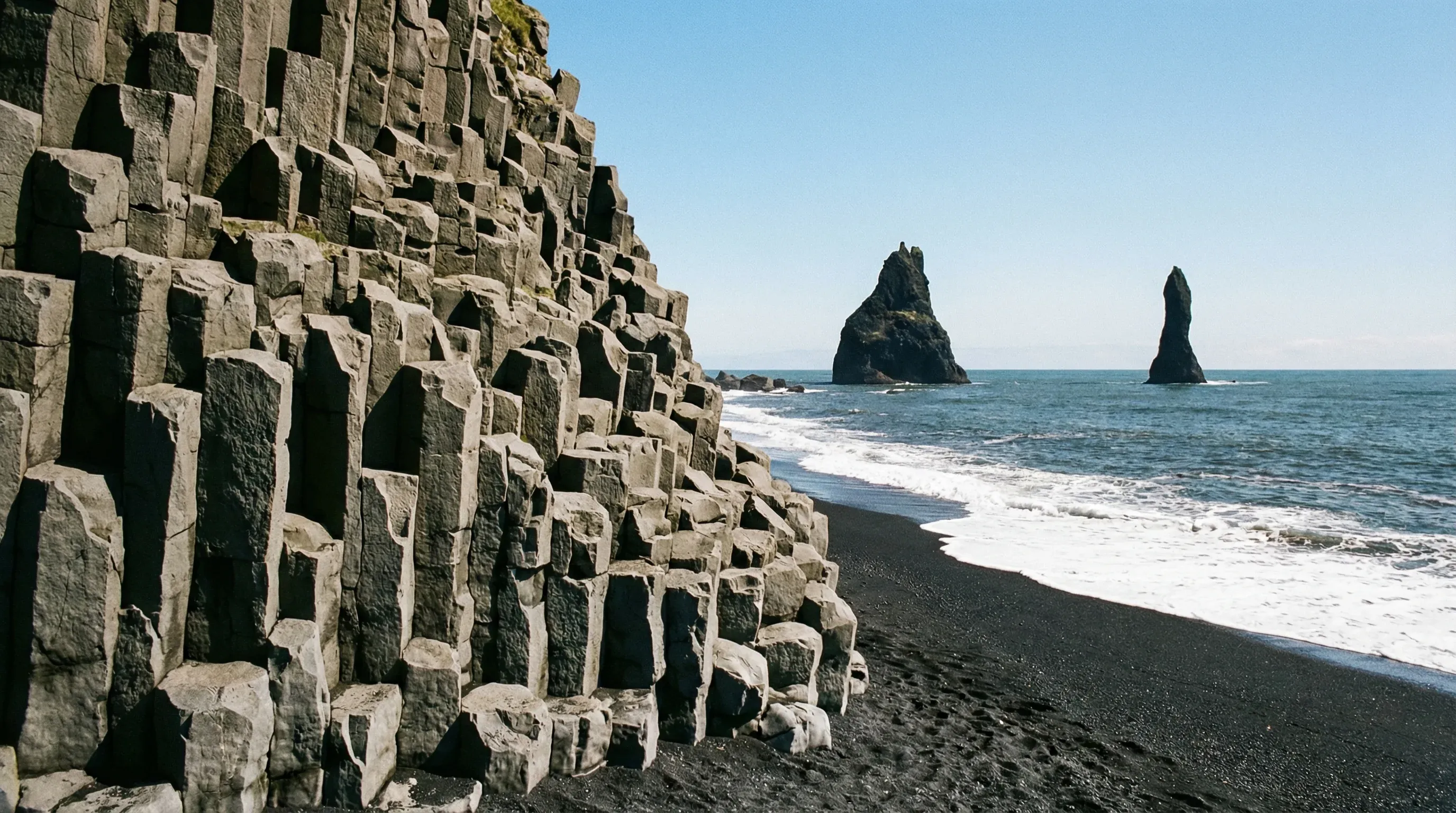

South Coast (waterfalls, glaciers, Vik)
The land of fire and ice: Waterfalls, black sands, and diamond beaches 🧊🌊
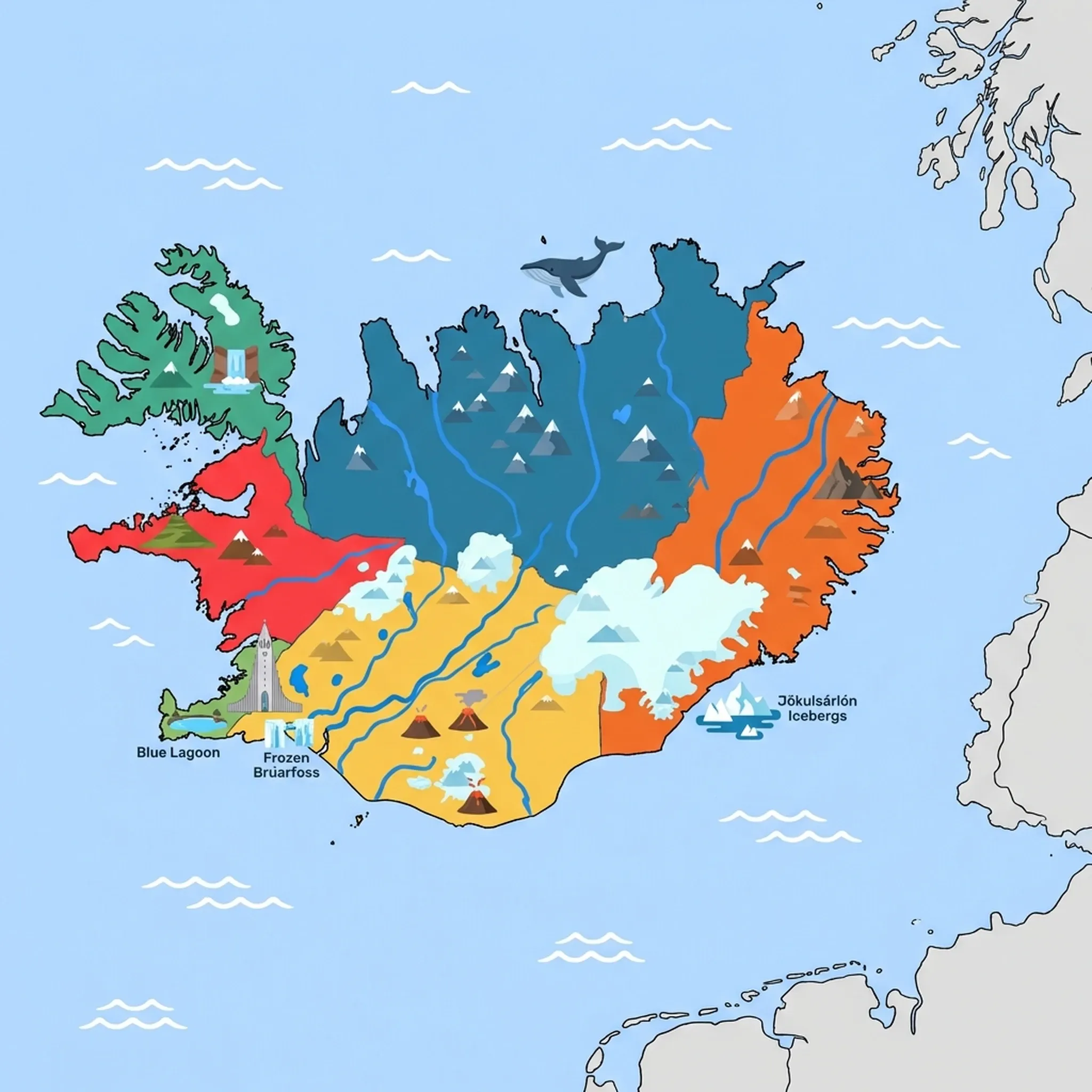
Click a region to explore
SAFETY WARNING: The South Coast is home to Reynisfjara Black Sand Beach, famous for "sneaker waves." These powerful waves can surge far up the beach unexpectedly, even on calm days. Never turn your back on the ocean and keep children well back from the waterline. Serious accidents happen here regularly.
The South Coast is the Iceland you have seen on Instagram and in movies. It is a linear wonderland along Route 1 (the Ring Road) where the scenery changes every 20 minutes from pastoral farms to thundering waterfalls, then to black desert sands and looming glacier tongues. For families, this is the most action-packed region. The sheer scale of nature here is humbling. You drive beneath the brooding volcano Hekla and the infamous Eyjafjallajökull, giving kids a real-sense of the country's volcanic power. It is accessible, paved, and serviced with plenty of stops, making it the most popular road trip in the country.
Because it is so popular, it can get crowded. However, the attractions are grand enough to handle the visitors. The experiences here are tactile and visceral: feeling the spray of Skógafoss on your face, crunching across the crystal blue ice of a glacier, or holding a chunk of ancient ice washed up on Diamond Beach. It is a region of contrasts, where green moss meets black sand and white ice. While the drive to the glacier lagoon is long (about 5 hours from Reykjavik), the route is so packed with sights that the journey itself is the attraction.
Key Attractions
Two major waterfalls define the western part of the coast. Seljalandsfoss is unique because (in summer) you can walk on a slippery path right behind the falling water—bring waterproofs! A short drive away is Skógafoss, a perfect curtain of water where you can walk right up to the spray or climb 500+ steps to the top for a view. Nearby, the Skógar Museum is excellent for showing kids how Icelanders lived in turf houses centuries ago.
Further east, near the village of Vík, lies Reynisfjara Black Sand Beach with its basalt column cave (Hálsanefshellir) that looks like a pipe organ carved from rock. The crown jewel of the south is Jökulsárlón Glacier Lagoon. Here, massive blue icebergs break off the Breiðamerkurjökull glacier and float in a deep lagoon. Families can take amphibian boat tours among the bergs, and across the road is the "Diamond Beach" where ice chunks glitter on the black sand.
Practical Advice
To beat the crowds, stay overnight in Vík or Kirkjubæjarklaustur rather than doing this as a day trip from Reykjavik. This allows you to visit major sights early in the morning or late evening. In winter, the wind can be ferocious; always check road conditions on Road.is.
Food & Drink
Typical meal times: Lunch 11:30 am to 2:00 pm. Dinner 6:00 pm to 8:30 pm. Options between Vík and Höfn are sparse, so grab food when you see it.
Typical meal costs: Very high due to remoteness. A burger/pizza in Vík costs 3,500–4,500 ISK (approx. $25–33 USD / €23–30 EUR). Soup is around 2,500 ISK (approx. $18 USD / €17 EUR).
Dietary requirements: Most roadside restaurants offer a veggie burger or soup. Vík has a large supermarket and decent restaurants catering to tourists with allergies, but options thin out further east.
Signature dishes:
- Arctic Char – Often farmed sustainably in the area, served pan-fried with potatoes.
- Soup in Bread Bowl – A tourist classic but perfect for the cold weather; usually meat or mexican-style tomato soup served in a hollowed-out loaf.
- Local Lamb – The sheep you see by the road? They are on the menu, and the free-range meat is incredibly tender.
Why this score?
The region provides a high level of outdoor recreation, from walking behind Seljalandsfoss to glacier hiking and exploring the Jökulsárlón lagoon. While the main sites are very accessible, the dynamic weather and proximity to active volcanoes and massive ice caps maintain a notable level of physical adventure.
Why this score?
Medical services are scattered and consist mostly of small clinics in towns like Vík and Selfoss, which can become overwhelmed during the peak tourist season. While emergency responders are highly skilled at wilderness rescue, the distance to a full-service hospital in Reykjavik is a significant factor.
Why this score?
The South Coast is a globally recognized destination famous for its black sand beaches and glacier lagoons, seeing massive international visitor traffic. It is arguably the most photographed part of Iceland, though it lacks the high-density urban infrastructure found in score 8 or 9 regions.

This is one of the most expensive regions. Accommodation is in extremely high demand; a basic room with shared bathroom can cost 30,000 ISK (approx. $220 USD / €200 EUR). Hotel rooms with private baths can exceed 60,000 ISK (approx. $440 USD / €400 EUR). Food at rest stops is pricey. Save money by buying snacks in Selfoss or Vík supermarkets (Krónan/Netto) before heading east.

Getting Here & Around
Getting Here
- Driving – The region is defined by The Ring Road (Route 1). Vík is 2.5 hours from Reykjavik; Jökulsárlón is 5 hours. The road is paved and well-maintained.
- Bus – Strætó bus 51 runs from Reykjavik to Vík and on to Jökulsárlón/Höfn, but it is infrequent (often once a day) and not ideal for sightseeing stops.
- Tours – Countless operators run bus and super-jeep tours from Reykjavik to this region.
Getting Around
- Car – Absolutely the best way to travel. It allows you to stop at the many unmarked waterfalls and viewpoints along The Ring Road (Route 1).
- Walking – Short walks are required from car parks to waterfalls. Skaftafell (Vatnajökull National Park) offers excellent marked hiking trails to glaciers like Svartifoss.
No airports in this region. See the country flight map for nearby connections.
Official Links

Packing List
Waterfalls like Skógafoss and Seljalandsfoss generate massive spray; you will get soaked without it.
Paths to waterfalls become sheer ice in winter; simple slip-on spikes prevent dangerous falls.
Protects your device from waterfall mist and blowing sand at Reynisfjara.
The wind at Vík and the Glacier Lagoon is freezing, even in summer.
Summer brings 24-hour daylight (Midnight Sun), making it very hard for children to sleep without total darkness.
Rain comes sideways, and waterfalls like Seljalandsfoss soak you completely. Jeans will stay wet and cold all day.
Icelandic tap water is pristine and free. Buying bottled water is considered a 'tourist tax' and unnecessary.
Essential for visiting natural hot springs or local swimming pools where towel rental can be expensive or unavailable.
The combination of strong winds and dry cold air chaps skin very quickly, especially on children's faces.
Pack this even in winter! You will visit geothermal pools, hot tubs, and lagoons constantly—it's a daily ritual.

Activities & Best Times

Hiking, wildlife, outdoor exploration, ecotourism
Home to iconic waterfalls and the Jökulsárlón glacier lagoon, this region offers world-class wilderness immersion and glacier exploration. Peak summer months provide the necessary daylight and safe trail conditions for families to explore the vast national parks.

Urban tourism, museums, historical sites, architecture
Features unique heritage sites like the Skógar Museum and Keldur turf houses alongside globally recognized landmarks like the Solheimasandur wreck. Summer offers the most vibrant atmosphere and reliable access to these culturally significant rural sites.

Sport tourism, fitness activities, active recreation
Boasts world-renowned trekking routes like the Fimmvörðuháls trail and organized glacier hiking in Skaftafell. The season is restricted to late summer when high-altitude infrastructure is fully accessible and weather conditions are stable enough for active sport.
Beach resorts, marine activities: diving, snorkelling, kite surfing, wind surfing, sailing
Offers world-unique coastal experiences at Reynisfjara and the Diamond Beach, though these are for exploration rather than swimming. Harsh winter storms and dangerous sneaker waves make coastal visits strictly a fair-weather activity for safety-conscious families.

Learning experiences, scientific sites, historical education
High-quality facilities like the LAVA Centre and the Beluga Whale Sanctuary offer world-class scientific engagement for children. These purpose-built indoor sites are excellent during the extended summer window when regional travel remains feasible.

Spa retreats, wellness centers, peaceful getaways
Features authentic geothermal bathing experiences such as the Secret Lagoon and Reykjadalur thermal river. While open year-round, the experience is most suitable for families when the surrounding climate allows for comfortable outdoor transitions.

Scenic drives, countryside tours, route-based travel
Includes the most scenic portion of the Ring Road with high-quality infrastructure connecting major waterfalls and coastal vistas. Summer travel is essential for families to ensure safe driving conditions and full visibility of the dramatic landscapes.

Attractions (20 total)



Public Holidays & Calendar Next 12 months
Public holidays, festivals, cultural celebrations, and seasonal natural phenomena coming up in South Coast (waterfalls, glaciers, Vik) over the next 12 months.
Loading holidays and events...

Travel Advisory
The country is considered safe for travel with no major security concerns. Standard personal safety awareness is recommended.
Safety Topics
Traveller Advice (5 groups)

Solo female travel is generally safe and common in Iceland; standard personal safety precautions are recommended.
Consult local resources like SafeTravel.is before embarking on outdoor activities. High-risk areas include active volcanic sites, glaciers, and unpredictable coastal waters where sneaker waves occur.

Iceland is a highly inclusive destination with extensive legal protections and social acceptance for LGBTQ+ individuals.
Accessibility is generally good in urban centers like Reykjavik, though natural sites and rural areas may present significant physical challenges.

Ensure your passport is valid for at least three to six months beyond your departure date. Be prepared for the new electronic entry systems when arriving from outside the Schengen zone.
Agency Summaries
Travel risk is low, but visitors should be cautious regarding natural phenomena. Particular attention is drawn to the potential for volcanic eruptions and extreme weather changes.
Irish citizens should observe standard safety measures. As there is no resident Irish embassy in Iceland, consular services are managed through the mission in Oslo, Norway.
Travellers are advised to maintain a standard level of safety awareness while visiting Iceland. Entry is governed by Schengen Area regulations, allowing short stays without a visa for Canadian citizens.
Iceland is generally safe for visitors. The Department suggests standard safety measures and staying informed about potential natural hazards through local news and authorities.
No specific travel restrictions are in place. Visitors should follow general safety practices and remain aware of weather conditions and local entry requirements for the Schengen Zone.
Standard precautions are sufficient for travel to Iceland. Authorities highlight the need to avoid active volcanic zones on the Reykjanes Peninsula and to prepare for the implementation of the new European Entry/Exit System.
Information is provided for general guidance only and does not constitute travel, safety, medical, or legal advice. Conditions may change. Users are responsible for independently verifying information before travel.