
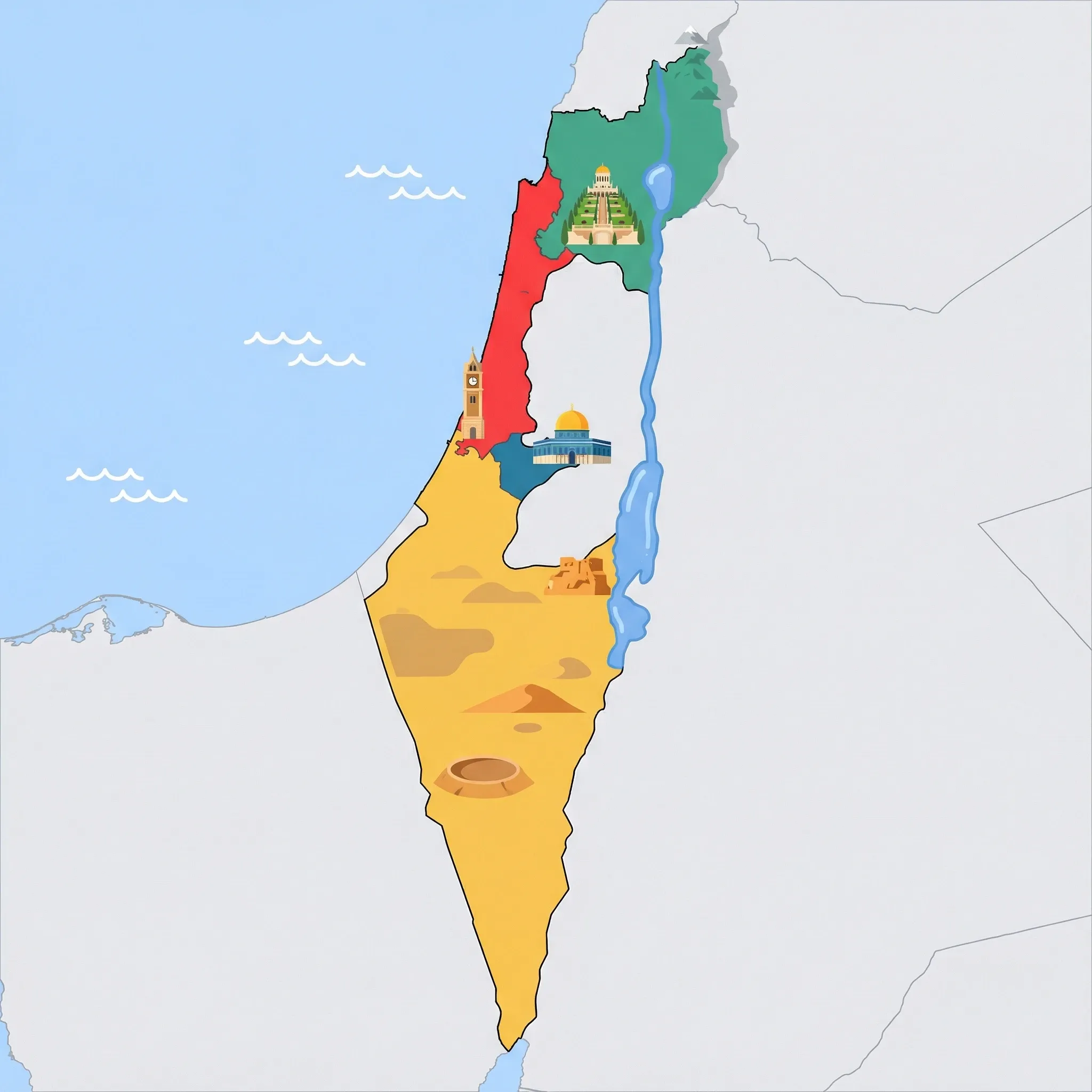
Click a region to explore
⚠️ SAFETY WARNING: Due to the risk of civil unrest, terrorism, and rocket fire, government agencies (including the USA, UK, and AU) advise travelers to reconsider travel to Jerusalem. Security can deteriorate rapidly, particularly in the Old City, East Jerusalem, and around the Temple Mount/Haram al-Sharif. Families are strongly urged to consult their own government's official travel advisory before considering a trip, as circumstances and risk assessments vary.
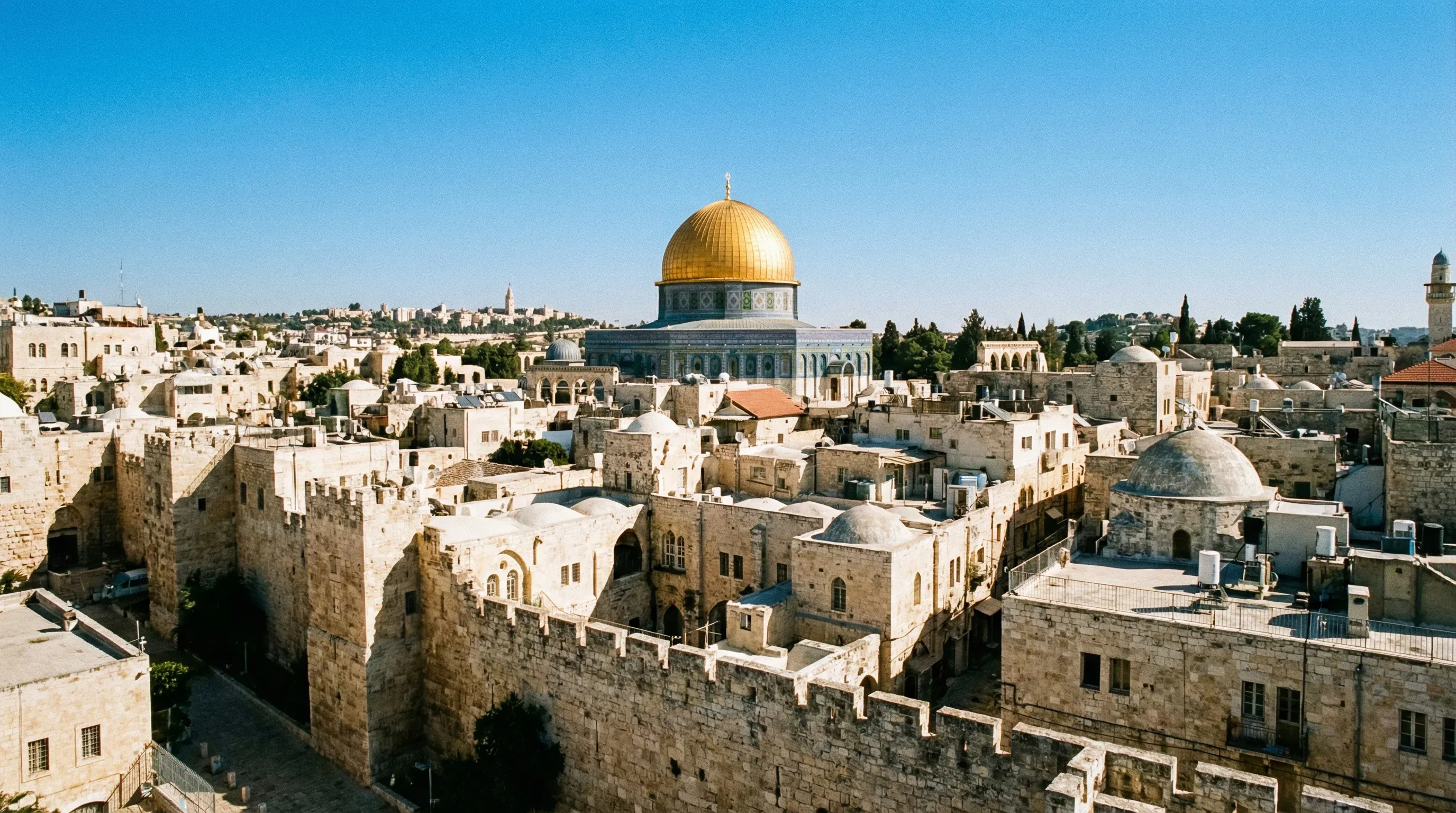
Jerusalem is one of the most intense, fascinating, and complex cities on Earth. For a family, it offers a living history lesson that no textbook can match. The air here feels different—charged with significance and the sound of church bells mixed with the muezzin's call to prayer. While the religious sites are the main draw for many, the city has developed a robust array of child-focused attractions that provide a break from the intensity of the holy sites. The climate is mountainous, meaning it is significantly cooler and less humid than the coast, with chilly evenings even in summer and occasional snow in winter.
Navigating Jerusalem with kids requires a bit of strategy. The Old City is a maze of cobblestones and stairs (tough for strollers), filled with markets (shuks) that overload the senses with spices, ceramics, and shouting vendors. Kids usually love the chaos of the market but may need quiet breaks. West Jerusalem offers modern amenities, pedestrian malls, and parks. The city is a unique blend of ancient traditions and modern innovation, where you can walk through a 2,000-year-old water tunnel in the morning and visit a cutting-edge science museum in the afternoon.
Key Attractions
Beyond the obvious religious landmarks, the Jerusalem Biblical Zoo is widely considered one of the best family days out in the country. It is beautifully landscaped, prioritizing animal welfare and biblical themes, and includes a "wet side" aquarium. For active kids, the Jerusalem Walls National Park offers the "Ramparts Walk," allowing you to safely hike along the top of the Old City walls for incredible views (note: not stroller friendly).
If the weather is too hot or cold, the Bloomfield Science Museum provides excellent hands-on exhibits that encourage touching and playing. For a calm escape from the city stone, the Jerusalem Botanical Gardens offers a tropical conservatory and a children's discovery path. Finally, the Israel Museum is home to the Dead Sea Scrolls but also features an expansive Art Garden and a dedicated Youth Wing with interactive workshops that make archaeology accessible to children.
Practical Advice
Best time to visit: Spring and Autumn are perfect. Summers are hot but bearable due to low humidity. Logistics: The city shuts down almost completely for Shabbat (Friday afternoon to Saturday evening). No public transport (buses/trains) runs, and most shops/restaurants close. Plan to be within walking distance of your hotel or pre-book taxis.
Food & Drink
Typical meal times: Lunch 12:00 pm to 3:00 pm. Dinner is lively, often starting around 7:00 pm and going late.
Typical meal costs: Sit-down meals are pricey, approx. 300–500 ILS (approx. $80–135 USD / €75–125 EUR) for a family of four. Market food is good value.
Dietary requirements: Extremely easy. "Kosher" laws mean meat and dairy are separated, and pork is rare in West Jerusalem. Vegan options are standard everywhere.
Signature dishes:
- Jerusalem Mixed Grill (Meorav Yerushalmi) – A hearty griddle-fried mix of chicken hearts, spleens, and liver with spices, served in a pita.
- Kugel – A traditional peppery noodle pudding (casserole) associated with Ashkenazi Jewish heritage, often sold in the Mahane Yehuda Market.
- Sabich – Originally Iraqi, this pita sandwich filled with fried eggplant, hard-boiled egg, potato, and amba (mango pickle) is a local favorite.
Why this score?
Tourism here is predominantly urban and focused on historical or religious sites within a dense metropolitan environment. The most adventurous activities typically involve subterranean archaeological tours like the City of David water tunnels, which offer a unique but managed physical challenge.
Why this score?
The city is home to the Hadassah Medical Center, an internationally renowned institution that frequently treats foreign dignitaries and tourists. Facilities are modern, highly specialized, and staffed by multilingual professionals who provide seamless care for international families.
Why this score?
As a global religious and historical epicenter, Jerusalem is the most recognizable destination in Israel and a bucket-list site for millions. Even during periods of lower inbound tourism, the Old City and its iconic landmarks maintain a significant international presence that dwarfs most other regional sites.

Jerusalem is expensive. Hotel rates are high year-round and skyrocket during Jewish holidays (Passover, Sukkot) and Christian holidays (Easter, Christmas). A standard hotel room is 800–1,500 ILS (approx. $210–400 USD / €200–375 EUR). Street food like falafel or bagels is cheap (20–40 ILS / $5–11 USD / €5–10 EUR), but sit-down restaurants charge premium tourist prices.

Getting Here & Around
Getting Here
- Train – The high-speed train from Tel Aviv Ben Gurion Airport to Jerusalem (Yitzhak Navon Station) takes only 25 minutes and is comfortable and scenic.
- Bus – Frequent buses (Lines 405 and 480) connect Tel Aviv to the Jerusalem Central Bus Station.
- Driving – Highway 1 ascends from the coast to the mountains. Traffic entering the city in the morning and leaving in the evening is very heavy.
Getting Around
- Light Rail – The most efficient way to move through the city center, connecting the Central Bus Station, Mahane Yehuda Market, and the Old City of Jerusalem (Damascus Gate).
- Walking – The best way to see the Old City, though the stones are slippery and uneven. Be prepared for many stairs.
- Taxi/Ride-hailing – Gett (app) is widely used. Standard taxis are available but ensure they use the meter ("moneh").
No airports in this region. See the country flight map for nearby connections.
Official Links

Packing List
The Jerusalem stone used in Old City paving is ancient and polished smooth, becoming extremely slippery.
Required for women and girls to cover shoulders/knees instantly when entering churches or holy sites.
The Old City is full of stairs and narrow cobbled streets that are a nightmare for strollers.
Jerusalem is mountainous; evenings get surprisingly chilly and windy even after hot days.
Essential for women and girls to cover shoulders/knees instantly when entering holy sites.
Dead Sea salt crystals are razor-sharp and can cut feet; Eilat beaches are also rocky.
Useful for sun protection and respecting local norms at more conservative beaches or springs.
Old City Jerusalem is full of stairs and cobblestones where strollers are impossible to use.
Summer heat is intense; a wet cooling towel is a lifesaver for children hiking or walking.
The high salinity of the Dead Sea can sting sensitive skin; aloe helps soothe it immediately.

Activities & Best Times

Urban tourism, museums, historical sites, architecture
A globally peerless destination for heritage, featuring the Old City, Western Wall, and the Israel Museum. Peak demand centers on major religious and cultural festivals in spring and autumn; summer is busy but hot, while winter brings cold, rainy conditions.

Hiking, wildlife, outdoor exploration, ecotourism
Jerusalem offers unique nature experiences including the world-renowned Biblical Zoo and scenic trails through the Judean Hills. Peak months provide mild temperatures and blooming landscapes, while summer heat and winter rains can significantly diminish the outdoor experience.

Sport tourism, fitness activities, active recreation
Jerusalem features established active infrastructure including the Jerusalem Trail and the Jerusalem Zipline for adventurous families. Activity levels peak during the mild spring and autumn months, as summer heat makes strenuous activity difficult.

Learning experiences, scientific sites, historical education
Home to world-class facilities like the Bloomfield Science Museum and Gottesman Family Israel Aquarium, which serve as destination-level learning centers. These indoor attractions are most comfortable during the peak spring and autumn tourism windows.

Scenic drives, countryside tours, route-based travel
Offers iconic scenic drives through the Judean Mountains and the dramatic descent to the Dead Sea. Driving conditions are optimal in the clear, mild months of spring and autumn; winter rains and summer desert heat present significant challenges.

Amusement parks, family entertainment venues
Features high-quality family venues such as Mini Israel and the indoor Magic Kass theme park. Peak visitation aligns with international and domestic school holiday windows when facilities are fully operational and family demand is high.

Events, celebrations, seasonal attractions
Hosts internationally significant religious and cultural events like the Holy Fire Ceremony and the Jerusalem March. Suitability is highly concentrated around the specific dates of these world-class ceremonies in spring and autumn.

Attractions (23 total)



Public Holidays & Calendar Next 12 months
Public holidays, festivals, cultural celebrations, and seasonal natural phenomena coming up in Jerusalem over the next 12 months.
Loading holidays and events...

Travel Advisory
The vast majority of international agencies now advise against all travel to Israel due to active armed conflict, regular military operations, and a highly unstable security situation. Most governments have raised their warnings to the maximum possible level, urging those already in the country to seek immediate shelter and prepare for evacuation as soon as commercial or safe land routes are available.
Safety Topics
Traveller Advice (3 groups)

Operational safety is severely compromised in border areas and Gaza. Coordination with military authorities is essential, but even with clearance, risks of falling debris and active combat are extremely high.

Ensure you have a secondary power source for communication and keep a stock of essential medications and emergency food supplies. Identify the nearest reinforced or underground shelter immediately upon arrival if you are already in the country.

Extreme vigilance is required when operating near military infrastructure or border zones. Conventional press markings may not provide protection in areas of active missile fire or drone activity.
Agency Summaries
British authorities strongly discourage any travel to the region as regional tensions and military actions pose significant risks. UK nationals currently present are advised to shelter in place and stay informed through local media regarding evacuation routes and commercial flight availability.
Australia has implemented its maximum travel warning, citing armed conflict and the potential for rapid security deterioration. Citizens should prioritize personal safety, find underground shelter if sirens sound, and monitor the National Emergency Portal for immediate safety updates.
United States officials recommend that citizens re-evaluate plans to visit because of civil unrest and the threat of terrorism. There is a higher 'Do Not Travel' warning for Gaza and specific border regions. Personnel have limited movement within the country due to unpredictable security incidents.
The Canadian government has raised its warning to the highest level, advising citizens to avoid all visits due to active military operations and the volatile security environment. Canadians on the ground are urged to stay in secure locations and prepare to depart when commercial options become viable.
New Zealand has designated the entire region as a 'Do Not Travel' zone due to the heightened risk of military strikes and unpredictable violence. Travelers are warned that standard insurance often fails to cover incidents arising from active warfare or civil unrest in these areas.
Ireland advises against all travel to the area following recent regional escalations and missile strikes. Irish citizens in the country should minimize all movement, stay away from military sites, and register with the embassy immediately to receive crisis updates.
Information is provided for general guidance only and does not constitute travel, safety, medical, or legal advice. Conditions may change. Users are responsible for independently verifying information before travel.