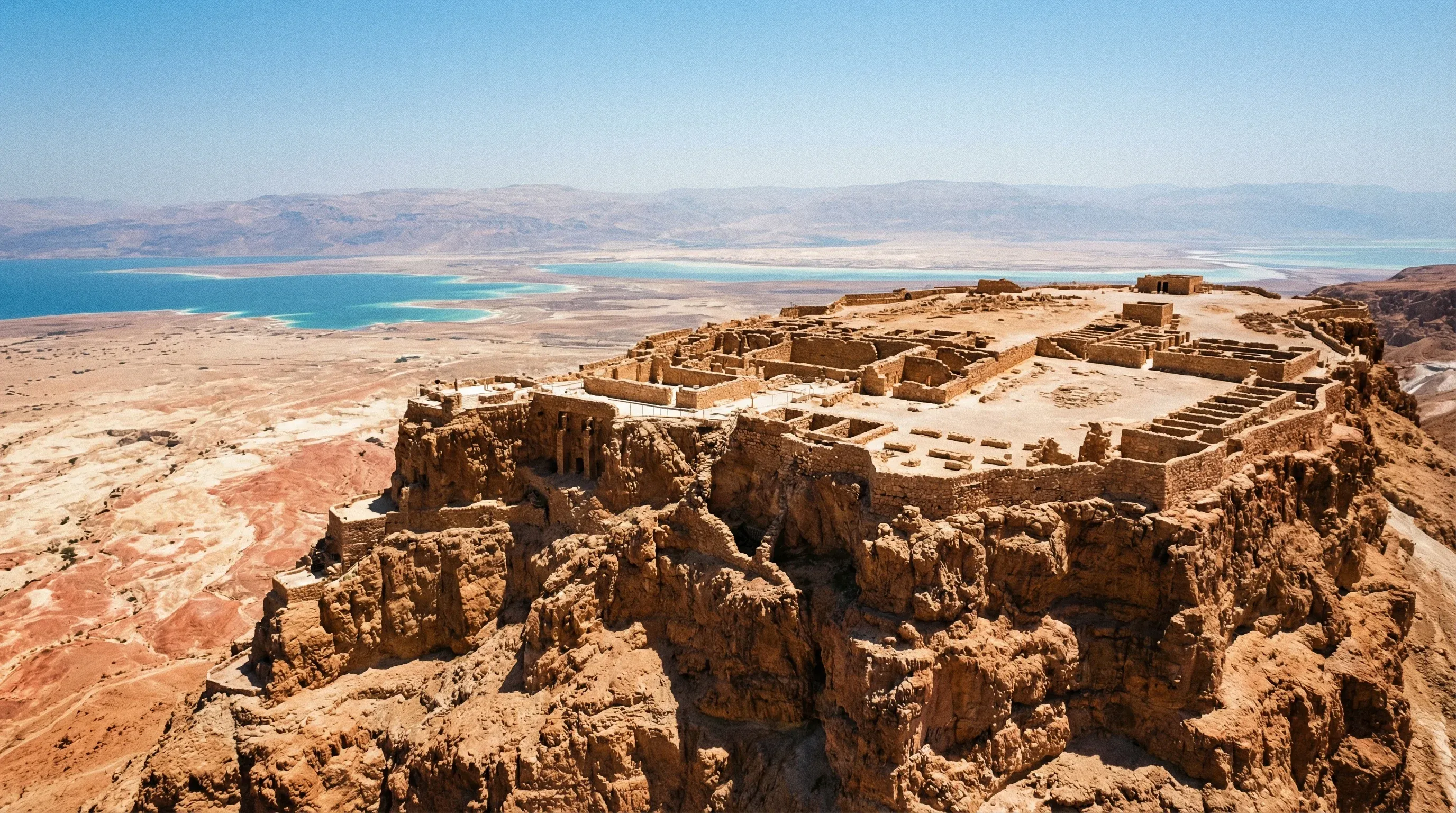

Southern Israel (Negev, Dead Sea & Eilat)
Desert stars, floating waters, and coral reefs 🐪🐠☀️
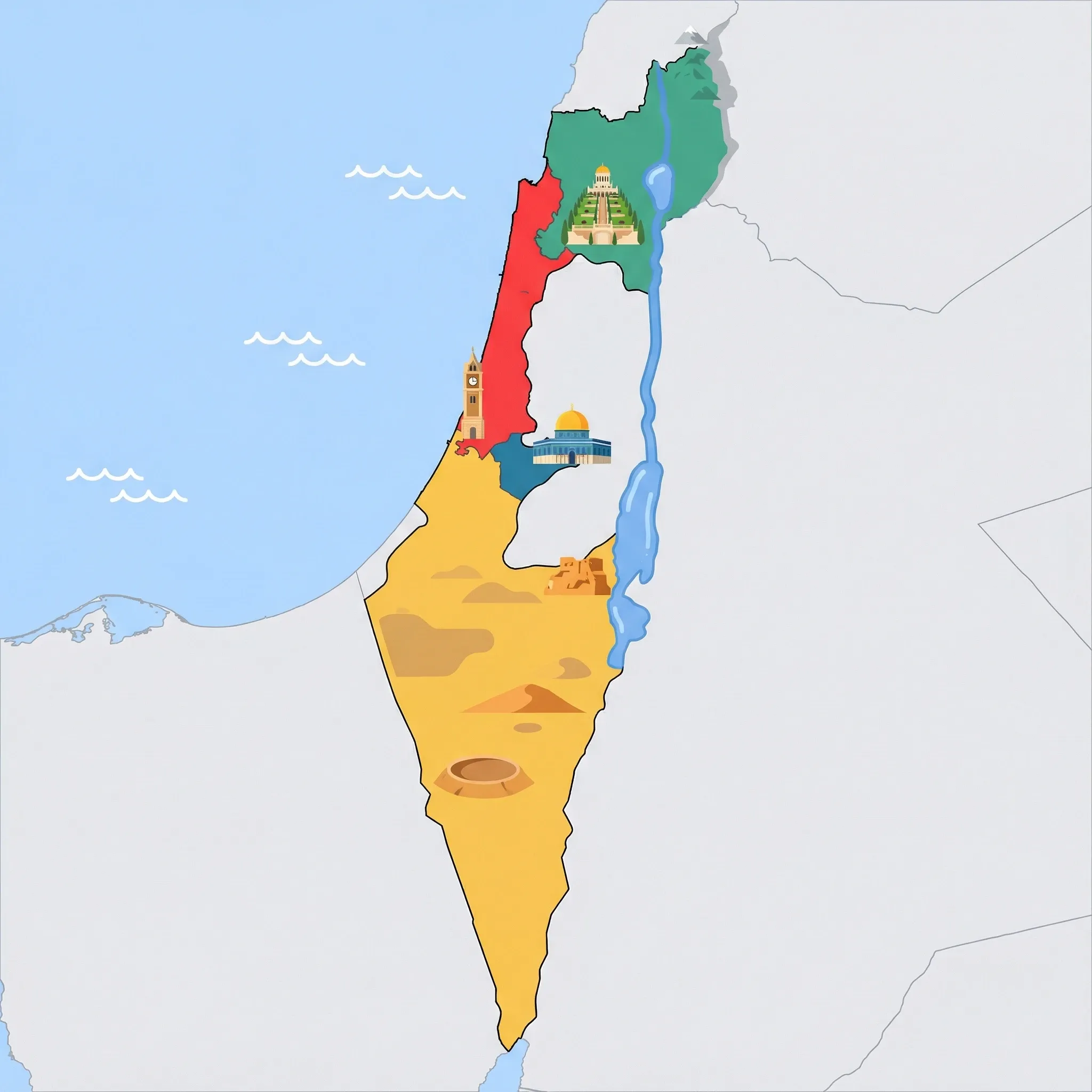
Click a region to explore
⚠️ SAFETY WARNING: Government agencies (including the USA, UK, and CA) advise travelers to reconsider travel to Southern Israel and strictly avoid areas near the Gaza border. While the Dead Sea and Eilat are generally considered safer and remain popular tourist destinations, the security situation in the broader region can be unpredictable. Travelers should avoid the Western Negev and any area within 40km of Gaza. Families are strongly urged to consult their own government's official travel advisory before considering a trip.
Southern Israel is a land of extremes that fascinates children: it contains the lowest point on earth (the Dead Sea), vast craters that look like the moon, and the vibrant coral reefs of the Red Sea. This region covers more than half the country's landmass but is sparsely populated, offering a sense of space and silence that is rare elsewhere. For families, the South is split into two main experiences: the geological wonders of the Negev/Dead Sea and the classic resort vacation in Eilat. The desert landscape is starkly beautiful, with colors shifting from yellow to red to purple at sunset.
The climate here is harsh. Summers are scorching hot, making outdoor hiking dangerous during midday, while winters are mild and sunny—perfect for European families escaping the cold. The Dead Sea offers a unique physics lesson where you cannot sink, though the salt water stings cuts and eyes (caution with toddlers!). Eilat, at the southern tip, is a tax-free resort city focused entirely on tourism, offering snorkeling, ice skating in malls, and endless hotel pools. It serves as the gateway to the Red Sea's underwater world, which is accessible even to non-swimmers via observatories.
Key Attractions
In Eilat, the Dolphin Reef Eilat is magical; unlike a zoo, the dolphins live in open sea nets and interact with humans on their own terms. Nearby, the Coral World Underwater Observatory allows you to descend into the sea without getting wet, perfect for small children. In the desert highlands, the Alpaca Farm near Mitzpe Ramon allows kids to hand-feed llamas and alpacas and even stay overnight in the herd's paddock area.
For nature lovers, the Ein Gedi Botanical Garden and the adjacent reserve offer a miraculous sight: waterfalls and ibex (desert goats) thriving in the middle of a barren landscape. A dip in the Dead Sea is mandatory; Ein Bokek Beach is the most developed and family-friendly spot with showers and lifeguards. Driving down Route 90: Dead Sea Scenic Highway itself is an attraction, with the landscape changing dramatically as you descend below sea level.
Practical Advice
Best time to visit: October to April. Avoid July/August unless you plan to stay in the pool/AC. Logistics: Distances are long. Always carry twice as much water as you think you need. Flash floods are a real danger in desert wadis during rain—never hike when rain is forecast upstream.
Food & Drink
Typical meal times: Resort hotels in Eilat run on standard tourist times (Lunch 1:00 pm–3:00 pm). Desert areas have fewer options, so plan ahead.
Typical meal costs: Eilat is VAT-free (17% cheaper), but tourist markup absorbs the savings. Meals cost 60–100 ILS (approx. $16–27 USD / €15–25 EUR) per person.
Dietary requirements: Eilat hotels are famous for massive kosher buffets with endless options for every diet.
Signature dishes:
- Bedouin Tea and Flatbread – In the Negev, many tents offer hospitality featuring sweet sage tea and bread baked on a convex metal dome (Saj).
- Arava Peppers – The desert Arava region grows some of the world's best sweet peppers, often served fresh in salads.
- Hotel Israeli Breakfast – Eilat hotels are renowned for their breakfasts: a massive spread of cheeses, salads, fish, eggs, and pastries.
Why this score?
This region offers the country's most rugged and wild landscapes, including the massive Ramon Crater and the jagged Eilat Mountains. Families can engage in significant desert adventures such as sandboarding, multi-day trekking on the Israel National Trail, or scuba diving in the Red Sea.
Why this score?
Quality care is available in Beersheba (Soroka) and Eilat (Josephtal), but the vast desert expanses in between have very limited medical infrastructure. While the main hospital hubs are excellent, the significant travel times required for emergency services in remote desert areas lower the overall score.
Why this score?
The Dead Sea is a world-unique attraction that draws significant international crowds, while Eilat serves as a major resort destination for European sun-seekers. The Negev attracts a smaller but consistent niche of desert travelers, contributing to a diverse and robust tourism ecosystem in the south.

Costs vary wildly. Camping in the Negev is budget-friendly (50–80 ILS / approx. $13–21 USD / €12–20 EUR per person). Eilat hotels are expensive, especially in summer and holidays (1,200+ ILS / approx. $320 USD / €300 EUR per night). The Dead Sea hotels are also premium priced. Food in roadhouses is expensive; pack snacks.

Getting Here & Around
Getting Here
- Airports – Ramon Airport (ETM) serves Eilat and the southern Negev, located about 20 minutes north of Eilat. Flights from Tel Aviv take 45 minutes.
- Driving – The drive from Tel Aviv to Eilat takes 4–5 hours via Route 90: Dead Sea Scenic Highway or Route 40. It is a scenic but long drive.
- Bus – Comfortable, WiFi-equipped buses run frequently from Tel Aviv and Jerusalem to Eilat (must reserve seats in advance).
Getting Around
- Car – Essential for the Negev and Dead Sea areas (e.g., reaching Alpaca Farm or trailheads).
- Taxi – In Eilat, taxis are cheap and plentiful; no car is needed if you just stay in the resort area.
- Bus – Local buses in Eilat are good, but buses in the open desert are too infrequent for touring.
No airports in this region. See the country flight map for nearby connections.
Official Links

Packing List
Salt water in the Dead Sea causes intense pain if splashed in eyes; goggles protect kids.
Dead Sea mud and high mineral content can discolor or ruin expensive swimwear.
Dehydration happens fast in the Negev; carrying bottles is often not enough for hikes.
The desert sun is stronger than it feels due to dry air; burns happen quickly.
Essential for women and girls to cover shoulders/knees instantly when entering holy sites.
Dead Sea salt crystals are razor-sharp and can cut feet; Eilat beaches are also rocky.
Useful for sun protection and respecting local norms at more conservative beaches or springs.
Old City Jerusalem is full of stairs and cobblestones where strollers are impossible to use.
Summer heat is intense; a wet cooling towel is a lifesaver for children hiking or walking.

Activities & Best Times

Hiking, wildlife, outdoor exploration, ecotourism
The Negev features unique erosion craters (Makhteshim) and Timna Park's dramatic desert geology, providing internationally significant hiking and wildlife experiences. Extreme desert temperatures and flash flood risks make late spring through early autumn unsuitable for wilderness immersion.

Beach resorts, marine activities: diving, snorkelling, kite surfing, wind surfing, sailing
Eilat offers world-class Red Sea diving with coral reef access comparable to Sharm el-Sheikh. While not Caribbean-level 'excellent', it exceeds standard 'good' beach destinations and warrants 'very_good' rating.

Urban tourism, museums, historical sites, architecture
Features a blend of modern Israeli art in Be'er Sheva and Arad alongside iconic desert landmarks and heritage sites. The living culture of the desert is best explored in spring and autumn, as the peak summer heat severely limits urban exploration and walking tours.

Sport tourism, fitness activities, active recreation
The region offers world-class desert cycling and trekking infrastructure, including segments of the Israel National Trail. Active pursuits are restricted to cooler months to avoid the severe medical risks associated with high-intensity exercise in the arid summer climate.

Learning experiences, scientific sites, historical education
Internationally significant facilities like the Carasso Science Park and Mitzpe Ramon Visitor Center offer deep engagement with desert ecology and space science. These facilities remain accessible year-round, though the overall travel experience is degraded by peak summer heat.

Spa retreats, wellness centers, peaceful getaways
The Dead Sea is a globally unique wellness destination known for mineral-rich mud and hyper-saline waters with therapeutic properties. In summer, the sea water becomes uncomfortably hot and the ambient temperature makes outdoor relaxation and spa treatments difficult.

Scenic drives, countryside tours, route-based travel
Iconic routes like the Route 90 Dead Sea highway and Route 40 through the Ramon Crater offer spectacular desert vistas. Travel is best in transitional months when visibility is high and vehicle occupants can comfortably exit at scenic lookouts without extreme heat.
Amusement parks, family entertainment venues
Eilat hosts several high-quality attractions including the Coral World Underwater Observatory and U Splash water park. Peak visits align with Israeli school holidays and pleasant weather, while winter is often too cool for outdoor aquatic centers.

Attractions (19 total)



Public Holidays & Calendar Next 12 months
Public holidays, festivals, cultural celebrations, and seasonal natural phenomena coming up in Southern Israel (Negev, Dead Sea & Eilat) over the next 12 months.
Loading holidays and events...

Travel Advisory
The vast majority of international agencies now advise against all travel to Israel due to active armed conflict, regular military operations, and a highly unstable security situation. Most governments have raised their warnings to the maximum possible level, urging those already in the country to seek immediate shelter and prepare for evacuation as soon as commercial or safe land routes are available.
Safety Topics
Traveller Advice (3 groups)

Operational safety is severely compromised in border areas and Gaza. Coordination with military authorities is essential, but even with clearance, risks of falling debris and active combat are extremely high.

Ensure you have a secondary power source for communication and keep a stock of essential medications and emergency food supplies. Identify the nearest reinforced or underground shelter immediately upon arrival if you are already in the country.

Extreme vigilance is required when operating near military infrastructure or border zones. Conventional press markings may not provide protection in areas of active missile fire or drone activity.
Agency Summaries
British authorities strongly discourage any travel to the region as regional tensions and military actions pose significant risks. UK nationals currently present are advised to shelter in place and stay informed through local media regarding evacuation routes and commercial flight availability.
Australia has implemented its maximum travel warning, citing armed conflict and the potential for rapid security deterioration. Citizens should prioritize personal safety, find underground shelter if sirens sound, and monitor the National Emergency Portal for immediate safety updates.
United States officials recommend that citizens re-evaluate plans to visit because of civil unrest and the threat of terrorism. There is a higher 'Do Not Travel' warning for Gaza and specific border regions. Personnel have limited movement within the country due to unpredictable security incidents.
The Canadian government has raised its warning to the highest level, advising citizens to avoid all visits due to active military operations and the volatile security environment. Canadians on the ground are urged to stay in secure locations and prepare to depart when commercial options become viable.
New Zealand has designated the entire region as a 'Do Not Travel' zone due to the heightened risk of military strikes and unpredictable violence. Travelers are warned that standard insurance often fails to cover incidents arising from active warfare or civil unrest in these areas.
Ireland advises against all travel to the area following recent regional escalations and missile strikes. Irish citizens in the country should minimize all movement, stay away from military sites, and register with the embassy immediately to receive crisis updates.
Information is provided for general guidance only and does not constitute travel, safety, medical, or legal advice. Conditions may change. Users are responsible for independently verifying information before travel.