
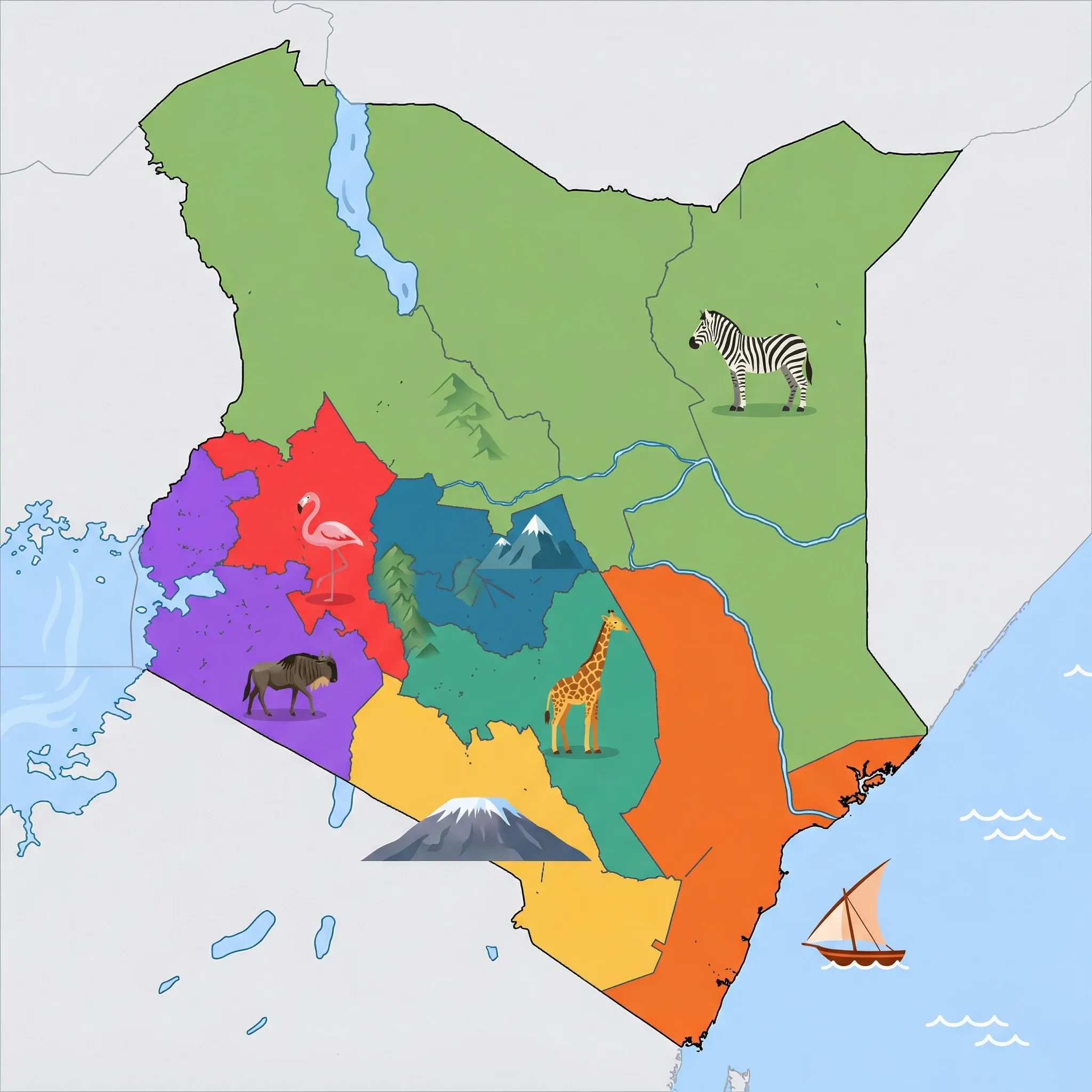
Click a region to explore
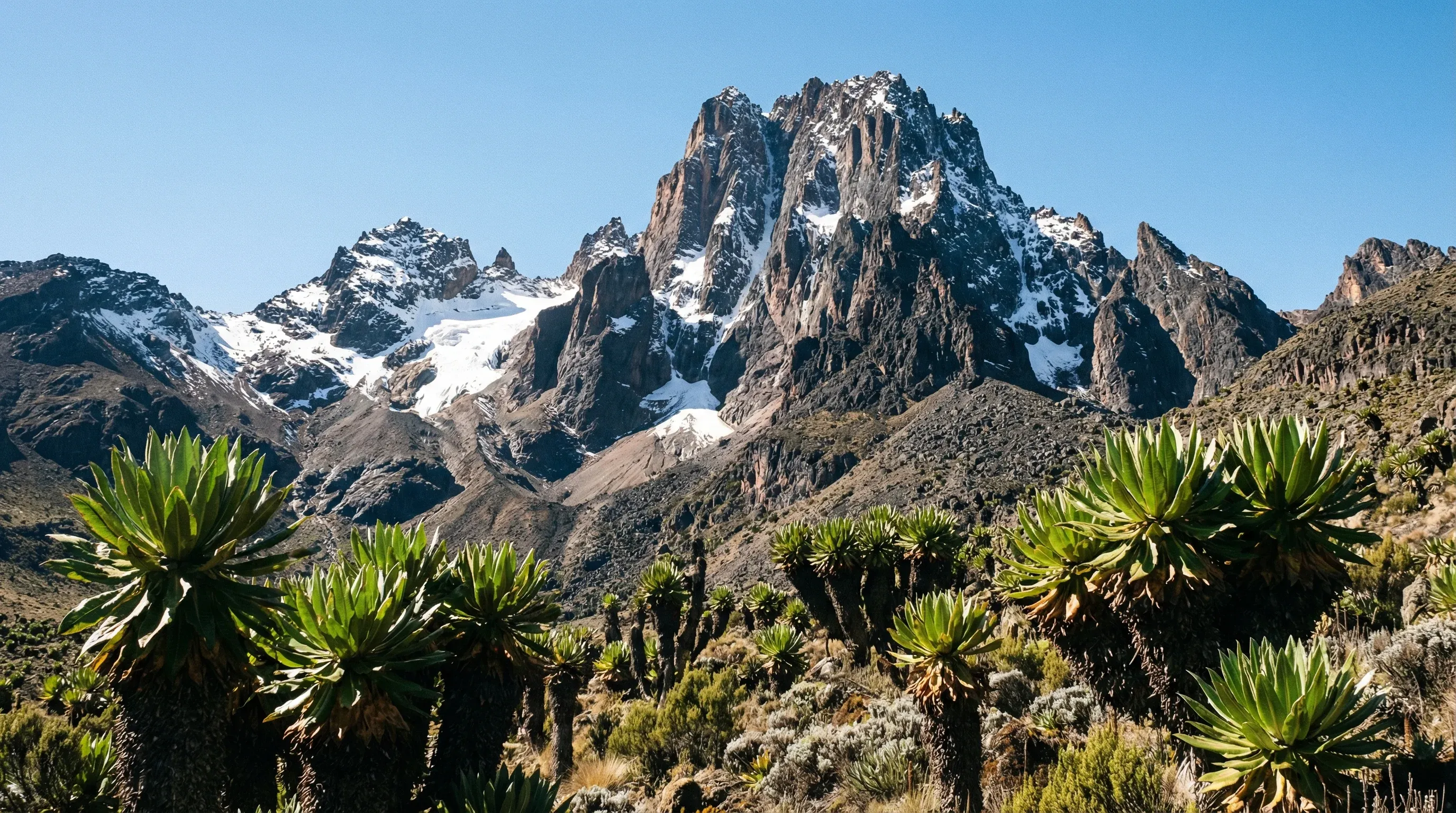
Dominating the skyline of central Kenya, Mount Kenya is the country's highest peak and a UNESCO World Heritage site. But you don't need to be a mountaineer to enjoy this region. For families, the Laikipia plateau and the foothills of the mountain offer some of the most exclusive and interactive wildlife experiences in East Africa. The climate here is cooler and fresher than the coast or the low-lying savannahs, making it very comfortable for active kids. The landscape is a mix of high-altitude moorland, bamboo forests, and open ranch land.
This area is pioneering the "conservancy model" of tourism, where cattle ranching coexists with wildlife conservation. This means families can often participate in unique activities unavailable in national parks, such as lion tracking with researchers, visiting anti-poaching dog units, or horse riding among zebras. It feels less like a tourist circuit and more like a working landscape where wildlife thrives. Nanyuki, the main town, sits right on the Equator, providing a fun photo opportunity where you can hop between the northern and southern hemispheres.
Key Attractions
Ol Pejeta Conservancy is arguably the most family-friendly wildlife destination in Kenya. It is home to the last two northern white rhinos on Earth and hosts a Chimpanzee Sanctuary (the only place in Kenya to see chimps). The educational value here is immense.
Mount Kenya National Park offers day hikes to the lower slopes and caves that are manageable for older children. Aberdare National Park is different again—a dense forest where you can stay in "tree hotels" overlooking salt licks, watching elephants emerge from the mist right beneath your balcony.
Practical Advice
Nights are genuinely cold here; some lodges even have fireplaces in the rooms. Pack layers. The altitude (mostly over 2,000m) ensures it is malaria-free or very low risk, which is a significant relief for parents.
Food & Drink
Typical meal times: Standard hotel times apply. Breakfast 7:00 am to 9:00 am, Lunch 12:30 pm to 2:00 pm, Dinner 7:00 pm to 9:00 pm.
Typical meal costs: Lunch at a Nanyuki cafe or restaurant costs KES 1,500–3,000 (approx. $11–23 USD / €10–21 EUR) per person.
Dietary requirements: Excellent. This is a farming region, so fresh dairy, beef, and vegetables are abundant and high quality.
Signature dishes:
- Mountain Trout – Fresh rainbow trout from the cold mountain streams, usually grilled with butter and almonds.
- Mukimo – A hearty mash of potatoes, pumpkin leaves, corn, and beans—a central Kenyan staple that is pure comfort food.
- Kenyan Stew – Beef or goat slow-cooked with potatoes, carrots, and coriander, perfect for the chilly mountain evenings.
Why this score?
Climbing Africa's second-highest peak and exploring the moorlands of the Aberdares offers a significant physical challenge and a sense of isolation. The terrain is steep, cold, and rugged, presenting risks like altitude sickness and wildlife encounters in dense forests. It is an excellent region for families looking for an active, highland-style adventure beyond the standard safari.
Why this score?
The town of Nanyuki serves as a hub for the region and has better-than-average medical clinics, partly due to the presence of the British Army Training Unit Kenya (BATUK). While these facilities can stabilize patients, they are not equipped for advanced medical interventions. Mountain rescue operations on Mount Kenya are organized but can be delayed by weather and terrain.
Why this score?
This region attracts a more specialized group of tourists, including high-altitude trekkers, climbers, and conservation enthusiasts visiting Ol Pejeta. It lacks the mass-market appeal of the coastal beaches or the 'Big Five' fame of the Masai Mara, resulting in lower visitor numbers. Much of the tourism is concentrated in high-end private conservancies or around the town of Nanyuki.

Laikipia is famous for ultra-luxury private villas, but Nanyuki and Ol Pejeta offer accessible mid-range camps. Expect to pay KES 25,000–50,000 (approx. $190–380 USD / €175–350 EUR) per night for a family tent/room. Conservancy fees are around $90–110 USD per adult.

Getting Here & Around
Getting Here
- Driving – An easy, paved 3–4 hour drive from Nairobi via the Thika Superhighway to Nanyuki.
- Airports – Nanyuki Civil Airstrip is the main hub, with daily scheduled flights from Nairobi Wilson.
Getting Around
- Car – Necessary for reaching the conservancies. Roads around Nanyuki are good, but 4x4 is needed inside Ol Pejeta Conservancy or Aberdare National Park.
- Walking – Unlike the Mara, walking safaris are common and safe in the private conservancies here.
No airports in this region. See the country flight map for nearby connections.
Official Links

Packing List
Nights on the slopes of Mount Kenya are cold; lodges often provide hot water bottles.
Mountain weather is unpredictable and showers can occur even in dry seasons.
If planning any walking safaris or forest hikes, sturdy footwear is required.
Small safari planes strictly forbid hard-shell suitcases; bags must be squashed into tight holds.
Safari vehicles are open-sided; fine dust covers everything during game drives.
Avoid dark blue and black which attract painful tsetse flies, and bright white which scares animals.
Many eco-lodges run on solar or generators that turn off at night; essential for bathroom trips.
Single-use plastic bottles are strictly banned in all National Parks and forests.
Animals can be distant; having their own pair keeps kids engaged and prevents arguments.

Activities & Best Times

Hiking, wildlife, outdoor exploration, ecotourism
Offers world-class high-altitude trekking on Mount Kenya and elite private conservancy safaris in Laikipia, home to unique species like the Grevy's zebra. Dry seasons provide optimal wildlife viewing and clear mountain vistas, while heavy rains in April-May and November significantly degrade trail conditions.

Sport tourism, fitness activities, active recreation
Features iconic mountaineering routes and internationally recognized adventure parks like The Forest and Ngare Ndare. Peak months offer the dry, stable conditions required for technical climbing and forest activities, whereas the wet seasons make high-altitude routes dangerous.

Urban tourism, museums, historical sites, architecture
Centred on the colonial history of Nanyuki and the global heritage of the scouting movement at Baden-Powell's grave. The experience is best during dry months for walking tours, though the cultural sites remain authentic and accessible outside of the heaviest rain periods.

Learning experiences, scientific sites, historical education
Home to globally significant conservation research at Ol Pejeta and the Mount Kenya Wildlife Conservancy. These facilities offer exceptional learning opportunities regarding rhino conservation, with the best accessibility occurring during the region's dry windows.

Scenic drives, countryside tours, route-based travel
The Mount Kenya Ring Road and Aberdare Scenic Pass offer spectacular high-altitude driving with diverse ecosystem transitions. Peak months ensure clear visibility of the peaks and safe passage on unpaved sections which can become impassable during the long rains.

Amusement parks, family entertainment venues
Chaka Ranch provides a solid regional family entertainment experience with high-quality facilities for the area. It is most popular during international and local school holiday peaks, though it does not reach the scale of global 'destination' theme parks.




Public Holidays & Calendar Next 12 months
Public holidays, festivals, cultural celebrations, and seasonal natural phenomena coming up in Mount Kenya region over the next 12 months.
Loading holidays and events...

Travel Advisory
All major global agencies maintain that travel to Kenya requires increased vigilance. While the country is open to tourism, there are persistent threats from terrorism and violent crime. Several agencies escalate their warnings to 'Reconsider Travel' or 'Do Not Travel' for specific regions, particularly those bordering Somalia, South Sudan, and Ethiopia, as well as certain high-crime neighborhoods in Nairobi.
Safety Topics
Traveller Advice (4 groups)

Female travellers should be cautious about travelling alone, particularly in the evening. Sexual assault risks exist in crowded city areas and some beach resorts.

Visitors should avoid displaying high-value items, limit road travel after dark, and use only trusted transportation services. It is essential to monitor local news for updates on security alerts and avoid any areas where large crowds or protests are gathering.

Staff from international organizations are advised that they may be specifically targeted for kidnapping by extremist groups in northeastern counties. Strict organizational security protocols and coordination with local authorities are highly recommended.

Sexual acts between same-sex individuals are illegal and can lead to imprisonment. Given conservative social attitudes, discretion is advised to avoid harassment or legal complications.
Agency Summaries
While general travel is possible, the government warns of a heightened terror threat. Strict 'no-travel' zones exist for areas bordering Somalia and parts of the northern coast.
Citizens are encouraged to maintain high awareness of their surroundings due to political instability, potential for demonstrations, and local security concerns.
Heightened safety risks from terrorism and crime exceed what is typical for New Zealanders. Specific urban neighborhoods and border regions are designated as higher risk.
Travellers should be extremely vigilant due to the pervasive threat of terrorism and high rates of violent crime across the nation.
Increased safety precautions are necessary throughout the country due to the danger of extremist violence and street crime. Regional restrictions apply to volatile border zones.
Vigilance is required because of criminal activity, the risk of terrorist attacks, kidnapping, and periodic civil unrest. Specific border regions carry significantly higher danger.
Information is provided for general guidance only and does not constitute travel, safety, medical, or legal advice. Conditions may change. Users are responsible for independently verifying information before travel.