
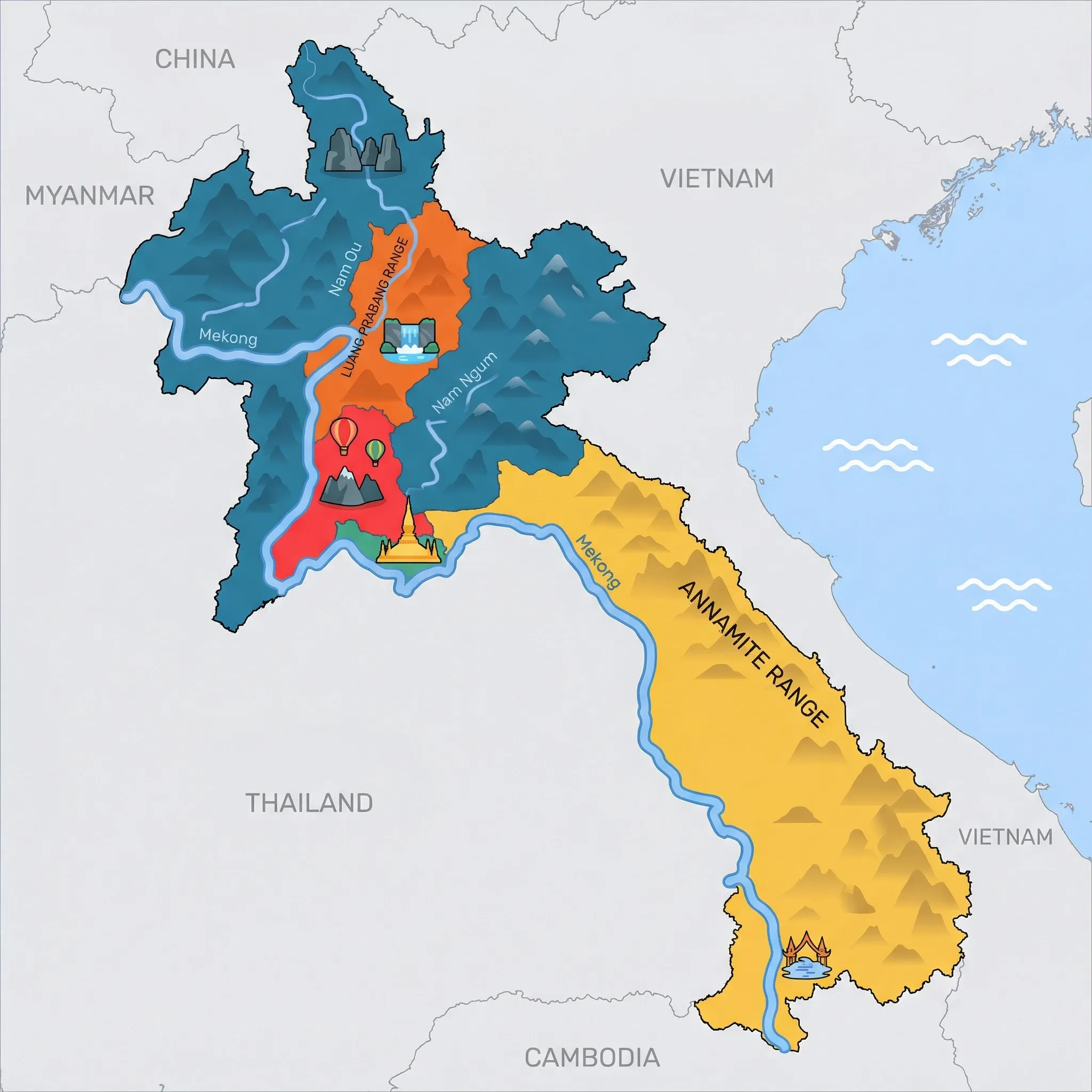
Click a region to explore
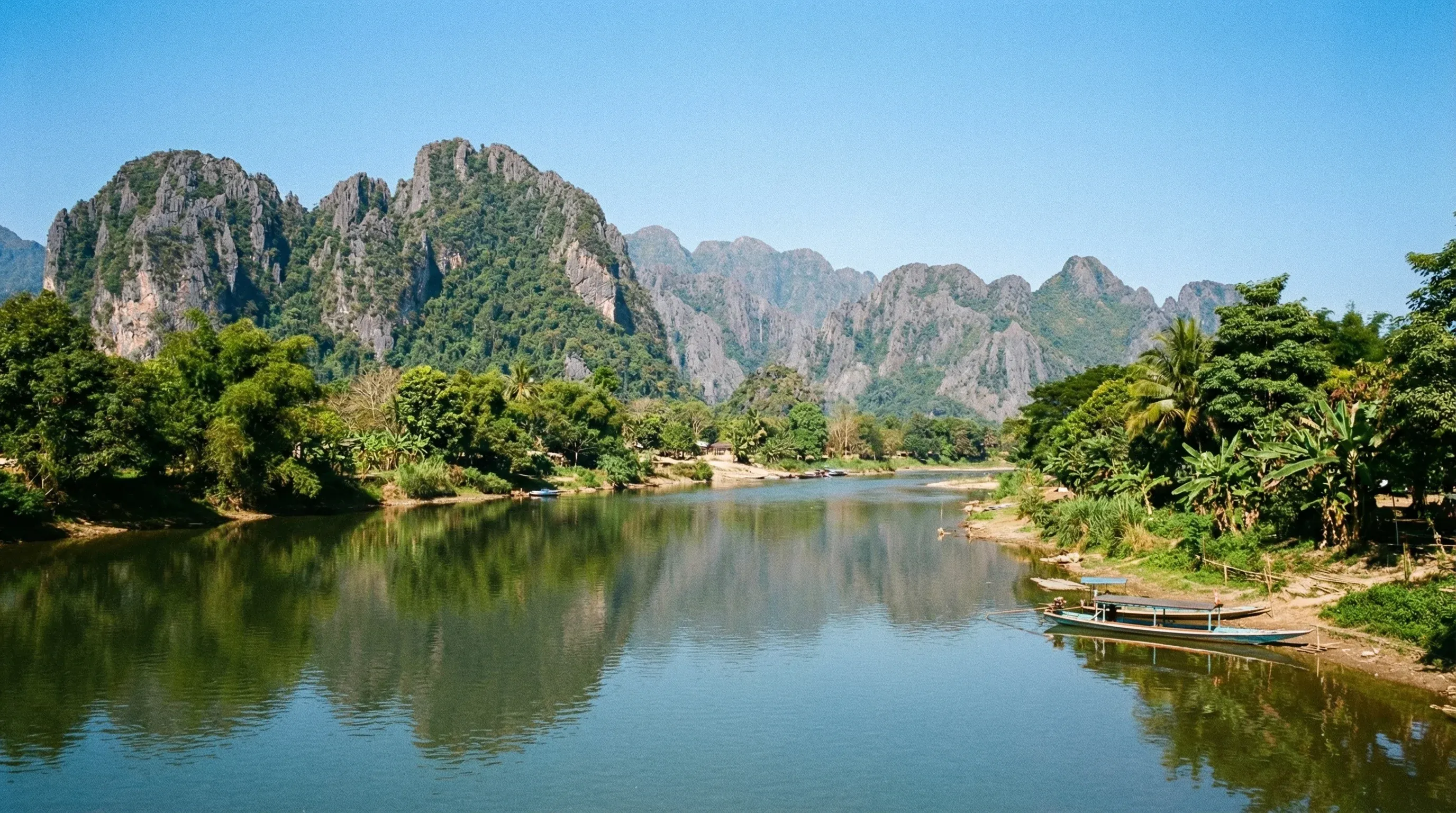
Vang Vieng is the adventure capital of Laos, set against a backdrop of breathtaking limestone karsts that jut abruptly out of rice paddies. For years, it had a reputation as a wild party town, but a government cleanup has successfully rebranded it as an eco-tourism and family destination. Today, it is arguably the most fun region for active children and teenagers. The scenery is surreal—like a traditional Chinese painting come to life. The town sits on the banks of the Nam Song River, which serves as the central artery for activities. The atmosphere is energetic but laid back, with plenty of cafes and restaurants catering to international tastes.
Families can spend days exploring the countryside. The famous "Blue Lagoons"—natural turquoise swimming holes fed by mountain springs—are a huge hit with kids, featuring rope swings and trees to jump from. While some lagoons can get busy, there are several to choose from, with the further ones offering more peace. Beyond swimming, the area is famous for buggies (off-road karts) which you can rent to drive along dusty village roads, exploring caves and viewpoints. Vang Vieng is also one of the cheapest places in the world to ride a hot air balloon, offering a magical sunrise experience over the misty mountains that is safe and unforgettable for the whole family.
Key Attractions
The Nam Song River is the star attraction. Renting a kayak for a guided downstream paddle is a must; the current is generally gentle, making it suitable for beginners and children. You will drift past towering cliffs and riverside gardens. For swimming, Blue Lagoon 1 is the most famous (and crowded), located right next to Tham Phu Kham Cave, which contains a reclining Buddha. For a quieter experience, head to Blue Lagoon 3, which has bamboo rafts and zip lines.
Hot air ballooning here is iconic. Seeing the karst landscape from above at sunrise provides a perspective you can't get anywhere else. On the ground, renting a dune buggy allows families to explore the dirt tracks leading to remote villages like Ban Pha Tang independently, turning the transit into an adventure.
Practical Advice
The dry season (November to March) is best for outdoor activities. In the rainy season, the river can become brown and faster-flowing, and lagoon water may lose its blue clarity. Roads to the lagoons are unpaved and dusty—bring sunglasses and a scarf/buff to cover your face when driving buggies. Sun protection is critical on the river.
Food & Drink
Typical meal times: All day dining is common here due to the tourist influx. Lunch 11:30 am to 2:30 pm, Dinner 6:00 pm to 9:30 pm.
Typical meal costs: Budget options are everywhere. Sandwiches and pancakes cost ₭30,000–50,000 (approx. $1.35–2.25 USD / €1.25–2.10 EUR). Restaurant meals are ₭100,000–200,000 (approx. $4.50–9.00 USD / €4.15–8.30 EUR).
Dietary requirements: Very accommodating. You will find pizza, pasta, and burgers alongside Lao food. Vegan and vegetarian options are abundant.
Signature dishes:
- Lao Baguettes (Khao Jee) – A legacy of the French, these massive sandwiches are filled with paté, pork, cucumber, and chili sauce. A cheap, filling lunch.
- Roti Pancakes – Street stalls sell these crispy, fried pancakes filled with banana, chocolate, or condensed milk. A favorite sugar hit for kids.
- Luang Prabang Sausage – Often found here too, a fatty, herbal pork sausage perfect with sticky rice.
Why this score?
The area is an outdoor playground centered on river activities, cave exploration, and paramotoring over the limestone peaks. While it offers high-adrenaline activities, the proximity of these sites to the town and the availability of guided tours lower the threshold for physical challenge.
Why this score?
Healthcare in Vang Vieng is limited to small clinics and basic provincial facilities that are best suited for minor injuries sustained during outdoor activities. Serious trauma or illness would necessitate a several-hour drive to the capital, Vientiane, for more reliable care.
Why this score?
Once a notorious backpacker party town, Vang Vieng has transitioned into a recognized outdoor recreation hub with a steady flow of international and domestic visitors. Its iconic karst landscape is widely photographed, though it lacks the mass-market scale of major global resort destinations.

Vang Vieng offers great value. A nice hotel with a pool facing the mountains costs ₭800,000–1,500,000 (approx. $36–68 USD / €33–62 EUR). Kayaking tours are around ₭250,000 (approx. $11 USD / €10 EUR) per person. Lagoon entry is cheap, approx ₭20,000 ($0.90 USD).

Getting Here & Around
Getting Here
- Train – The high-speed Laos-China Railway connects Vientiane to Vang Vieng in just 1 hour. It's fast, comfortable, and scenic.
- Bus/Minivan – The toll expressway has reduced driving time from Vientiane to approx. 1.5–2 hours. From Luang Prabang, the new road takes about 4–5 hours.
- Private Taxi – A flexible option allowing stops for photos along the spectacular Route 13.
Getting Around
- Dune Buggy / UTV – The most popular way for families to reach the Blue Lagoons. They are loud and dusty but fun.
- Bicycle/E-bike – Good for exploring the town and closer attractions, though the roads to lagoons are bumpy.
- Songthaew – Shared trucks can be hired privately to take the whole family to specific lagoons if you don't want to drive.
No airports in this region. See the country flight map for nearby connections.

Packing List
Riverbeds and lagoon floors can be rocky and slippery; flip-flops will float away.
Essential for kayaking and tubing; you will get wet.
Roads to the Blue Lagoons are extremely dusty; you need face protection in buggies.
Sun is intense on the river and sunscreen washes off quickly.
Visa-on-arrival fees require immaculate banknotes; torn or old bills are frequently rejected.
You will remove shoes constantly for temples and some guesthouses; laces become frustrating.
Roads between towns are incredibly winding and mountainous if you aren't taking the train.
Public restrooms rarely provide paper; keeping a supply in your day bag is essential.
Essential for keeping phones/cameras dry during boat trips, kayaking, or tubing.
Street lighting can be dim or non-existent in rural areas and cave entrances.

Activities & Best Times

Hiking, wildlife, outdoor exploration, ecotourism
Vang Vieng has impressive karst scenery and caves, but 'excellent' should be reserved for globally premier nature destinations. The landscape is regionally significant but not at the level of Halong Bay, Guilin, or Torres del Paine.

Sport tourism, fitness activities, active recreation
A major international hub for outdoor sports like rock climbing, kayaking, and rural cycling through spectacular karst valleys. These active pursuits are best enjoyed during the cool, dry season; extreme spring heat and heavy summer rains reduce the safety and quality of most activities.

Urban tourism, museums, historical sites, architecture
Vang Vieng is primarily an adventure tourism town. While it has temples and riverfront character, it doesn't have the cultural depth to justify 'very_good' on international standards. This rating should be reserved for places with UNESCO sites or major cultural institutions.

Scenic drives, countryside tours, route-based travel
The region features legendary scenic routes, including mountain passes towards Luang Prabang that offer breathtaking vistas of northern Laos. Winter provides the safest driving conditions and highest visibility, while the heavy monsoon season brings substantial risks of mudslides and road closures.

Amusement parks, family entertainment venues
Vang Vieng Inter Park offers local-scale water-based entertainment primarily for domestic visitors, lacking the world-class infrastructure of global theme parks. Peak visitation occurs during the hottest months of March and April, though heavy monsoon rains make the outdoor facilities unappealing for the rest of the year.

Attractions (5 total)



Public Holidays & Calendar Next 12 months
Public holidays, festivals, cultural celebrations, and seasonal natural phenomena coming up in Vang Vieng over the next 12 months.
Loading holidays and events...

Travel Advisory
The majority of international agencies suggest standard safety awareness for Laos, though several recommend elevated caution due to specific security incidents and significant health risks like methanol poisoning. Severe regional warnings are in place for Xaisomboun and Bokeo provinces.
Safety Topics
Traveller Advice (2 groups)

Travellers should be extremely cautious when consuming alcohol, particularly spirit-based cocktails or locally distilled drinks. Awareness of methanol poisoning symptoms is essential, and visitors should avoid unlit areas or travelling alone at night.

Female visitors are advised to dress conservatively to respect local customs and remain vigilant against harassment, particularly when using taxis or travelling independently.
Agency Summaries
Visitors are advised to remain alert, particularly regarding personal safety and harassment risks. The government recommends avoiding Xaisomboun Province and provides warnings about methanol poisoning from local spirits.
While the overall advisory is at the lowest level, travellers must be extremely careful with alcoholic beverages following fatal methanol poisoning cases. High caution is required in Bokeo and Xaisomboun provinces.
Standard safety measures are generally sufficient, though specific regional risks exist. Significant concerns include methanol poisoning in tourist drinks and the ongoing threat of unexploded ordnance in rural districts.
Travellers should remain highly vigilant due to risks associated with crime, banditry, and hazardous unexploded munitions. Specific regions like Xaisomboun and border areas in Bokeo are under stricter warnings to avoid non-essential travel.
Standard travel awareness is advised, with a focus on preventing petty theft and bag snatching, which tend to increase during local festivals and in major tourist hubs.
Increased vigilance is recommended nationwide due to civil unrest. Travellers are advised to reconsider visits to Xaisomboun Province because of violence and should be wary of unexploded ordnance in rural areas.
Information is provided for general guidance only and does not constitute travel, safety, medical, or legal advice. Conditions may change. Users are responsible for independently verifying information before travel.