
Beirut
A resilient city of culture, history, and Mediterranean soul 🌊🏙️
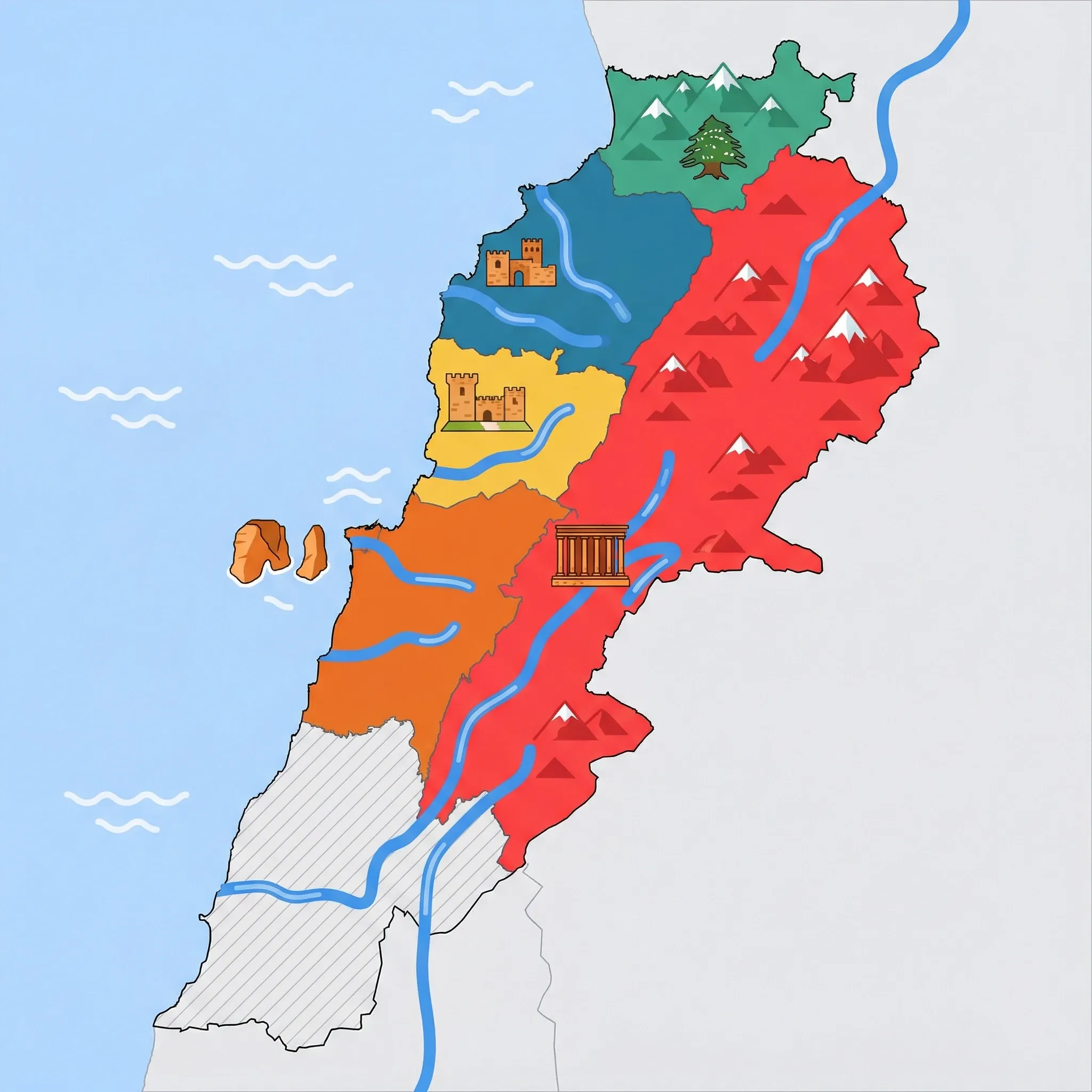
Click a region to explore
⚠️ SAFETY WARNING: Due to political volatility, the risk of civil unrest, and potential military conflict, government agencies (including the CA, USA, UK, AU, IE, and NZ) advise travelers to reconsider travel to Beirut. The security situation can change rapidly, particularly in the southern suburbs and near government buildings. Families are strongly urged to consult their own government's official travel advisory before considering a trip, as circumstances and risk assessments vary.
Beirut is a city that defies easy categorization, a place where the scars of the past sit side-by-side with a vibrant, unyielding zest for life. For families who choose to visit, the city offers a sensory education unlike any other. It is a bustling metropolis where the call to prayer blends with church bells and the honking of traffic, creating a soundscape that is uniquely Lebanese. The city is geographically compact, hugging the Mediterranean coastline, which provides a welcome breeze and a scenic backdrop to the urban density. Culturally, it is the meeting point of East and West, meaning you can find traditional souks selling spices next to modern malls and French-style patisseries.
For children, the chaos of Beirut can be an adventure if managed well. The streets are alive with energy, and the local hospitality towards children is heartwarming; don't be surprised if shopkeepers offer your little ones sweets or if waiters go out of their way to entertain them. While the city lacks the manicured playgrounds of Europe, it makes up for it with rich historical narratives and spontaneous interactions. The waterfront areas provide space to run and breathe, while the museums are surprisingly world-class, offering interactive and visually stunning exhibits that captivate young minds. It is a city that teaches resilience and history, offering families a chance to discuss civilizations ranging from the Phoenicians to the Ottomans, all within a few square miles.
Key Attractions
Despite the urban density, Beirut holds several gems that are perfect for a family itinerary. A must-visit is the MIM Museum, a private collection of minerals that is arguably one of the best in the world. The interactive screens and the sheer, vibrant colors of the crystals—resembling kryptonite and hidden treasures—mesmerize children and adults alike. It is a quiet, air-conditioned haven that feels like entering a jewel box. Afterward, head to the National Museum of Beirut. This is not a stuffy, dusty museum; its layout is accessible, and the sarcophagi and Phoenician statues are imposing enough to capture a child's imagination without overwhelming them. The short documentary shown there explains the museum's survival during the civil war, adding a poignant layer for older children and parents.
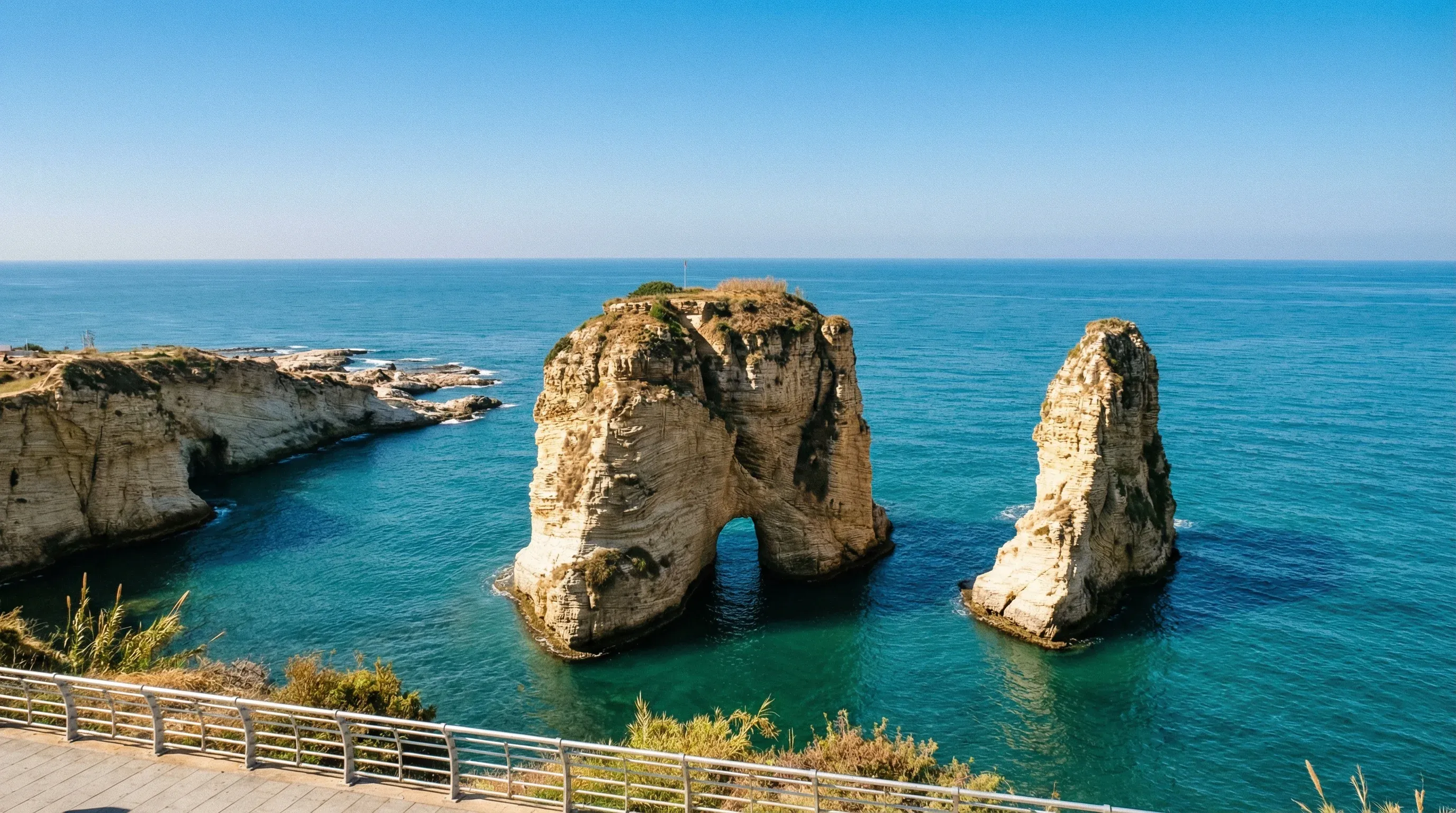
For outdoor time, the Beirut Corniche is the city's living room. It is a wide, seaside promenade perfect for pushing a stroller or letting kids stretch their legs. As you walk towards the Raouche neighborhood, you will encounter the iconic Pigeon Rocks (Raouche). These massive natural rock arches rise dramatically from the sea. Families can take a boat tour around and through the arches, a thrilling short excursion that offers a different perspective of the city from the water. Finally, a walk through Beirut Central District allows you to see the restored architecture and the ancient Roman baths, providing a history lesson in the open air.
Practical Advice
Best time to visit: Spring (April–May) and Autumn (September–October) offer the most pleasant temperatures for walking. Summer can be humid, and August is often very hot. Winter is mild but can be rainy.
Logistics: Pavements in Beirut can be uneven, high, or non-existent, making strollers difficult to use outside the Corniche and Downtown areas. A baby carrier is often more practical. Electricity cuts are common; ensure your accommodation has a generator (most hotels do).
Food & Drink
Typical meal times: Lebanese culture runs late. Lunch is typically 1:00 pm to 3:30 pm. Dinner is rarely served before 8:30 pm, with many families eating at 9:00 pm or later.
Typical meal costs: A mid-range meal for a family of four costs approximately LBP 3,600,000–5,400,000 (approx. $40–60 USD / €37–55 EUR). Street food is much cheaper.
Dietary requirements: Excellent for vegetarians and vegans. The "mezze" style of eating includes many naturally plant-based dishes like hummus, tabbouleh, and vine leaves. Gluten-free bread is becoming available in supermarkets but is rare in restaurants; however, many mezze dishes are naturally gluten-free (avoid fried kibbeh).
Signature dishes:
- Manakish – A flatbread topped with za'atar (thyme/sesame blend) or cheese, baked in a brick oven. It is the quintessential Lebanese breakfast.
- Knefeh – A semolina dough layered with melting cheese and soaked in sugar syrup, often eaten for breakfast in a sesame bun (kaak).
- Batata Harra – Cubes of potatoes fried with coriander, garlic, and chili; a favorite for children who like a tiny bit of spice (ask for it "not spicy" for sensitive palates).
Why this score?
Beirut is a densely populated urban environment where tourism centers on walking the Corniche, dining in upscale districts like Zaitunay Bay, and visiting museums. There is very little rugged terrain or wilderness activity within the city limits, making it a comfortable but non-adventurous destination. Most activities are catered to families looking for urban culture rather than physical challenges.
Why this score?
Beirut remains the medical capital of the Levant, home to world-class institutions like the American University of Beirut Medical Center (AUBMC) where English and French are standard. Although the national economic crisis has strained resources and led to some staff migration, the private hospitals in the capital still provide high-quality care that far exceeds regional averages. Facilities are well-equipped to handle international insurance and complex emergencies for visiting families.
Why this score?
As the primary gateway to Lebanon, Beirut attracts the vast majority of the country's 1.4 million annual visitors who come for its legendary nightlife, Mediterranean atmosphere, and the National Museum. While international arrival numbers are significant for the region, they remain moderate compared to global mega-destinations due to periodic travel advisories. The city serves as a hub for the diaspora and cultural tourists exploring the 'Paris of the Middle East.'

Beirut is the most expensive region in Lebanon. While devaluation makes it cheaper than Europe, it is pricey compared to the countryside. A 4-star family hotel room costs LBP 10,800,000–16,200,000 (approx. $120–180 USD / €110–165 EUR) per night. upscale coffee costs LBP 350,000–550,000 (approx. $4–6 USD / €3.70–5.50 EUR).

Getting Here & Around
Getting Here
- Airport – Beirut-Rafic Hariri International Airport (BEY) is the only operational commercial airport in the country, located about 15-20 minutes south of the city center (traffic dependent).
- Taxi/Private Transfer – There are no trains. The only way to arrive from the airport is by registered airport taxi or pre-arranged private transfer. Uber is available but local SIM cards are needed for data.
Getting Around
- Taxi/Rideshare – This is the primary mode of transport for families. Uber and Bolt are widely used and safer than hailing random "service" (shared) taxis, as the price is fixed upfront.
- Walking – Feasible in specific districts like Beirut Central District, Gemmayzeh, and along the Beirut Corniche. Crossing streets requires vigilance as traffic rules are loosely followed.
- Bus – Not recommended for tourists with children due to complex, informal routes and lack of schedules.
No airports in this region. See the country flight map for nearby connections.
Official Links

Packing List
Daily electricity cuts are standard; you need backup power for phones.
Street lights often don't work, and stairwells can be dark during power cuts.
The economy is dollarized; card machines often fail. Bring clean, new bills.
The city can be dusty and humid; essential for cleaning hands before street food.
Old, torn, or marked bills are often rejected. Bring new, crisp $10 and $20 notes for daily spending.
Streetlights are rare and stairwells in buildings may be dark during power outages.
Specific prescription drugs and some over-the-counter meds can be in short supply.
Essential for coastal evenings in summer, as insect control measures may be limited.

Activities & Best Times

Urban tourism, museums, historical sites, architecture
Beirut offers a sophisticated blend of Ottoman, Mandate-era, and modern architecture, anchored by world-class institutions like the Sursock Museum and the National Museum. Peak conditions occur during spring and autumn when the Mediterranean climate is ideal for exploring the vibrant culinary scene and historic districts on foot.

Hiking, wildlife, outdoor exploration, ecotourism
Urban nature experiences are centered around the dramatic Raouche sea caves and the Horsh Beirut park, offering accessible exploration for families. These sites are best enjoyed during mild transitional months to avoid the heavy winter rains or the intense summer humidity of the coast.
Beach resorts, marine activities: diving, snorkelling, kite surfing, wind surfing, sailing
The city features iconic coastal landmarks like Pigeon Rocks and luxury marinas like Zaitunay Bay, though it lacks expansive sandy beaches compared to dedicated resorts. The swimming season is most active from June to September when sea temperatures are warm and waters are generally calm.

Scenic drives, countryside tours, route-based travel
As the starting point for celebrated routes to Baalbek and the Chouf Mountains, Beirut is an excellent base for scenic driving tours. Peak months offer the best visibility and safe road conditions, avoiding the winter snows in the high mountains and the heavy coastal traffic of mid-summer.
Amusement parks, family entertainment venues
Beirut serves as a hub for several major regional water parks like Waves and Watergate, which are primary summer draws for families. These facilities are strictly seasonal, operating during the hot summer months and closing for the cooler, wetter remainder of the year.

Learning experiences, scientific sites, historical education
The MIM Museum houses a world-class mineral collection of global significance, providing a unique scientific attraction for inquisitive families. While indoor and accessible year-round, it is best visited when city conditions are pleasant for general travel.

Sport tourism, fitness activities, active recreation
The Beirut Corniche and Waterfront provide dedicated, though relatively short, routes for cycling and jogging with scenic Mediterranean views. These activities are most enjoyable during the cooler hours of the spring and autumn months.
Attractions (12 total)



Public Holidays & Calendar Next 12 months
Public holidays, festivals, cultural celebrations, and seasonal natural phenomena coming up in Beirut over the next 12 months.
Loading holidays and events...

Travel Advisory
All major international agencies have reached a consensus that Lebanon is currently too dangerous for travel. This assessment is driven by active military conflict, high terrorism threats, and a volatile security situation that can worsen instantly. Immediate departure is recommended for all foreign nationals.
Safety Topics
Traveller Advice (4 groups)

Same-sex relationships lack legal protection and may face societal hostility; discretion is advised regarding public behavior and expressions of identity.
Personnel working for non-governmental organizations face an elevated risk of being targeted for kidnapping or caught in cross-border violence near refugee settlements and border zones.

It is recommended to dress conservatively and respect local cultural norms to minimize the risk of harassment or unwanted attention in public areas.

Visitors should maintain a high level of situational awareness, keep a low profile, and ensure they have a stock of essential supplies like food, water, and medicine for sheltering in place if movement becomes impossible.
Agency Summaries
Extreme caution is advised as the nation faces multiple severe threats including active armed conflict, terrorism, and widespread civil unrest. The U.S. government has ordered the departure of non-emergency personnel and has severely limited ability to provide emergency assistance to its citizens on the ground.
Ireland maintains its highest level of travel warning for the entire country. The current political and security environment is highly volatile with a significant risk of escalation. Citizens are advised that consular services are extremely constrained during this crisis.
Safety cannot be guaranteed due to intensified conflict between regional actors involving heavy military strikes. Travel to southern Lebanon and the border with Syria is strictly discouraged, while all non-essential travel to the rest of the country should be canceled. British nationals should prepare personal emergency plans.
The security landscape is extremely hazardous and unstable due to ongoing military actions and cross-border hostilities. Air raids and shelling are frequent, particularly in southern regions and Beirut's suburbs, posing a direct threat to life. Visitors are strongly urged to leave immediately while commercial transportation is still available.
A critical warning has been issued due to a sharp deterioration in regional security. Threats include armed conflict, kidnapping, and the risk of terrorist attacks. Essential services and transport infrastructure, including the main international airport, are at high risk of sudden closure or disruption.
There is an extreme risk to personal safety throughout the country. Explosions, airstrikes, and military operations occur with little to no notice. All travel plans should be abandoned, and individuals currently in the region should prioritize safe departure immediately.
Information is provided for general guidance only and does not constitute travel, safety, medical, or legal advice. Conditions may change. Users are responsible for independently verifying information before travel.