
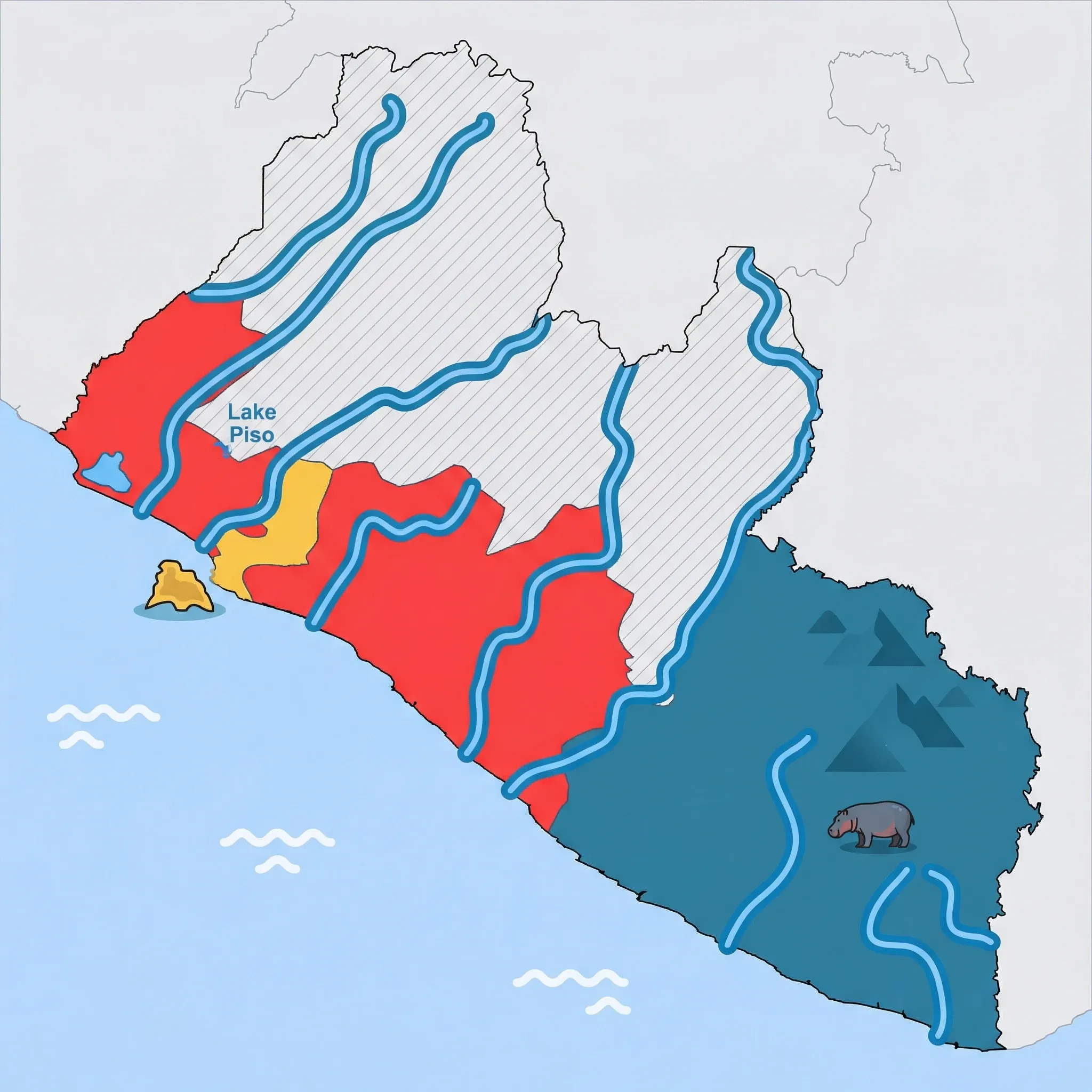
Click a region to explore
⚠️ SAFETY WARNING: Due to limited infrastructure, remote terrain, and variable security conditions near border areas, government agencies (including the US, UK, and Canada) advise travelers to reconsider travel to the Southeast and Sapo National Park regions. Emergency services are virtually non-existent in these areas. Families are strongly urged to consult their own government's official travel advisory before considering a trip, as circumstances and risk assessments vary.
For the truly adventurous, the Southeast and Sapo National Park represent one of West Africa's last great wildernesses. This is not a standard family holiday destination; it is an expedition. The region is dominated by the Upper Guinean rainforest, a biodiversity hotspot that feels prehistoric in its density and aliveness. The sounds of the jungle here are deafeningly beautiful. Sapo is the country's only national park and a stronghold for elusive species like the pygmy hippo, forest elephants, and chimpanzees. Visiting requires patience, resilience, and a love for the outdoors, but the reward is seeing nature completely untouched by mass tourism.
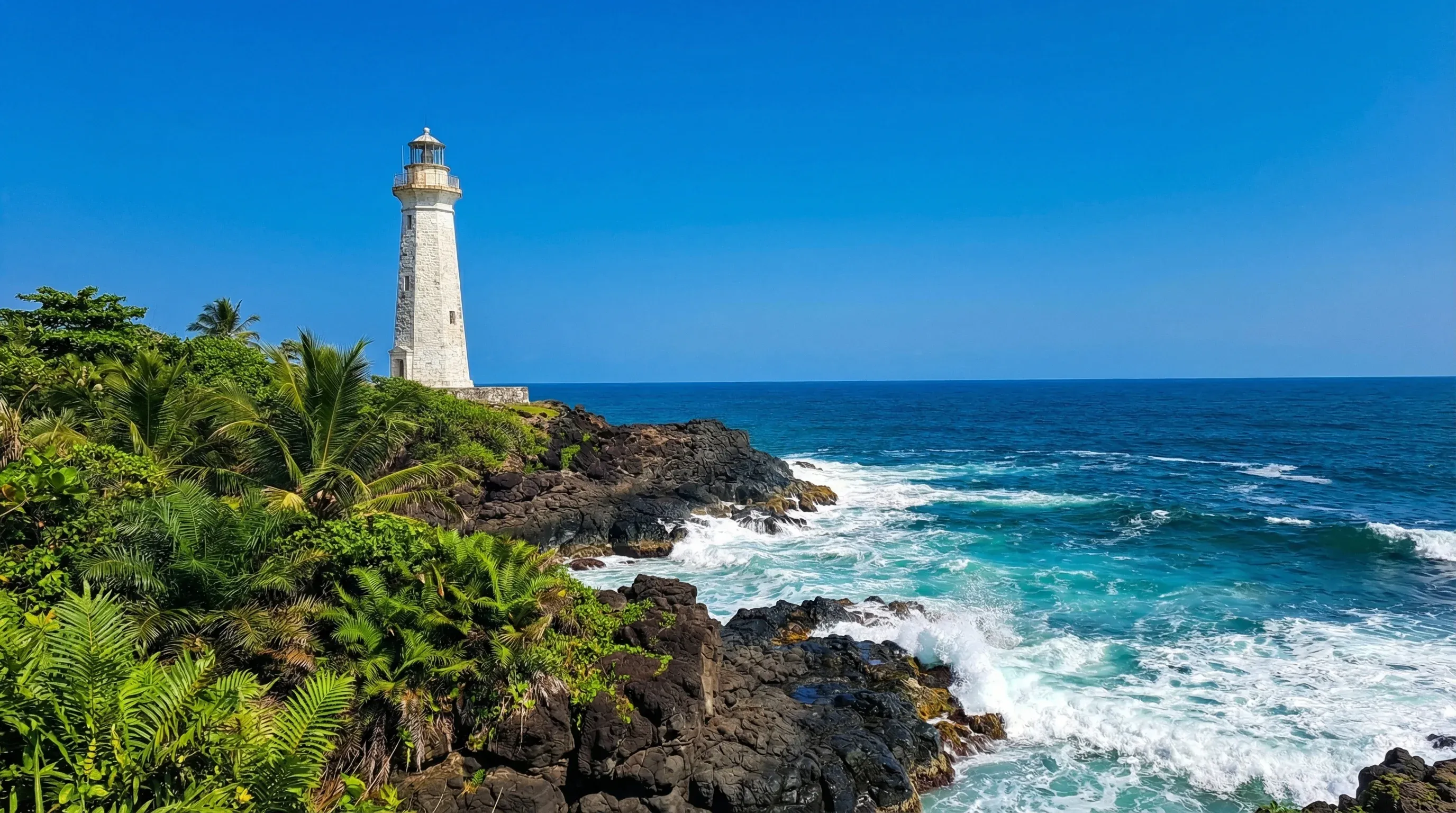
Beyond the forest, the coastal town of Harper offers a fascinating, ghostly glimpse into the past with its decaying "Gone with the Wind" style mansions, remnants of the Americo-Liberian settlers. The beaches in the southeast are spectacular and empty, though amenities are basic. This region teaches children about conservation, the challenges of development, and the raw power of nature. Travel here is slow and arduous, often involving mud-slicked roads and river crossings, making it suitable only for experienced traveling families with older children.
Key Attractions
The primary reason to visit is Sapo National Park. Accessing the park involves a boat ride up the Sinoe River and hiking into the dense canopy. It is a place to track wildlife with expert guides, spot rare birds, and camp under the stars in designated zones. It offers a rare chance to walk in a primary rainforest that has existed for centuries. In Harper, the architectural ruins and the pristine beaches offer a secondary draw, providing a place to decompress after the rigors of the jungle.
Practical Advice
Travel here is best attempted ONLY during the dry season (December–April); in the rainy season, roads can disappear entirely. You must travel with a reputable operator or a highly experienced local fixer. All supplies (food, water, fuel, medical kits) must be brought from Monrovia. There is effectively no phone signal in the park. This is a malaria-endemic zone, so nets and medication are non-negotiable.
Food & Drink
Typical meal times: Variable; in remote areas and camps, meals are eaten when prepared, often around daylight hours (6:00 am breakfast, 6:00 pm dinner).
Typical meal costs: In local towns like Harper, meals are cheap, around L$500–1,000 (approx. $2.50–5.50 USD / €2.20–5.00 EUR). Inside the park, you must pay for your own provisions and a cook.
Dietary requirements: extremely limited. You must bring all specialty food with you. Local food is often spicy and meat-heavy.
Signature dishes:
- Palm Butter – The regional specialty of the southeast; a rich, oily stew made from palm nuts, usually served with rice and fish or meat.
- GB (Geebee) – A heavy, dough-like swallow made from cassava, eaten with spicy soup.
- Fufu and Pepper Soup – A spicy, light broth served with dough, common in Harper.
Why this score?
Sapo National Park represents serious adventure, consisting of dense, primary rainforest with no internal roads and few established trails, requiring multi-day trekking to spot pygmy hippos. Reaching the southeast requires grueling multi-day drives on treacherous dirt roads or infrequent, expensive domestic flights to Harper.
Why this score?
Medical infrastructure in the southeast is extremely limited, consisting of basic government clinics and mission hospitals that lack modern diagnostic equipment. In the event of an emergency in Sapo National Park, rescue and evacuation would be exceptionally difficult due to the dense terrain and distance from Monrovia.
Why this score?
This region is one of the least visited areas in West Africa, with Sapo National Park receiving only a handful of international visitors annually due to its extreme remoteness. The historic town of Harper is equally isolated, making it a destination only for the most dedicated explorers.

While local costs are low, the logistics of getting here make it expensive. Hiring a 4x4, driver, and fuel costs L$38,000–57,000 (approx. $200–300 USD / €180–270 EUR) per day. Park entry fees and guide fees are modest, but the cost of self-sufficiency (bringing all food/gear) adds up.

Getting Here & Around
Getting Here
- Driving – The drive from Monrovia to the entrance of Sapo National Park can take 10–15 hours on difficult dirt roads. A sturdy 4x4 with a winch is mandatory.
- Airports – Small charter flights may land at Harper (JJ Roberts Airfield), but schedules are unreliable. This saves a grueling two-day drive.
Getting Around
- Walking – Inside Sapo National Park, all travel is on foot on forest trails. Good hiking boots are essential.
- Car – A 4x4 is required to move between towns like Greenville and Harper. Roads are often rutted and muddy.
- Canoe – Dugout canoes are often used to cross rivers or access park boundaries.
No airports in this region. See the country flight map for nearby connections.
Official Links

Packing List
Bottled water is unavailable in the park and remote villages.
There is zero cellular coverage in Sapo National Park for emergencies.
The rainforest floor is damp and leeches are common on hiking trails.
Gas stations are non-existent between major towns; you must carry your own supply.
Power outages are frequent and street lighting is rare; essential for navigating hotels at night.
Old, torn, or small-head dollar bills are frequently rejected by local vendors and banks.
Tap water is unsafe and buying plastic bottles constantly is expensive and environmentally unfriendly.
Electricity is often generator-based and may be turned off during the day or late at night.
Essential for boat trips on Lake Piso and protecting electronics during sudden tropical downpours.

Activities & Best Times

Hiking, wildlife, outdoor exploration, ecotourism
Sapo National Park is West Africa's largest protected primary tropical rainforest and home to rare endemic species including forest elephants, pygmy hippos, and chimpanzees. The classification notes describe 'world-class rainforest immersion' which justifies a very_good rating. Once the missing Sapo NP attraction is added to the database, this upgrade is warranted.

Urban tourism, museums, historical sites, architecture
The historic district of Harper (Cape Palmas) provides a unique, authentic look at Americo-Liberian architecture and history through landmarks like the Tubman Mansion. Travel is best during the dry season when the humid heat is tempered by the Harmattan breeze, as heavy rains from May to October make the remote region difficult to reach.
Beach resorts, marine activities: diving, snorkelling, kite surfing, wind surfing, sailing
Pristine and undeveloped beaches like Cape Palmas and Greenville offer raw natural beauty but lack international-standard resort infrastructure. Peak visitation coincides with the short dry window to ensure safe sea conditions and sunny weather, as the Atlantic coast experiences extreme rainfall and rough surf during the monsoon.



Public Holidays & Calendar Next 12 months
Public holidays, festivals, cultural celebrations, and seasonal natural phenomena coming up in Sapo NP & Southeast over the next 12 months.
Loading holidays and events...

Travel Advisory
The majority of international agencies advise travellers to exercise a high degree of caution or increased vigilance when visiting Liberia. This assessment is primarily driven by high levels of violent crime, potential for civil unrest, and extremely limited medical and emergency services infrastructure.
Safety Topics
Traveller Advice (3 groups)

Check specific guidance on local attitudes and legal risks, as social and legal environments for LGBTQ+ individuals may differ significantly from Western standards.

Female travellers should be aware of high reported rates of sexual assault and aggravated harassment. It is strongly recommended to avoid walking alone, particularly in isolated areas or after sunset.

Limit movement after dark and avoid traveling between cities at night. Do not display signs of wealth such as jewelry or expensive electronics. Ensure you have comprehensive travel insurance that covers emergency medical evacuation by air.
Agency Summaries
High vigilance is necessary due to the threat of violent crime and the risk of civil disturbances. Ongoing health concerns, including Mpox outbreaks and poor medical services, further complicate the safety environment. Consular support is limited for Australian citizens.
Travellers should remain highly vigilant due to the potential for violent incidents and a high rate of crime. Petty theft is prevalent in crowded areas, while more serious crimes like armed robbery and sexual assault are significant risks, especially after dark when lighting is limited.
There is a significant incidence of armed robbery and muggings, particularly after dark. Travellers should avoid public transportation and pre-arrange all travel through reputable organizations, as the local police have limited capacity to respond to emergencies.
Increased caution is advised because of widespread crime, potential civil unrest, and inadequate medical facilities. Violent crimes, including armed robberies, frequently occur in urban centers and on public beaches. U.S. government personnel are restricted from traveling at night outside the capital.
While the political situation is stable, protests can occur with little notice and may turn violent. Visitors are warned of the high risk of crime, poor healthcare infrastructure, and the potential for terrorist activity within the broader West African region.
The security environment remains fragile with high levels of violent crime reported, including sexual assault and armed robbery. Protests are common and carry a risk of localized violence, making careful planning and situational awareness essential.
Information is provided for general guidance only and does not constitute travel, safety, medical, or legal advice. Conditions may change. Users are responsible for independently verifying information before travel.