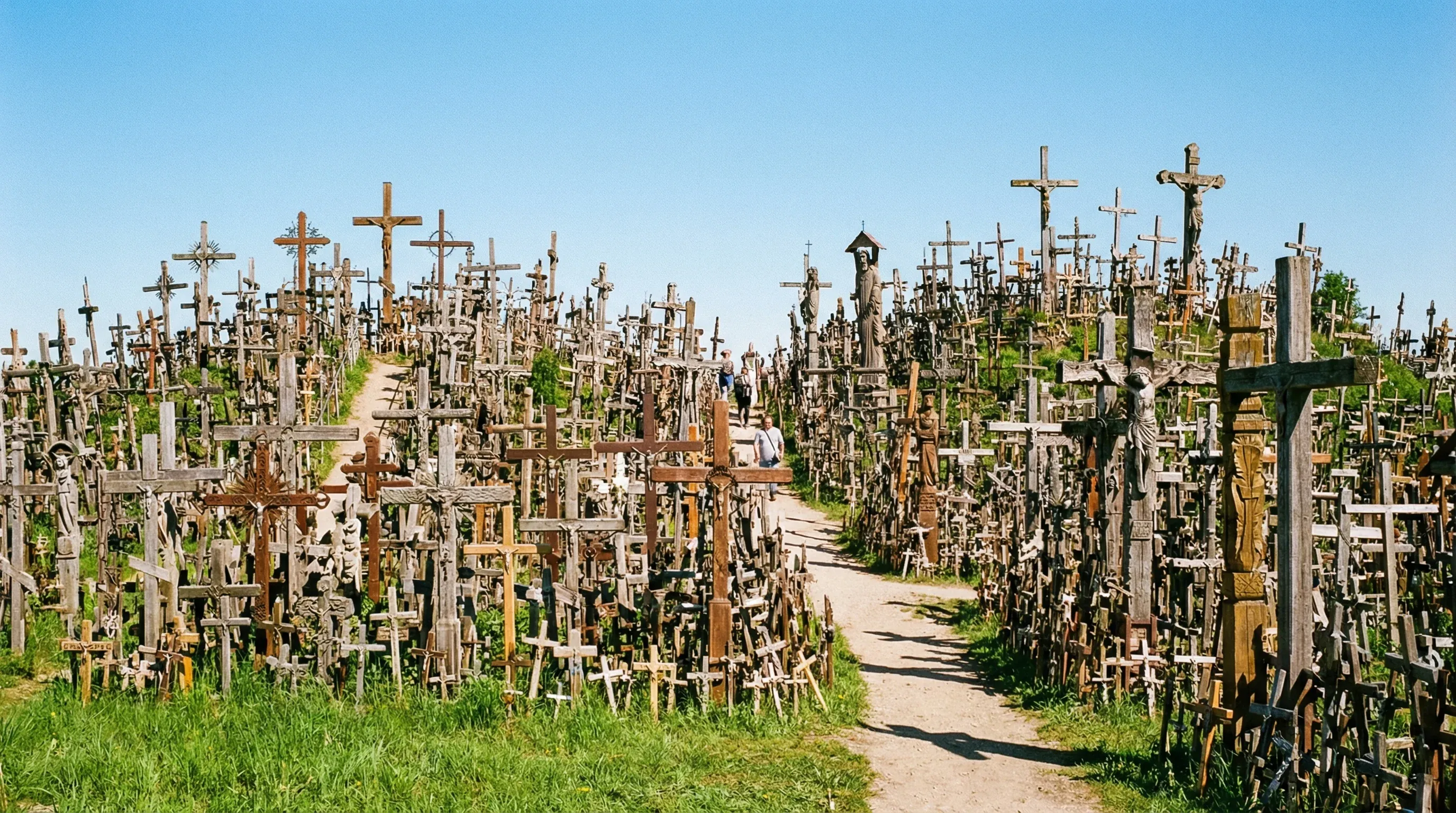

Aukštaitija (Hill of Crosses, lakes)
Where starry skies meet a thousand lakes 🌌🛶
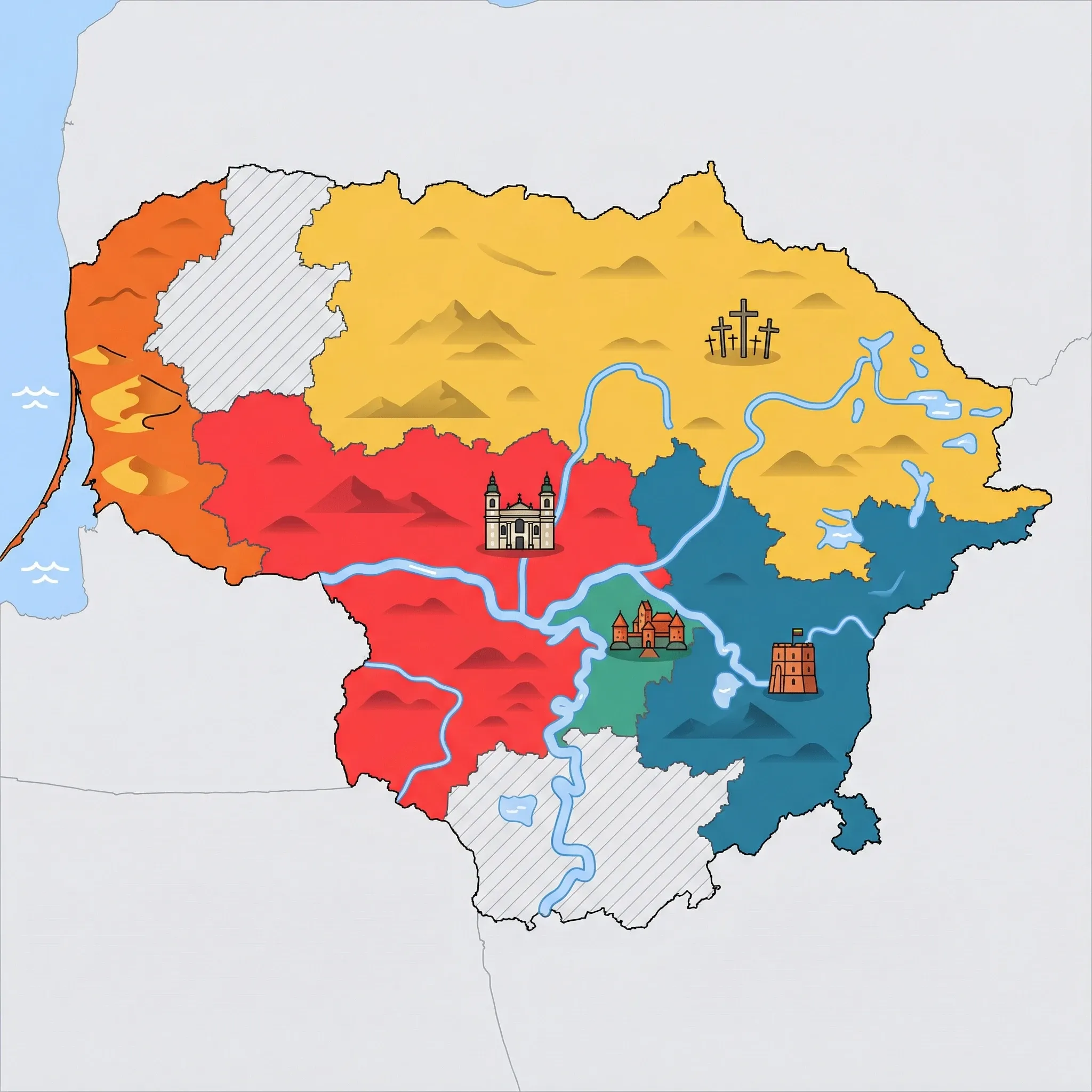
Click a region to explore
Overview
Aukštaitija is the ethnographic heart of Lithuania, a region defined by its deep connection to nature and ancient traditions. For families, this is not a place of hurried sightseeing, but a landscape that invites you to slow down. Imagine driving through endless tunnels of pine forest, the sun dappling through the trees, only to emerge at the shores of yet another crystal-clear lake. The region boasts over a thousand lakes, making it a summer paradise for swimming, kayaking, and camping. The air here is exceptionally fresh, and the rolling hills—unusual for mostly flat Lithuania—offer scenic viewpoints that feel like illustrations from a storybook. Unlike the busy capital, the pace here is dictated by the seasons, offering a tranquil retreat where children can run free in safe, open environments.
Culturally, Aukštaitija is a treasure trove of Lithuanian identity. It is a place where legends of devils and giants are still told, and where rural architecture has been lovingly preserved. Families can explore working farms, climb observation towers that rise above the tree line, and ride narrow-gauge railways that chug through the countryside. The region effectively blends the mystical—exemplified by the awe-inspiring Hill of Crosses—with the scientific, hosting Europe's only ethnocosmology museum. Whether you are splashing in Lake Lūšiai or learning about the stars, the region provides a wholesome, grounding experience that connects children with the natural world.
Key Attractions
The most iconic sight in the region is undoubtedly the Hill of Crosses near Šiauliai. It is a mesmerizing sight for children and adults alike—a small hillock covered in hundreds of thousands of crosses, rosaries, and statues left by pilgrims. It is a powerful symbol of resilience and history, and wandering through the maze of crosses is an experience families will never forget. For a completely different perspective, the Lithuanian Ethnocosmology Museum near Molėtai is a must-visit. It lifts your eyes to the sky, offering night observations through powerful telescopes and interactive exhibits about humanity's relationship with the universe.
For a taste of traditional life, the Horse Museum in Anykščiai is delightful for younger children. It isn't just a static display; it celebrates the bond between Lithuanians and their horses, often featuring wagon rides and craft demonstrations. If your family enjoys grandeur, a visit to Pakruojis Manor transports you back to the 19th century. It is the largest surviving manor complex in Lithuania, often hosting vibrant festivals with flowers, lanterns, and theatrical performances that bring history to life in a way that is engaging rather than stuffy.
Practical Advice
When to visit: Summer (June to August) is best for lake activities and swimming. However, the golden autumn (late September) is stunning for photography and hiking. Winter can be magical but very cold, with many smaller attractions operating on reduced hours.
Logistics: Public transport is sparse between the lakes. Renting a car is practically mandatory to get the most out of the region. Roads are generally good, but some rural access roads to campsites may be gravel.
Food & Drink
Typical meal times: Lunch is the main meal, usually served from 12:00 pm to 2:00 pm. Dinner is lighter, typically eaten between 6:00 pm and 8:00 pm.
Typical meal costs: A hearty meal in a rural guesthouse is very affordable, costing around €40–60 (approx. $45–65 USD / £35–50 GBP) for a family of four.
Dietary requirements: Traditional food is heavy on meat and dairy. While vegetarians can rely on potato dishes (ask for no bacon garnish), vegans may struggle in remote villages and should pack snacks. Gluten-free options are rare in rural taverns.
Signature dishes:
- Blynai – Potato pancakes, often served with sour cream and sometimes salmon or mushroom sauce. A hit with kids.
- Aukštaitiški kleckai – Small dough dumplings boiled and served with a bacon and onion sauce or milk soups.
- Obuolių sūris – Literally "Apple Cheese," this is actually a dried, pressed apple confectionery with cinnamon, a perfect sweet souvenir.
Why this score?
The region offers the country's most rugged terrain for kayaking and forest exploration, particularly within Aukštaitija National Park. While lacking extreme elevation, the dense forests and remote lake systems provide a genuine off-the-beaten-path experience for families seeking nature-oriented adventure.
Why this score?
Medical facilities in regional centers like Utena and Šiauliai are adequate for basic care but lack the extensive English-speaking staff found in the capital. Foreign visitors may encounter language barriers and more limited specialized services compared to Lithuania's major urban hubs.
Why this score?
While the Hill of Crosses is a globally recognized pilgrimage site, the wider region remains a niche destination primarily visited by domestic travelers and neighboring Europeans. International visitor flow is concentrated at specific landmarks, leaving the vast lake districts and national parks largely undiscovered by the global mass market.

Aukštaitija is one of the most affordable regions in Lithuania. Accommodation in rural homesteads (kaimo turizmas) is excellent value, often costing €50–80 (approx. $55–85 USD / £40–70 GBP) per night for a family cabin. Dining out is inexpensive, with main courses often under €10 (approx. $11 USD / £8.50 GBP). Museum entry fees are generally nominal.

Getting Here & Around
Getting Here
- Airports – The region is best accessed via Vilnius Airport (VNO) or Kaunas Airport (KUN). Driving time from Vilnius to the Molėtai lake district is roughly 1 hour.
- Driving – The A14 "Molėtai Highway" is the main artery connecting Vilnius to the heart of the region. To reach the Hill of Crosses near Šiauliai, take the A2 highway from Vilnius (approx. 2.5 hours).
- Train – Trains run regularly from Vilnius to Šiauliai (approx. 2.5 hours), which is the base for visiting the Hill of Crosses, though you will need a taxi or bus to reach the hill itself.
Getting Around
- Car – Essential for family travel. Attractions like the Lithuanian Ethnocosmology Museum and various nature trails are spread out and difficult to reach via public transport.
- Bicycle – The terrain in Anykščiai and Utena is relatively hilly but scenic. Many towns offer bike rentals for exploring local trails.
- Bus – Regional buses connect main towns like Utena and Anykščiai, but schedules can be infrequent and inconvenient for day-tripping families.
No airports in this region. See the country flight map for nearby connections.
Official Links

Packing List
Forest areas have a high prevalence of ticks; essential for hiking and berry picking.
Many lake bottoms are pebbly or muddy; protects feet while swimming.
Lakeside evenings in summer can be very buggy.
Legally required for pedestrians on rural roads at dusk/night.
Legally mandatory to wear on outer clothing if walking on road shoulders at dusk/dark; fines apply if missing.
High risk of tick-borne encephalitis and Lyme disease in forests and even city parks.
Makes finding natural amber (Lithuanian gold) on the beaches at night much easier and fun for kids.
Lake bottoms and Baltic beaches can sometimes be rocky or have sharp shells.
If visiting late summer/autumn, joining locals in mushroom picking is a national pastime.

Activities & Best Times

Hiking, wildlife, outdoor exploration, ecotourism
Features the unique Treetop Walking Path and the vast Aukštaitija National Park, offering authentic immersion in glacial lake landscapes and wildlife experiences. Summer provides optimal accessibility, while the autumn shoulder season offers striking foliage despite cooler temperatures.

Urban tourism, museums, historical sites, architecture
The Hill of Crosses is a unique single-site pilgrimage destination, not a comprehensive city/cultural region. 'Very_good' city_cultural ratings should indicate dense urban cultural infrastructure (museums, galleries, architecture), not isolated religious monuments. Downgrade maintains its significance while correctly positioning it internationally.

Scenic drives, countryside tours, route-based travel
The Aukštaitija Lake District Scenic Drive offers a curated route through traditional villages and rolling glacial terrain. Best experienced when visibility is high and roadside services are fully operational during the summer and early autumn.

Sport tourism, fitness activities, active recreation
The region boasts significant long-distance infrastructure including the Camino Lituano and Forest Trail, ideal for sophisticated hiking and cycling enthusiasts. Peak season aligns with the driest and warmest months for comfortable multi-day activity.
Amusement parks, family entertainment venues
Offers creative regional attractions like the Labyrinth Park and Alpine coasters that provide solid family entertainment with a local flavor. These outdoor venues are highly seasonal, operating primarily during the warmer months from May to September.

Learning experiences, scientific sites, historical education
Home to specialized institutions like the Lithuanian Ethnocosmology Museum, providing niche scientific and cultural insights. These facilities are most accessible to international families during the extended summer season when regional travel is easiest.

Winter sports, ski resorts, snow activities
Small-scale winter sports centers provide modest downhill and cross-country opportunities that serve as a decent winter stopover. Peak conditions are limited to the coldest months of January and February when natural snow is most reliable.

Attractions (12 total)



Public Holidays & Calendar Next 12 months
Public holidays, festivals, cultural celebrations, and seasonal natural phenomena coming up in Aukštaitija (Hill of Crosses, lakes) over the next 12 months.
Loading holidays and events...

Travel Advisory
Lithuania is broadly recognized as a safe destination with a security environment similar to other stable Western nations. Standard safety awareness and standard travel precautions are sufficient for visitors.
Safety Topics
Traveller Advice (5 groups)

Female visitors can access dedicated safety guidance for independent travel to ensure a secure experience while exploring the country.

Visitors should maintain valid photo identification at all times as required by local law. Passports should typically have at least three months of validity remaining beyond the planned date of departure from the Schengen Area.

Specialized resources are available to help sexual and gender minorities understand local social norms and safety considerations before their trip.

Guidelines for those participating in volunteering projects or adventure-based activities are available to help manage potential risks in remote areas.
Information regarding accessibility and specialized support is provided to assist travelers with physical or cognitive impairments.
Agency Summaries
Lithuania offers a security environment comparable to Ireland. Visitors are advised to research local regulations and ensure their travel documents are valid for the duration of their trip.
Lithuania is assessed as a safe destination where travelers should maintain standard security awareness similar to what they would in Canada. Entry is visa-free for short stays, though travelers should be mindful of evolving climate-related weather patterns.
Travelers can visit Lithuania without major safety warnings. Recent updates focus on the implementation of the new European Entry/Exit System (EES) and general passport validity requirements for the Schengen Area.
The U.S. government recommends following standard safety protocols while visiting Lithuania. The country is considered safe for international visitors, with no significant security threats currently identified.
Lithuania is considered safe for tourists. Notable updates include the introduction of biometric registration for non-EU citizens and occasional temporary border checks at the frontier with Poland.
There is currently no elevated risk level assigned for Lithuania. Travelers are reminded to carry official identification at all times and to prepare for upcoming changes to Schengen border rules.
Information is provided for general guidance only and does not constitute travel, safety, medical, or legal advice. Conditions may change. Users are responsible for independently verifying information before travel.