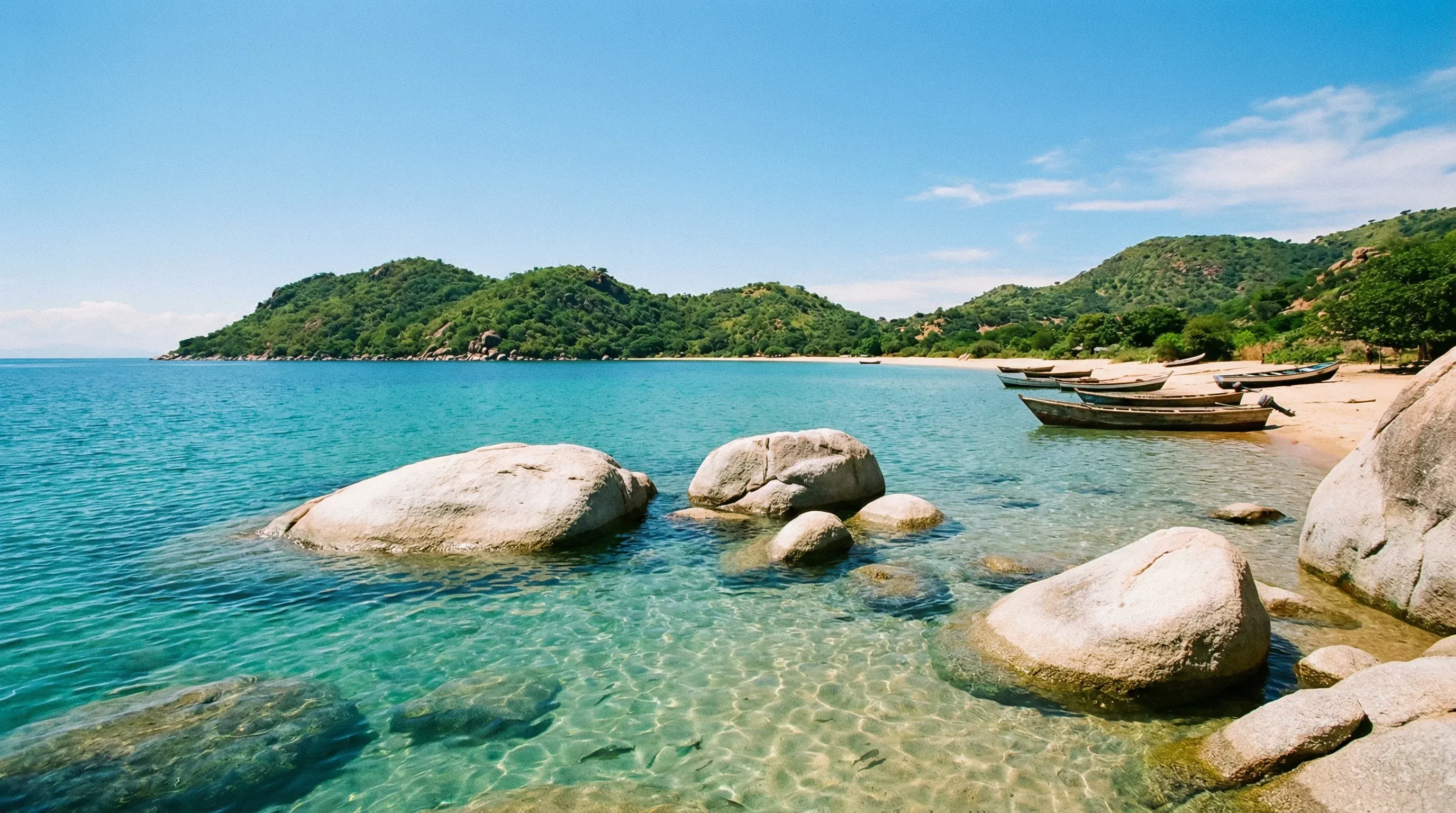

Lake Malawi (south, central, north shores)
The warm, crystal-clear Calendar Lake where beach life meets freshwater fun 🐠
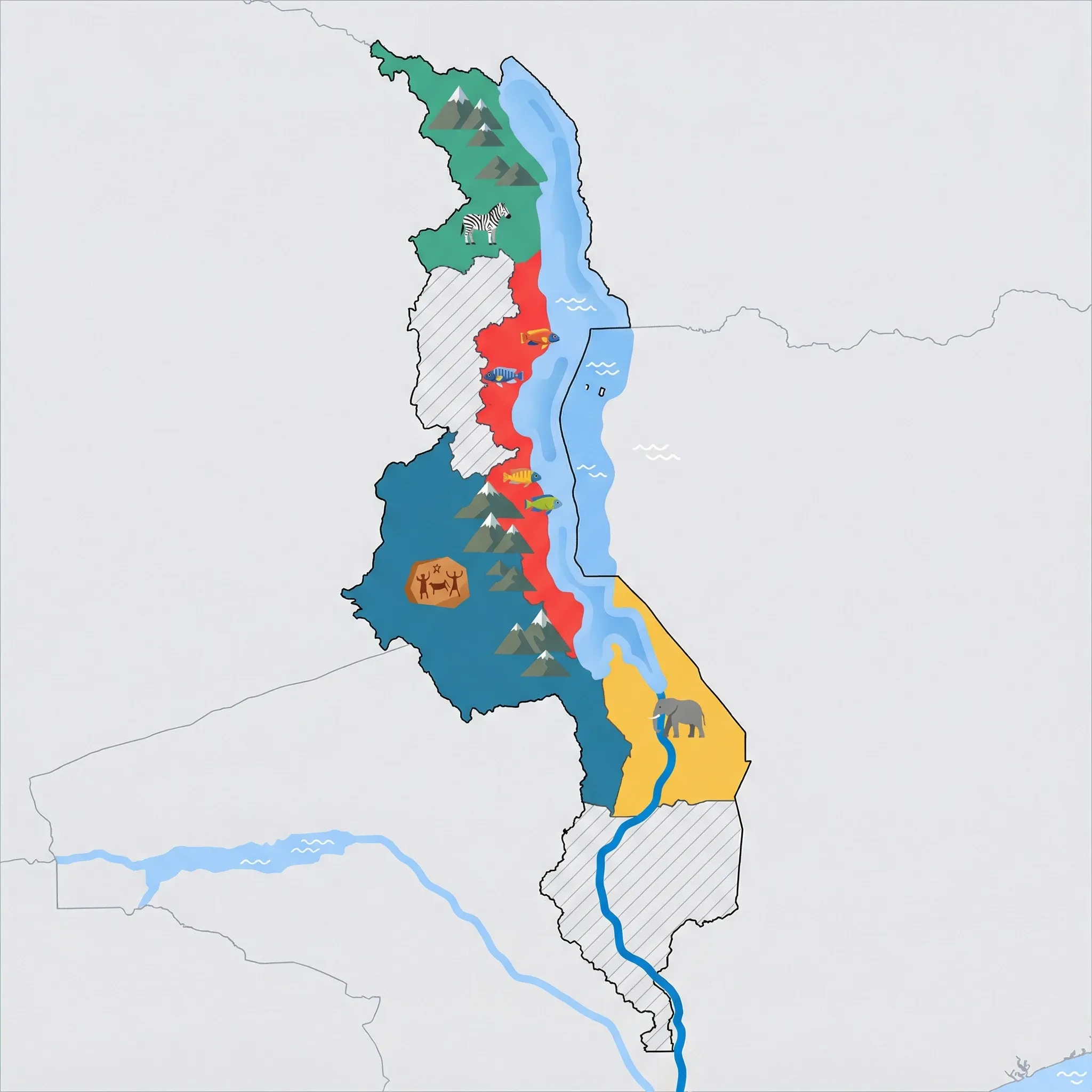
Click a region to explore
Overview
Lake Malawi is the jewel of the country—a vast inland sea that occupies one-fifth of Malawi's total land area. For families, it presents a unique paradox: a beach vacation with golden sands and turquoise waters, yet located hundreds of miles from the ocean. The absence of tides, currents, and saltwater makes it exceptionally safe for children to swim, splash, and learn to snorkel. The water is fresh, warm, and teems with "mbuna"—brightly colored cichlid fish that often swim right up to the shallow shorelines, delighting toddlers and teenagers alike. The atmosphere across the lakeshore is famously laid-back; life moves at the pace of the local fishermen who head out in dugout canoes at sunset, their lanterns creating the "Lake of Stars" effect that gives the region its nickname.
The geography varies dramatically from south to north, offering different experiences for traveling families. The southern shores, particularly around Mangochi and Cape Maclear, feature sandy bays nestled between granite boulders, reminiscent of the Seychelles but with a distinctly African freshwater twist. Moving north, the coastline becomes more rugged and dramatic, with the verdant hills of Nkhata Bay dropping steeply into deep blue waters. Culturally, the lake is the lifeblood of the nation. Visits to local fishing villages are not staged tourist traps but genuine interactions where children can learn how nets are mended and how the famous "Chambo" fish is dried. Whether you are kayaking around islands, taking a pottery workshop, or simply building sandcastles, the lake offers a gentle, welcoming introduction to Africa.
Key Attractions
The undisputed highlight for active families is Lake Malawi National Park located at Cape Maclear. As the world's first freshwater national park and a UNESCO World Heritage site, it protects hundreds of species of fish found nowhere else on Earth. Families can hire kayaks to paddle out to Thumbi West Island, where fish eagles swoop down to catch prey and rock hyraxes scamper along the boulders. The snorkeling here is aquarium-quality and shallow enough for beginners. For a taste of history and adventure, a trip to Likoma Island is unforgettable; here you can visit the massive St. Peter's Cathedral, a stunning architectural feat built by missionaries in the early 1900s that seems impossibly grand for its remote island setting.
For those who enjoy a scenic road trip, the Lakeshore Road (M5) offers incredible vistas as it winds along the water's edge. It connects the bustling southern resorts with the quieter northern bays. If you are venturing further north towards the highlands, a detour to the Livingstonia Mission and Stone House Museum provides a fascinating educational stop. Perched high on the escarpment with panoramic views back down to the lake, it tells the story of early Scottish missionaries. While technically just inland, it is inextricably linked to the lake's history and offers a cool climate respite from the shore's heat.
Practical Advice
The dry season (May to October) is the best time to visit, with warm days and cooler nights. October and November can be extremely hot. While the lake is generally safe, visitors should be aware of bilharzia (schistosomiasis) in certain reedy areas; however, most established lodges test their water fronts or treat them. It is advisable to ask lodge owners about the best swimming spots. Malaria prophylaxis is essential for the whole family.
Food & Drink
Typical meal times: Breakfast is usually 7:00 am to 9:00 am, lunch 12:00 pm to 2:00 pm, and dinner 6:30 pm to 8:30 pm.
Typical meal costs: A fresh fish dinner at a lodge costs MWK 15,000–25,000 (approx. $8.50–14.50 USD / €8–13 EUR). Local village restaurants are much cheaper, around MWK 3,500–7,000 (approx. $2–4 USD / €1.80–3.70 EUR).
Dietary requirements: Lodges catering to international tourists accommodate vegetarian and gluten-free needs well. In local eateries, options may be limited to Nsima and greens (relish).
Signature dishes:
- Chambo – The most famous fish from the lake (a type of Tilapia), usually served grilled or fried with chips or Nsima.
- Kondowole – A sticky cassava flour meal, similar to Nsima but with a distinct texture, popular in the northern lakeshore districts.
- Butter Fish – A rich, flaky catfish often found in Nkhata Bay, excellent in curries.
Why this score?
Tourism here is centered around relaxed water activities like snorkeling and kayaking, with well-established backpacker and mid-range lodges providing a comfortable base. The 'adventure' stems from the rustic infrastructure and boat transfers to remote islands, rather than extreme physical challenges or true wilderness isolation.
Why this score?
Medical facilities along the lakeshore are extremely basic, consisting mostly of small clinics in towns like Mangochi or Nkhata Bay that lack specialist equipment. Foreign tourists requiring anything beyond basic first aid or malaria treatment would likely need an evacuation to Lilongwe or a neighboring country.
Why this score?
As the country's primary attraction, the lake's southern shores and Likoma Island draw the highest concentration of international visitors for freshwater diving and beach holidays. While it is the heart of Malawi's tourism industry, it remains a niche destination globally, comparable to emerging regions in Southeast Asia rather than major international hubs.

While local village life is inexpensive, tourist lodges on the lake price themselves in USD. Budget beach camps exist, but family-friendly mid-range lodges with pools cost MWK 175,000–260,000 (approx. $100–150 USD / €90–135 EUR) per night. Meals and drinks are reasonably priced compared to Europe.

Getting Here & Around
Getting Here
- Airports – Most international travelers arrive at Lilongwe (LLW). From there, the lake is accessible by road. Light aircraft charters fly to airstrips at Club Makokola (south) and Likoma Island.
- Driving – The southern lakeshore (Mangochi/Cape Maclear) is a 3 to 4-hour drive from Lilongwe or Blantyre. The roads are generally paved but watch for livestock and cyclists. Driving the Lakeshore Road (M5) is a scenic way to traverse the region.
- Ferry – The famous Ilala Ferry travels the length of the lake weekly, connecting Nkhata Bay, Likoma Island, and other ports. It is a slow, legendary African travel experience.
Getting Around
- Car – A private vehicle or transfer is the easiest way to hop between lodges along the shore.
- Boat – Water taxis and lodge boats are the primary transport in areas like Lake Malawi National Park and essential for reaching islands like Likoma.
- Walking – Most beach villages are walkable, and walking is safe during the day.
No airports in this region. See the country flight map for nearby connections.
Official Links

Packing List
Essential for rocky entries and avoiding stepping on dormant snails or sharp stones.
Lodges often have adult sizes, but high-quality child-sized masks are rare to rent.
The tropical sun reflects off the water; sunburn happens very quickly while snorkeling.
For taking photos of the colorful fish in the shallows without risking your device.
Effective at deterring tsetse flies in the bush, which are often attracted to moving vehicles and not repelled by standard DEET.
Power cuts and load shedding are common; a hands-free light is essential for navigating lodges or reading bedtime stories in the dark.
Cash is vital for visas and tips. Notes must be in pristine condition and printed after 2013, or banks and merchants will reject them.
Roads in national parks and rural areas can be extremely corrugated and bumpy; extra support is highly recommended for comfort.
Multi-purpose: use as a dust cover in vehicles, a modest skirt for village visits, or a beach towel at the lake.
The heat in the Shire Valley can be intense; these are hard to find in remote areas and vital for keeping kids hydrated.

Activities & Best Times

Hiking, wildlife, outdoor exploration, ecotourism
A UNESCO World Heritage site renowned for its unique freshwater biodiversity (cichlids) and world-class island eco-lodges like Mumbo Island. Peak dry season offers optimal water visibility for snorkeling and prime wildlife viewing in the adjacent Liwonde and Nkhotakota reserves.

Urban tourism, museums, historical sites, architecture
Features authentic missionary heritage at Livingstonia and internationally recognized traditional art at the Kungoni Centre. These highland and rural sites are most accessible during the dry months, as summer rains can make access roads challenging for families.

Scenic drives, countryside tours, route-based travel
The M5 Lakeshore Road and Chiweta Escarpment offer dramatic rift valley vistas and authentic stops in lakeside villages. Best explored from May to October when dry conditions ensure safe passage and clear visibility across the lake toward Mozambique.

Sport tourism, fitness activities, active recreation
Offers unique active opportunities including kayaking between islands, freshwater snorkeling, and trekking the Livingstonia Trail. Conditions are optimal in the cooler, drier months when the lake surface is calmer and hiking temperatures are manageable.

Learning experiences, scientific sites, historical education
The Lake Malawi National Park Visitor Centre and local museums provide specialized insight into rift valley evolution and endemic speciation. These are notable supplementary activities for families during the primary dry season visit.

Events, celebrations, seasonal attractions
The 'Lake of Stars' is a major international arts festival that draws global visitors to the lake's shores, typically in late September. Outside of this specific event window, the region lacks high-profile seasonal festivals for international travelers.

Spa retreats, wellness centers, peaceful getaways
Natural thermal sites like Chiweta Hot Springs provide authentic restorative stops, though luxury spa infrastructure is limited compared to global benchmarks. The cooler months of May to August offer the most pleasant environment for these outdoor thermal experiences.

Attractions (5 total)



Public Holidays & Calendar Next 12 months
Public holidays, festivals, cultural celebrations, and seasonal natural phenomena coming up in Lake Malawi (south, central, north shores) over the next 12 months.
Loading holidays and events...

Travel Advisory
Travellers should exercise increased vigilance due to high rates of crime and potential civil unrest. While the country is generally safe for tourism, specific precautions against violent crime (including carjackings and robberies) and during political demonstrations are recommended. Health risks such as waterborne diseases and limited medical infrastructure also require preparation.
Safety Topics
Traveller Advice (4 groups)

Female travellers, particularly those moving alone, may encounter verbal harassment or unwanted attention. It is advisable to avoid walking alone at night and to dress modestly in rural or conservative areas.

When planning to climb Mount Mulanje, it is strongly recommended to coordinate with the Mountain Club of Malawi for updated security and safety information. Trails can be poorly marked and weather conditions change rapidly.

Ensure all visas are arranged before travel as rules for Irish and other citizens have recently changed. Maintain copies of travel documents and be prepared for limited police assistance in rural areas.

Same-sex relationships are illegal and can lead to imprisonment. Public displays of affection are generally discouraged for all travellers but may carry higher risks for LGBTQ+ individuals due to local laws and social conservative norms.
Agency Summaries
Travellers should be more alert due to significant crime rates. Safety concerns include violent incidents such as carjackings and robberies, particularly in larger cities. Public transport is often overcrowded and road conditions can be hazardous, necessitating extra care when driving.
Vigilance is advised because of frequent violent crime, including muggings and residential break-ins. Periodic civil unrest and political protests may lead to road closures or the use of crowd control measures. Police resources are often limited in their ability to respond to emergencies.
While travel is generally safe, visitors should be mindful of petty theft and stay informed about the potential for demonstrations. There is a general global threat of terrorism. Medical facilities are limited, and health precautions for waterborne diseases are essential.
No specific elevated security warnings are in place, but travellers should maintain typical safety habits. Significant focus should be placed on health risks, including rabies and bilharzia, and ensuring comprehensive insurance for medical evacuations.
A high level of vigilance is required due to the risk of violent crime. Avoid walking after dark and be cautious at transit hubs. Travellers should be aware of risks such as drink spiking and ensure all entry permits are secured prior to arrival.
Standard safety measures are recommended. New entry regulations require many visitors to obtain a visa in advance via the official government portal. Maintain awareness of local news and follow the instructions of local authorities during your stay.
Information is provided for general guidance only and does not constitute travel, safety, medical, or legal advice. Conditions may change. Users are responsible for independently verifying information before travel.