
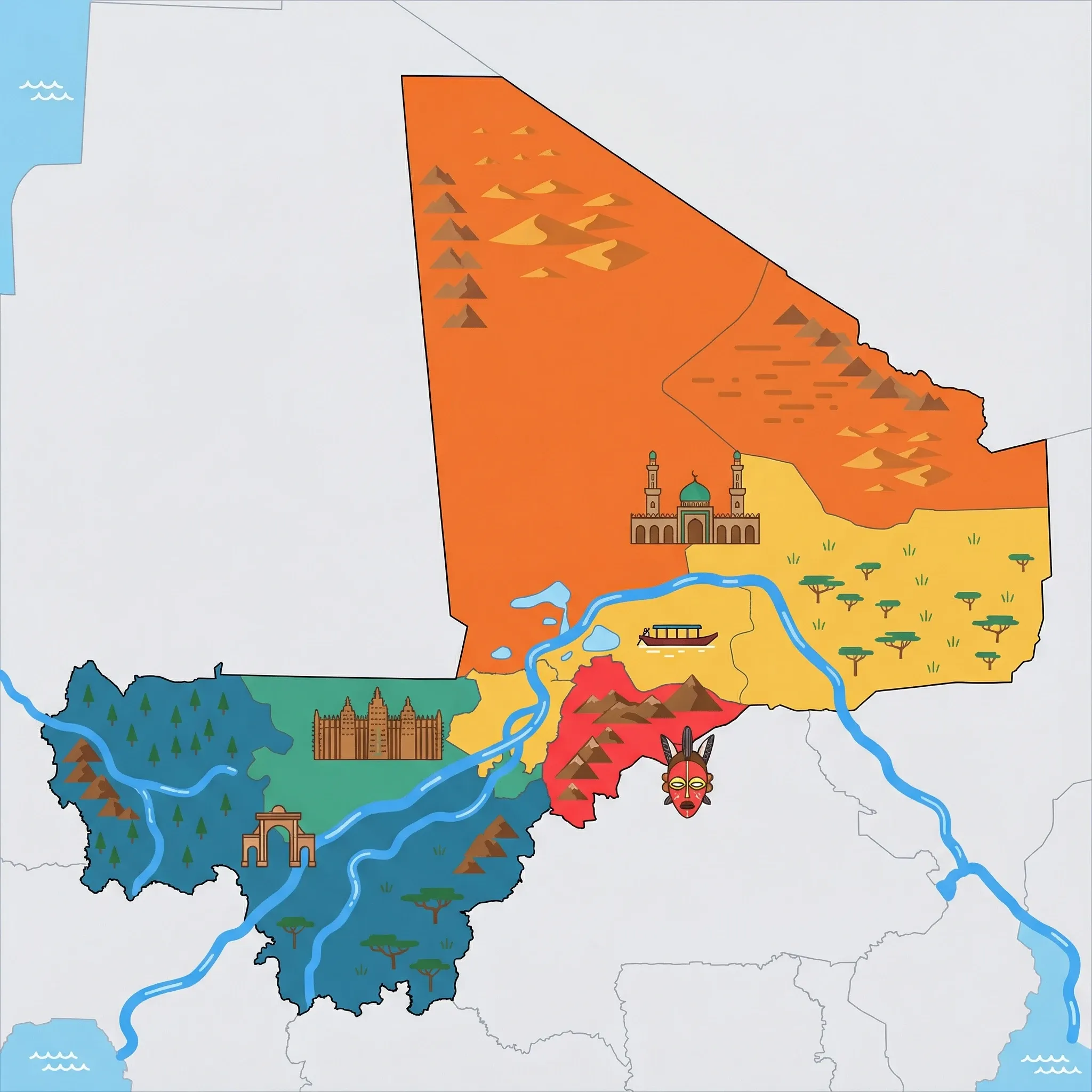
Click a region to explore
⚠️ SAFETY WARNING: Do not travel to Djenné. The town lies in central Mali's active conflict zone with significant terrorist and kidnapping risks reported by Western governments (UK, USA, CA, AU). The roads leading to the town are subject to banditry and militant checkpoints. The iconic Monday market and historic sites cannot be safely visited under current conditions. Families should consult their own government's official travel advisory before considering a trip.
Overview
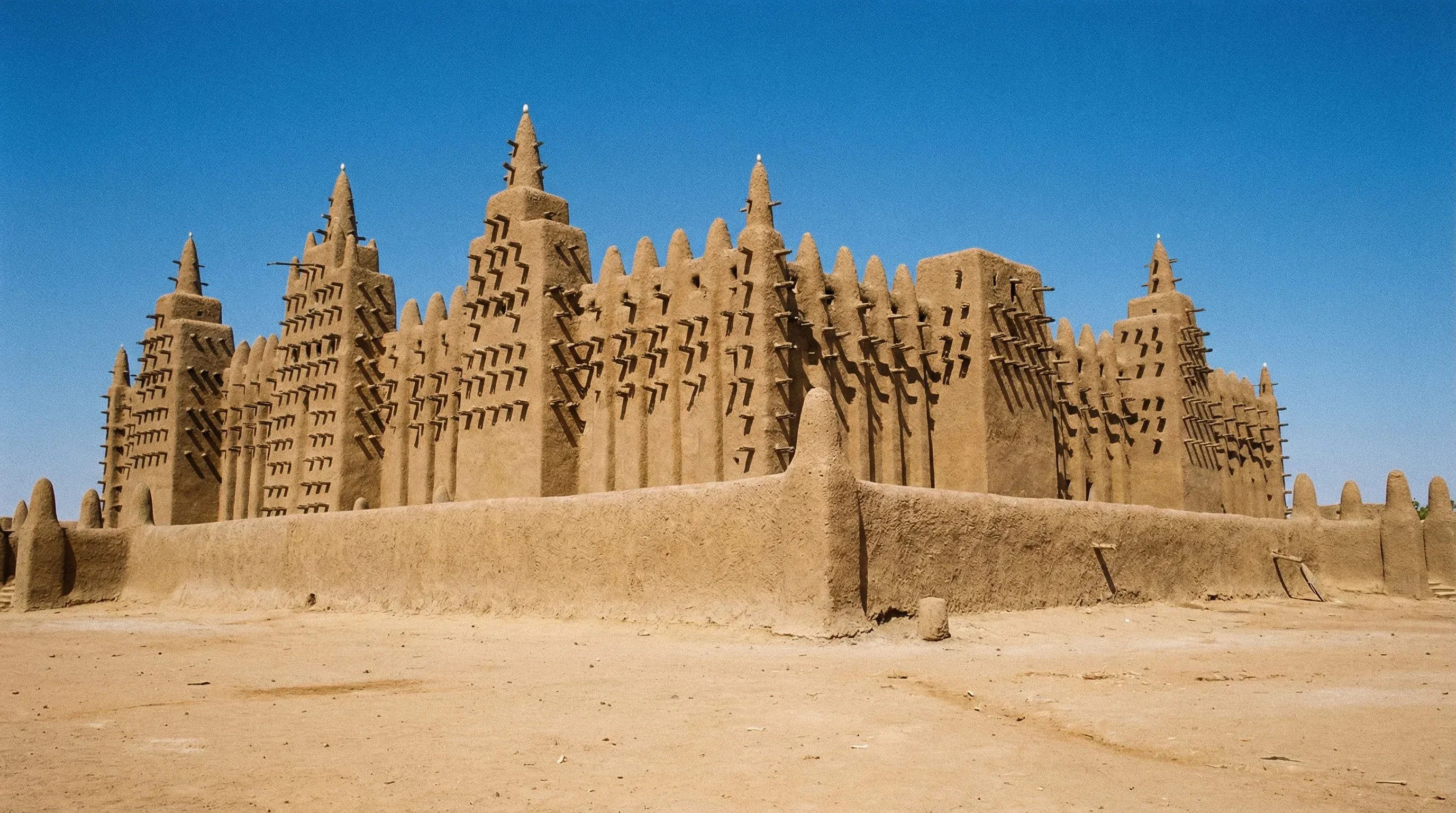
Djenné is one of the oldest known towns in sub-Saharan Africa, a place where history is built literally from the earth. Situated on an island formed by the Bani River and the Niger, the town is a masterpiece of Sudano-Sahelian architecture. The entire community participates in the maintenance of their heritage; the city is famous for the annual 'Crépissage,' a festival where the residents come together to re-plaster the Great Mosque with fresh mud before the rains arrive. For families, the concept of a city built entirely of mud—from the humblest home to the grandest monument—captures the imagination like few other places on Earth.
The culture of Djenné is deeply Islamic and scholarly, having been a center of learning for centuries alongside Timbuktu. The streets are narrow and winding, designed to provide shade and trap cool air. In peaceful times, the town comes alive on Mondays for one of the most vibrant markets in Africa, drawing traders from all over the Inland Delta. The atmosphere is ancient, almost biblical, with livestock, spices, and textiles traded in the shadow of the mosque. The surrounding floodplain turns the town into an island during the rainy season, requiring boats to access the city gates, adding to its mythical allure.
Key Attractions
The crown jewel of the region is the Great Mosque of Djenné. It is the largest mud-brick building in the world and a stunning example of African engineering. Its wooden beams stick out from the walls, serving as permanent scaffolding for the annual repairs. While non-Muslims are historically restricted from entering the prayer hall, the exterior view alone is breathtaking. The surrounding Old Towns of Djenné are a UNESCO World Heritage site, comprising archaeological mounds (Djenne-Djeno) that reveal civilizations dating back to 250 B.C. The Bani River itself offers scenic views of the flat, expansive delta landscape, particularly beautiful at sunset when the pirogues silhouette against the sky.
Practical Advice
Djenné is most accessible during the dry season (November to April). During the rainy season, the rivers swell, and the town becomes a true island, accessible only by ferry. If travel were safe, families would need to be prepared for very basic infrastructure; electricity and running water can be sporadic. Modest dress is strictly required due to the town's conservative religious nature.
Food & Drink
Typical meal times: Lunch is served from 12:30 pm to 2:00 pm. Dinner is usually eaten after the final prayer call, around 7:30 pm to 9:00 pm.
Typical meal costs: Dining is very local and affordable. A family meal might cost 2,500–5,000 XOF (approx. $4.00–8.00 USD / €3.80–7.60 EUR). There are no high-end restaurants.
Dietary requirements: The diet is heavy on fish and grains. Vegetarians can eat rice with vegetable sauces, but options are limited. Gluten is prevalent in the form of millet and wheat.
Signature dishes:
- Timbam – Sweet, fried fritters made from millet flour, often sold by street vendors and popular with children.
- Capitaine Stew – A tomato-based stew using the fresh Nile Perch caught in the surrounding Bani River.
- Widjila – A traditional bread dish, often balls of dough steamed and served in a sauce, specific to the northern and central regions.
Why this score?
Reaching this island town involves navigating the Bani River floodplains and passing through areas with significant security concerns. The physical environment is seasonally challenging, and tourism infrastructure is limited to basic traditional guesthouses.
Why this score?
Medical infrastructure is extremely limited to basic local health centers that lack specialized equipment or English-speaking staff. Any serious medical issue would require a difficult overland transfer back to Bamako or international evacuation.
Why this score?
Despite housing the world-famous Great Mosque, Djenné's tourism has plummeted due to its location in an insecure central zone. Visitor numbers are minimal, consisting mostly of highly intrepid cultural travelers or specialized researchers.

Djenné is a rural economy. Costs for food and accommodation are very low compared to Bamako, but standards are also basic. Guest houses (campements) typically cost 15,000–30,000 XOF (approx. $25–50 USD / €23–45 EUR) per night. Cash is king; credit cards are useless here.

Getting Here & Around
Getting Here
- Road – Djenné is traditionally reached via a turnoff from the main Bamako-Mopti highway. The final leg involves a ferry crossing over the Bani River.
- Ferry – The ferry crossing is a quintessential experience, often crowded with people, livestock, and goods, though currently high-risk.
Getting Around
- Walking – The old town is compact and best explored on foot. The streets are too narrow for cars, preserving the medieval atmosphere.
- Cart – Horse or donkey carts are frequently used to transport goods and people around the outskirts and to the market.
No airports in this region. See the country flight map for nearby connections.
Official Links

Packing List
You will frequently need to remove shoes when entering homes or viewing religious sites.
Djenné is conservative; shoulders and knees must be covered at all times.
Bottled water supplies can be unreliable in this remote town.
There is very little shade in the open plazas and the Sahelian sun is intense.
Power outages are frequent in Bamako and almost guaranteed elsewhere; street lighting is minimal.
Credit cards are virtually useless outside top hotels; ATMs are unreliable. Euros exchange easily.
Physical proof of vaccination is strictly checked at the airport border control upon arrival.
Extreme heat and potential stomach bugs make dehydration a rapid risk for children.
Mali is conservatively Muslim; covering shoulders and knees is respectful and avoids unwanted attention.

Activities & Best Times

Urban tourism, museums, historical sites, architecture
Djenné is a UNESCO World Heritage site with the iconic Great Mosque - one of Africa's most significant cultural monuments. The current 'good' rating is too conservative given the international significance of the site.

Hiking, wildlife, outdoor exploration, ecotourism
The Bani River offers a window into the Niger Inland Delta ecosystem, best experienced by boat when water levels are high but rains have subsided. The experience is limited for families due to minimal infrastructure and becomes unsuitable during the peak dry season heat and the height of the summer rains.

Events, celebrations, seasonal attractions
The annual Crépissage (plastering of the Great Mosque) is an internationally significant cultural event of immense authenticity. It typically occurs in April, which is otherwise a period of extreme heat, making the festival the primary but very specific motivator for visiting at this time.




Public Holidays & Calendar Next 12 months
Public holidays, festivals, cultural celebrations, and seasonal natural phenomena coming up in Djenné over the next 12 months.
Loading holidays and events...

Travel Advisory
All major international travel agencies maintain their highest risk rating for Mali, advising against all travel due to extreme security threats including terrorism, kidnapping, and civil instability.
Safety Topics
Traveller Advice (2 groups)

Anyone currently in the country should leave immediately via commercial air travel while it remains available. If you must stay, maintain a personal emergency plan and consider hiring professional security services.

Aid workers face a critical risk of kidnapping for ransom by extremist groups. Operations outside of Bamako are extremely dangerous and lack government protection or support.
Agency Summaries
U.S. authorities recommend against any travel due to extreme levels of violent crime, terrorism, and kidnapping. While embassy operations have been normalized, government personnel are strictly limited to the capital, and help outside Bamako is unavailable.
The Irish Department of Foreign Affairs strongly advises against all travel. With no local embassy presence, the ability to provide emergency consular assistance is severely limited, and citizens are urged to leave via commercial air routes.
Australia urges citizens to avoid Mali entirely. There is a very high danger of terrorist activity and kidnapping throughout the country. Australians already present should consider departing while commercial flights are still operational.
The Canadian government warns against all travel to Mali because of persistent threats from terrorist organizations, high kidnapping risks, and widespread banditry. Recent fuel shortages have further complicated domestic transportation and essential services.
New Zealand classifies Mali as a no-travel zone due to extreme insecurity, violent banditry, and the threat of terrorism. The withdrawal of international peacekeeping forces has increased regional instability and risks for foreigners.
The FCDO advises against all travel to Mali citing highly unpredictable security and a significant threat of kidnapping. Militant blockades on major roads and fuel supply routes have increased risks for those attempting to travel by land.
Information is provided for general guidance only and does not constitute travel, safety, medical, or legal advice. Conditions may change. Users are responsible for independently verifying information before travel.