
Mopti & Niger Inland Delta
The bustling river crossroads of West Africa 🛶🦅
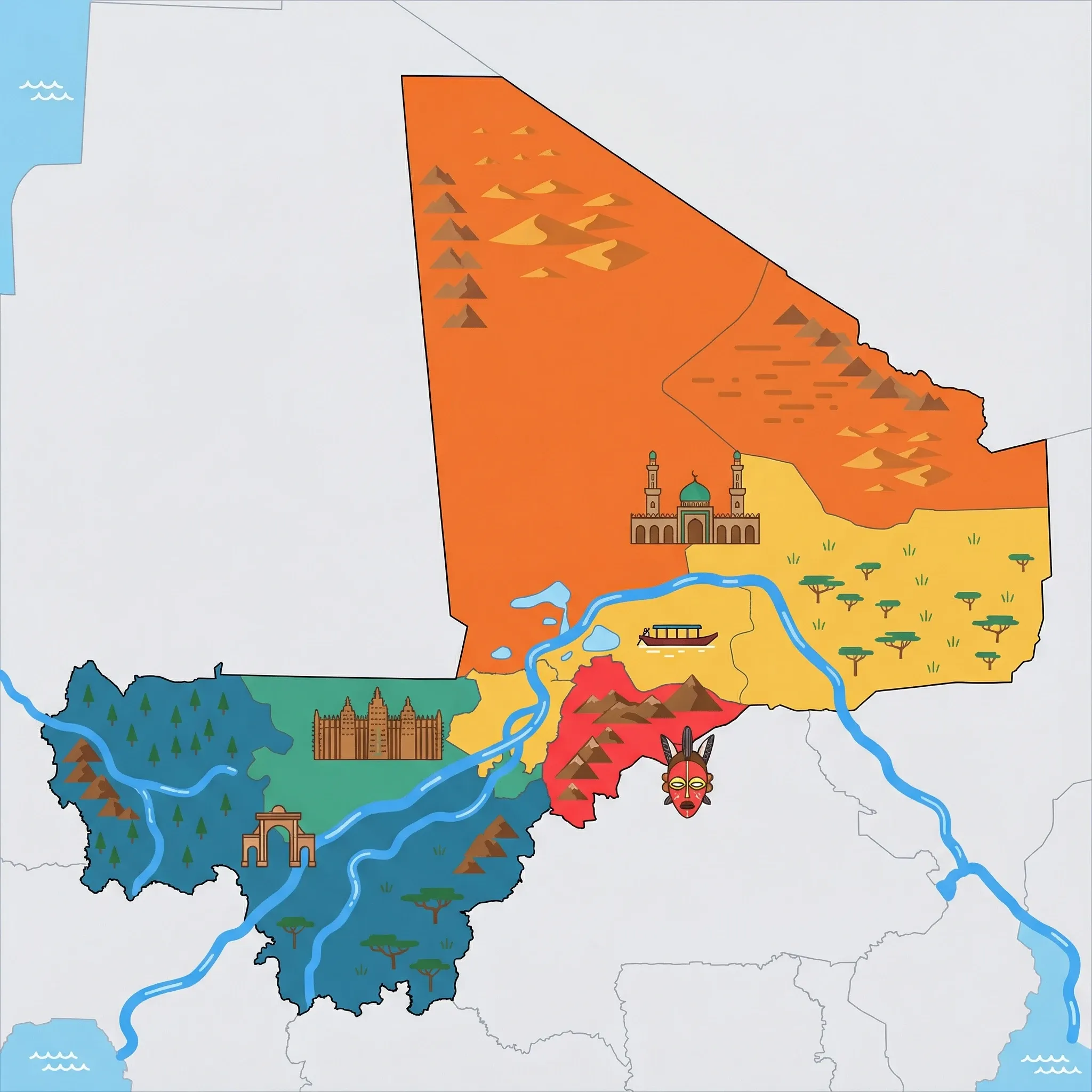
Click a region to explore
⚠️ SAFETY WARNING: Do not travel to Mopti or the Niger Inland Delta. The region is a central theater for armed conflict and terrorist activity. Western governments (USA, UK, CA, IE) warn of a very high risk of kidnapping and violence. The roads connecting Mopti to the rest of the country are dangerous, and the river itself is not safe for tourist traffic. Families must avoid this region entirely.
Overview
Mopti sits at the confluence of the Niger and Bani rivers, a strategic location that has made it a commercial powerhouse for centuries. Often called the 'Venice of Mali,' the city is actually composed of three islands linked by dykes. During the rainy season, the surrounding Inner Niger Delta floods, turning the landscape into a massive wetland teeming with waterbirds, hippos, and fish. It is a world governed by water, where children learn to paddle pirogues before they learn to read, and where commerce happens on the riverbanks.
The cultural tapestry here is rich, blending the Bozo (masters of the river), the Peul (cattle herders), and the Dogon and Bambara traders. The harbor is a chaotic, colorful spectacle of large wooden pinnaces (cargo boats) being loaded with slabs of salt from Timbuktu, dried fish, and passengers. The architecture reflects the Sudano-Sahelian style, with vertical lines and mud construction, but Mopti has a bustle and density that feels distinct from the ancient quiet of Djenné. The delta provides a vital ecosystem for migratory birds, making it a potential paradise for nature-loving families in a more stable reality.
Key Attractions
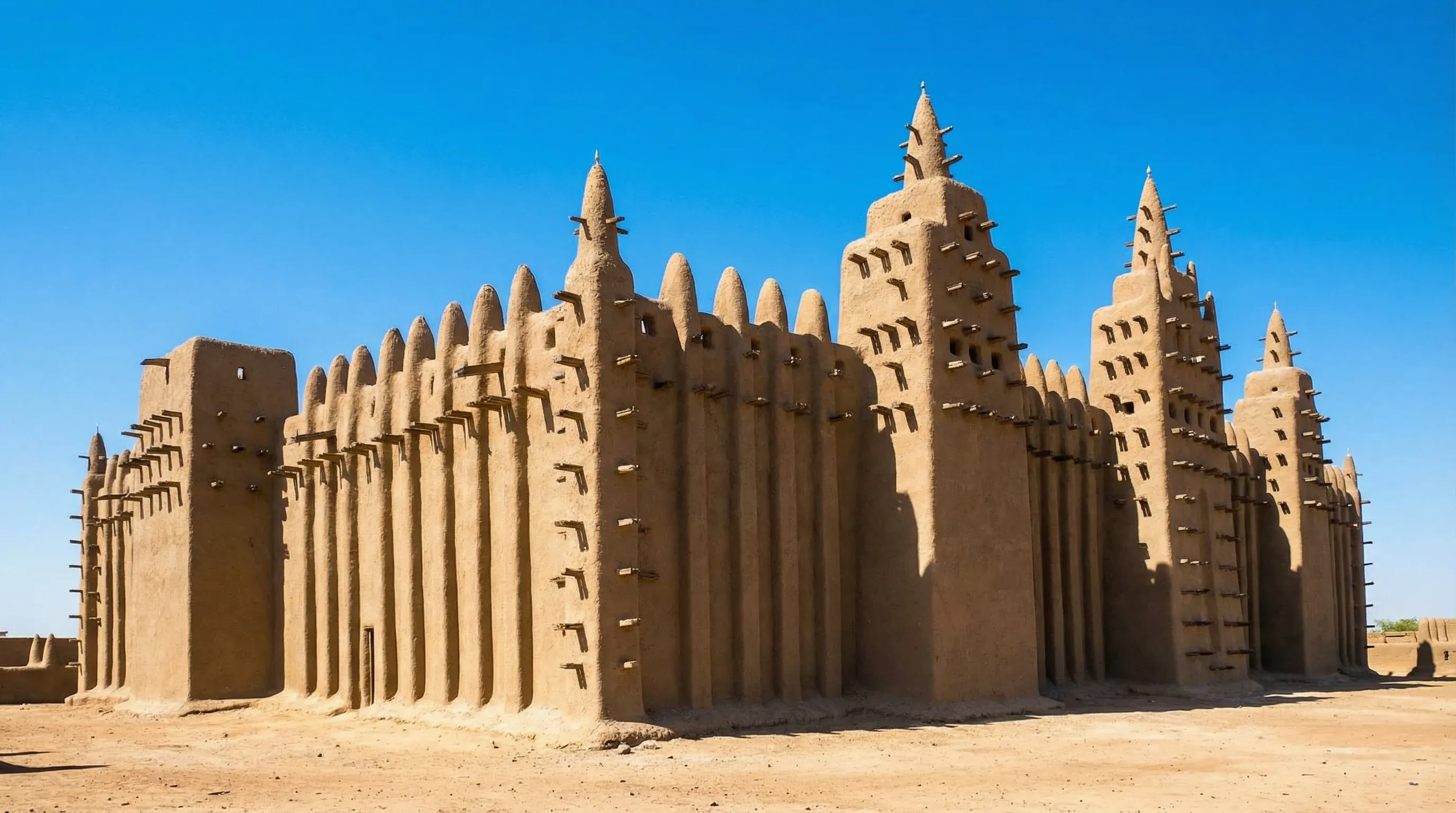
The skyline of the city is dominated by the Grand Mosque of Mopti (Komoguel Mosque). While similar in style to Djenné's mosque, it is taller and more compact, officially recognized as a UNESCO World Heritage candidate. A boat trip into the Inner Niger Delta is the highlight of the region. Navigating the channels allows visitors to see Bozo fishing villages that are temporary, moving with the water levels. From Mopti, the Dogon Country Trek (Bandiagara Escarpment) is traditionally accessed, making the city the staging ground for all central Malian adventures. The nearby town of Sevare serves as the transport hub, though it lacks the charm of the old port.
Practical Advice
The delta is best visited between November and February when water levels are high enough for boats but the weather is cool. By May, the waters recede, leaving dust and dry heat. Mosquito protection is non-negotiable here; the wetlands are a breeding ground for malaria. Travelers would historically hire a 'pinasse' (large motorized canoe) for multi-day river journeys, sleeping on the roof of the boat under the stars.
Food & Drink
Typical meal times: Lunch is 12:30 pm to 2:00 pm. Dinner is 7:30 pm to 9:00 pm.
Typical meal costs: Meals are inexpensive. A fish dinner in a local restaurant costs 3,000–6,000 XOF (approx. $5.00–10.00 USD / €4.50–9.00 EUR).
Dietary requirements: This is fish country. Vegetarians will find plenty of rice and fruit, but fish stock is used in almost every sauce. Smoked fish is a local specialty that might be challenging for children's palates due to its strong flavor and texture.
Signature dishes:
- Capitaine Sangha – Nile Perch cooked with a spicy chili sauce, a specialty of the region.
- Smoked Fish (Maniguette) – Fish smoked over wood fires, preserving it for transport; often added to stews for a deep, savory flavor.
- Lait Caillé – Sweetened curded milk, often sold in small bags by Peul women, a popular dessert or snack.
Why this score?
Navigating the vast wetlands of the Inner Niger Delta by traditional pirogue requires significant physical resilience and local expertise. The combination of unpredictable river levels and the proximity to conflict zones creates a high-stakes adventure environment.
Why this score?
Mopti has a regional hospital that can handle basic trauma and stabilization, but it is poorly equipped for complex cases involving foreign nationals. Travelers must rely on the limited medical resources available in a high-risk humanitarian setting.
Why this score?
Mopti serves as a commercial crossroads but has lost its status as a bustling tourist hub for river cruises and delta exploration. The decline in security along the Niger River corridor has restricted visitors to essential travel and occasional intrepid river adventurers.

Mopti is a trading hub, so prices are slightly higher than rural villages but lower than Bamako. Hiring a private pinasse for a river trip is the biggest expense, costing 100,000–150,000 XOF (approx. $165–245 USD / €150–230 EUR) per day including fuel and crew.

Getting Here & Around
Getting Here
- Airports – Mopti Ambodédjo Airport (MZI) exists but commercial flights are often suspended due to security. It is primarily used for military and UN logistics.
- Bus – Long-haul buses run from Bamako (8-10 hours), but the road is dangerous and subject to attacks.
- Boat – In the rainy season, the COMANAV ferry runs from Koulikoro (near Bamako) to Mopti, a classic slow-travel African experience.
Getting Around
- Pirogue/Pinasse – The primary way to explore the delta. Motorized longboats are the taxis of the river.
- Moto-taxi – Within Mopti town, motorcycle taxis are the quickest way to navigate the crowded causeways.
No airports in this region. See the country flight map for nearby connections.
Official Links

Packing List
The Niger Inland Delta is a world-class birdwatching site; optics are essential.
Travel is primarily by small boat; protecting electronics from splashes is vital.
The wetland environment means mosquito density is extremely high.
Glare from the river water significantly increases sun exposure.
Power outages are frequent in Bamako and almost guaranteed elsewhere; street lighting is minimal.
Credit cards are virtually useless outside top hotels; ATMs are unreliable. Euros exchange easily.
Tap water is unsafe. Bottled water is available but a backup purification method is essential for emergencies.
Physical proof of vaccination is strictly checked at the airport border control upon arrival.
Extreme heat and potential stomach bugs make dehydration a rapid risk for children.
Mali is conservatively Muslim; covering shoulders and knees is respectful and avoids unwanted attention.

Activities & Best Times

Hiking, wildlife, outdoor exploration, ecotourism
Home to the UNESCO-listed Bandiagara Escarpment and the Inner Niger Delta, this region offers unparalleled trekking and birdwatching opportunities. Peak travel occurs during the cooler dry season (Nov-Feb), as extreme heat in spring and seasonal flooding from July to September restrict access.

Urban tourism, museums, historical sites, architecture
The Great Mosque of Djenné and the vibrant port of Mopti represent world-class examples of Sudano-Sahelian architecture and living river culture. Discerning travelers should visit in the cooler winter months to avoid the intense heat of the pre-monsoon season and the heavy summer rains.

Scenic drives, countryside tours, route-based travel
Routes between Mopti, Djenné, and the Dogon villages offer spectacular views of the Sahelian landscape and the unique architecture of the Inner Delta. Driving conditions are optimal during the dry season, whereas summer rains can make rural dirt tracks difficult or impassable.

Events, celebrations, seasonal attractions
The region hosts internationally significant events like the 'Crossing of the Cattle' and the annual plastering of the Great Mosque. Peak visitation is strictly tied to these specific event dates, which typically fall in the cooler months or just before the onset of the rainy season.




Public Holidays & Calendar Next 12 months
Public holidays, festivals, cultural celebrations, and seasonal natural phenomena coming up in Mopti & Niger Inland Delta over the next 12 months.
Loading holidays and events...

Travel Advisory
All major international travel agencies maintain their highest risk rating for Mali, advising against all travel due to extreme security threats including terrorism, kidnapping, and civil instability.
Safety Topics
Traveller Advice (2 groups)

Anyone currently in the country should leave immediately via commercial air travel while it remains available. If you must stay, maintain a personal emergency plan and consider hiring professional security services.
Aid workers face a critical risk of kidnapping for ransom by extremist groups. Operations outside of Bamako are extremely dangerous and lack government protection or support.
Agency Summaries
U.S. authorities recommend against any travel due to extreme levels of violent crime, terrorism, and kidnapping. While embassy operations have been normalized, government personnel are strictly limited to the capital, and help outside Bamako is unavailable.
The Irish Department of Foreign Affairs strongly advises against all travel. With no local embassy presence, the ability to provide emergency consular assistance is severely limited, and citizens are urged to leave via commercial air routes.
Australia urges citizens to avoid Mali entirely. There is a very high danger of terrorist activity and kidnapping throughout the country. Australians already present should consider departing while commercial flights are still operational.
The Canadian government warns against all travel to Mali because of persistent threats from terrorist organizations, high kidnapping risks, and widespread banditry. Recent fuel shortages have further complicated domestic transportation and essential services.
New Zealand classifies Mali as a no-travel zone due to extreme insecurity, violent banditry, and the threat of terrorism. The withdrawal of international peacekeeping forces has increased regional instability and risks for foreigners.
The FCDO advises against all travel to Mali citing highly unpredictable security and a significant threat of kidnapping. Militant blockades on major roads and fuel supply routes have increased risks for those attempting to travel by land.
Information is provided for general guidance only and does not constitute travel, safety, medical, or legal advice. Conditions may change. Users are responsible for independently verifying information before travel.