
Timbuktu & North
The mysterious city of 333 saints at the desert's edge 🏜️📜
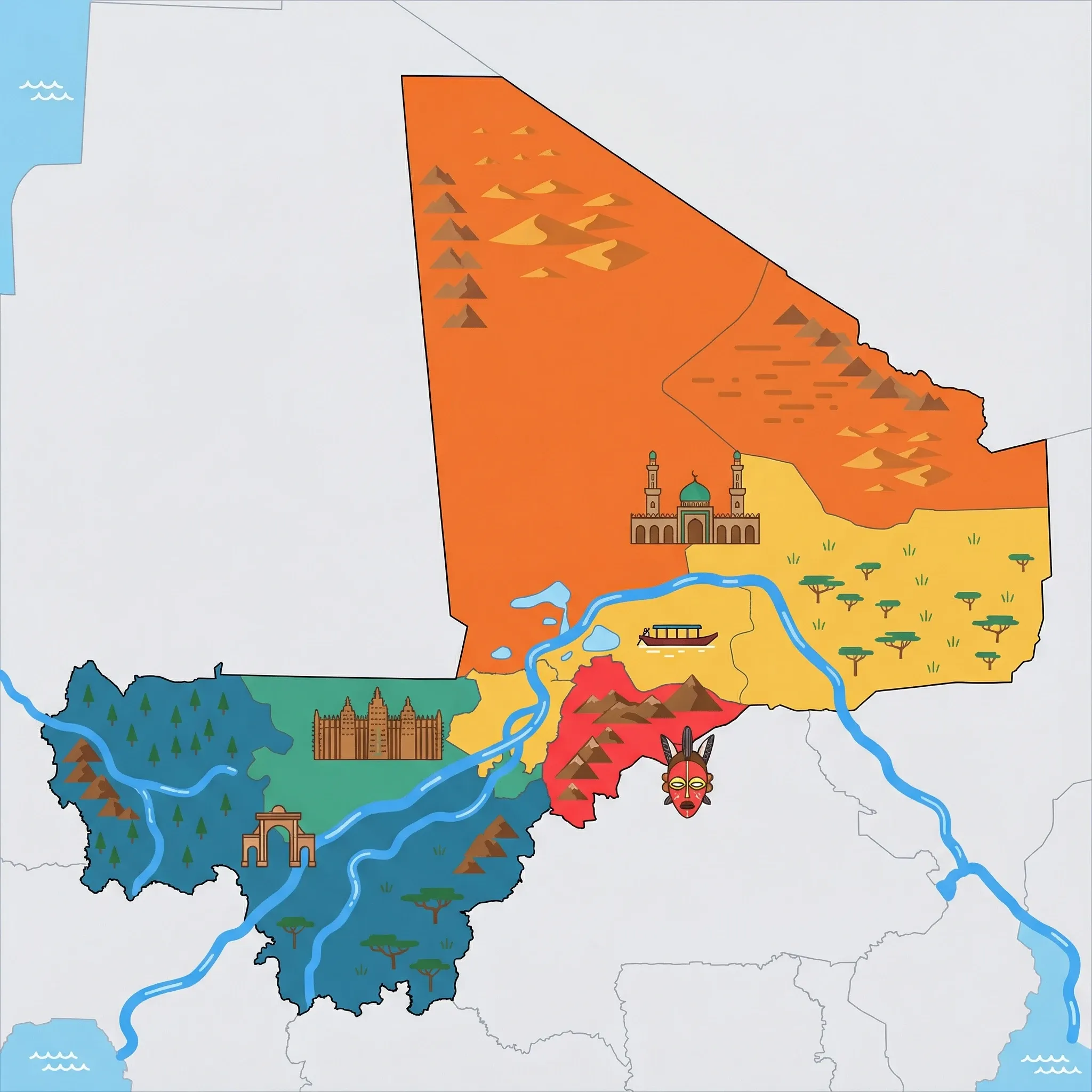
Click a region to explore
⚠️ SAFETY WARNING: Absolutely do not travel to Timbuktu or northern Mali. This region is an active war zone controlled or contested by various terrorist groups (including affiliates of Al-Qaeda and IS). The risk of kidnapping for Westerners is critical. The city of Timbuktu and the surrounding Sahara are completely inaccessible to tourists. Government advisories (USA, UK, CA, AU, NZ) are unanimous: Do Not Travel.
Overview
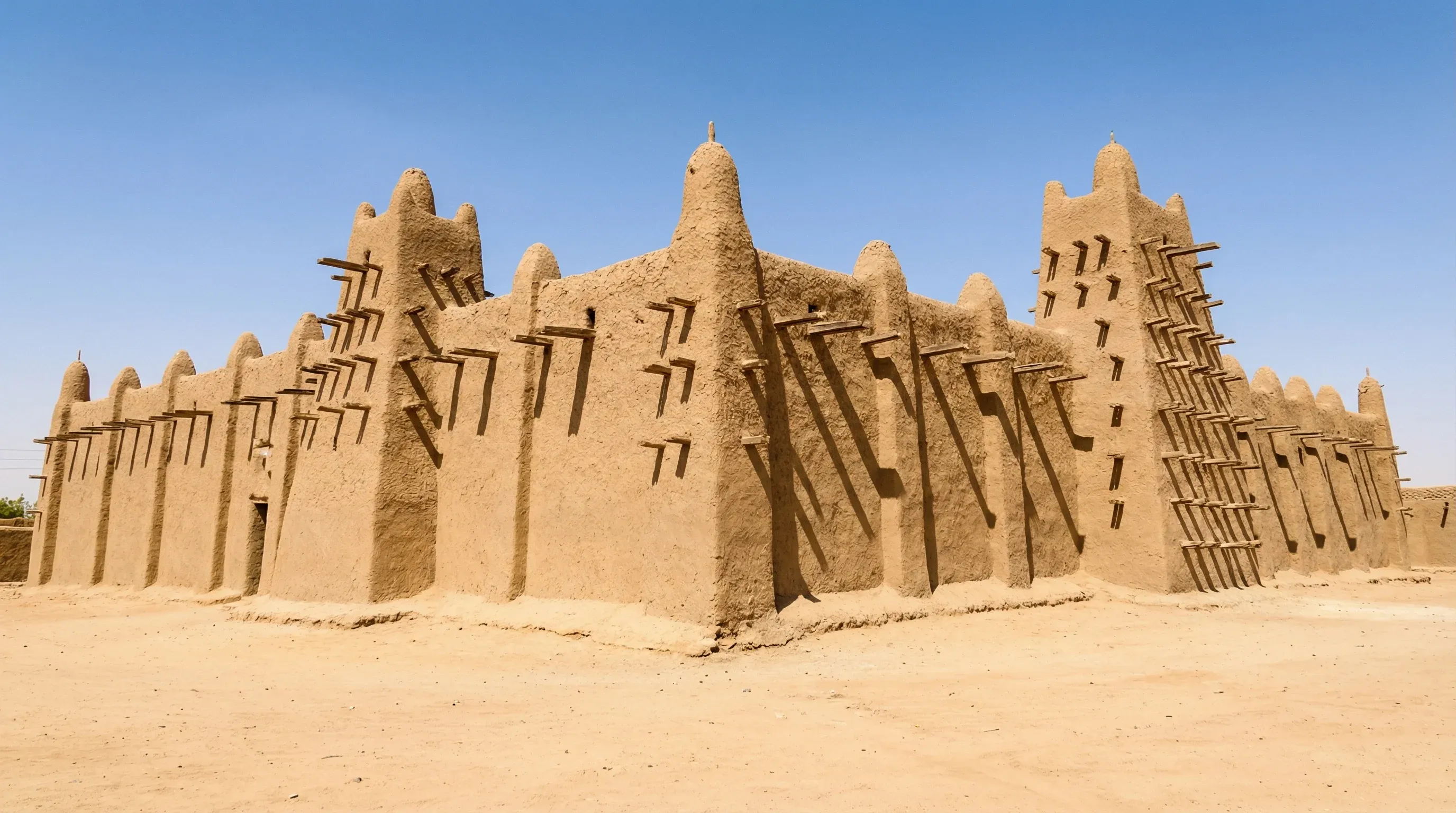
Timbuktu is a name that has become a synonym for the ends of the earth, but in reality, it was once the center of it. Located at the precise point where the Niger River flows north into the Sahara Desert, it became the meeting point of the camel and the canoe. For families, the allure of Timbuktu lies in its incredible history as a city of scholars. In the 15th and 16th centuries, it was home to universities that housed hundreds of thousands of manuscripts covering astronomy, law, mathematics, and poetry. The city is architecturally distinct, built from grey mud and limestone, with heavy, studded wooden doors influenced by Moroccan design.
Beyond the city limits lies the vast expanse of the Sahara. This is the land of the Tuareg, the 'blue men of the desert,' known for their indigo robes and mastery of the dunes. The culture here is dramatically different from the south; it is a desert culture of tea ceremonies, camel caravans, and silence. The Azalai—the salt caravan from the mines of Taoudenni—still arrives here, bringing slabs of salt to the river port. While the current conflict has silenced the tourism industry, the mystique of the city and its status as a repository of African written history remains undiminished.
Key Attractions
The city's spiritual and physical anchors are its three great mosques. The Djinguereber Mosque is the oldest, built in 1327, and is the only one open to visitors (historically). Its heavy, conical mud pillars and dark interior offer a cool refuge from the desert heat. The Sankore Mosque formerly housed the famous university; its pyramid-like minaret is the symbol of the city. In the nearby city of Gao, the Tomb of Askia stands as another mud-brick testament to the Songhai Empire's power. The Sahara Desert itself is the ever-present backdrop, offering opportunities (in peace times) for camel trekking and sleeping under the clearest starry skies imaginable.
Practical Advice
The climate is extreme desert. The 'cool' season (November to January) is the only viable time for visitors; otherwise, temperatures routinely exceed 45°C (113°F) with dust storms (Harmattan) obscuring the sky. Infrastructure is severely damaged. Electricity is rare, and medical facilities are non-existent for tourists. Travel here requires a convoy and specialized desert survival gear.
Food & Drink
Typical meal times: Lunch is late, often after 2:00 pm. Dinner is eaten late in the cool of the night, often after 9:00 pm.
Typical meal costs: Food is scarce and expensive due to transport difficulties. A simple meal might cost 5,000–8,000 XOF (approx. $8.00–13.00 USD / €7.50–12.00 EUR). Fresh vegetables are a luxury.
Dietary requirements: The diet is almost exclusively meat (mutton, camel, goat) and grain (rice, bread). Vegetables are rare. Vegetarians will struggle significantly.
Signature dishes:
- Alabadja – A northern specialty of white rice mixed with minced meat and butter. It is rich and filling.
- Toukeri – A steamed dumpling made from flour and spices, often eaten as a travel food by nomads.
- Tuareg Tea – Not a meal, but a ritual. Strong, sweet green tea served in three rounds ('gunpowder' tea), representing life, love, and death.
Why this score?
The region offers extreme adventure due to the harsh Saharan environment and the severe security risks associated with travel. Reaching the 'City of 333 Saints' currently qualifies as an expedition rather than a standard holiday, requiring specialized logistics and risk management.
Why this score?
Medical services are severely degraded by years of conflict and isolation, with local clinics lacking the most basic supplies. There is effectively no safe or reliable medical infrastructure available for international tourists in this region.
Why this score?
Timbuktu is a legendary name, but it is currently almost entirely inaccessible to leisure tourists due to its location in an active conflict zone. Regular international flights and tourist caravans have ceased, leaving the city virtually isolated from global tourism.

Despite being a poor region, the cost for a tourist to survive here is 'luxury' level due to the logistics of desert survival. Fuel is expensive, fresh food is imported, and security (if available) costs thousands of dollars. A secure compound stay would cost $150–250 USD (approx. 90,000–150,000 XOF / €140–230 EUR) per night.

Getting Here & Around
Getting Here
- Airports – Timbuktu Airport (TOM) is currently closed to civilian traffic. UN flights operate but are not for tourists.
- Boat – The ferry from Mopti runs during high water (August-December), taking 3-4 days. It is a slow, exposed journey.
- Road – The 'Road of Hope' through the desert is currently a high-risk corridor for banditry and IEDs.
Getting Around
- 4x4 Vehicle – Essential for navigating the sandy streets and surrounding desert. Regular cars cannot function here.
- Camel – The traditional method for short trips into the dunes or transporting goods within the old city.
No airports in this region. See the country flight map for nearby connections.
Official Links

Packing List
Essential for protecting the face and nose from sandstorms and intense sun.
Cellular networks are often down; this is the only reliable emergency comms.
The dry, dusty air causes severe eye irritation very quickly.
Desert temperatures drop drastically at night, often approaching freezing.
Power outages are frequent in Bamako and almost guaranteed elsewhere; street lighting is minimal.
Credit cards are virtually useless outside top hotels; ATMs are unreliable. Euros exchange easily.
Tap water is unsafe. Bottled water is available but a backup purification method is essential for emergencies.
Physical proof of vaccination is strictly checked at the airport border control upon arrival.
Extreme heat and potential stomach bugs make dehydration a rapid risk for children.
Mali is conservatively Muslim; covering shoulders and knees is respectful and avoids unwanted attention.

Activities & Best Times

Urban tourism, museums, historical sites, architecture
Home to legendary UNESCO World Heritage sites like the Djinguereber Mosque, offering deep historical immersion into Saharan trade and Islamic scholarship. Tourism is concentrated in the cooler months; the intense heat from April to September makes urban exploration physically exhausting.

Events, celebrations, seasonal attractions
Festival au Désert is internationally renowned and attracts global audiences. This is one of Africa's most famous cultural festivals. The 'marginal' rating is severely undervalued for an event of this international significance.

Hiking, wildlife, outdoor exploration, ecotourism
Offers iconic Sahara desert landscapes and the unique Niger River bend, providing high-authenticity wilderness experiences for intrepid families. Peak visitation is restricted to the cooler winter months to avoid the extreme, dangerous heat of the Saharan summer.




Public Holidays & Calendar Next 12 months
Public holidays, festivals, cultural celebrations, and seasonal natural phenomena coming up in Timbuktu & North over the next 12 months.
Loading holidays and events...

Travel Advisory
All major international travel agencies maintain their highest risk rating for Mali, advising against all travel due to extreme security threats including terrorism, kidnapping, and civil instability.
Safety Topics
Traveller Advice (2 groups)

Anyone currently in the country should leave immediately via commercial air travel while it remains available. If you must stay, maintain a personal emergency plan and consider hiring professional security services.

Aid workers face a critical risk of kidnapping for ransom by extremist groups. Operations outside of Bamako are extremely dangerous and lack government protection or support.
Agency Summaries
U.S. authorities recommend against any travel due to extreme levels of violent crime, terrorism, and kidnapping. While embassy operations have been normalized, government personnel are strictly limited to the capital, and help outside Bamako is unavailable.
The Irish Department of Foreign Affairs strongly advises against all travel. With no local embassy presence, the ability to provide emergency consular assistance is severely limited, and citizens are urged to leave via commercial air routes.
Australia urges citizens to avoid Mali entirely. There is a very high danger of terrorist activity and kidnapping throughout the country. Australians already present should consider departing while commercial flights are still operational.
The Canadian government warns against all travel to Mali because of persistent threats from terrorist organizations, high kidnapping risks, and widespread banditry. Recent fuel shortages have further complicated domestic transportation and essential services.
New Zealand classifies Mali as a no-travel zone due to extreme insecurity, violent banditry, and the threat of terrorism. The withdrawal of international peacekeeping forces has increased regional instability and risks for foreigners.
The FCDO advises against all travel to Mali citing highly unpredictable security and a significant threat of kidnapping. Militant blockades on major roads and fuel supply routes have increased risks for those attempting to travel by land.
Information is provided for general guidance only and does not constitute travel, safety, medical, or legal advice. Conditions may change. Users are responsible for independently verifying information before travel.