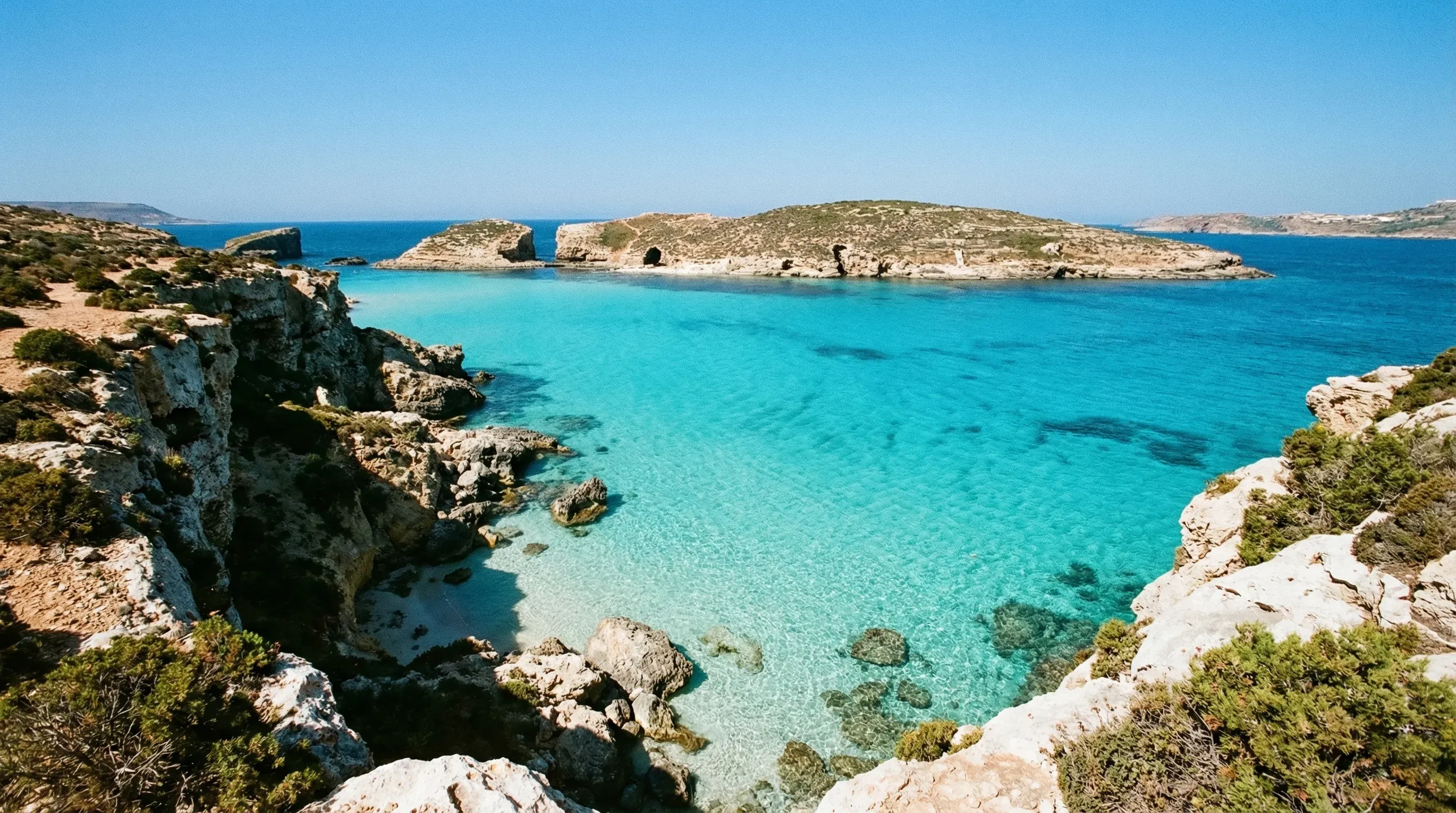

Gozo & Comino
A mythical playground of ancient giants and hidden coves 🏰🌊
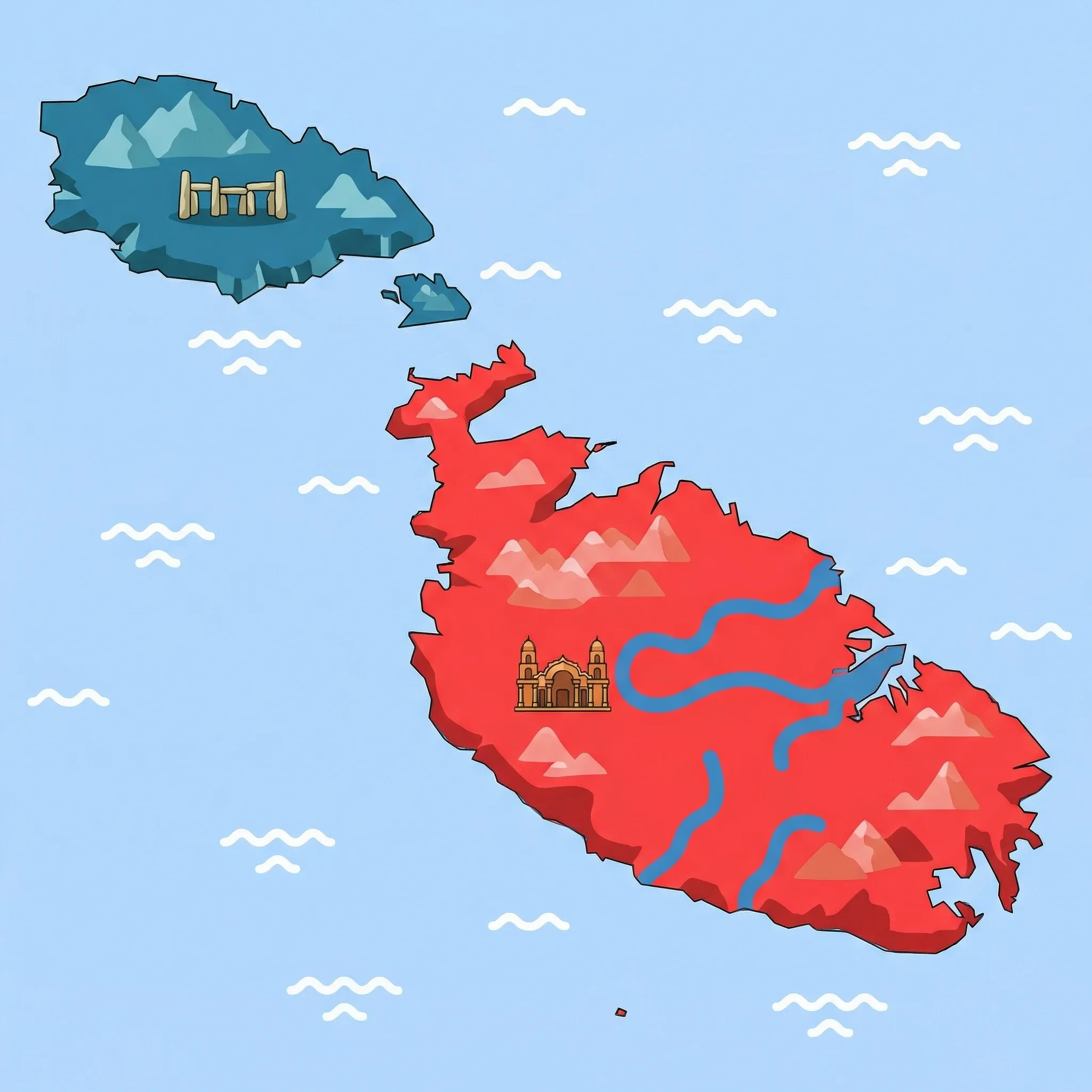
Click a region to explore
Separated from the main island by a narrow stretch of sea, Gozo feels like stepping back in time to a slower, greener, and more tranquil Mediterranean. For families, Gozo is often the highlight of a Maltese holiday because it offers space to breathe. The landscape is characterized by flat-topped hills, patchwork fields, and dramatic cliffs that drop vertically into deep blue waters. Unlike the urban density of mainland Malta, Gozo is dotted with sleepy villages where life revolves around the parish church square. The mythical home of the nymph Calypso, this island has a storybook quality that captures children's imaginations—from legends of giants building temples to knights defending stone fortresses.
Accommodation here is distinctively family-friendly; the signature Gozitan experience is renting a converted 'farmhouse'—centuries-old limestone buildings renovated with private pools and modern comforts. These provide a perfect base for families who want to self-cater and enjoy quiet evenings after days spent exploring. The pace of life here is unhurried, traffic is lighter, and the locals are famously hospitable. Whether you are hiking the coastal paths, snorkeling in safe inlets, or exploring underground grain silos, Gozo feels like a vast, open-air adventure playground safe enough for children to explore freely.
Key Attractions
The crown jewel of the island is The Citadel (Cittadella) in Victoria. Recently restored, this fortified city offers 360-degree views of the island; kids love running along the ramparts and visiting the old prison cells where graffiti from centuries-old prisoners is still visible on the walls. For a beach day, Ramla Bay is unmissable. Its sand is a striking burnt orange-red, and the water remains shallow for a long distance out, making it one of the safest swimming spots for toddlers. Just above the beach lies the legendary Calypso’s Cave (currently viewed from a distance due to stability), adding a layer of Greek mythology to the swim.
History comes in giant proportions at the Ġgantija Archaeological Park. These megalithic temples are older than the Pyramids of Egypt and Stonehenge. The local legend that they were built by a giantess who carried the stones while holding her baby appeals to children, making the archaeology accessible and fun. For a unique natural wonder, visit the Inland Sea at Dwejra. Here, a small boat can take the family through a natural tunnel in the cliffs to the open sea—a thrilling but safe short voyage. Finally, no trip is complete without a boat ride to Comino Island and Blue Lagoon. While the lagoon gets incredibly busy, the turquoise water is akin to a swimming pool. For families, it is best to go very early in the morning or late afternoon to avoid the crushed crowds and let kids snorkel in peace.
Practical Advice
The best time for families is late spring (May-June) or early autumn (September-October) when the weather is warm enough for swimming but not scorching. July and August can see temperatures soar above 35°C (95°F), making mid-day sightseeing difficult. If visiting in summer, plan activities for the morning and late afternoon, utilizing the 'siesta' hours for pool time or rest. Renting a car is almost essential on Gozo; while buses exist, they are less frequent than on Malta, and waiting in the heat with children is not ideal. Gozo is generally very safe, but keep an eye on children near cliff edges, which are often unfenced.
Food & Drink
Typical meal times: Lunch is typically served from 12:30 pm to 2:30 pm. Dinner is a relaxed affair, usually starting from 7:00 pm or 7:30 pm, with many kitchens staying open until 10:00 pm.
Typical meal costs: A meal for a family of four in a mid-range restaurant costs roughly €60–100 (approx. $65–110 USD / £50–85 GBP). Street food snacks are very cheap, often under €3 ($3.25 USD / £2.50 GBP).
Dietary requirements: Vegetarian options are standard, particularly pasta and cheese dishes. Gluten-free pasta is available in most restaurants, though cross-contamination can be a risk in smaller bakeries. Dairy is heavy in local cuisine.
Signature dishes:
- Gbejniet – Small, round cheeselets made from sheep or goat milk, served fresh (soft) or dried (hard and peppery). Kids usually like the fresh, mild version.
- Ftira Għawdxija – The Gozitan version of pizza, typically made with a bread dough base and topped with sliced potatoes, onions, tomatoes, and sometimes anchovies (ask to remove fish for picky eaters).
- Imqaret – Deep-fried diamond-shaped pastries filled with spiced dates, a sweet treat often sold at street stalls.
Why this score?
The islands offer a more rural and rugged landscape than the mainland, featuring world-class diving at the Blue Hole and scenic coastal hiking trails. While more off-the-beaten-path, the small geographic scale and presence of clear signage and transport make it accessible for families.
Why this score?
Gozo General Hospital provides reliable medical services with English-speaking staff and modern facilities. While most major surgeries and specialized care are centralized on the main island, the local infrastructure is robust enough to handle tourist emergencies and routine family needs.
Why this score?
Gozo and Comino are highly recognizable Mediterranean destinations, particularly famous for the Blue Lagoon and Ggantija Temples. While they receive fewer overnight stays than the main island, they are essential day-trip targets for a large portion of Malta's 3.5 million annual visitors.

Gozo is generally slightly cheaper than mainland Malta, particularly for accommodation. A restored farmhouse with a pool can cost €150–250 (approx. $160–270 USD / £125–210 GBP) per night in shoulder season. Restaurant mains average €12–22 (approx. $13–24 USD / £10–19 GBP). Ferry tickets are standard: approx €15.70 ($17 USD / £13.50 GBP) for a car and driver return, and €4.65 ($5 USD / £4 GBP) for additional passengers.

Getting Here & Around
Getting Here
- Ferry – The main Gozo Channel Ferry runs 24/7 from Cirkewwa (Malta) to Mgarr (Gozo). The crossing takes 25 minutes. You do not pay on the way there; you pay the return fare when leaving Gozo.
- Fast Ferry – A passenger-only catamaran service runs from Valletta (Grand Harbour) directly to Gozo in 45 minutes, landing near the The Citadel (Cittadella) bus links.
- Driving – If renting a car at Malta Airport, you can drive it onto the ferry. This is the most convenient option for families with luggage.
Getting Around
- Car – Highly recommended. It gives you the freedom to reach remote bays like Ramla Bay without relying on bus schedules. Traffic is much lighter than on the main island.
- Bus – Public buses cover the island, all radiating from the Victoria terminal. They are cheap, but frequencies can be low (every 45–60 minutes) in rural areas.
- Hop-on Hop-off – Popular with day-trippers, these buses loop between major sites including Ġgantija Archaeological Park and the coast.
No airports in this region. See the country flight map for nearby connections.

Packing List
Many superb swimming spots (like Wied il-Ghasri) are rocky with sharp limestone entry points.
Gozo is more rural than Malta; mosquitoes can be aggressive in farmhouses and gardens at dusk.
Buying quality gear on the island is pricey; the underwater visibility is world-class for kids.
Useful for exploring the darker corners of the Citadel silos or unlit rural paths near farmhouses.
Many of the best swimming spots, including the Blue Lagoon, have rocky entries and sea urchins.
Churches like St. John's Co-Cathedral strictly enforce dress codes; shoulders and knees must be covered.
Malta uses the British 3-pin rectangular plug system, which surprises many European travellers.
Valletta and Mdina have many steep steps and cobblestones where pushchairs struggle.

Activities & Best Times

Hiking, wildlife, outdoor exploration, ecotourism
Features dramatic limestone geology like Dwejra Bay and the crystal-clear waters of the Blue Lagoon. Best explored via coastal walks in spring when the islands are lush and green; July and August are often too hot for active nature exploration.

Urban tourism, museums, historical sites, architecture
Home to the world-class Cittadella and Ggantija Temples, offering an authentic, slow-paced Mediterranean heritage experience. Peak visits occur during the temperate spring and autumn, while mid-summer heat can make urban exploration uncomfortable.

Beach resorts, marine activities: diving, snorkelling, kite surfing, wind surfing, sailing
Renowned for the Blue Lagoon's exceptional sea visibility and the unique red sands of Ramla Bay. High summer is peak for swimming and boat excursions, though sea temperatures remain acceptable for hardy travelers in late spring and early autumn.

Scenic drives, countryside tours, route-based travel
The North Coast Salt Pan drive and Dwejra loop offer incredibly scenic, compact driving experiences through rural landscapes. While the island is small, the high density of viewpoints and coastal vistas provides a high-quality touring environment during clear-sky months.

Sport tourism, fitness activities, active recreation
Gozo is a premier destination for diving, featuring the Blue Hole and inland sea tunnel, alongside established cycling routes. Optimal conditions for both land and sea sports occur in the transitional seasons to avoid the peak summer heat and winter storms.

Learning experiences, scientific sites, historical education
Small-scale but authentic scientific engagement is available at the Gozo Nature Museum within the historic Citadel. While not a primary travel motivator, it serves as an excellent educational supplement for families visiting the islands' natural sites during the main tourism season.

Attractions (12 total)



Public Holidays & Calendar Next 12 months
Public holidays, festivals, cultural celebrations, and seasonal natural phenomena coming up in Gozo & Comino over the next 12 months.
Loading holidays and events...

Travel Advisory
Malta is assessed as a low-risk destination by all major international agencies. Standard personal safety awareness and common sense are sufficient for most travellers. No major security or safety threats are present beyond typical urban petty crime.
Safety Topics
Traveller Advice (3 groups)

Malta is highly progressive and consistently ranks as one of the most LGBT-friendly countries in the world. Legal protections are strong and social acceptance is very high across the islands.

While the country is generally safe, physical and sexual assaults have been reported in nightlife districts like Paceville. Travellers should remain vigilant in these areas, especially where alcohol consumption is high, and never leave drinks unattended.

Dual nationals are recognized by the Maltese government; however, unlike some countries, dual citizens are not subject to mandatory military service requirements.
Agency Summaries
The U.S. Department of State classifies Malta as a Level 1 destination, indicating a low risk to safety and security. Travellers should follow standard safety protocols and remain aware of their surroundings. Passport validity should be checked to ensure compliance with Schengen Area requirements.
Malta is a safe destination for British nationals with no specific travel restrictions in place. Travellers should stay informed about the global risk of terrorism and ensure their travel documents meet Schengen requirements, including passport issue dates and validity periods.
The Irish government advises normal safety measures for visitors to Malta. Irish citizens do not require a visa for entry but are encouraged to register with authorities if staying for more than 90 days. Standard vigilance regarding personal belongings is recommended.
There is currently no specific travel advisory for Malta, meaning New Zealanders should follow baseline safety protocols. Comprehensive travel insurance is highly recommended, especially to cover potential medical evacuations given the island's geography.
Australia advises travellers to use common sense and maintain standard precautions. While generally safe, petty crime and nightlife-related rowdiness are present in tourist hubs. Australia maintains a reciprocal healthcare agreement with Malta providing access to public medical facilities for short stays.
Malta is considered a low-risk destination where travellers should maintain standard safety awareness. Petty crimes such as pickpocketing and bag snatching occur in crowded areas and nightlife districts. Travellers are advised to be cautious in the Paceville area where large crowds and alcohol consumption can lead to incidents.
Information is provided for general guidance only and does not constitute travel, safety, medical, or legal advice. Conditions may change. Users are responsible for independently verifying information before travel.