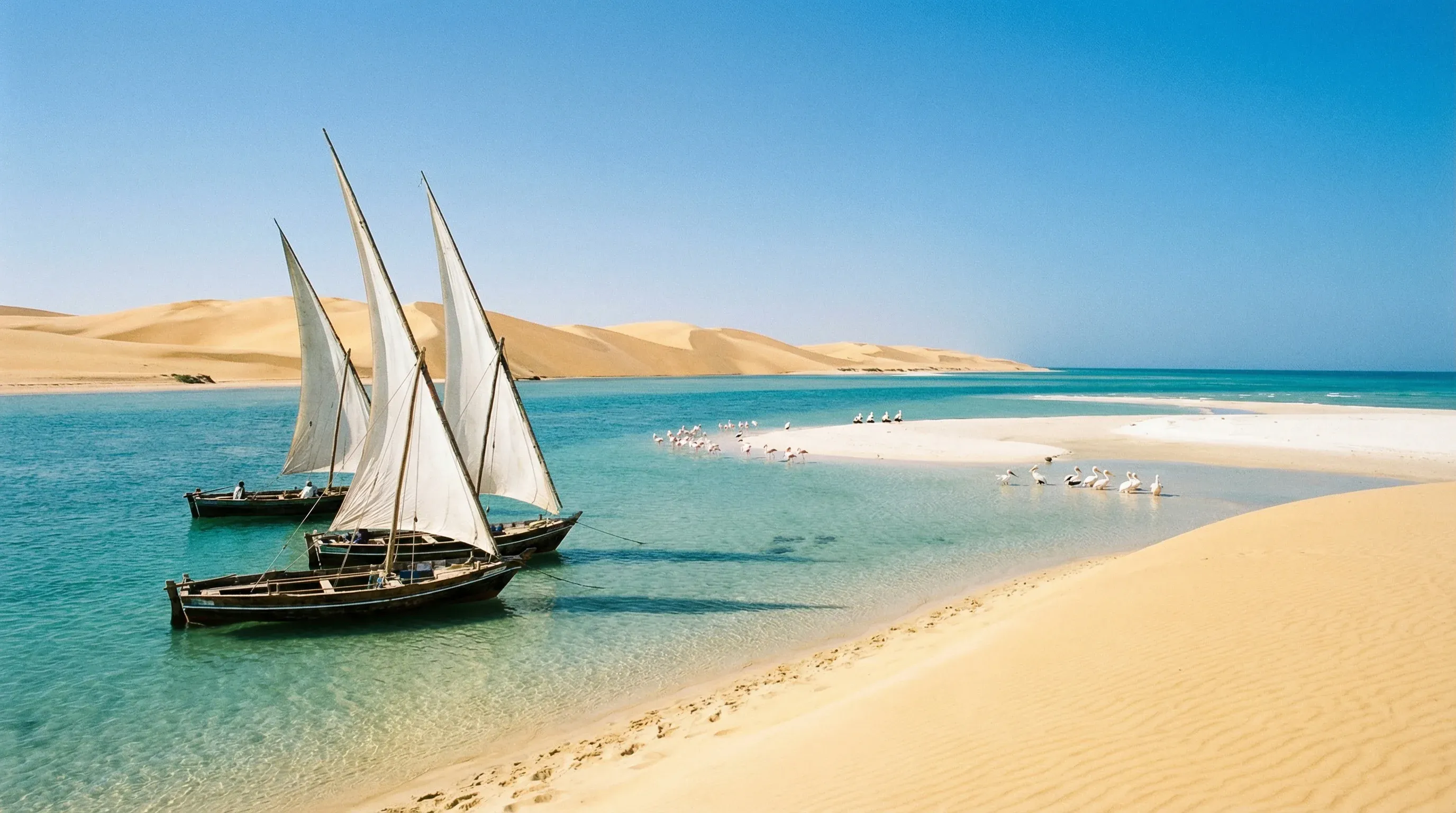

Banc d'Arguin (birds)
Where the golden desert meets the silver sea 🌊🦅
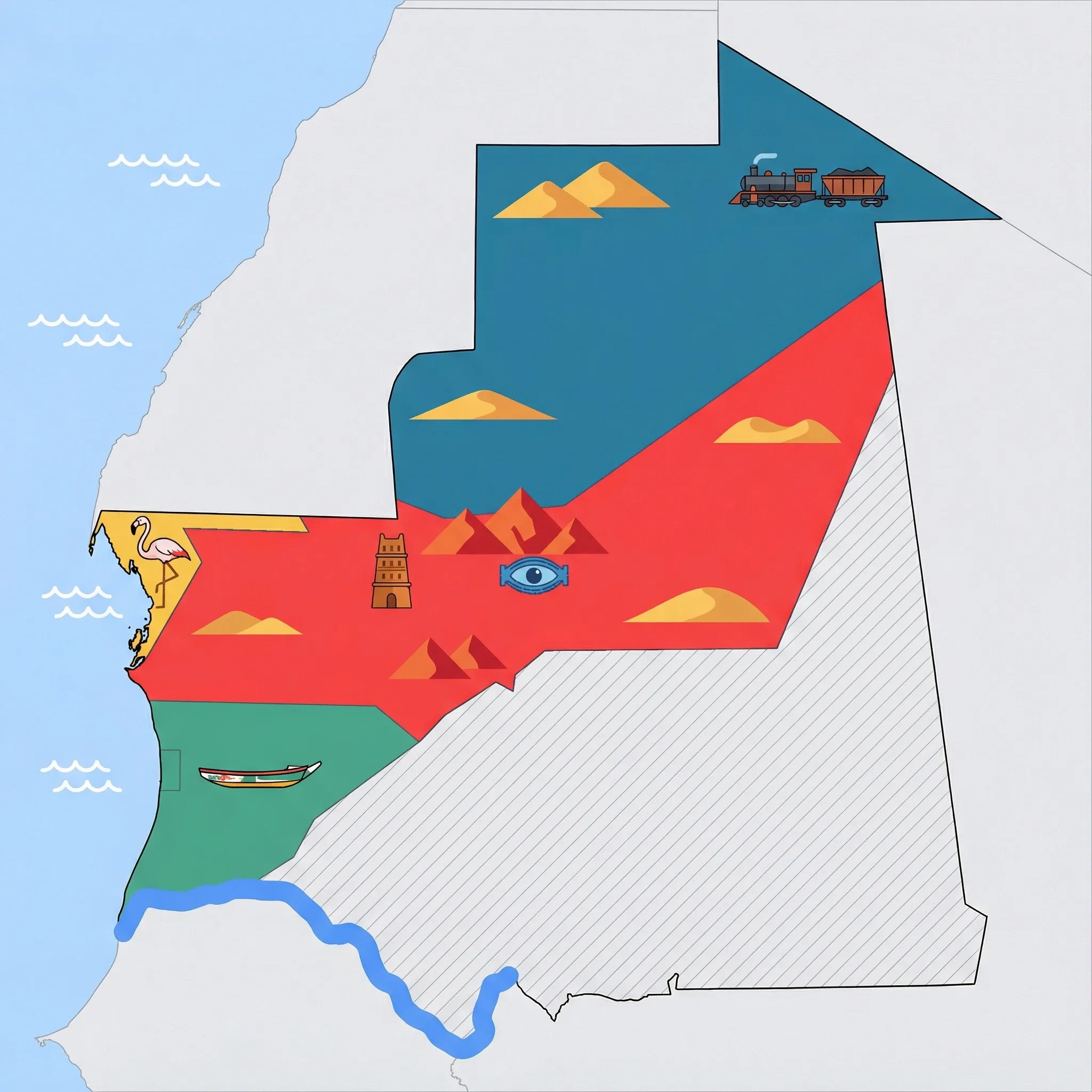
Click a region to explore
⚠️ SAFETY WARNING: Due to the remote nature of this region and general country-wide security concerns, government agencies (including CA, USA, UK, and AU) advise travelers to reconsider their need to travel or exercise a high degree of caution. While specific terrorist incidents have not recently targeted the park, the area is isolated with limited infrastructure. Medical evacuation is difficult. Families should only visit with reputable, registered tour operators and consult their own government's official travel advisory before booking.
Overview
The Banc d'Arguin is one of the most dramatic geological and ecological meeting points on Earth. Here, the endless golden dunes of the Sahara do not simply fade away; they tumble directly into the Atlantic Ocean, creating a vast landscape of tidal mudflats, sandbanks, and shallow channels. For families who love nature, this UNESCO World Heritage site is a revelation. It is not a typical beach holiday destination—the waters are for wildlife rather than swimming—but it offers a front-row seat to one of nature's greatest spectacles. The park is a critical stopover for millions of migratory birds flying between Europe and southern Africa. In winter, the sky and sandbanks turn pink with tens of thousands of flamingos, while pelicans, terns, and spoonbills crowd the shallows. It is a living biology lesson that captivates children and adults alike.
Beyond the birds, the region is the ancestral home of the Imraguen people, a distinct fishing culture that has lived in harmony with this harsh environment for centuries. Unlike modern industrial fleets, the Imraguen use traditional wooden sailboats called lanches, relying on the wind and tides to catch mullet. In some areas, they historically communicated with dolphins to drive fish into their nets—a story that fascinates young travelers. Visiting the Banc d'Arguin is about slowing down. There are no bustling cities or theme parks here; instead, families will find the luxury of silence, the brilliance of unpolluted starlit skies, and the adventure of sleeping in traditional Mauritanian tents (khaimas) within hearing distance of the crashing waves.
Key Attractions
The undisputed highlight is the Banc d'Arguin National Park itself. Covering a third of Mauritania's coastline, it is best explored by boat. Families can take a guided trip on a traditional lanche from the village of Iwik. These silent, wind-powered vessels allow you to glide incredibly close to massive flocks of birds without disturbing them. Seeing a cloud of pink flamingos take flight against the backdrop of desert dunes is a memory that defines the trip.
On land, the viewpoints around Cap Tafarit offer sweeping panoramas where the contrast between the orange desert sand and the turquoise ocean is most striking. It is an ideal spot for a family picnic and photography. While swimming is not the main activity due to shallow, muddy waters, the sheer emptiness of the beaches allows for wonderful beachcombing walks where children can find shark teeth, giant shells, and bones washed up from the Atlantic depths.
Practical Advice
The best time to visit is during the European winter (November to February) when the migratory birds are present in their millions and the temperatures are bearable (around 25°C/77°F). Summers are scorchingly hot and devoid of many bird species. This is a remote expedition; you must travel with a 4x4 and a driver/guide. Accommodation is primarily in basic eco-camps or traditional tents; electricity and running water may be limited, so prepare children for a "camping-style" adventure.
Food & Drink
Typical meal times: Lunch is typically served late, from 1:00 pm to 3:00 pm, while dinner is a communal affair starting around 8:00 pm or 9:00 pm.
Typical meal costs: Meals are usually included in tour packages. If paying independently at a camp, expect to pay 400–800 MRU (approx. $10–20 USD / €9–19 EUR) per person for a set menu.
Dietary requirements: The diet here is strictly limited to what is locally available—primarily fish, rice, and bread. Vegetarians may struggle as vegetable supplies are irregular in the desert; bringing supplementary protein bars or snacks for children is highly recommended. Gluten-free options are rare.
Signature dishes:
- Poutargue (Bottarga) – The region is famous for dried mullet roe. It is a salty, intense delicacy often sliced thin and eaten with bread—an acquired taste but a local icon.
- Thieboudienne (Fish and Rice) – The staple meal, featuring fresh catch from the Atlantic cooked in a tomato base with rice and whatever vegetables (carrots, cassava) have been brought in from the city.
- Pain de Sable (Sand Bread) – Bread baked traditionally in the hot sand beneath the embers of a fire. Watching the preparation is magical for kids, and the bread is dusted off and surprisingly grit-free.
Why this score?
Visiting requires 4WD vehicles and navigating vast intertidal mudflats and desert tracks. The experience is rugged, involving stays in basic tents or traditional dwellings with no modern amenities, and activities like sailing on traditional non-motorized Imraguen boats.
Why this score?
Medical facilities are almost non-existent within the park boundaries, with only very basic clinics in nearby villages. Any serious medical emergency would require a lengthy 4WD journey back to Nouakchott or Nouadhibou, making it a high-risk area for families with health concerns.
Why this score?
While a UNESCO World Heritage site and a world-class destination for ornithologists, the region sees very few international visitors due to its remote coastal location. Infrastructure is limited to a few eco-camps and the traditional fishing village of Iwik, catering to a small number of niche adventure travelers and researchers.

While the region is undeveloped, visiting is not cheap due to the logistics required. You are paying for the exclusivity and the 4x4 transport. A fully supported 3-day tour typically costs between 12,000–20,000 MRU (approx. $300–500 USD / €280–470 EUR) per person. Accommodation in eco-tents runs 2,000–4,000 MRU (approx. $50–100 USD / €45–95 EUR) per night including meals.

Getting Here & Around
Getting Here
- Airports – Most visitors arrive via Nouakchott-Oumtounsy International Airport (NKC), which is the main gateway. From there, it is a 4x4 expedition to the park.
- Driving – The park is accessed via the main Nouakchott-Nouadhibou highway. The drive from Nouakchott takes approximately 3–4 hours to the park entrance, followed by off-road driving on sand tracks to reach the camps.
Getting Around
- Car (4x4) – A four-wheel-drive vehicle is mandatory. The terrain consists of soft sand, mudflats, and unmarked tracks. Self-driving is dangerous due to the risk of getting stuck in rising tides; a local driver is essential.
- Boat (Lanche) – Within Banc d'Arguin National Park, the only way to access the bird islands and shallow waters is by the traditional lanche sailboats operated by Imraguen locals.
No airports in this region. See the country flight map for nearby connections.
Official Links

Packing List
Essential for viewing birds on the islands, as boats cannot land to protect nests.
Boat trips are on open sailing vessels; spray and splashes are guaranteed.
Campsites have limited electricity; red light prevents attracting desert insects.
Atlantic winds make evenings surprisingly cold, even after hot days.
Essential for protecting eyes during sandstorms or if near the dusty Iron Ore Train.
Used locally to wrap the face and head for protection against sun, wind, and sand.
The desert air is extremely dry and dusty; this helps prevent nosebleeds and discomfort.
Power cuts are common and desert camping is pitch black; red light preserves night vision.
Provides a clean sleeping layer when staying in basic guest houses or communal nomad tents.
Sand gets everywhere; essential for protecting phones, cameras, and documents.

Activities & Best Times

Hiking, wildlife, outdoor exploration, ecotourism
UNESCO World Heritage site, one of the world's most significant bird sanctuaries (over 2 million migratory birds), globally important coastal ecosystem. Meets international standards for 'very_good' nature tourism.

Scenic drives, countryside tours, route-based travel
The Nouakchott–Nouadhibou highway offers a world-class desert driving experience with access to remote coastal tracks like the Piste d'Iwik. Winter provides the safest and most comfortable driving conditions, avoiding the extreme engine stress and discomfort of 40°C+ summer temperatures.

Beach resorts, marine activities: diving, snorkelling, kite surfing, wind surfing, sailing
Rugged, windswept coastal sites like Cap Tafarit offer raw Atlantic beauty rather than traditional resort infrastructure. Visitation is best during the cooler months to avoid the scorching sun and high humidity of the Saharan summer.

Urban tourism, museums, historical sites, architecture
The Imraguen fishing culture is authentic but this is remote coastal villages, not city tourism. No urban cultural infrastructure, museums, or galleries. The 'very_good' rating conflates cultural authenticity with city cultural tourism.

Learning experiences, scientific sites, historical education
The Ecomusée du Banc d'Arguin offers specific scientific insights into the intersection of desert and marine ecosystems. Optimal visitation aligns with peak bird activity and the presence of international research initiatives during the cooler winter season.




Public Holidays & Calendar Next 12 months
Public holidays, festivals, cultural celebrations, and seasonal natural phenomena coming up in Banc d'Arguin (birds) over the next 12 months.
Loading holidays and events...

Travel Advisory
All major agencies maintain a high-level warning for Mauritania, primarily due to terrorism, the threat of kidnapping against Westerners, and violent crime. Non-essential travel is discouraged for the entire country, while large regional sections are considered too dangerous for any travel.
Safety Topics
Traveller Advice (3 groups)
Staff from international organizations are at a heightened risk of kidnapping in the eastern and northern regions. Professional security assessments and escorts are strongly recommended when operating outside Nouakchott.

Female travellers should dress conservatively and avoid moving alone, particularly after dark. There are significant legal risks when reporting sexual assault, as local laws may require victims to provide specific proof to avoid being charged with non-consensual acts themselves.

A pre-approved electronic visa is mandatory for entry; visas are no longer issued upon arrival at the border or airport. Travellers should carry multiple photocopies of their passport at all times as identity checks are frequent.
Agency Summaries
New Zealand classifies the security situation as unpredictable, citing kidnapping and terrorism as major threats. Travel to northern and eastern provinces is strongly discouraged due to armed banditry and military operations.
Canadians are advised to avoid non-essential travel due to significant threats of terrorism and kidnapping. Highest risk levels apply to northern and eastern border regions where extremist groups and bandits are active. Westerners are frequently targeted for abduction.
Australia advises a high degree of caution overall with a recommendation to reconsider travel plans due to kidnapping risks and terrorism. Violent crime is on the rise, and landmines remain a hazard near the Western Sahara border, particularly after sandstorms.
British authorities advise against all travel to eastern regions and border zones, and all but essential travel elsewhere. There is a high risk of terrorism and kidnapping throughout the country. Civil unrest and demonstrations occur periodically in the capital.
Ireland advises against non-essential travel due to serious security concerns. Irish citizens have very limited consular support as there is no local embassy. E-visas must be obtained online prior to departure.
The U.S. government recommends reconsidering travel because of crime and terrorism. Violent crimes like armed robbery and assault are common. Military-restricted zones in the north and along the Mali/Algeria borders are extremely dangerous and off-limits to visitors.
Information is provided for general guidance only and does not constitute travel, safety, medical, or legal advice. Conditions may change. Users are responsible for independently verifying information before travel.