
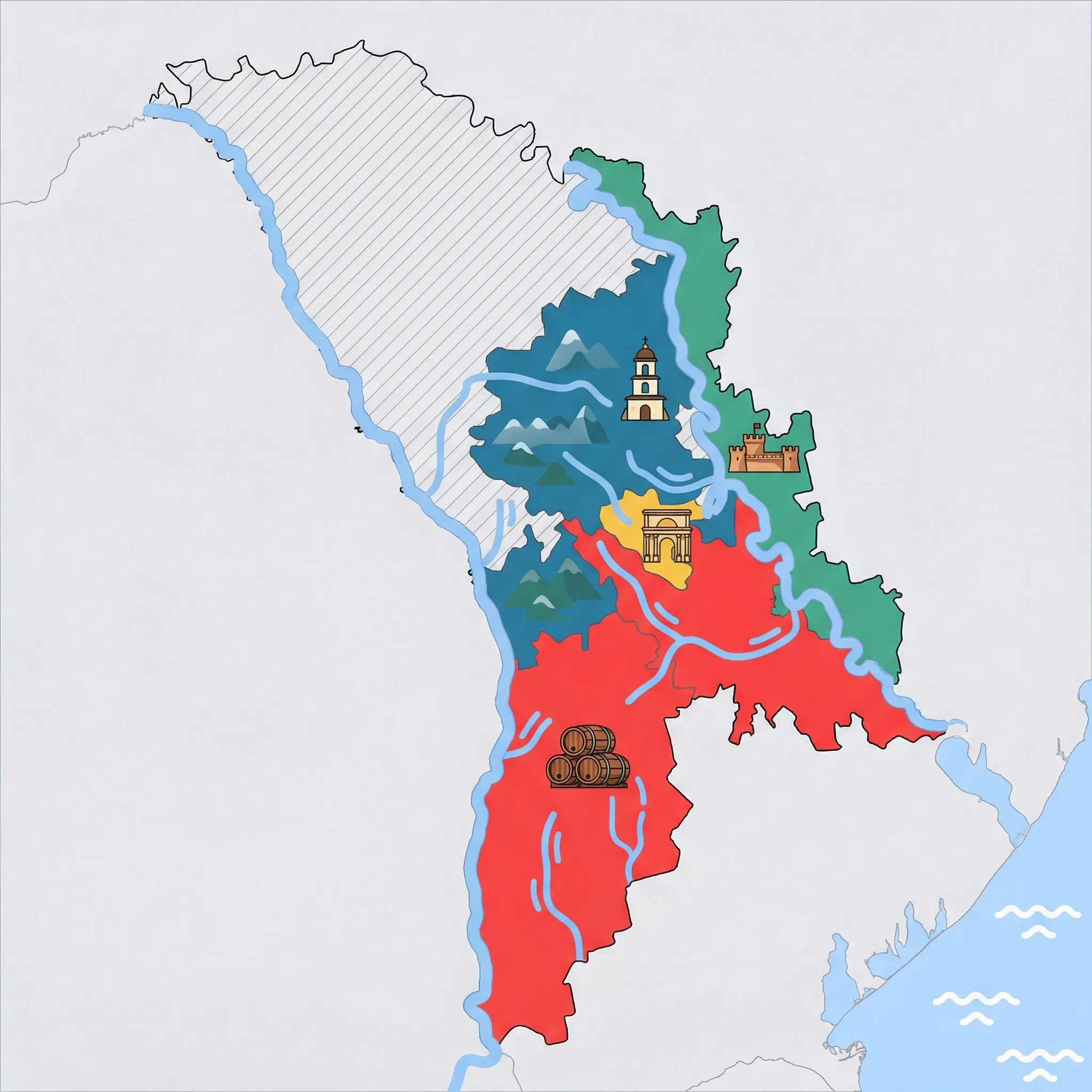
Click a region to explore
⚠️ SAFETY WARNING: Due to the unpredictable security situation, political volatility, and lack of consular support, government agencies (including CA, USA, UK, AU, IE, NZ) advise travelers to avoid all travel to Transnistria. This breakaway region is not under Moldovan government control, and if you encounter difficulties, your home government cannot assist you. Families are strongly urged to consult their own government's official travel advisory before considering a trip, as circumstances and risk assessments vary.
For those who do choose to visit, Transnistria (officially the Pridnestrovian Moldavian Republic) offers one of the most unusual travel experiences in Europe. It is a breakaway territory that functions as an independent state—with its own border guards, currency, and flag—yet remains unrecognized by the UN. Crossing the Dniester River feels like crossing into a different epoch. The streets of Tiraspol, the capital, are lined with Soviet-style blocks, hammer-and-sickle emblems, and statues of Lenin, yet the city is surprisingly tidy, quiet, and full of roses. It is an open-air museum of a geopolitical twilight zone.
Despite its reputation, the atmosphere on the ground for tourists is generally calm and curious. Families will find large, well-maintained parks and a slow pace of life. The region is proud of its distinct identity, and English is rarely spoken, making a visit feel like a true expedition. However, the logistics are tricky: you must register upon entry, you cannot use international credit cards, and mobile roaming often fails. It is a destination for adventurous families interested in history and geopolitics, rather than a standard holiday spot.
Key Attractions
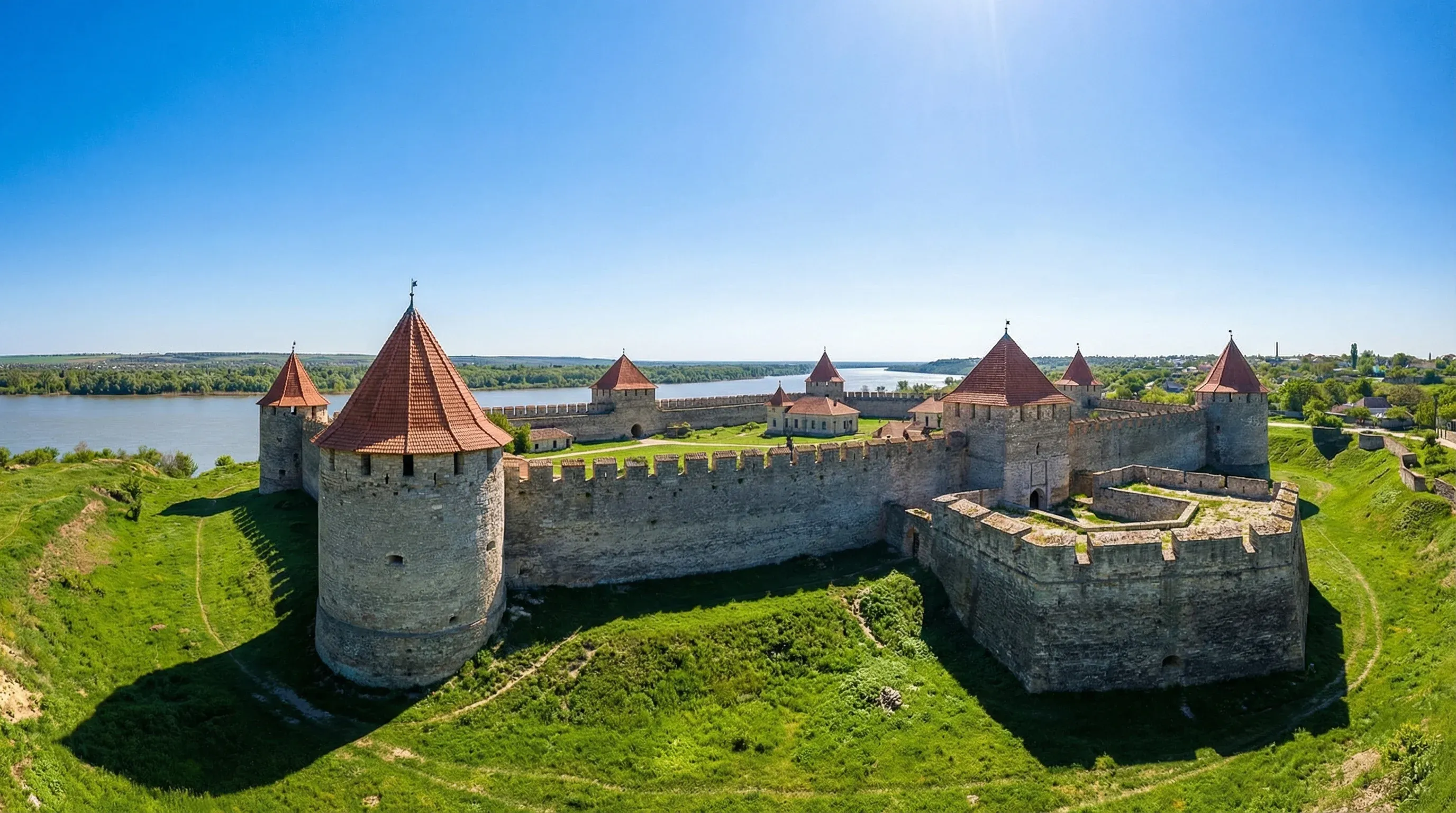
The highlight for families is undoubtedly the Bender Fortress (Tighina Fortress). This massive 16th-century Ottoman citadel has been heavily restored and allows children to walk along the ramparts and climb the towers. Inside, there are museums showcasing medieval torture instruments (skip for sensitive kids) and local history. The grounds are expansive and offer great views over the river.
In Tiraspol, the Catherine Park (Ekaterininskiy Park) is a modern, immaculate public space featuring statues of Catherine the Great, fountains, and lakes. It is the center of family life in the city and a safe place for kids to play. Nearby, Suvorov Square is the vast central plaza dominated by an equestrian statue of Alexander Suvorov and a Soviet T-34 tank monument, providing a stark history lesson and iconic photo opportunities.
Practical Advice
Entry requires a passport; you will receive a migration card that you must keep and surrender upon exit. Do not lose it. The visit is usually limited to 10-12 hours unless you register a hotel stay. Photography of military sites or checkpoints is strictly prohibited and can lead to detention. Bring enough cash (USD/EUR) to exchange for Transnistrian Rubles immediately, as your cards will not work.
Food & Drink
Typical meal times: Similar to Moldova, lunch is 12:00 pm to 2:00 pm. Restaurants in Tiraspol are open late, but service can be slow.
Typical meal costs: Costs are low. A family meal costs around 300–500 Transnistrian Rubles (approx. $18–30 USD / €16–27 EUR). *Note: Prices are in local rubles, which cannot be exchanged outside the region.*
Dietary requirements: Russian cuisine dominates. Vegetarian borscht and salads are available, but meat dumplings and stews are the norm. Vegan options are very limited outside of simple side dishes.
Signature dishes:
- Pelmeni – Russian-style meat dumplings served with butter, sour cream, or vinegar. A hit with children due to their simple flavor and soft texture.
- Borscht – A beetroot soup that is a staple here, often served with a dollop of sour cream (smetana) and garlic bread (pampushky).
- Kvass – A fermented non-alcoholic drink made from rye bread, sold from street tankers in summer. It has an acquired taste that kids might find interesting.
Why this score?
The adventure here is primarily geopolitical and cultural rather than physical, as the region is relatively flat and urbanized. Visiting a territory with limited international recognition creates a sense of being off-the-beaten-path, and the lack of standard tourist signage adds a layer of difficulty. However, the presence of developed cities like Tiraspol and the ease of visiting the Bender Fortress keep the ruggedness moderate.
Why this score?
Medical services in Transnistria are separate from the Moldovan national system and operate with limited resources and aging infrastructure. Access for foreigners is complicated by the region's political status, and international travel insurance may not be recognized or easy to process locally. For anything serious, immediate evacuation to Chișinău or across the border to the EU is generally recommended.
Why this score?
Transnistria attracts a small number of intrepid travelers drawn by its unique status as a 'de facto' independent state and its preserved Soviet aesthetics. Attractions like the Bender Fortress and Tiraspol's Suvorov Square are highlights, but the region is far from a mainstream tourist destination. Many foreign visitors only stay for a day due to the administrative requirements and political complexities of the territory.

Transnistria is very cheap for visitors. A museum ticket might cost 25–50 Transnistrian Rubles (approx. $1.50–3.00 USD / €1.40–2.80 EUR). A hearty lunch is 80–120 Rubles (approx. $5–7.50 USD / €4.50–7.00 EUR). However, you must exchange cash into Transnistrian Rubles, and you cannot convert leftover Rubles back easily outside the region, so change small amounts.

Getting Here & Around
Getting Here
- Bus – Regular minibuses (marshrutkas) run from Chișinău Central Bus Station to Tiraspol and Bender. The journey takes about 1.5–2 hours depending on border formalities.
- Train – The train from Chișinău to Odesa stops in Tiraspol. It is more comfortable than the bus and border control is handled on board, but the schedule is infrequent.
- Car – You can drive, but it requires patience at the 'border'. Ensure your rental agency allows travel to Transnistria (many do not) and be prepared to buy local third-party insurance at the checkpoint.
Getting Around
- Trolleybus – Tiraspol has an aging but functional trolleybus system that connects major sites. It is extremely cheap and offers a window into local life.
- Taxi – Local taxi apps exist, or you can hail them. You must pay in Transnistrian Rubles. Distances between Suvorov Square and Catherine Park are walkable.
- Walking – Tiraspol is very walkable, with wide, flat sidewalks. Walking across the Dniester bridge to reach the city beach is a popular activity.
No airports in this region. See the country flight map for nearby connections.
Official Links

Packing List
International ATMs and credit cards DO NOT WORK in Transnistria. You must exchange cash.
Border guards often demand physical proof of accommodation to allow stays longer than 10 hours.
You must keep the loose migration slip safe; losing it causes major exit fines/delays.
Mobile data roaming often fails or is extremely expensive in this specific region.
You will frequently remove shoes when entering homes and monasteries; slip-ons make this much easier.
Street lighting in villages and even some city parks can be very sparse or non-existent at night.
Credit cards are rarely accepted outside Chișinău; small shops and rural markets operate almost exclusively on cash.
Public restrooms, especially at bus stations or in rural areas, often lack toilet paper and soap.
Essential for entering Orthodox monasteries and churches, where covering your head is a strict requirement.

Activities & Best Times

Hiking, wildlife, outdoor exploration, ecotourism
The region offers unique rural experiences including sturgeon farm tours and hiking through the Dniester valley's limestone cliffs. Peak conditions occur in late spring and early autumn when the temperate climate is ideal for nature exploration without the mid-summer heat.

Urban tourism, museums, historical sites, architecture
Known for its unique Soviet-era aesthetics and the impressive Bender Fortress, this region offers a distinctive cultural 'time-capsule' experience. The transition seasons provide the most comfortable walking weather for exploring Tiraspol's landmarks and historic monuments.

Sport tourism, fitness activities, active recreation
Established cycling routes and modern adventure parks like Catherine Park offer structured activity for families. The most favorable conditions for these active pursuits are during the mild, sunny months of May, June, and September.

Scenic drives, countryside tours, route-based travel
Short but scenic drives along the Dniester River provide views of rural villages and historic monasteries. While evocative, the limited geographic scale makes this a secondary activity rather than a standalone driving destination.

Amusement parks, family entertainment venues
Regional amusement parks and aquatic centers offer local family entertainment but do not meet the scale or facility standards of world-class international parks. Visits are best timed for the height of summer when aquatic facilities are fully operational.

Attractions (7 total)



Public Holidays & Calendar Next 12 months
Public holidays, festivals, cultural celebrations, and seasonal natural phenomena coming up in Transnistria over the next 12 months.
Loading holidays and events...

Travel Advisory
All major agencies recommend exercising a high degree of caution or increased vigilance throughout Moldova, primarily due to the regional security environment and political tensions resulting from the nearby conflict in Ukraine. The breakaway region of Transnistria carries a much higher risk level, with several agencies advising against all travel there.
Safety Topics
Traveller Advice (3 groups)

Female visitors are encouraged to review safety resources specifically for solo or group women travellers before arriving, as standard safety precautions for women should be strictly followed.
Accessibility features in public spaces and transportation may be limited; those with mobility or other disabilities should research specific facility standards in advance.

It is recommended that LGBTQ+ travellers consult specialized guides on local social attitudes and legal frameworks to ensure their safety and comfort during their stay.
Agency Summaries
Due to the regional instability, visitors are urged to be extremely cautious, monitor local news closely, and strictly avoid the breakaway Transnistria area.
Increased safety precautions are necessary across the country because of the unpredictable security landscape and the proximity of military activity in Ukraine.
A state of emergency and regional conflict necessitate heightened awareness. Visitors are advised to steer clear of all political gatherings and the Transnistria region.
While most of the country is accessible, all travel to the Transnistria region is discouraged due to volatile security and restricted consular access. Potential energy shortages may affect infrastructure.
Vigilance is advised because of the persistent tensions surrounding the separatist Transnistria territory and the broader regional security situation linked to the war in Ukraine.
Travellers should remain highly vigilant due to the ongoing spillover effects from the conflict in neighboring Ukraine and the potential for sudden civil disturbances or demonstrations.
Information is provided for general guidance only and does not constitute travel, safety, medical, or legal advice. Conditions may change. Users are responsible for independently verifying information before travel.