
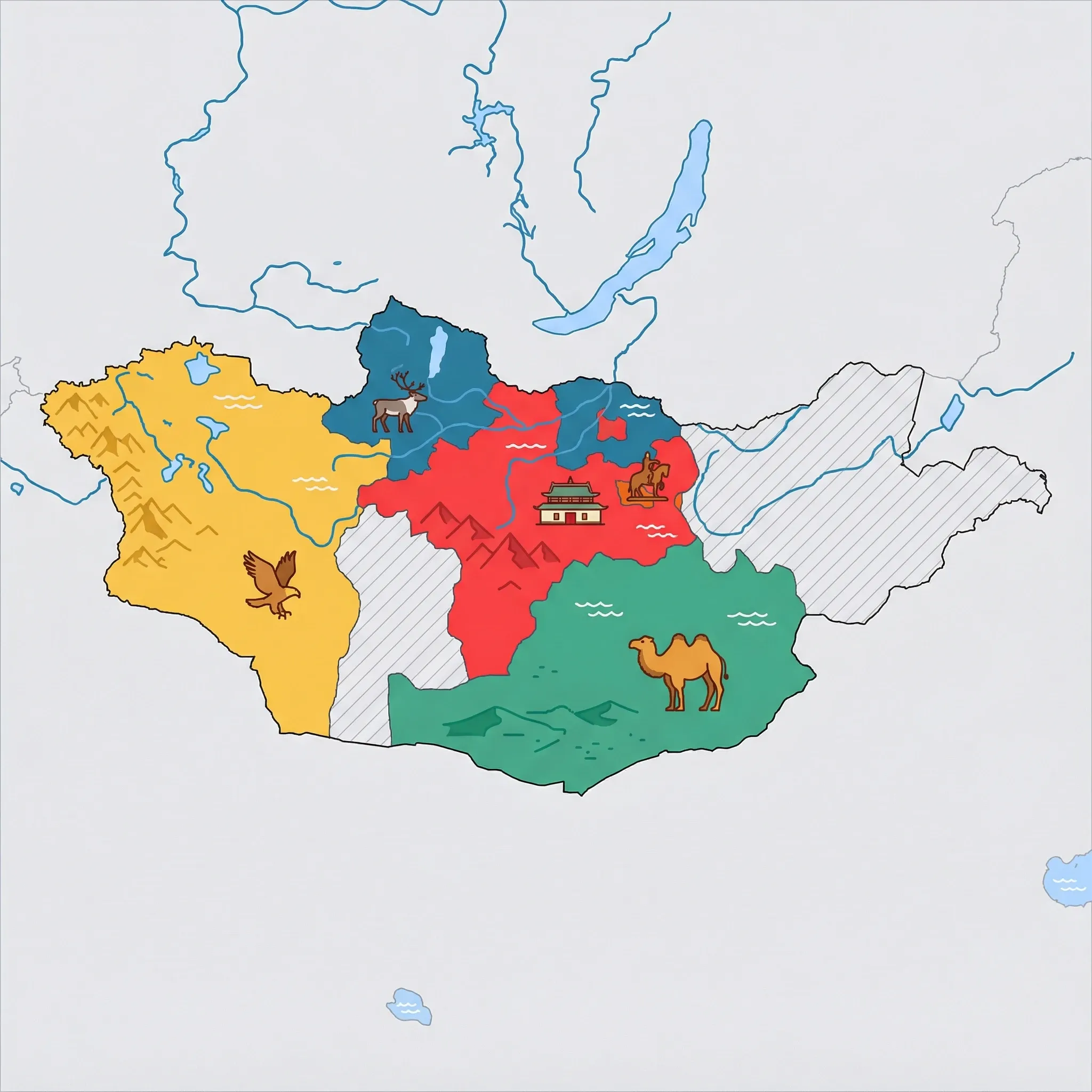
Click a region to explore
Safety Advisory: Traffic in Ulaanbaatar is chaotic and pedestrian crossings are not always respected by drivers—hold children's hands firmly. Pickpocketing can occur in crowded markets and on buses.
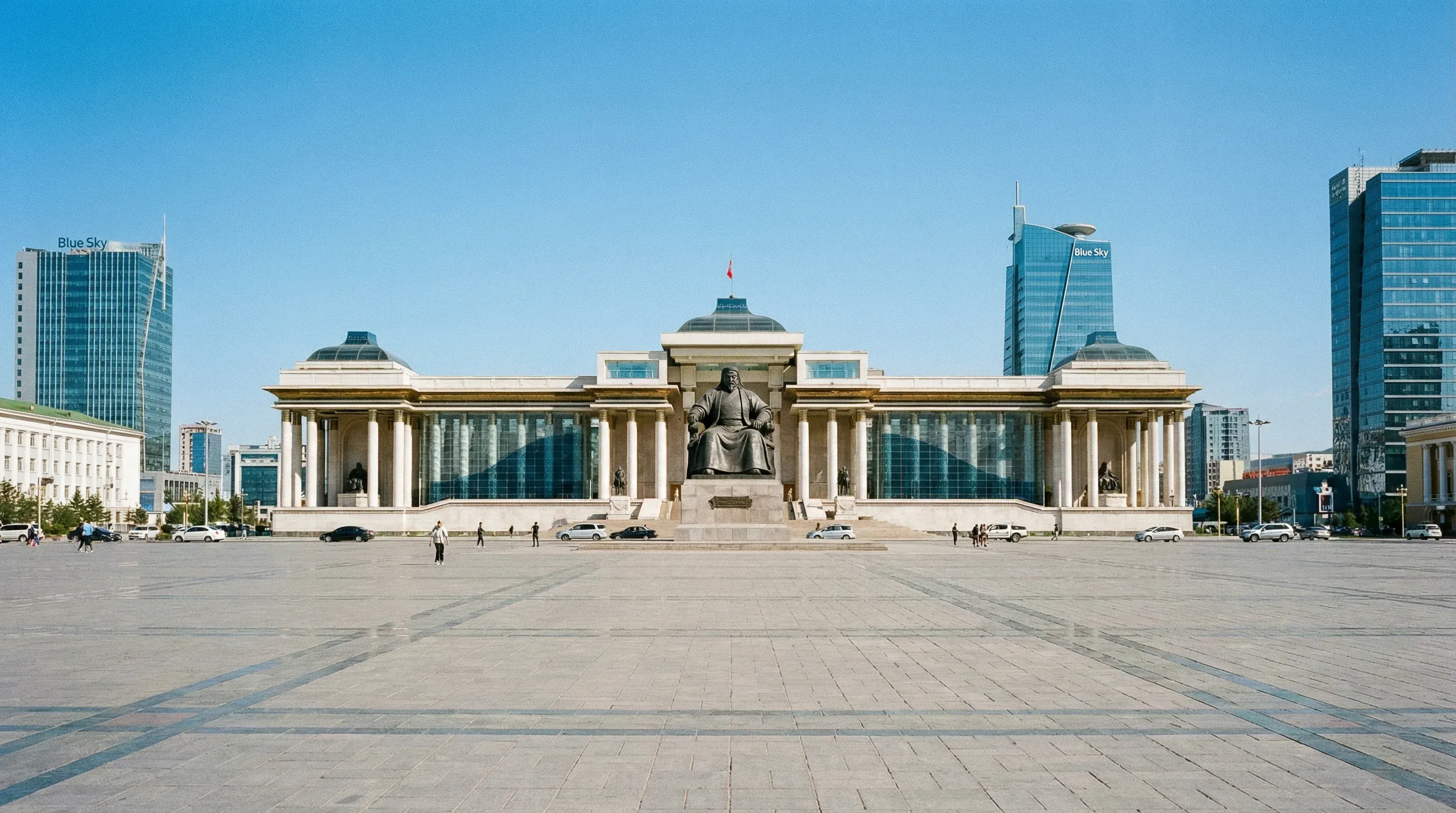
Ulaanbaatar (UB) is almost certainly where your family trip will begin and end. It is a city of stark contrasts: luxury SUVs park next to horses, and glass skyscrapers overlook sprawling districts of felt tents. While many travelers rush to leave for the countryside, UB has several gems that are fantastic for children. It offers a chance to acclimatize to the culture, stock up on supplies, and learn about the history you are about to see in the wild. The city is nestled in a valley, meaning hiking opportunities like Bogd Khan Uul Strictly Protected Area are just a short drive from downtown.
For families, the city offers modern comforts that will be missed in the countryside: coffee shops, indoor play areas, and varied international cuisine. It is the best place to explain Buddhism to children before seeing rural ruins, and arguably the best place in the world to see dinosaur fossils. The traffic is notoriously bad, so planning your day to stay within one district is a smart strategy.
Key Attractions
The absolute must-visit for kids is the Natural History Museum of Mongolia (note: currently housed in the new Chinggis Khaan Museum or the Central Museum of Mongolian Dinosaurs, depending on renovation status—always check locally). The dinosaur collection is world-class, featuring the complete skeleton of the Tarbosaurus bataar (a T-Rex cousin) and nests of dinosaur eggs that captivate young imaginations.
For a cultural immersion, Gandantegchinlen Monastery is the country's main Buddhist center. The main temple houses a towering 26-meter-high golden statue of Avalokitesvara. Kids are usually fascinated by the spinning prayer wheels and the pigeons in the courtyard. To burn off energy, the National Amusement Park offers rides, coasters, and a castle in the city center, though safety standards can vary, so inspect rides first. For a glimpse of royal history, the Winter Palace of the Bogd Khan displays the eccentric collection of Mongolia's last king, including his ger covered in snow leopard skins and exotic taxidermy animals.
Practical Advice
Visit in summer to avoid the severe winter pollution. Taxis are cheap but can be unofficial; using apps like UB Cab is safer. Most museums are closed on Mondays or Tuesdays. The city is walkable in the very center, but distances are deceivingly large.
Food & Drink
Typical meal times: Lunch 12:00 pm – 2:00 pm; Dinner 6:00 pm – 9:00 pm.
Typical meal costs: Diverse options. A meal at a modern cafe costs 25,000–45,000 MNT (approx. $7.50–13 USD / €7–12 EUR). Local cafeterias cost 10,000–15,000 MNT (approx. $3–4.50 USD / €2.50–4 EUR).
Dietary requirements: UB is very accommodating. You can find excellent vegan, Korean, Indian, and European restaurants. Supermarkets carry gluten-free pasta and soy milk.
Signature dishes:
- Tsuivan – A hearty noodle stew with mutton and vegetables (carrots, onions, peppers). It is the staple comfort food of the city.
- Buuz – Steamed dumplings filled with meat. During the Lunar New Year, families eat thousands of these, but they are available year-round.
- Niislel Salad – "Capital Salad," a potato salad with carrots, peas, ham, and mayonnaise (similar to Russian Olivier salad).
Why this score?
The city is a developing urban center with modern amenities, paved roads, and international restaurants, offering little adventure in itself. Nearby Gorkhi-Terelj National Park provides accessible hiking and rock climbing, but the experience is far more manicured than the rest of the country. It is the only region in Mongolia where one can reliably find a high level of comfort and predictability.
Why this score?
Ulaanbaatar is the only place in Mongolia with healthcare facilities that meet international standards, such as the SOS Medica and Intermed clinics. These facilities offer English-speaking staff and are accustomed to dealing with foreign insurance providers. However, care can still be inconsistent compared to top-tier global medical hubs, and very complex procedures may still require relocation to Seoul or Beijing.
Why this score?
As the primary international gateway, almost every one of Mongolia's 727,000 annual visitors spends time here. It serves as the hub for all transportation and logistics, but it is rarely the primary destination itself for international travelers. Compared to major global cities, its tourist infrastructure and visitor volume are modest.

Ulaanbaatar accommodates all budgets. A luxury hotel (Shangri-La, Kempinski) costs $150–300 USD (approx. 510,000–1,020,000 MNT / €135–275 EUR) per night. Mid-range hotels are $60–100 USD (approx. 200,000–340,000 MNT / €55–90 EUR). Taxis within the city are cheap, typically 10,000–20,000 MNT (approx. $3–6 USD / €2.70–5.50 EUR) for a standard trip.

Getting Here & Around
Getting Here
- Airports – Chinggis Khaan International Airport (UBN) is the main international gateway, located approx. 50km south of the city center. The drive to downtown takes 1.5 to 2 hours depending on traffic.
- Train – The main railway station connects UB to the Trans-Siberian line (Russia to the north, China to the south). It is a central hub for arrivals from Irkutsk or Beijing.
Getting Around
- Taxi/App – "UB Cab" is the most reliable app for tourists. Flagging down random cars is common for locals but risky for tourists.
- Walking – The city center (Sukhbaatar Square to Natural History Museum of Mongolia) is walkable, but sidewalks can be uneven with open manholes—watch your step.
- Bus – Very cheap (500 MNT) but extremely crowded and confusing for non-Mongolian speakers. Not recommended for families with luggage.
No airports in this region. See the country flight map for nearby connections.

Packing List
If visiting between October and April, smoke pollution is severe.
Public restrooms often lack soap; essential for city hygiene.
Mobile data can be spotty and navigating the street system is tricky.
High-end restaurants and cultural shows in UB have a dressier code than the countryside.
Ger camps and outhouses often lack electricity at night; hands-free lighting is essential for bathroom trips.
You must remove shoes every time you enter a family's ger. Laces become very frustrating very quickly.
Showers can be scarce in the remote steppes. Wipes are the standard 'Mongolian shower' for days on the road.
It is customary to offer small tokens to the children of host families when visiting their gers.
Electricity in rural camps is often limited to a few hours of generator time or solar power.
To carry your own trash out of remote areas (leave no trace) and protect electronics from fine Gobi dust.

Activities & Best Times

Urban tourism, museums, historical sites, architecture
Home to significant Buddhist monasteries and the Winter Palace, the city offers a deep dive into Central Asian history. Winter months are classified as off-peak due to extreme sub-zero temperatures and significant urban heating pollution.

Hiking, wildlife, outdoor exploration, ecotourism
While Ulaanbaatar is a gateway to Mongolia's steppe, the city itself lacks documented nature attractions. 'Gateway' status alone doesn't justify very_good rating - actual nature experiences require travel outside the city to regions like Terelj or the wider steppe.

Scenic drives, countryside tours, route-based travel
Serves as the starting point for the Orkhon Valley Heritage Route and Terelj scenic drives. Roads are most accessible and landscapes most vibrant during the summer, while winter snow and ice make rural transit hazardous.

Sport tourism, fitness activities, active recreation
The region features established infrastructure for hiking, cycling, and outdoor activity centers like Sky Resort. Activity is heavily restricted by the harsh climate, with the brief summer offering optimal conditions for active family pursuits.

Learning experiences, scientific sites, historical education
Features the Natural History Museum of Mongolia, known for its dinosaur fossils, and the unique International Intellectual Museum. These facilities are best visited during the primary tourist season when support services and guided tours are fully operational.

Events, celebrations, seasonal attractions
The world-renowned Naadam Festival in July is the region's premier cultural event, showcasing traditional wrestling, archery, and horse racing. Outside of this specific window, there are few festivals of international significance.
Amusement parks, family entertainment venues
Local aquatic centers and amusement parks provide basic family entertainment but are modest by international standards. These outdoor-dependent venues are only operational during the height of the warm season.

Attractions (15 total)



Public Holidays & Calendar Next 12 months
Public holidays, festivals, cultural celebrations, and seasonal natural phenomena coming up in Ulaanbaatar over the next 12 months.
Loading holidays and events...

Travel Advisory
All major international agencies currently designate Mongolia as a low-risk destination where standard safety measures are sufficient. There are no active regional travel prohibitions or heightened security warnings beyond typical urban crime awareness.
Safety Topics
Traveller Advice (4 groups)

Rural travel requires significant preparation for extreme weather and limited infrastructure. It is recommended to travel with local guides, carry a satellite phone for communication in remote areas, and pack ample water and supplies.

Accessibility in Ulaanbaatar is very limited. While some sidewalks have tactile paving, most public buildings and transport systems remain inaccessible for wheelchair users, and elevators are often too small for standard equipment.

While same-sex relationships are not illegal, there is a lack of legal recognition for same-sex unions. Members of the community may face social discrimination, verbal abuse, or harassment, so discretion in public is recommended.

Female visitors should avoid solo travel, particularly at night, due to reports of harassment and infrequent sexual assault. It is safer to use registered taxi apps rather than hailing cars on the street.
Agency Summaries
No specific travel restrictions are in place, but visitors should be aware of the global threat of terrorism. Petty theft occurs in crowded areas. Road travel outside the capital can be hazardous due to poor infrastructure.
Irish citizens can visit Mongolia visa-free for tourism for up to 30 days until the end of 2026. Consular assistance is managed through the embassy in Beijing, as there is no local mission.
The overall risk is low, but tourists must register with local immigration authorities within 48 hours of arrival. Be cautious of scams involving fake police officers and exercise care during extreme winter weather conditions.
New Zealand does not have a specific travel advisory for Mongolia, suggesting a standard security environment. Travellers should focus on health precautions, particularly regarding water safety and winter air quality.
While generally safe, there is an upward trend in street crime and occasional violent incidents in larger cities. Visitors should stay in well-lit areas and use reputable transport. Female travellers are encouraged to avoid travelling alone.
Travellers should remain alert in urban centers where petty crimes like pickpocketing are frequent. Increased vigilance is recommended during major public holidays and festivals due to higher crime rates. There are reports of individuals impersonating police to rob visitors.
Information is provided for general guidance only and does not constitute travel, safety, medical, or legal advice. Conditions may change. Users are responsible for independently verifying information before travel.