
Etosha National Park
The Great White Place where the safari comes to you 🦁🦓
Click a region to explore
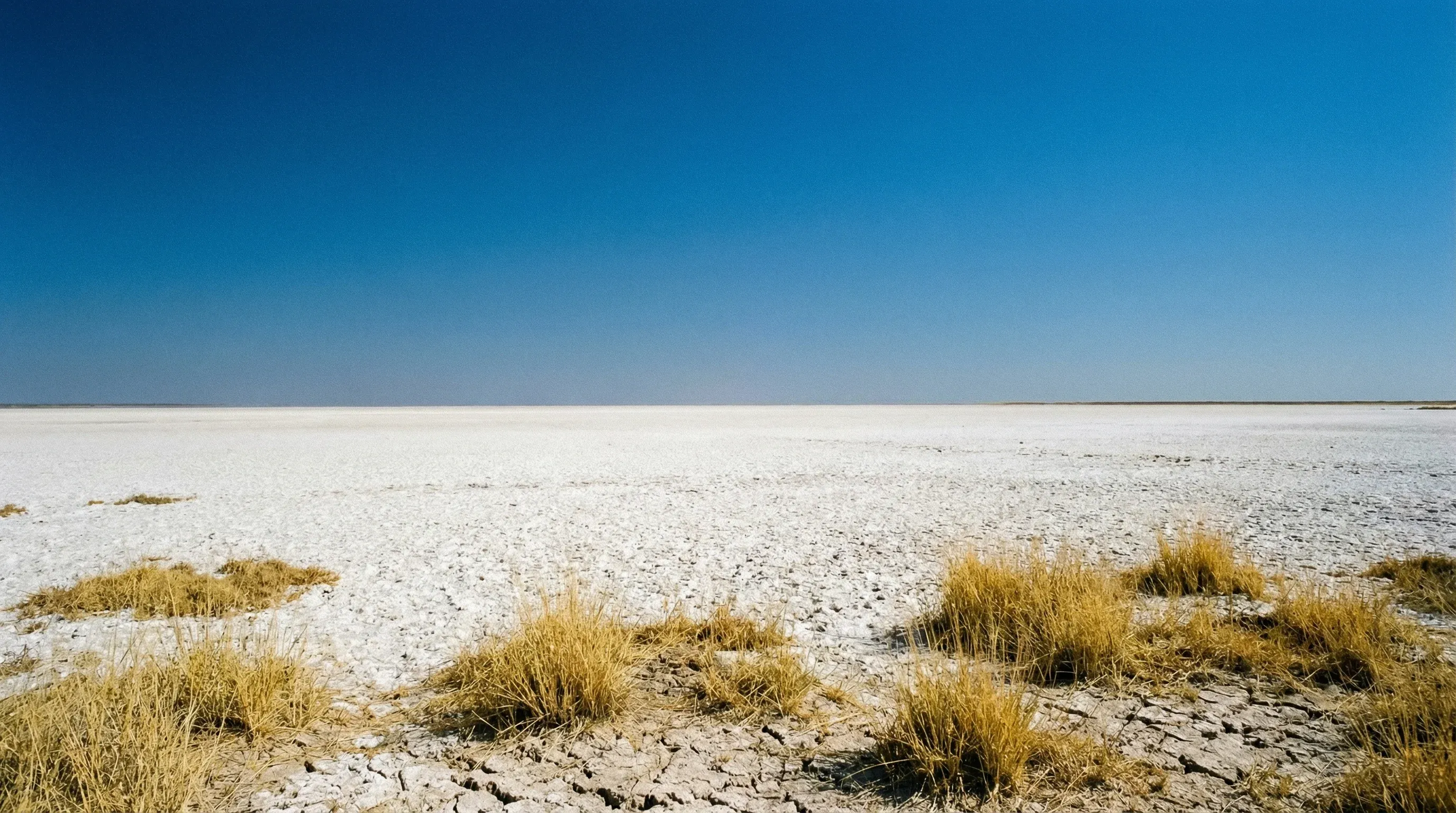
Etosha National Park is the crown jewel of Namibian tourism and arguably one of the most family-friendly safari destinations in Africa. The park's name means 'Great White Place,' referring to the massive mineral pan that covers 25% of the area—a shimmering white expanse that is both eerie and beautiful. What makes Etosha unique for families is the ease of wildlife viewing. In the dry season, animals are forced to congregate around established waterholes, meaning you don't have to drive for hours hunting for game; you simply park your car and wait for the show to begin. It is common to see elephants, giraffes, zebras, and rhinos all drinking together at the same spot, providing a 'Noah's Ark' experience that captivates children without the boredom of long, empty game drives.
The infrastructure is well-suited for self-drivers, with clear gravel roads and fenced rest camps that offer pools, restaurants, and shops. The camps are famous for their floodlit waterholes, allowing families to sit on a bench safely behind a wall and watch black rhinos and lions interact just meters away—a rare nocturnal treat that requires no guide and no 4x4 expertise. The landscape is flat and open, offering excellent visibility even for smaller children sitting in the back seat.
Key Attractions
No visit is complete without spending time at Okaukuejo Waterhole. Located right inside the main rest camp, it is renowned as the best place in Africa to see black rhinos reliably at night. The atmosphere is hushed and magical, perfect for older children who can sit quietly. For a daytime adventure, drive to the edge of the Etosha Pan itself. You can step out of your vehicle at designated lookout points to stand on the cracked, salty earth—a fun photo opportunity where the horizon seems to disappear. On the eastern side of the park lies Fort Namutoni, a German colonial fort originally built in 1897. It now serves as a rest camp, and children love exploring its white-walled ramparts and towers, which offer panoramic views of the surrounding bush and the nearby King Nehale waterhole.
Practical Advice
The best wildlife viewing is from May to October (dry season). Summers (November to April) are hot and green; wildlife scatters, but newborn animals are plentiful. Gates open at sunrise and close strictly at sunset—plan your day carefully to avoid being locked out. The speed limit is 60km/h, and speeding fines are heavy. Always stay in your car unless in a fenced camp or designated toilet stop.
Food & Drink
Typical meal times: Breakfast buffets run from 6:00 am to 9:00 am. Lunch is available 12:00 pm to 2:30 pm (often light meals like burgers or salads). Dinner buffets open around 6:30 pm to 9:00 pm.
Typical meal costs: Buffet dinners in the park camps cost around N$280–350 (approx. $15–19 USD / €14–17.50 EUR). Light lunches are N$100–160 (approx. $5.50–9 USD / €5–8 EUR).
Dietary requirements: NWR (Namibia Wildlife Resorts) camps offer buffet-style meals with plenty of vegetarian salads and sides, but main courses are meat-heavy. Gluten-free options are limited; packing your own bread/snacks is wise.
Signature dishes:
- Game Steaks – Oryx or Kudu steaks are staples at camp restaurants, lean and organic.
- Potjiekos – A traditional slow-cooked stew prepared in a cast-iron pot, often served on buffet nights.
- Roosterkoek – Fire-grilled bread rolls, perfect for self-catering families having a braai (BBQ).
Why this score?
While the park is a wild sanctuary with free-roaming lions and elephants, the infrastructure is highly managed with fenced rest camps and well-maintained gravel roads. It offers a safe entry-point into African wilderness that is accessible even for families with young children.
Why this score?
Medical care within the park is limited to basic first aid at rest camps. The nearest significant hospitals are hours away in Tsumeb or Otjiwarongo, and critical cases require expensive air evacuation to the capital.
Why this score?
As Namibia's premier wildlife destination, it captures a large share of the country's 864,000 annual visitors. However, compared to global giants like the Kruger or Masai Mara, its absolute visitor numbers remain modest and limited by park accommodation capacity.

Park entry fees are very reasonable at approx. N$150 ($8 USD) per international adult and free for children under 8. Accommodation varies from camping at N$350 ($19 USD) per person to luxury chalets inside the park costing N$3,000–5,000 (approx. $165–275 USD / €150–250 EUR) per night.
Family Travel Notice
Immigration officials may request unabridged birth certificates or parental consent affidavits for minors travelling with one parent or without their legal guardians.

Getting Here & Around
Getting Here
- Driving – Access is via the B1 highway from Windhoek (approx. 4-5 hours) to the Anderson Gate. The roads are paved all the way to the park entrance.
- Airports – Most international travelers fly into Windhoek (WDH) and drive. There is a small airstrip near Fort Namutoni for private charters.
Getting Around
- Car – A standard sedan can handle the gravel roads inside Etosha National Park during the dry season, but a high-clearance SUV (2x4 or 4x4) is more comfortable for the corrugations and offers better viewing height for kids.
- Guided Drives – The camps offer guided game drives in open vehicles, which are great for learning from rangers, but self-driving is the standard and most flexible way to explore.
No airports in this region. See the country flight map for nearby connections.

Packing List
The fine white dust of the salt pan gets into everything.
Useful for walking to the waterholes at night (though camps are lit).
Keeps children engaged by ticking off the species they spot.
The camps have pools which are essential for midday heat breaks.
Fine desert sand gets everywhere; essential for protecting cameras, phones, and snacks.
The air is incredibly dry and can cause skin to crack and bleed within days.
Namibia uses the old 'large 3-pin' South African plugs which most universal adapters do not fit.
Stops arguments during wildlife viewing in Etosha; animals are often at a distance.
Campsites and even some lodges have limited lighting; essential for navigating at night.
Sand can hide scorpions and thorns; flip-flops are not safe for walking in the bush.
Desert temperatures drop drastically at night, often reaching freezing even after hot days.

Activities & Best Times

Hiking, wildlife, outdoor exploration, ecotourism
One of Africa's premier wildlife destinations, offering world-class waterhole viewing and the unique landscape of the Etosha Pan. Peak season aligns with the dry winter months when animals congregate at permanent water sources, while the wet summer causes wildlife to disperse into thick vegetation.

Urban tourism, museums, historical sites, architecture
Features significant historical landmarks like Fort Namutoni alongside the iconic natural monument of the Etosha Pan. Best experienced during the cooler months to comfortably explore the colonial-era architecture and vast pan vistas without the extreme summer heat.

Scenic drives, countryside tours, route-based travel
Etosha is a world-class self-drive destination with well-maintained gravel roads and the iconic Main Traverse route. The dry season ensures optimal road conditions and visibility, whereas summer rains can make secondary tracks muddy and difficult to navigate.

Learning experiences, scientific sites, historical education
Information centers at Okaukuejo and Namutoni provide scientific context on the park's unique ecology and conservation history for visiting families. These facilities are best visited during the primary tourist season when staffing and guided educational programs are most active.




Public Holidays & Calendar Next 12 months
Public holidays, festivals, cultural celebrations, and seasonal natural phenomena coming up in Etosha National Park over the next 12 months.
Loading holidays and events...

Travel Advisory
The majority of international agencies consider Namibia safe for travel under standard safety awareness, although North American agencies advise elevated caution due to urban crime rates.
Safety Topics
Traveller Advice (4 groups)

A new visa requirement for many nationalities, including those from the UK, USA, and Australia, took effect on April 1, 2025. Ensure your passport has at least six months of validity and three blank pages.

Exercise extra caution when moving about, particularly after dark. Avoid walking alone in isolated areas or quiet city streets.

Societal attitudes remain conservative, especially in rural areas. While same-sex relationships are not illegal, certain sexual acts remain technically prohibited by law, though prosecutions are rare.

Immigration officials may request unabridged birth certificates or parental consent affidavits for minors travelling with one parent or without their legal guardians.
Agency Summaries
Travellers should remain extremely vigilant due to significant crime rates across the country, particularly in urban centres like Windhoek.
Namibia is generally safe, but travellers should follow common sense safety measures. An ongoing Mpox outbreak has been noted in the region.
While no specific travel restrictions are in place, visitors are warned of street crime in the capital and hazardous driving conditions on unpaved roads.
No specific security warning is currently issued for the country, though comprehensive travel insurance is strongly recommended.
Visitors should maintain standard safety awareness and be informed of new visa requirements implemented in 2025.
Increased vigilance is recommended because of prevalent crime and health concerns. Violent incidents such as muggings and home invasions occur in major towns.
Information is provided for general guidance only and does not constitute travel, safety, medical, or legal advice. Conditions may change. Users are responsible for independently verifying information before travel.