
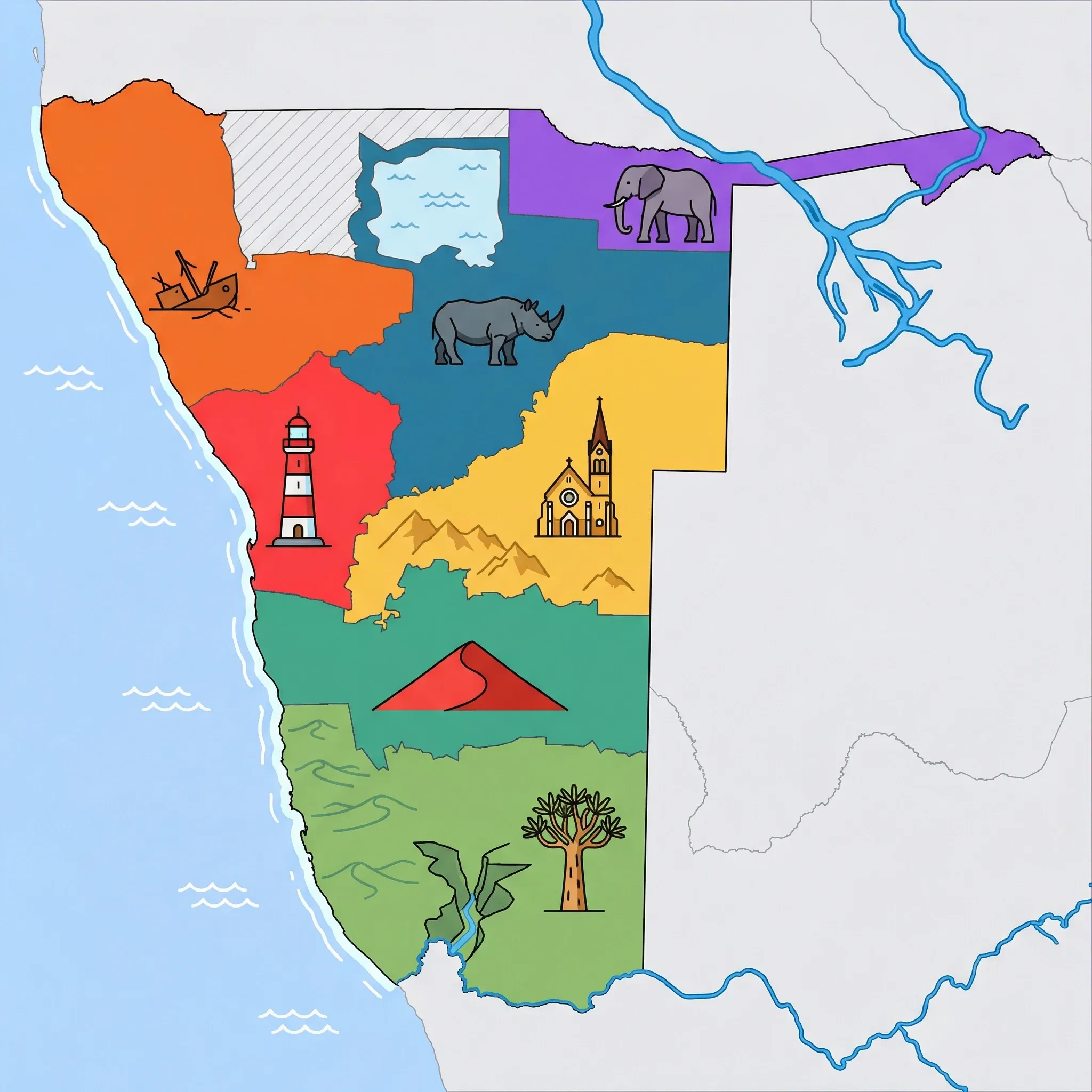
Click a region to explore
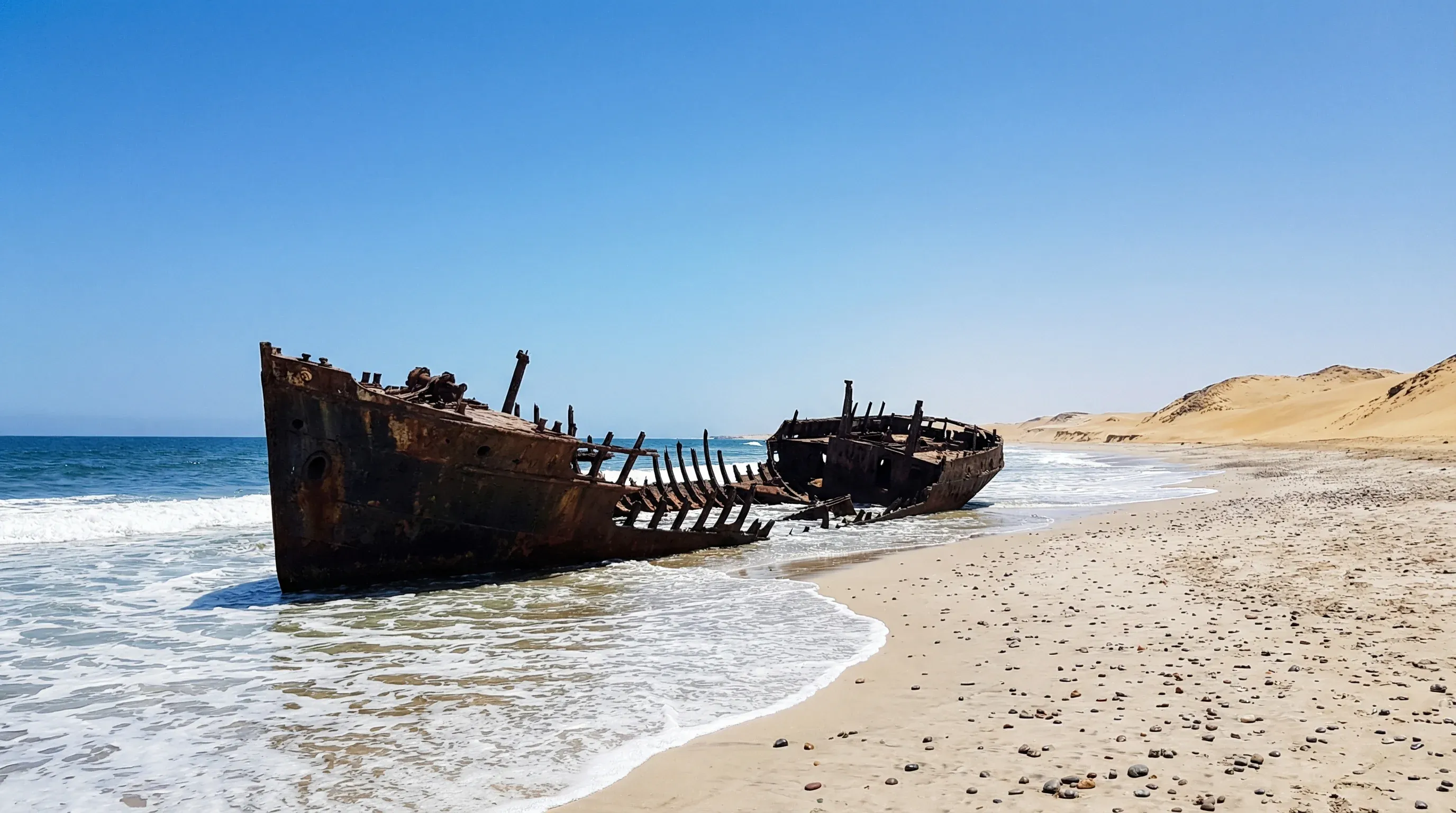
The Skeleton Coast is one of the most evocative names in travel, conjuring images of shipwrecks, swirling fog, and bleached whale bones. For families, it offers a raw, atmospheric adventure that feels like visiting the edge of the world. This is not a beach holiday destination in the traditional sense—the water is freezing and the currents dangerous—but it is a place of immense natural wonder. The clash between the hot desert air and the cold Benguela current creates a unique moody climate where fog rolls over the dunes until mid-morning. It is a fantastic place to teach children about nature's power and resilience, spotting desert-adapted wildlife like jackals and brown hyenas patrolling the beaches for food.
Visiting this region is usually done as a road trip heading north from Swakopmund. The southern section is accessible to the public and contains the most famous shipwrecks and fishing spots. It’s a wild, lonely place where you can drive for miles without seeing another car, making it perfect for families seeking solitude and untouched landscapes. The visual contrast of rusted metal ships against pristine sand is striking and provides a history lesson on the dangers early explorers faced.
Key Attractions
The primary draw for families is the Cape Cross Seal Reserve. Here, a colony of up to 100,000 Cape Fur Seals breeds on the rocky shore. The sight is chaotic and the smell is overpowering (bring a scarf or mask!), but the noise and sheer number of animals are mesmerizing for children. You can walk on raised wooden walkways right above the seals, watching pups bleat for their mothers. Further north, entering the Skeleton Coast National Park proper at the Ugab Gate, you encounter the famous skull-and-crossbones gates—a classic photo op. Inside, you can stop at various shipwrecks that sit high up on the beach, stranded by the shifting sands. Terrace Bay offers a remote outpost feel where you can see the desert dunes tumbling directly into the crashing waves.
Practical Advice
Access to the northern part of the park (beyond Terrace Bay) is fly-in only, but the southern section is open to self-drivers. The best time to visit is year-round, but expect cool, damp mornings even in summer. The salt roads are smooth but become slippery when wet from fog—drive carefully. There are no fuel stations between Mile 108 and Terrace Bay, so fill up before entering.
Food & Drink
Typical meal times: Meal options are extremely limited. Terrace Bay restaurant serves breakfast 7:00 am–9:00 am, lunch 12:00 pm–2:00 pm, and dinner 6:30 pm–8:30 pm.
Typical meal costs: Meals at the government-run resorts are basic and affordable, around N$100–180 (approx. $5.50–10 USD / €5–9 EUR). Most families self-cater.
Dietary requirements: Very limited. Bringing your own food supplies is highly recommended as shops are non-existent north of Henties Bay.
Signature dishes:
- Kabeljou (Cob) – The Skeleton Coast is a premier fishing destination; fresh catch of the day is the main staple.
- Braai – Most accommodation is self-catering, so grilling your own meat or fish is the standard dinner.
Why this score?
This is one of the most inhospitable environments on earth, defined by shipwrecks, dense fog, and towering dunes that meet the Atlantic. The lack of roads, water, and fuel infrastructure in the northern park makes it a true expedition-grade destination.
Why this score?
There are virtually no medical facilities within the Skeleton Coast National Park itself. Visitors are hundreds of kilometers away from even basic clinics, making it one of the most medically vulnerable regions for travelers in the country.
Why this score?
Vast stretches of the northern coastline are restricted or only accessible via expensive fly-in safaris, keeping visitor numbers very low. Most tourists only touch the southern edge at Cape Cross as a day trip from Swakopmund.

Accommodation is scarce. NWR Terrace Bay costs around N$1,500–2,000 (approx. $80–110 USD / €75–100 EUR) per person inclusive of meals. Camping at Torra Bay (only open Dec/Jan) is cheap but basic.
Family Travel Notice
Immigration officials may request unabridged birth certificates or parental consent affidavits for minors travelling with one parent or without their legal guardians.

Getting Here & Around
Getting Here
- Driving – Accessed via the C34 'Salt Road' from Swakopmund. It is about a 1.5-hour drive to Cape Cross Seal Reserve.
- Airports – No commercial airports. Access is by road or private charter flight.
Getting Around
- Car – A vehicle is essential. While a sedan can handle the salt roads to the main gates, a 4x4 is recommended for comfort and safety on the slippery salt surface.
- No Public Transport – There are no buses or shuttles in this remote region.
No airports in this region. See the country flight map for nearby connections.

Packing List
To cover your nose at the seal colony—the smell is incredibly strong.
Temperatures can drop to 10°C (50°F) with icy winds, even in summer.
Shore fishing is the primary activity here for many visitors.
There is zero cell phone signal in most of the park.
Fine desert sand gets everywhere; essential for protecting cameras, phones, and snacks.
The air is incredibly dry and can cause skin to crack and bleed within days.
Namibia uses the old 'large 3-pin' South African plugs which most universal adapters do not fit.
Stops arguments during wildlife viewing in Etosha; animals are often at a distance.
Campsites and even some lodges have limited lighting; essential for navigating at night.
Sand can hide scorpions and thorns; flip-flops are not safe for walking in the bush.
Desert temperatures drop drastically at night, often reaching freezing even after hot days.

Activities & Best Times

Hiking, wildlife, outdoor exploration, ecotourism
A globally unique wilderness where massive sand dunes meet the Atlantic, featuring desert-adapted wildlife and the Skeleton Coast National Park. Peak season aligns with the dry winter months when temperatures are cooler for trekking and wildlife is more easily spotted near riverbeds.

Beach resorts, marine activities: diving, snorkelling, kite surfing, wind surfing, sailing
Focused on dramatic coastal scenery and major wildlife spectacles like the Cape Cross Seal Reserve rather than traditional swimming. Summer months offer the most comfortable air temperatures for coastal recreation before the arrival of heavy winter Atlantic winds.

Urban tourism, museums, historical sites, architecture
Swakopmund serves as a distinctive cultural hub with German colonial architecture, the Swakopmund Museum, and a vibrant local art scene. Visitation peaks during the European summer holidays and the Southern African festive season in December.

Sport tourism, fitness activities, active recreation
Offers world-class sandboarding, quad biking, and unique desert cycling routes through the Messum Crater and Ugab River. The cooler months are preferred to avoid the extreme heat and humidity that can occur during the Namibian summer.

Learning experiences, scientific sites, historical education
Features the National Marine Aquarium of Namibia and significant historic sites at Cape Cross. These facilities offer valuable insights into the Benguela Current ecosystem and maritime history during the primary tourism windows.

Scenic drives, countryside tours, route-based travel
The C34 Salt Road provides a surreal driving experience along the coast, though infrastructure is limited to specialized gravel routes. Best experienced in the dry season when road conditions are most stable and desert visibility is at its highest.




Public Holidays & Calendar Next 12 months
Public holidays, festivals, cultural celebrations, and seasonal natural phenomena coming up in Skeleton Coast over the next 12 months.
Loading holidays and events...

Travel Advisory
The majority of international agencies consider Namibia safe for travel under standard safety awareness, although North American agencies advise elevated caution due to urban crime rates.
Safety Topics
Traveller Advice (4 groups)

A new visa requirement for many nationalities, including those from the UK, USA, and Australia, took effect on April 1, 2025. Ensure your passport has at least six months of validity and three blank pages.

Exercise extra caution when moving about, particularly after dark. Avoid walking alone in isolated areas or quiet city streets.

Societal attitudes remain conservative, especially in rural areas. While same-sex relationships are not illegal, certain sexual acts remain technically prohibited by law, though prosecutions are rare.

Immigration officials may request unabridged birth certificates or parental consent affidavits for minors travelling with one parent or without their legal guardians.
Agency Summaries
Travellers should remain extremely vigilant due to significant crime rates across the country, particularly in urban centres like Windhoek.
Namibia is generally safe, but travellers should follow common sense safety measures. An ongoing Mpox outbreak has been noted in the region.
While no specific travel restrictions are in place, visitors are warned of street crime in the capital and hazardous driving conditions on unpaved roads.
No specific security warning is currently issued for the country, though comprehensive travel insurance is strongly recommended.
Visitors should maintain standard safety awareness and be informed of new visa requirements implemented in 2025.
Increased vigilance is recommended because of prevalent crime and health concerns. Violent incidents such as muggings and home invasions occur in major towns.
Information is provided for general guidance only and does not constitute travel, safety, medical, or legal advice. Conditions may change. Users are responsible for independently verifying information before travel.