
Sossusvlei & Namib Desert
Climb the world's highest sand dunes 🏜️☀️
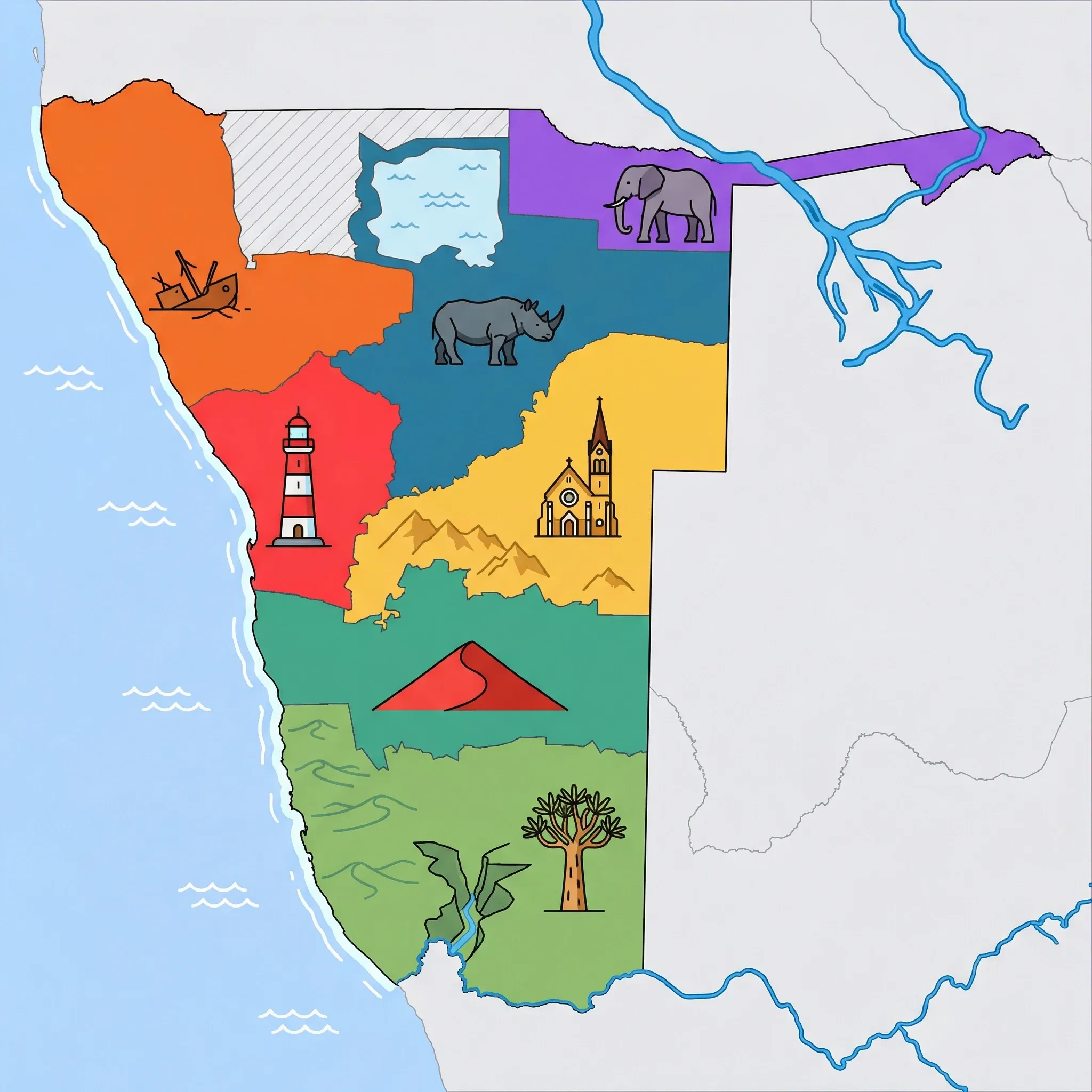
Click a region to explore
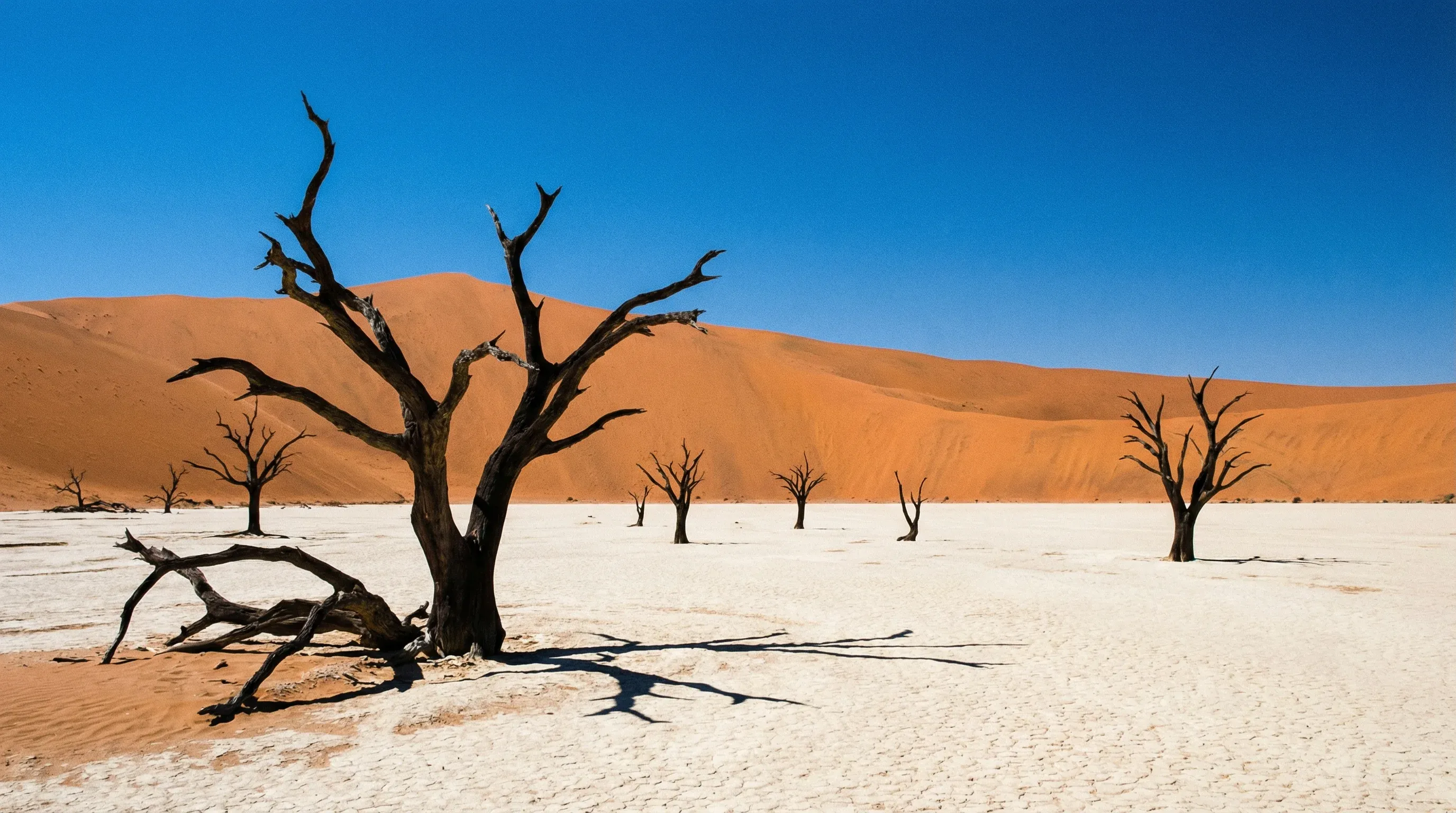
If you see one picture of Namibia, it is likely of the red dunes of Sossusvlei against a deep blue sky. Part of the vast Namib-Naukluft National Park, this region offers a landscape so alien it feels like Mars. For families, the sheer scale of the sand dunes is a playground of epic proportions. Children love the challenge of climbing the ridges and the thrill of rolling or running down the soft slipfaces. It is an active destination where the day starts before dawn to beat the heat, but the reward is watching the sun turn the dunes from grey to burning apricot. Beyond the dunes, the desert is surprisingly alive; kids can track beetles, lizards, and gemsbok (oryx) that thrive in this hyper-arid environment.
The area is anchored by Sesriem, the gateway campsite and town. The vibe is adventurous and dusty. While the heat can be intense, the dryness makes it manageable if you pace yourself. Exploring the ghostly white clay pan of Deadvlei with its 900-year-old dead camel thorn trees is like walking onto a surrealist movie set. It’s a place that sparks the imagination and provides the backdrop for the best family photos you will ever take.
Key Attractions
The morning ritual usually begins with Dune 45, located 45km from the gate. It is the most accessible large dune for families to climb, with a relatively easy slope that takes about 20-30 minutes to summit. The view from the top is breathtaking. deeper into the park lies Deadvlei, accessible via a 4x4 shuttle from the parking area. The walk into the pan (about 1km) is soft sand, so carry toddlers, but the sight of the blackened trees against the white floor and red dunes is worth the effort. Nearby Sossusvlei itself often holds water after good rains, attracting birds. Don't miss Sesriem Canyon at the park entrance—a narrow, shaded gorge carved by water that offers a cool, fun scramble for kids to explore on foot.
Practical Advice
Timing is everything. You must enter the park gates at sunrise (or stay inside the park to start earlier). By 11:00 am, the sand is often too hot to walk on. Afternoon activities should be low-energy, like swimming at your lodge pool. Hydration is critical—carry double the water you think you need.
Food & Drink
Typical meal times: Early breakfast (5:00 am–7:00 am) before the dunes. Lunch 12:00 pm–2:00 pm. Dinner 6:30 pm–9:00 pm.
Typical meal costs: Lodge buffets are pricey, around N$300–450 (approx. $16–25 USD / €15–22.50 EUR). Solitaire’s bakery offers affordable pies and pastries for under N$60 ($3.50 USD).
Dietary requirements: Lodges cater well to vegetarians. Gluten-free bread is available at higher-end lodges but rare in campsites.
Signature dishes:
- Game Carpaccio – Thinly sliced raw Ostrich or Kudu meat, a popular starter in desert lodges.
- Solitaire Apple Pie – Famous throughout the country, this chunky, crumble-topped pie sold at Solitaire is a mandatory road-trip snack.
Why this score?
The environment is characterized by extreme temperatures and physical demands like climbing the world's highest sand dunes. While accessible by 4x4, the isolation and harsh desert climate require significant preparation and self-sufficiency.
Why this score?
Infrastructure is limited to basic tourist services in Sesriem, with no local hospital or emergency facility capable of treating serious conditions. Most lodges rely on satellite phones to coordinate air evacuations to Windhoek for medical emergencies.
Why this score?
As the most photographed landscape in Namibia, Sossusvlei is a bucket-list destination that attracts nearly every international visitor to the country. Despite its fame, its remote desert location and limited lodge beds keep it in the moderate popularity bracket globally.

Accommodation is at a premium. Inside-the-park camping costs N$400+ ($22 USD) per person. Lodges outside the gate range from N$2,500 ($140 USD) to ultra-luxury N$10,000+ ($550 USD) per night. Park entry is approx. N$150 ($8 USD) per adult.
Family Travel Notice
Immigration officials may request unabridged birth certificates or parental consent affidavits for minors travelling with one parent or without their legal guardians.

Getting Here & Around
Getting Here
- Driving – Approx. 5 hours from Windhoek or Swakopmund. The last hour is on gravel roads which can be corrugated. A 4x4 is not strictly necessary to reach the gate, but high clearance helps.
- Shuttle – To reach Deadvlei, you need a 4x4. If you drive a 2WD, you must park at the 2x4 car park and pay for the NWR shuttle to drive you the final 5km.
Getting Around
- Car – You drive yourself to the attractions. The road from Sesriem to the 2x4 parking is paved (a rarity!).
- Walking – Once at the parking areas, you explore on foot.
No airports in this region. See the country flight map for nearby connections.

Packing List
The sand gets blistering hot by mid-morning; flip-flops will not protect your feet.
The fine red sand destroys camera lenses and phone ports instantly.
It can be breezy on the dune ridges, and you need hands free for climbing.
Dehydration happens fast in the dry desert air; water alone sometimes isn't enough.
Fine desert sand gets everywhere; essential for protecting cameras, phones, and snacks.
The air is incredibly dry and can cause skin to crack and bleed within days.
Namibia uses the old 'large 3-pin' South African plugs which most universal adapters do not fit.
Stops arguments during wildlife viewing in Etosha; animals are often at a distance.
Campsites and even some lodges have limited lighting; essential for navigating at night.
Sand can hide scorpions and thorns; flip-flops are not safe for walking in the bush.
Desert temperatures drop drastically at night, often reaching freezing even after hot days.

Activities & Best Times

Hiking, wildlife, outdoor exploration, ecotourism
A world-renowned wilderness featuring some of the highest sand dunes on Earth and unique ecosystems like Deadvlei. Peak visitation occurs during the cooler winter months (May-Sept) when temperatures are manageable for desert exploration; summer heat can be extreme for families.

Urban tourism, museums, historical sites, architecture
Iconic landmarks like Dune 45 and the historic Duwisib Castle offer significant visual and architectural heritage. The region is best experienced from May to October to avoid the intense summer heat that makes landmark exploration and photography physically demanding.

Scenic drives, countryside tours, route-based travel
Offers some of Africa's most spectacular desert driving, including the iconic route into Sossusvlei and the rugged C27 Namib Desert Route. Optimal driving conditions are in the dry, cooler months; summer brings higher risks of heat-related vehicle stress and occasional flash floods.

Sport tourism, fitness activities, active recreation
Features internationally recognized hiking opportunities across massive dunes and through the rugged Naukluft mountains. Strenuous desert activity is strictly seasonal, with peak conditions in mid-winter (June-Aug); high summer temperatures make these trails unsafe for families.




Public Holidays & Calendar Next 12 months
Public holidays, festivals, cultural celebrations, and seasonal natural phenomena coming up in Sossusvlei & Namib Desert over the next 12 months.
Loading holidays and events...

Travel Advisory
The majority of international agencies consider Namibia safe for travel under standard safety awareness, although North American agencies advise elevated caution due to urban crime rates.
Safety Topics
Traveller Advice (4 groups)

A new visa requirement for many nationalities, including those from the UK, USA, and Australia, took effect on April 1, 2025. Ensure your passport has at least six months of validity and three blank pages.

Exercise extra caution when moving about, particularly after dark. Avoid walking alone in isolated areas or quiet city streets.

Societal attitudes remain conservative, especially in rural areas. While same-sex relationships are not illegal, certain sexual acts remain technically prohibited by law, though prosecutions are rare.

Immigration officials may request unabridged birth certificates or parental consent affidavits for minors travelling with one parent or without their legal guardians.
Agency Summaries
Travellers should remain extremely vigilant due to significant crime rates across the country, particularly in urban centres like Windhoek.
Namibia is generally safe, but travellers should follow common sense safety measures. An ongoing Mpox outbreak has been noted in the region.
While no specific travel restrictions are in place, visitors are warned of street crime in the capital and hazardous driving conditions on unpaved roads.
No specific security warning is currently issued for the country, though comprehensive travel insurance is strongly recommended.
Visitors should maintain standard safety awareness and be informed of new visa requirements implemented in 2025.
Increased vigilance is recommended because of prevalent crime and health concerns. Violent incidents such as muggings and home invasions occur in major towns.
Information is provided for general guidance only and does not constitute travel, safety, medical, or legal advice. Conditions may change. Users are responsible for independently verifying information before travel.