
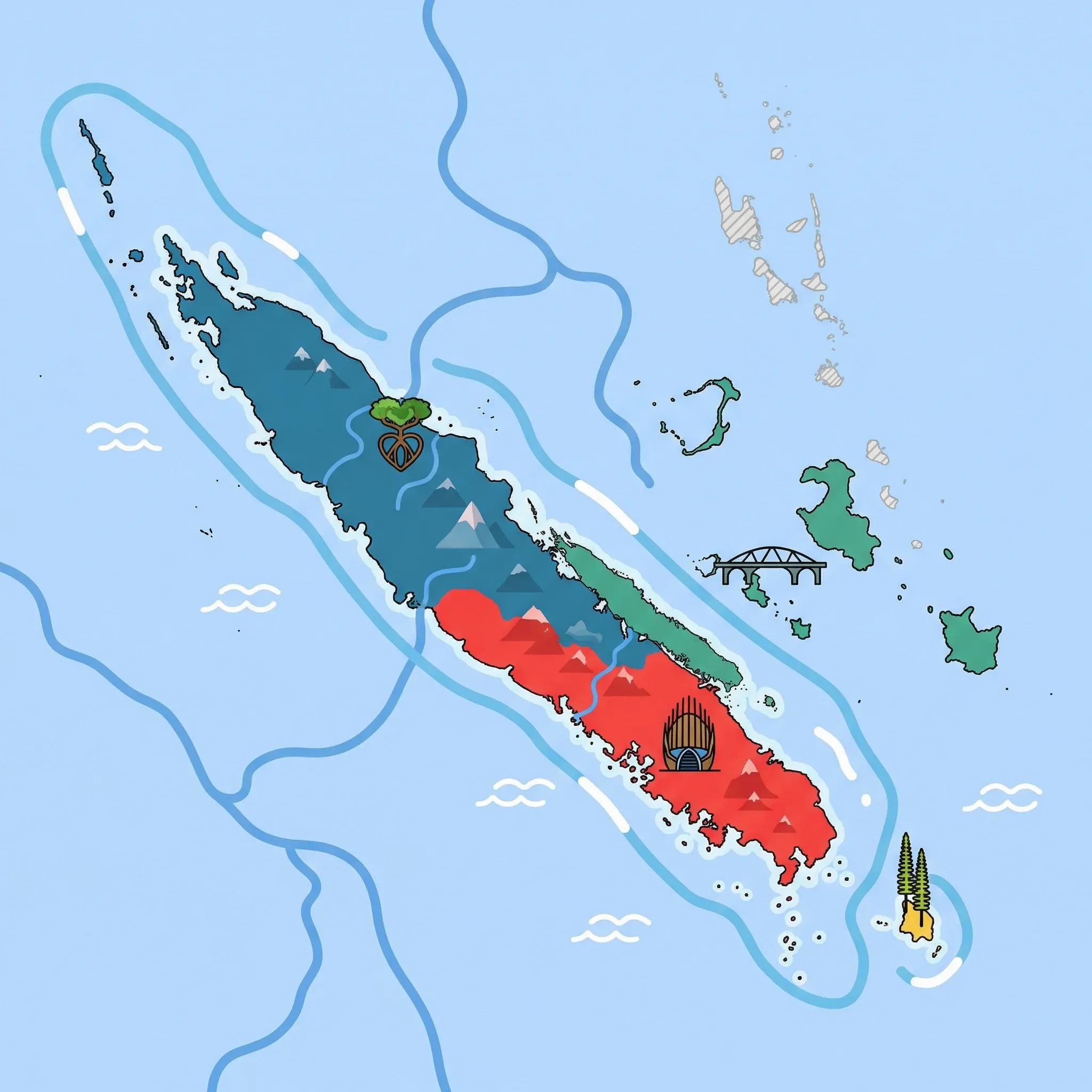
Click a region to explore
⚠️ SAFETY WARNING: Due to political volatility and the potential for rapid changes in security, government agencies (including CA, USA, AU, and NZ) advise travelers to exercise a high degree of caution or reconsider travel to this region. Roadblocks and civil unrest can occur unpredictably, particularly on routes outside main towns. Families are strongly urged to consult their own government's official travel advisory before considering a trip, as individual insurance coverage and risk assessments vary significantly.
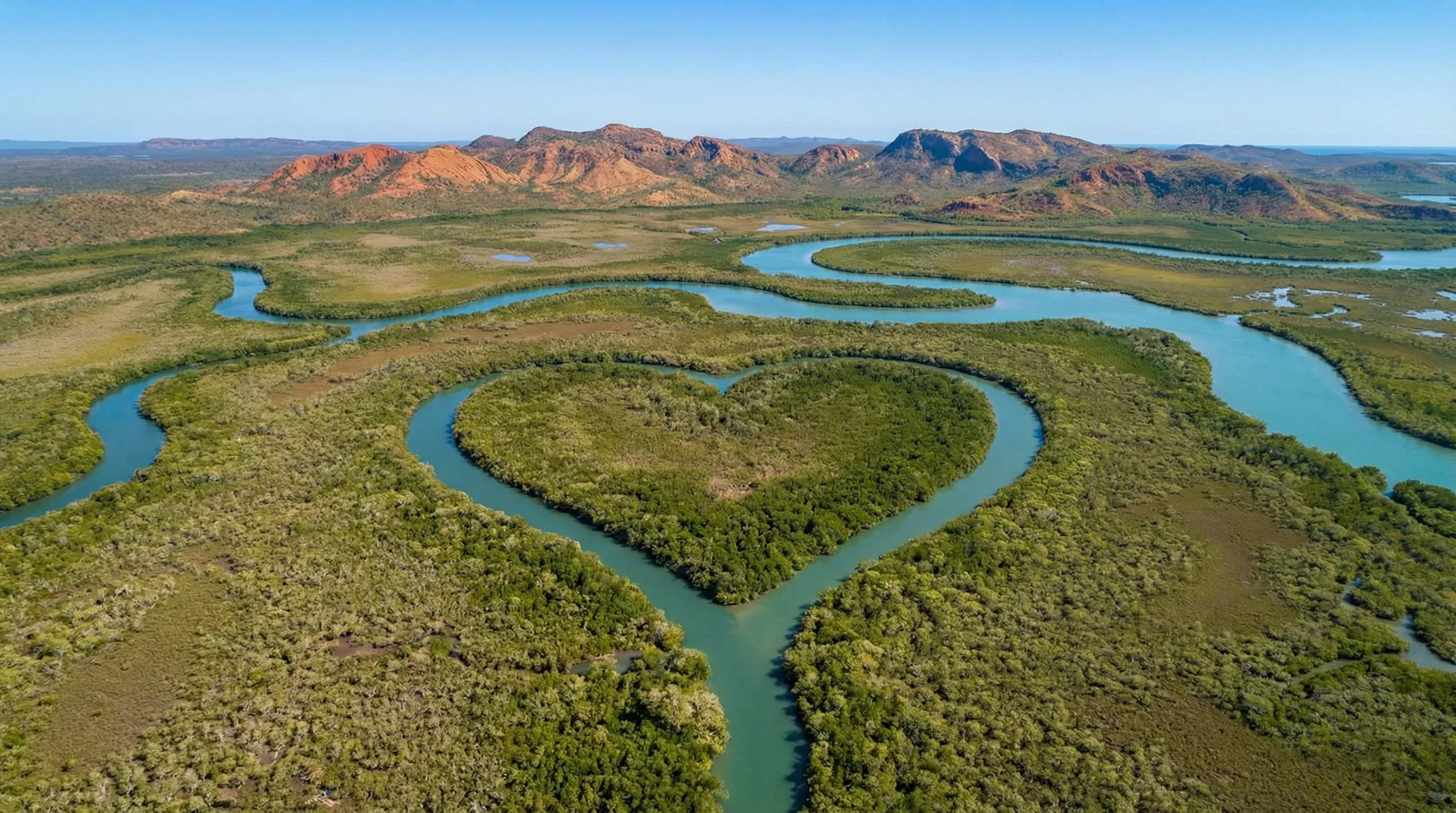
The North of Grande Terre, often called Le Grand Nord, feels like a different world compared to the bustle of the capital. It is the heartland of the Caloche (New Caledonian cowboy) culture and deeply traditional Kanak communities. For families, this region offers a sense of pioneering adventure. The landscape is dominated by the majestic Chaîne Centrale mountain range, which divides the dry, western plains from the lush, tropical east coast. On the west, you will find vast cattle ranches and the stunning geometric patterns of the mangrove swamps, while the east coast offers waterfalls, lush vegetation, and dramatic limestone cliffs rising from the sea. It is a destination best suited for families who enjoy road trips, nature, and cultural immersion rather than resort-style relaxation.
Culturally, the North is where visitors can truly connect with the indigenous spirit of the archipelago. The pace of life here is dictated by the sun and the seasons. Children will be fascinated by the stark red soil that contrasts vividly against the green vegetation and the turquoise lagoon—a color palette that looks almost otherworldly. Exploring the North requires patience and a spirit of flexibility; shops may close early, and livestock often wanders onto the roads, but the reward is an experience of the Pacific that feels untouched and raw. Whether you are watching a stockman round up cattle or taking a silent boat ride through ancient mangroves, the North leaves a lasting impression of wild beauty.
Key Attractions
The absolute centerpiece of the region is the Heart of Voh (Cœur de Voh). Made famous by aerial photographer Yann Arthus-Bertrand, this natural formation of mangroves in the shape of a perfect heart is a must-see. Families can take a 4x4 excursion up the Katépai massive to a viewing platform that offers a breathtaking perspective of the heart and the surrounding lagoon. It is an educational experience for children, illustrating the delicate balance of coastal ecosystems.
Beyond the mangroves, the jagged limestone towers of Hienghène on the east coast, specifically the Sphinx and the Brooding Hen (Poule Couveuse), trigger the imagination of younger travelers. The sheer cliffs drop vertically into the ocean, creating a landscape reminiscent of Ha Long Bay but without the crowds. Inland, the mining history of towns like Koumac offers a glimpse into the geological wealth of the island, with accessible caves that are safe for family exploration with a guide.
Practical Advice
The best time to visit is during the cooler, drier months from May to October, as heavy rains in the summer (December to March) can make some rural roads impassable. Families should be aware that infrastructure is thinner here than in the south; always carry extra water, snacks, and a full tank of fuel. English is less widely spoken in the North, so having a translation app or a phrasebook is very helpful.
Food & Drink
Typical meal times: Lunch is strictly 11:30 am to 1:30 pm. Dinner is served early, typically 6:30 pm to 8:00 pm. Many rural eateries close by 8:30 pm.
Typical meal costs: A standard main course in a country inn costs 2,500–3,800 XPF (approx. $22–34 USD / €21–32 EUR). Simple roadside snacks are 800–1,200 XPF (approx. $7–11 USD / €6–10 EUR).
Dietary requirements: Options can be limited. Vegetarians may struggle outside of hotels, as the diet is meat-heavy. Gluten-free travelers should buy supplies in Koné supermarkets before heading further north.
Signature dishes:
- Salade de Cerf – A marinated venison salad, utilizing the abundant local Rusa deer, cured in lime juice and herbs similar to ceviche.
- Crabe de Palétuviers – Mangrove crab, caught fresh from the swamps of Voh and often served simply grilled or with garlic butter.
- Civet de Roussette – A traditional stew made with fruit bat (flying fox), marinated in red wine. A challenging but culturally significant dish for adventurous eaters.
Why this score?
The region offers rugged 'Wild West' landscapes on the west coast and dense tropical terrain on the east. Families can explore the Koumac Caves and hike sections of the GR Nord, though the primary cross-island roads are well-maintained, lowering the extreme expedition feel.
Why this score?
Medical facilities are available in regional hubs like Koné and Koumac, but they are limited in scope compared to the capital. Specialized care or emergencies typically require a long drive or medevac to Nouméa's main hospitals.
Why this score?
While home to the iconic Heart of Voh and Hienghène's limestone formations, this region sees very few international visitors compared to Nouméa. Most tourism is domestic or niche intrepid travelers, with infrastructure focused more on the local mining industry than mass tourism.

Prices in the North are slightly lower than Nouméa but still reflect the high cost of living in New Caledonia. A night in a mid-range guesthouse or hotel costs 12,000–18,000 XPF (approx. $108–162 USD / €100–150 EUR). Fuel prices are regulated and identical to the capital. Dining is less varied but good value for the portion sizes.

Getting Here & Around
Getting Here
- Driving – The most common way to reach the North is by car from Nouméa. The drive to Koné takes approximately 3.5 to 4 hours via the RT1 highway. The road is sealed but can be winding.
- Airports – Air Calédonie operates daily flights from Nouméa-Magenta (GEA) to Koné (KNQ) and Koumac (KOC). The flight to Koné takes about 40 minutes and offers spectacular aerial views of the lagoon.
- Bus – The RAI interurban bus network connects Nouméa to major northern towns, though travel times are long (5+ hours) and may be challenging for young children.
Getting Around
- Car – Essential for exploring the North. Public transport is virtually non-existent between attractions. A 4WD or SUV is highly recommended, especially for accessing view points like the Heart of Voh (Cœur de Voh) or exploring the east coast transversals.
- Walking – While towns are small enough to walk, attractions are spaced far apart. Hiking trails are well-marked in specific parks but require transport to reach the trailheads.
No airports in this region. See the country flight map for nearby connections.
Official Links

Packing List
The iron-rich 'terre rouge' stains clothes permanently; pack dark socks/shoes.
Mobile data signals (3G/4G) drop frequently in mountain passes.
Supermarkets are far apart; keeps drinks/snacks cool on long drives.
English is rarely spoken in rural northern villages.
Essential for protecting feet from sharp coral and stonefish in the lagoon.
Outlets differ from Australia/NZ/US; a multi-plug strip is useful for charging family devices.
Strictly required to protect the delicate coral ecosystems in the marine reserves.
Dengue fever is a risk; strong repellent is necessary for evenings.
Keep electronics and clothes dry during frequent small boat transfers to islets.
Required for 'Coutume' (customary small gifts) if visiting tribal areas or local markets.

Activities & Best Times

Hiking, wildlife, outdoor exploration, ecotourism
Home to the GR Nord and the iconic Heart of Voh, this region offers rugged, authentic wilderness and endemic biodiversity in the Mont Panié range. Peak months provide the cool, dry conditions necessary for multi-day trekking and safe exploration of the Koumac Caves.

Beach resorts, marine activities: diving, snorkelling, kite surfing, wind surfing, sailing
Hienghène's spectacular limestone formations and the Tiéti coastline provide stunning, uncrowded marine experiences for families. Late year offers the best balance of warm water and high visibility, while the cyclone season (Jan-Mar) poses significant weather risks for coastal activities.

Urban tourism, museums, historical sites, architecture
Tjibaou Centre is located in Nouméa (South region), not North. Mining villages and Kanak cultural sites are culturally significant but not 'very_good' by international standards without major museums or UNESCO sites.

Scenic drives, countryside tours, route-based travel
The Koné-Tiwaka cross-island road and the remote Far North route offer spectacular scenic driving through diverse landscapes. Peak season ensures dry, safe road conditions and clear vistas of the lagoon and mountain ranges.

Sport tourism, fitness activities, active recreation
Offers established infrastructure for active travelers, including the GR Nord hiking network and adventure centers in Hienghène for kayaking and climbing. The mid-year period provides the comfortable temperatures required for high-exertion sports in a tropical environment.




Public Holidays & Calendar Next 12 months
Public holidays, festivals, cultural celebrations, and seasonal natural phenomena coming up in Grande Terre North over the next 12 months.
Loading holidays and events...

Travel Advisory
A majority of international agencies recommend exercising a high degree of caution. While the territory is generally accessible, travelers must remain alert to civil unrest, potential roadblocks, and volatile political conditions following the significant riots of 2024.
Safety Topics
Traveller Advice (4 groups)

Stay informed through local media and follow the instructions of security forces. Avoid all large public gatherings and demonstrations, which can escalate into violence without notice. Be prepared for sudden changes in commercial transportation schedules.

New Caledonia follows French law, which is generally liberal regarding sexual orientation; however, travelers should be aware of local cultural sensitivities in rural areas.

Be cautious of drink spiking in social venues; never leave beverages unattended. Avoid walking alone or travelling in isolated areas, particularly after dark.

Public infrastructure for accessibility may be limited outside of major tourist zones. Consult with travel providers regarding specific needs before departure.
Agency Summaries
There are continuing safety concerns following the 2024 unrest. Visitors should avoid all rallies and protests, as they can become violent quickly. Travel via main roads, especially those leading to the international airport, requires particular care.
While no travel is completely safe, the current guidance focuses on monitoring local conditions for potential protests. Significant unrest occurred in early 2024, and though tensions have eased, visitors should remain alert to sudden demonstrations or roadblocks.
Irish citizens are encouraged to be mindful of their surroundings and monitor local news. The advice highlights the risks of political instability and advises registering with the embassy before travel.
The advisory recommends reconsidering travel plans due to persistent civil unrest and criminal activity. Security incidents, including roadblocks and violent protests, occur unpredictably, and the government's ability to provide emergency services is limited.
Travellers are advised to be highly vigilant due to ongoing political tensions following significant civil disturbances in 2024. While the situation has stabilized, it remains unpredictable and could change rapidly.
Vigilance is required because of the potential for civil disorder and violence. Security forces maintain a high presence across the territory. International flights may be disrupted without warning during periods of instability.
Information is provided for general guidance only and does not constitute travel, safety, medical, or legal advice. Conditions may change. Users are responsible for independently verifying information before travel.