
Granada & Masaya
Colonial charm, active volcanoes, and lake adventures 🌋
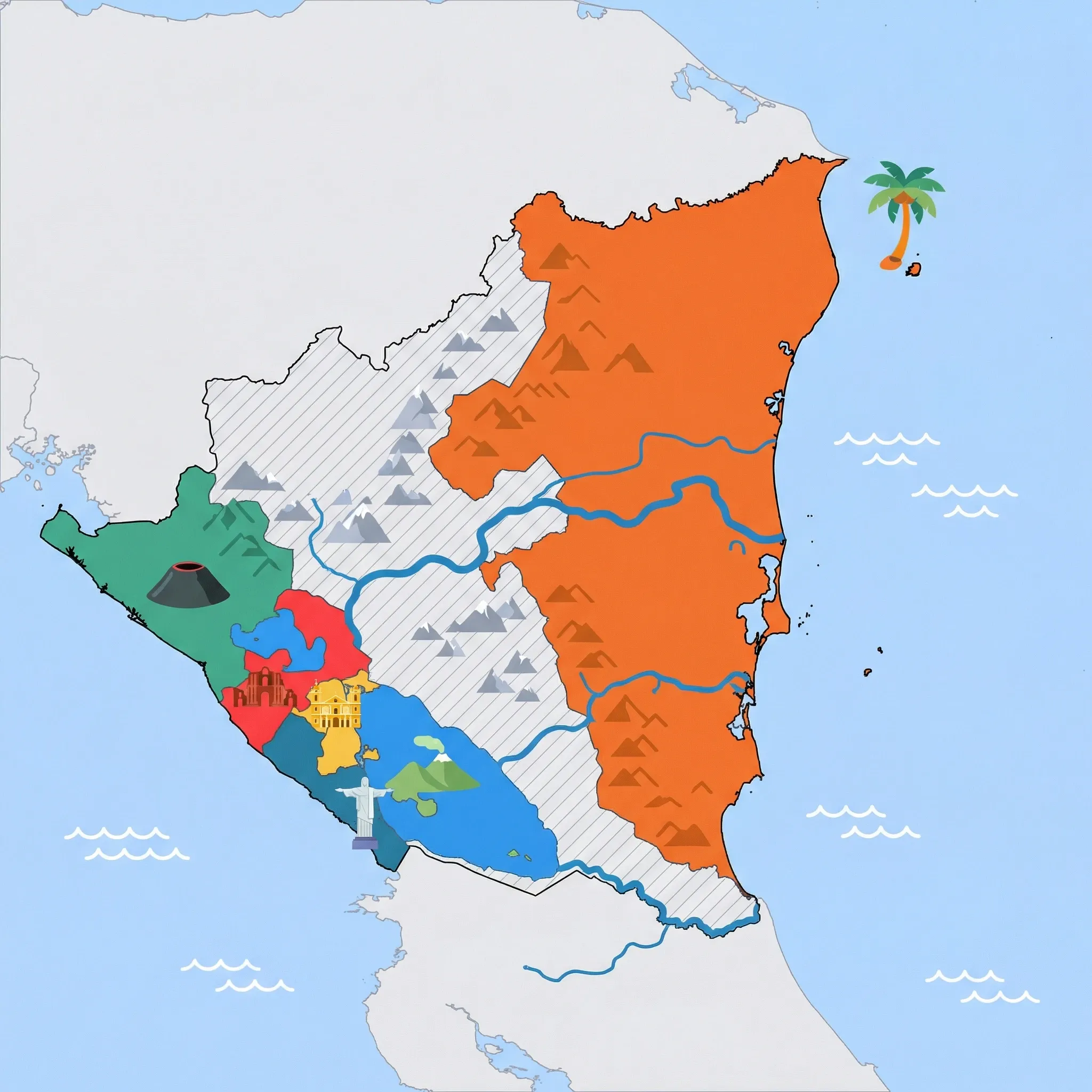
Click a region to explore
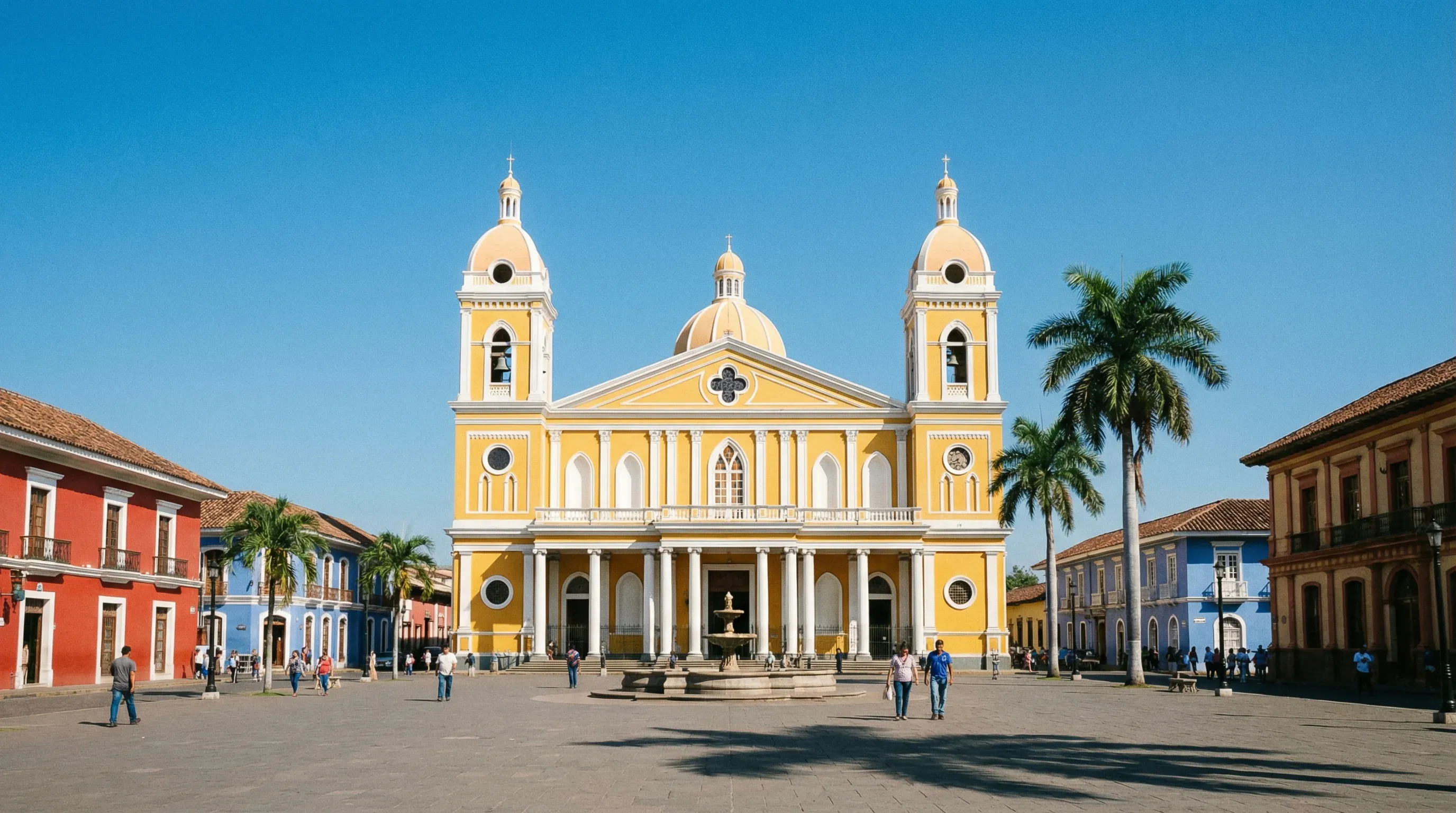
Granada and Masaya form the tourism heart of Nicaragua, offering the perfect blend of comfort, culture, and adventure for families. Granada, the oldest city on the continent founded by Europeans, is a visual treat of pastel-colored colonial buildings, horse-drawn carriages, and grand cathedrals. It is walkable, safe, and accustomed to tourists, making it an easy 'base camp' for exploring the region. The city sits on the shores of Lake Cocibolca (Lake Nicaragua), where a chain of hundreds of tiny islands (Las Isletas) provides a calm, nature-filled escape just minutes from the city center.
Just a short drive away lies Masaya, known as the 'City of Flowers' and the center of Nicaraguan folklore and artisan crafts. However, the real draw here is the landscape. This region offers accessible geography that is thrilling for children without being physically demanding. You can drive right up to the edge of a smoking volcano crater, swim in the thermally vented waters of Laguna de Apoyo, and visit markets filled with colorful hammocks and wooden toys. The proximity of these attractions—most are within 45 minutes of each other—means you can have a morning adventure and be back at your hotel pool by early afternoon, a crucial rhythm for traveling with younger kids.
Key Attractions
The absolute must-do experience is Masaya Volcano National Park. It is one of the few places on earth where you can drive a car all the way to the rim of an active volcano. Families can peer down into the 'Mouth of Hell' to see the lava lake glowing red—a sight that captivates children and adults alike. It is best visited at sunset to see the magma glow against the night sky. The park also has a visitor center that explains the geology in a kid-friendly way.
Another essential outing is a boat tour of the Isletas de Granada. These 365 small islands were formed by an ancient eruption of Mombacho Volcano. Families can hire a private boat to cruise through the canals, spot monkeys living on the islands, and see how locals live on the water. For active families, hiking the lower trails of Mombacho Volcano offers cloud forest scenery and the chance to spot sloths and howler monkeys in a cooler climate.
Practical Advice
Granada is hot and humid year-round. Plan activities for the early morning (8:00 am to 11:00 am) and late afternoon. The midday heat is best spent in a pool or a hammock. The city is very stroller-friendly in the central plaza, though side streets can have uneven cobblestones. Masaya Volcano is accessible to everyone, including those with limited mobility, as no hiking is required to see the crater.
Food & Drink
Typical meal times: Lunch is the main meal, served 12:00 pm to 2:00 pm. Dinner is usually 6:30 pm to 9:00 pm. Street food stalls in the central park are active from late afternoon.
Typical meal costs: Sit-down dinners in Granada are mid-range, costing C$350–600 (approx. $10–16 USD / €9–15 EUR). Street food like Vigorón costs C$100–150 (approx. $2.75–4 USD / €2.50–3.75 EUR).
Dietary requirements: Granada has many international restaurants catering to vegans and gluten-free diets. Traditional food relies heavily on pork and cheese, but rice and beans (gallo pinto) are always available.
Signature dishes:
- Vigorón – Steamed yucca, chicharrón (pork crackling), and a tangy cabbage salad, traditionally served on a banana leaf. This is the signature dish of Granada.
- Indio Viejo – A thick, hearty stew made with shredded beef, maize dough, onions, and mint.
- Cacao – A cold drink made from milk and cacao seeds (not powder), often spiced with cinnamon. It is refreshing and a favorite with children.
Why this score?
The region offers moderate adventure through activities like hiking Mombacho Volcano and kayaking the Isletas, but most attractions are highly accessible via paved roads. The presence of drive-up volcano craters and organized boat tours makes it suitable for families, lacking the extreme ruggedness of the north or east.
Why this score?
Granada has several private clinics and a decent public hospital that are accustomed to treating international travelers. While not as advanced as the capital, its proximity to Managua (roughly an hour's drive) ensures that specialized care is reachable in a relatively short timeframe.
Why this score?
This is Nicaragua's primary tourist corridor, receiving the bulk of international visitors due to its well-preserved colonial architecture and the accessibility of Masaya Volcano. It functions as the country's most established hub with a high density of boutique hotels, restaurants, and tour operators catering to Western tastes.

Granada caters to all budgets. A family room in a colonial hotel with a pool costs C$2,200–4,500 (approx. $60–125 USD / €55–115 EUR). Dining on the tourist strip (La Calzada) attracts a premium, while local sodas (diners) a few blocks away offer meals for under C$180 (approx. $5 USD / €4.50 EUR).

Getting Here & Around
Getting Here
- Airports – The region is served by Augusto C. Sandino International Airport (MGA) in Managua, roughly a 45-minute drive from Granada.
- Shuttle – Private and shared shuttles run frequently from the airport to Granada hotels. This is the safest and most comfortable option for families.
- Driving – The road from Managua to Masaya and Granada is paved and in excellent condition, making rental cars a viable option.
Getting Around
- Walking – Granada's city center is compact and best explored on foot, though the heat can be intense.
- Horse Carriage – Traditional horse-drawn carriages (coches) are a fun way for families to tour the colonial center without walking in the sun.
- Taxi – Taxis are cheap within city limits (set price usually). Always agree on the fare before getting in.
- Bus – Local 'chicken buses' connect Granada to Masaya Volcano National Park and other towns, but can be crowded and chaotic with luggage.
No airports in this region. See the country flight map for nearby connections.
Official Links

Packing List
Essential for spotting monkeys on the Isletas boat tour and birds on Mombacho.
It gets surprisingly breezy and cool at the top of Masaya Volcano at night.
Granada's sidewalks are uneven; flip-flops often cause trips.
The city heat is intense midday; wet cooling towels help keep kids comfortable.
Street lighting is poor in towns and power outages are relatively common.
Essential for keeping electronics dry during wet boat rides to Ometepe or the Corn Islands.
Voltage fluctuations can occur and may damage sensitive electronics like tablets or chargers.
English is rarely spoken outside of major hotels; basic Spanish is vital for local interaction.
Tap water is generally not safe to drink; this saves money and reduces plastic waste.

Activities & Best Times

Urban tourism, museums, historical sites, architecture
Granada is one of the Americas' most authentic colonial cities, complemented by the world-class artisan markets of Masaya. The region is best experienced during the dry season festivals; the peak rainy season in September and October can significantly disrupt walking tours and outdoor cultural events.

Hiking, wildlife, outdoor exploration, ecotourism
While Masaya volcano and Mombacho cloud forest are notable, this region's strength is cultural/colonial heritage, not adventure. Five of six regions rated very_good/excellent for adventure creates no differentiation. Downgrade to good maintains accuracy while improving regional distinction.

Scenic drives, countryside tours, route-based travel
The Pueblos Blancos and the drive to the Masaya crater are celebrated regional scenic routes with well-maintained access. Dry months offer the best driving visibility and volcanic panoramas, whereas the heaviest rainy months (June, September, October) can lead to cloud-obscured views and slick roads.

Sport tourism, fitness activities, active recreation
Boasts significant infrastructure for volcano trekking and established canopy tours on Mombacho. The dry season provides optimal conditions for these activities, while the mid-year peak precipitation makes steep volcanic trails slippery and less enjoyable for families.

Learning experiences, scientific sites, historical education
Specialized facilities like the Masaya Volcano visitor center and Mombacho biological station offer strong scientific context for the region's geography. While the centers are indoor, the primary educational value is linked to outdoor field observation, which is best during the clear-sky dry season.

Spa retreats, wellness centers, peaceful getaways
Natural thermal springs at the base of Mombacho provide an authentic, rustic wellness experience. These are most comfortable during the slightly cooler months of December to February; high humidity and heavy rain in the late wet season diminish the restorative atmosphere.

Amusement parks, family entertainment venues
Features regional-scale water parks like Xilonem that serve local audiences but lack international destination status. These outdoor facilities are most appealing during the peak heat of the dry season and are frequently avoided during the heavy tropical rains.




Public Holidays & Calendar Next 12 months
Public holidays, festivals, cultural celebrations, and seasonal natural phenomena coming up in Granada & Masaya over the next 12 months.
Loading holidays and events...

Travel Advisory
The majority of international agencies recommend exercising a high degree of caution. While travel is possible, significant risks related to political instability, arbitrary law enforcement, and violent crime require travelers to be more vigilant than usual.
Safety Topics
Traveller Advice (4 groups)

Hiking in remote or volcanic regions is hazardous. Local law requires hiring certified guides for many volcanic trails, particularly on Ometepe Island.

Individuals associated with non-profits or religious organizations face severe risks, as thousands of civil society groups have been shut down and their staff subjected to detention or expulsion.

Media professionals are at high risk of being targeted, arrested, or denied entry for political reasons. Authorities actively monitor social media and professional backgrounds for any perceived anti-government sentiment.

Female travelers should be aware of reports of sexual assault and are advised to avoid walking alone, especially after dark or in isolated areas.
Agency Summaries
While no general travel ban is in place, visitors are warned about significant crime rates and the legal risks associated with political expression or participation in protests.
There are notable security concerns regarding violent crime and political instability. New Zealanders now require a visa to enter or transit through the country as of early 2026.
Travelers should remain extremely vigilant due to a volatile political climate, the potential for sudden civil unrest, and high rates of criminal activity.
It is advised to reconsider visiting because of the unpredictable application of local laws, the threat of being wrongfully detained, and the scarcity of adequate medical services. Violent crime also remains a concern.
A heightened level of awareness is necessary due to the prevalence of violent crime, including robberies and assaults. Police presence is limited outside of major cities.
Visitors can expect higher risks than in Ireland. It is essential to monitor local news and maintain a high level of personal security awareness throughout the trip.
Information is provided for general guidance only and does not constitute travel, safety, medical, or legal advice. Conditions may change. Users are responsible for independently verifying information before travel.