
León & Northwest
Revolutionary history, white cathedrals, and volcano boarding 🏛️
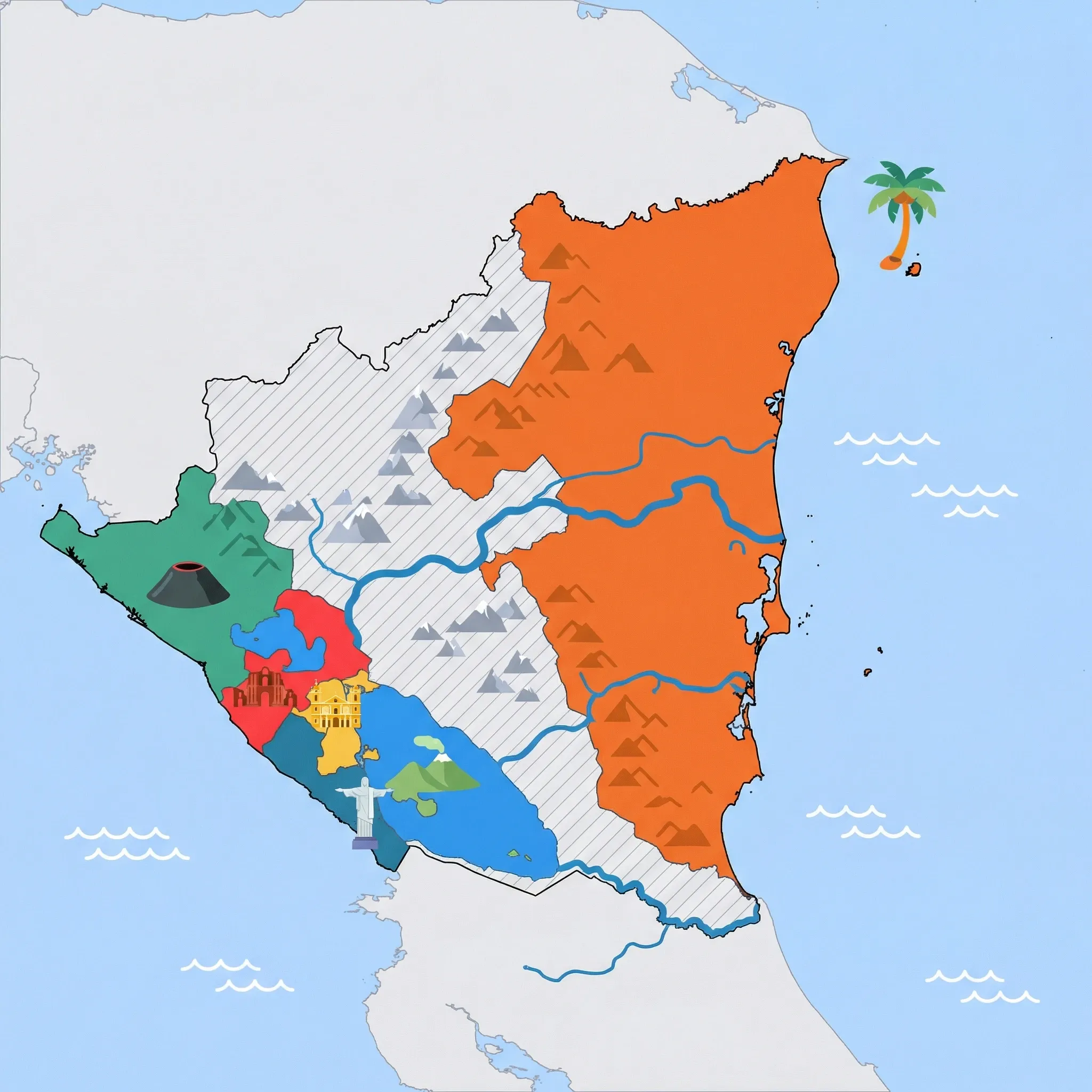
Click a region to explore
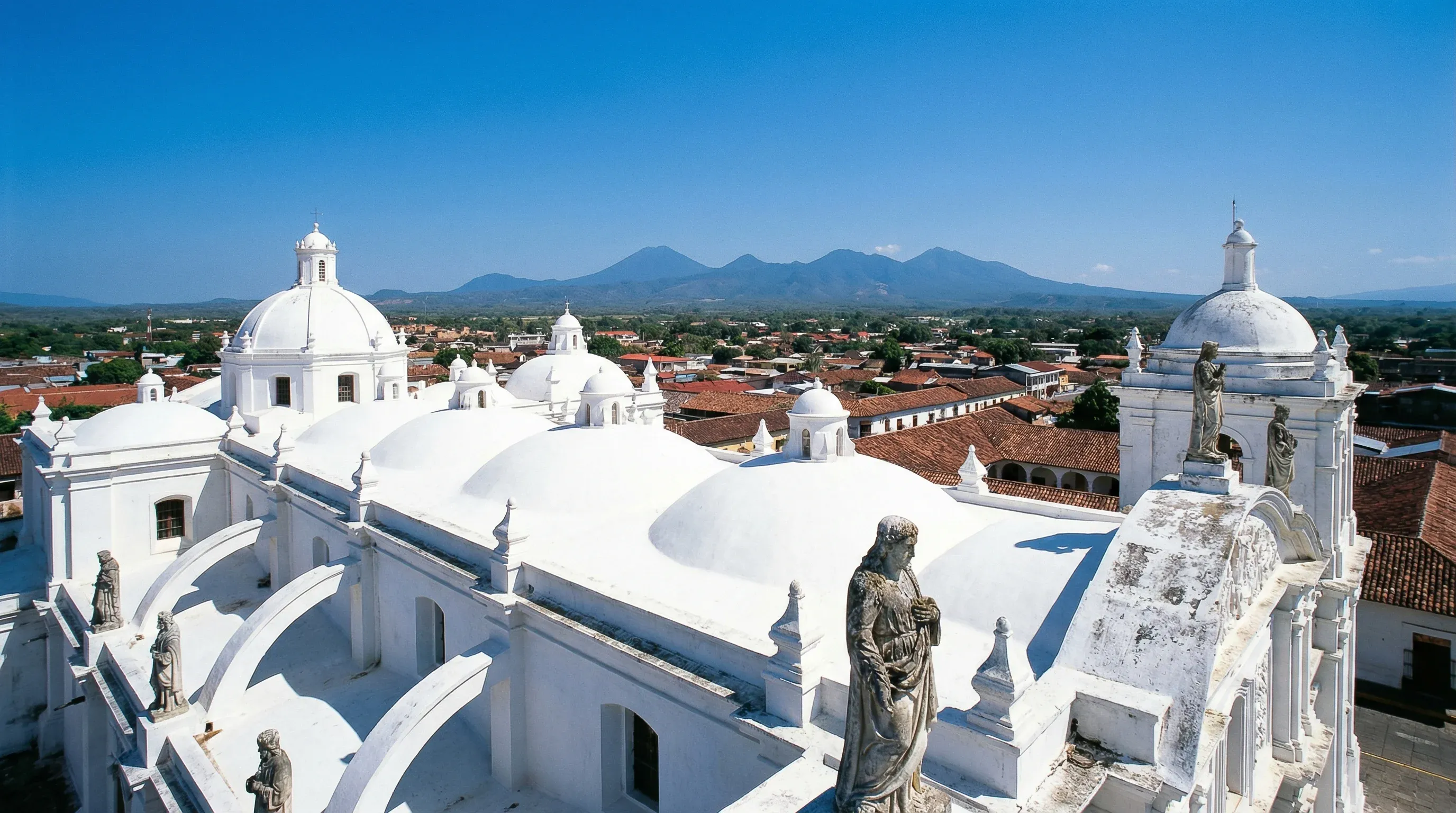
León offers a grittier, more intellectual, and deeply historic counterpart to Granada. As the traditional home of poets and revolutionaries, the city vibrates with energy. The architecture is grander but more weathered, dominated by the massive white Cathedral of León, the largest in Central America. For families with older children or teens, León is arguably the most exciting region in the country. The city itself is a living museum of the revolution, with murals and bullet-scarred buildings telling stories that can spark fascinating educational conversations.
Geographically, this region is hot—often the hottest in the country—but it is flanked by a spectacular chain of volcanoes (the Maribios range) and the Pacific Ocean. This proximity allows families to combine a morning of high-octane adventure on a volcano with a relaxing afternoon at the beach. The vibe here is less polished than Granada; it feels like a real working city where university students, farmers, and tourists mix. While the heat can be draining, the evenings come alive with locals sitting in rocking chairs on sidewalks and filling the plazas, creating a welcoming community atmosphere.
Key Attractions
The headline adventure here is volcano boarding on Cerro Negro Volcano. This young, black cinder cone allows visitors to hike up (about an hour) and slide down on a wooden sled. While it looks intimidating, you can control your speed, making it suitable for adventurous kids (usually ages 10+). For younger children, just the hike and the view of the smoking crater are memorable.
In the city center, families should visit the Cathedral of León. The highlight is paying a small fee to walk on the blindingly white roof. You must remove your shoes to protect the paint, and hopping barefoot across the domes offers incredible views of the city and volcanoes—a tactile experience kids love. For a day of relaxation, head to Las Peñitas Beach, a 20-minute drive away. It is a laid-back fishing village with strong surf, but there are calm estuary areas at the northern end (Juan Venado Island reserve) perfect for kayaking and spotting mangroves, crocodiles, and birds.
History buffs can also visit the UNESCO-listed Ruins of León Viejo, the original site of the city destroyed by a volcano in 1610, offering a Pompeii-style glimpse into the past.
Practical Advice
León is intense. The heat peaks between 12:00 pm and 3:00 pm; do not plan walking tours during this window. Stay in a hotel with a pool—it is practically a necessity here. When visiting the cathedral roof, go early (morning) or late afternoon, as the white surface reflects the sun and can be blindingly bright and hot.
Food & Drink
Typical meal times: Lunch 12:00 pm to 2:00 pm. Dinner 6:00 pm to 9:00 pm. The central market is a hub for cheap lunches.
Typical meal costs: Very affordable. A hearty local lunch costs C$150–250 (approx. $4–7 USD / €3.75–6.50 EUR). Western-style dinners cost C$350–550 (approx. $10–15 USD / €9–14 EUR).
Dietary requirements: Vegetarian options are standard in tourist cafes. Gluten-free travelers can rely on corn tortillas, but cross-contamination in street food is possible.
Signature dishes:
- Quesillo – A soft corn tortilla wrapped around local quesillo cheese, pickled onions, and a generous pour of sour cream. It is messy, salty, and delicious—often served in a plastic bag.
- Sopa de Queso – A rich cheese and corn soup with donut-shaped corn dumplings, traditionally eaten during Lent but available year-round.
- Raspados – Shaved ice topped with sweet syrups (often pineapple or tamarind) and condensed milk, sold from carts. Essential for the León heat.
Why this score?
The region is home to Cerro Negro, the world's premier volcano-boarding site, and several active peaks like Telica and San Cristóbal that require rigorous hiking. The nearby mangroves of Juan Venado Island offer wilder, less-manicured nature experiences compared to the southern lake regions.
Why this score?
León is home to a major university and a large public hospital, providing better-than-average local medical access for the region. Many clinics have staff who can assist foreigners, and it remains within driving distance of the more sophisticated medical hubs in the capital city of Managua.
Why this score?
As the country's second colonial city, León attracts a steady stream of cultural travelers and volcano-boarding enthusiasts. While it has significant international recognition, its visitor numbers are slightly lower than Granada's due to its higher temperatures and more spread-out attractions.

León is generally cheaper than Granada or San Juan del Sur. A comfortable hotel with a pool averages C$1,800–3,000 (approx. $50–85 USD / €45–80 EUR). Student culture keeps food prices low; you can eat very well for under C$200 (approx. $5.50 USD / €5 EUR). Volcano boarding tours are the main excursion cost, usually around $30-40 USD per person.

Getting Here & Around
Getting Here
- Bus – 'Interlocal' microbuses leave frequently from Managua (UCA terminal). They are fast, cheap, and air-conditioned, taking about 90 minutes.
- Shuttle – Private shuttles from Granada or Managua are easy to arrange.
- Driving – The highway from Managua is flat and straight. It is an easy drive, though traffic can be heavy entering the city.
Getting Around
- Walking – The historic center is walkable, but distances are longer than in Granada.
- Taxi – Taxis are the primary way to get around; they charge a flat per-person rate within the city.
- Bus – Frequent buses run from the Mercadito Subtiava to Las Peñitas Beach.
No airports in this region. See the country flight map for nearby connections.
Official Links

Packing List
Essential for volcano boarding to keep volcanic dust out of your mouth and nose.
León is the hottest city in Nicaragua; water alone isn't enough for active kids.
City streets are noisy with fireworks, church bells, and sirens early in the morning.
The cathedral roof requires you to be barefoot/socked; surface can be hot.
Street lighting is poor in towns and power outages are relatively common.
Essential for keeping electronics dry during wet boat rides to Ometepe or the Corn Islands.
Voltage fluctuations can occur and may damage sensitive electronics like tablets or chargers.
English is rarely spoken outside of major hotels; basic Spanish is vital for local interaction.
Tap water is generally not safe to drink; this saves money and reduces plastic waste.

Activities & Best Times

Hiking, wildlife, outdoor exploration, ecotourism
A premier destination for volcanic exploration, featuring the active Cerro Negro and Telica volcanoes for unique crater-side experiences. The dry season (Dec-Mar) provides ideal conditions for hiking, while the peak rainy months (Sep-Oct) make trails difficult and potentially hazardous.

Urban tourism, museums, historical sites, architecture
León is a hub of authentic Nicaraguan culture, home to the UNESCO-listed Cathedral and world-class contemporary art at the Ortiz Gurdián Foundation. Best visited in the cooler dry months; April is intensely hot, and the autumn rains can disrupt walking tours through the colonial center.

Sport tourism, fitness activities, active recreation
Offers the globally unique sport of volcano boarding on Cerro Negro alongside significant trekking routes through the Maribios volcanic chain. Optimal conditions are found in the dry season when the volcanic ash surfaces are stable and weather is predictable for outdoor adventure.

Beach resorts, marine activities: diving, snorkelling, kite surfing, wind surfing, sailing
Las Peñitas and Poneloya offer authentic Pacific coastal experiences with consistent surf and access to the Juan Venado Island mangrove reserve. International travelers should target the dry season for calm boat navigation and sunny beach conditions, avoiding the stormier months of September and October.

Learning experiences, scientific sites, historical education
Features the UNESCO-listed Ruins of León Viejo, providing critical archaeological context for early colonial Central America. Site accessibility is best in the dry season, as heavy rains can impact tours of these significant outdoor archaeological excavations.

Scenic drives, countryside tours, route-based travel
The Volcano Route offers a spectacular scenic drive connecting historical León with dramatic volcanic peaks and the Pacific coast. Roads are best navigated during the dry season; heavy tropical rainfall in late autumn can cause washouts or poor visibility on rural routes.

Spa retreats, wellness centers, peaceful getaways
Natural volcanic thermal pools at San Jacinto offer a rustic and authentic wellness experience, though facilities are basic by international standards. These geothermal sites are more pleasant to visit when ambient humidity is lower and rain does not cool the surface waters.




Public Holidays & Calendar Next 12 months
Public holidays, festivals, cultural celebrations, and seasonal natural phenomena coming up in León & Northwest over the next 12 months.
Loading holidays and events...

Travel Advisory
The majority of international agencies recommend exercising a high degree of caution. While travel is possible, significant risks related to political instability, arbitrary law enforcement, and violent crime require travelers to be more vigilant than usual.
Safety Topics
Traveller Advice (4 groups)

Hiking in remote or volcanic regions is hazardous. Local law requires hiring certified guides for many volcanic trails, particularly on Ometepe Island.

Individuals associated with non-profits or religious organizations face severe risks, as thousands of civil society groups have been shut down and their staff subjected to detention or expulsion.

Media professionals are at high risk of being targeted, arrested, or denied entry for political reasons. Authorities actively monitor social media and professional backgrounds for any perceived anti-government sentiment.

Female travelers should be aware of reports of sexual assault and are advised to avoid walking alone, especially after dark or in isolated areas.
Agency Summaries
While no general travel ban is in place, visitors are warned about significant crime rates and the legal risks associated with political expression or participation in protests.
There are notable security concerns regarding violent crime and political instability. New Zealanders now require a visa to enter or transit through the country as of early 2026.
Travelers should remain extremely vigilant due to a volatile political climate, the potential for sudden civil unrest, and high rates of criminal activity.
It is advised to reconsider visiting because of the unpredictable application of local laws, the threat of being wrongfully detained, and the scarcity of adequate medical services. Violent crime also remains a concern.
A heightened level of awareness is necessary due to the prevalence of violent crime, including robberies and assaults. Police presence is limited outside of major cities.
Visitors can expect higher risks than in Ireland. It is essential to monitor local news and maintain a high level of personal security awareness throughout the trip.
Information is provided for general guidance only and does not constitute travel, safety, medical, or legal advice. Conditions may change. Users are responsible for independently verifying information before travel.