
Nizwa & Interior
The fortress city and the Grand Canyon of Arabia 🏰⛰️
Click a region to explore
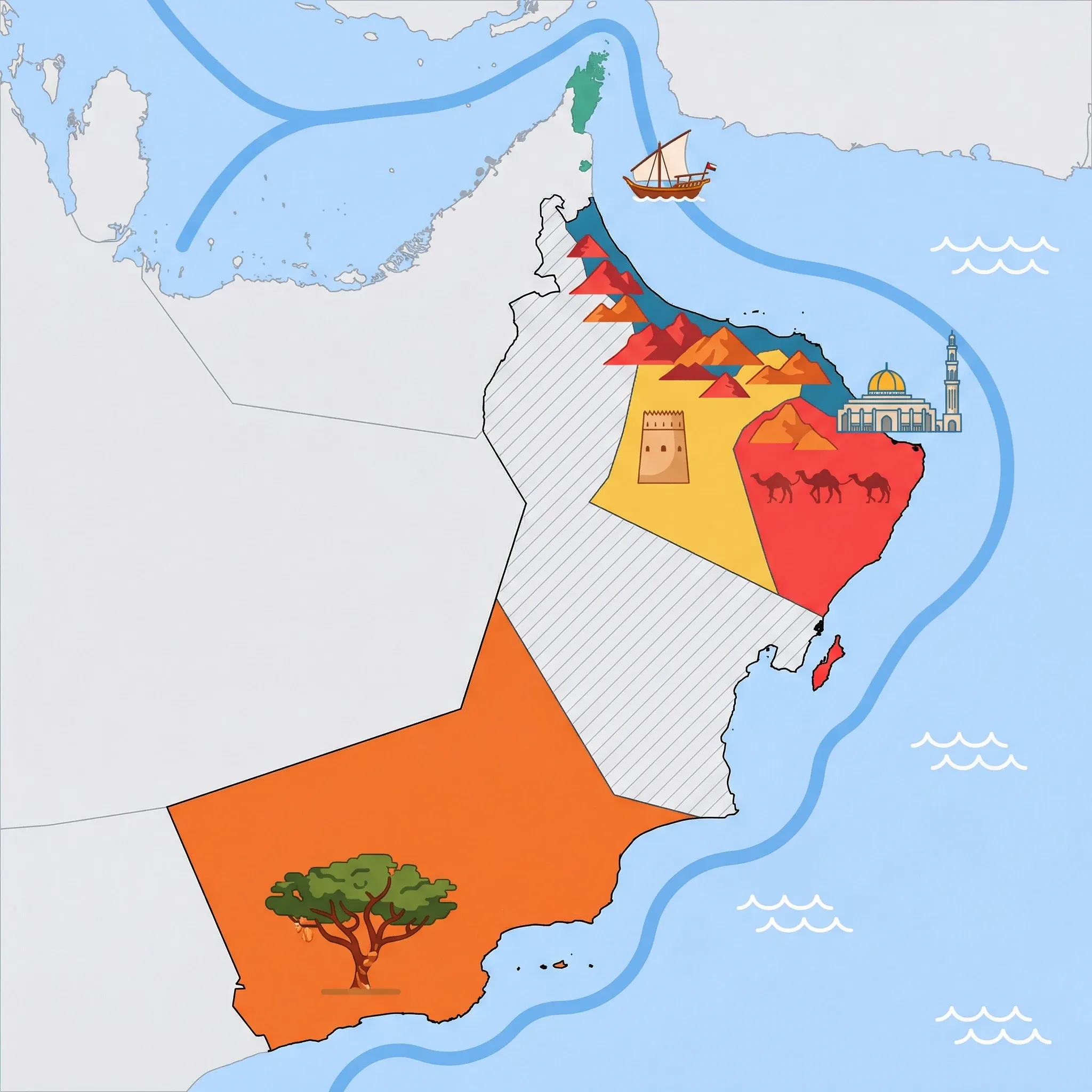
If Muscat is the modern face of Oman, the Interior is its soul. This region is dominated by the Al Hajar mountains and the historic city of Nizwa, which was once the capital. For families, this is the place to spark the imagination with tales of desert battles and ancient Imams. The landscape is dramatic—huge mountains rise abruptly from the gravel plains, hiding green terraced villages and deep canyons. It is cooler here than on the coast, especially up in the mountains, making it a refreshing escape.
The region is famous for its forts. These aren't just stuffy museums; they are massive, defensive labyrinths with trapdoors, murder holes (for pouring boiling date syrup on enemies), and towers that kids love to climb. Beyond the history, the 'Green Mountain' (Jebel Akhdar) and the 'Mountain of Sun' (Jebel Shams) offer world-class hiking and views. Jebel Shams is home to the 'Grand Canyon of Oman', a terrifyingly deep gorge that offers one of the most spectacular views in the Arabian Peninsula. The region feels authentic and grounded, with a pace of life dictated by the call to prayer and the weekly markets.
Key Attractions
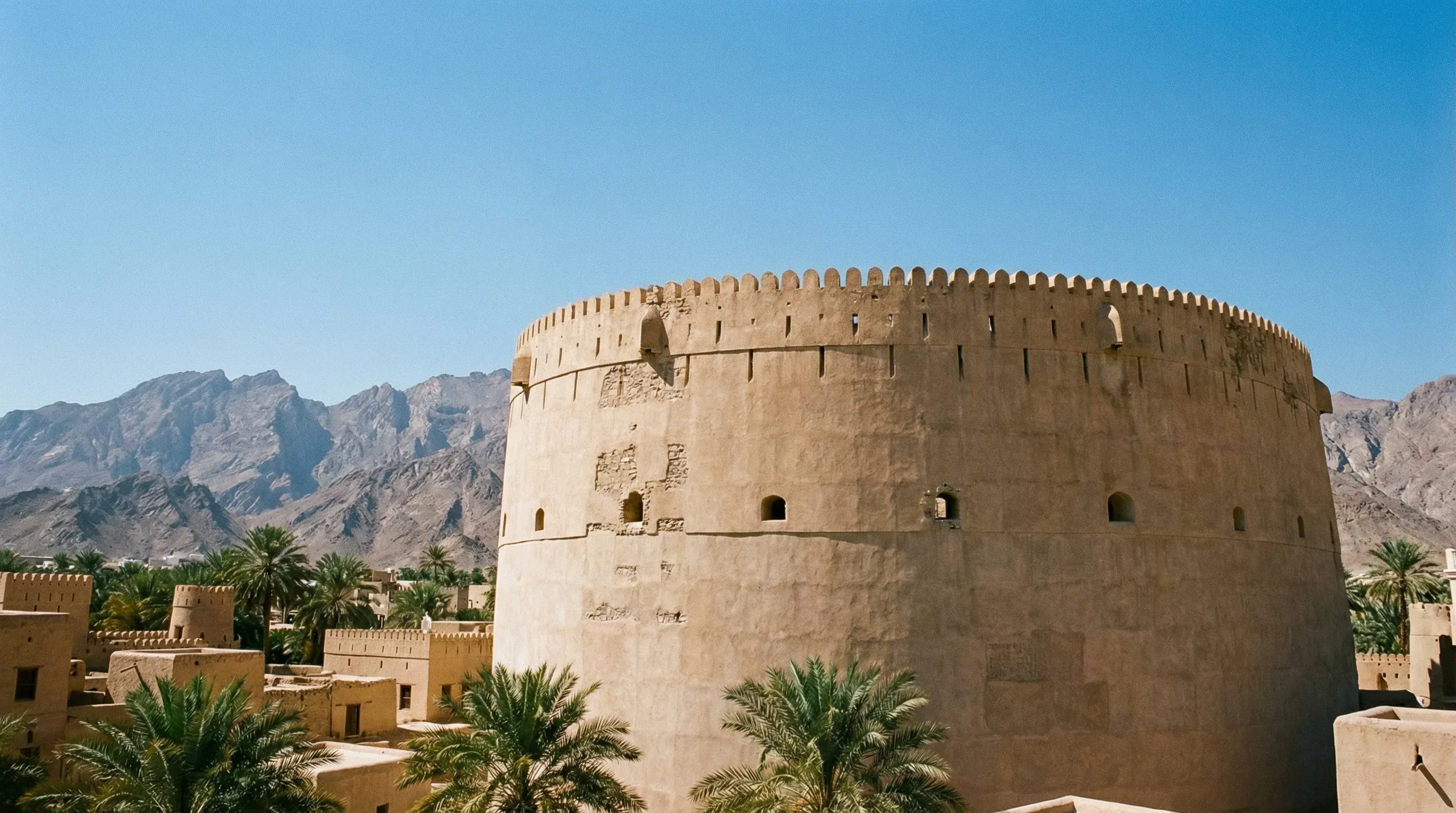
Nizwa is the main hub. The Nizwa Fort is the most visited monument in Oman and for good reason; its massive circular tower offers great views, and the museum inside is excellent. Just next door is the souq, famous for Friday morning goat auctions—a chaotic, loud, and fascinating cultural spectacle. For a more fairytale-like castle, drive to Jabrin Castle. It was built as a palace for the arts, not just defense, and features stunning painted ceilings and secret passages. Adventure-seeking families should head up Jebel Shams to see the canyon (Balcony Walk is a popular trail, but requires care with small kids). Alternatively, Jebel Akhdar offers cooler weather and walks through pomegranate and rose terraces.
Practical Advice
Nizwa is a 1.5 to 2-hour drive from Muscat. While you can reach Nizwa in a sedan, you must have a 4WD to go up Jebel Akhdar (police checkpoint will turn you back otherwise). Jebel Shams is technically doable in a sedan but a 4WD is strongly recommended due to the rough dirt road near the top. Temperatures in the mountains can drop to freezing in winter—pack warm clothes!
Food & Drink
Typical meal times: Lunch 12:00 pm to 2:30 pm. Restaurants close early in Nizwa compared to Muscat, with dinner often finishing by 9:30 pm or 10:00 pm.
Typical meal costs: Very affordable. A family platter of rice and meat costs OMR 10–15 (approx. $26–39 USD / €24–36 EUR).
Dietary requirements: Options are more limited here than in Muscat. Expect traditional Omani, Indian, and simple grilled fare. Vegetarians will rely on Indian restaurants for dal and vegetable curries.
Signature dishes:
- Qabuli – An Omani rice dish similar to Kabsa, featuring dried meat or fresh meat cooked with spices and chickpeas.
- Omani Halwa – Nizwa is the Halwa capital. It is served warm with coffee.
- Arsia – Mashed rice and meat dish, very traditional for celebrations.
Why this score?
The Hajar Mountains offer serious adventure, including the W6 Balcony Walk on Jebel Shams, the highest peak in the country. Navigating the steep switchbacks and rugged canyon terrain requires 4x4 vehicles and a taste for outdoor exploration.
Why this score?
Nizwa features a large, competent regional hospital that serves as a hub for the interior. While quality is good, access is much more difficult for those staying in high-altitude mountain villages where response times can be slow.
Why this score?
Nizwa is Oman's cultural heart and a mandatory stop for nearly every international tourist visiting the country. The Nizwa Fort and the high-altitude resorts of Jebel Akhdar maintain a consistent flow of visitors throughout the year.

Accommodation in Nizwa is generally cheaper than Muscat, with good apartments for OMR 20–30 (approx. $52–78 USD / €48–72 EUR). However, luxury mountain resorts on Jebel Akhdar are very expensive (OMR 150+ / $390+ per night). Food and entry fees are low.

Getting Here & Around
Getting Here
- Driving – The primary way to arrive. A dual carriageway connects Muscat to Nizwa (approx. 1.5 hours).
- Bus – Mwasalat buses run from Muscat to Nizwa, but once there, you will need a taxi to get around.
Getting Around
- Car – Essential. Attractions like Jabrin Castle and Bahla Fort are spread out.
- 4WD Vehicle – Mandatory by law if you plan to drive up Jebel Akhdar. Highly recommended for Jebel Shams.
No airports in this region. See the country flight map for nearby connections.

Packing List
Mountain temperatures at night can be 15-20°C colder than the coast
Forts have uneven stairs and mountain terrain is rocky/dusty
The roads up Jebel Akhdar and Jebel Shams are extremely winding
Small shops and the souq often do not accept cards
Essential for swimming in public wadis where modest dress (covering shoulders/knees) is expected even in water.
Wadi beds are extremely slippery with mossy rocks; flip-flops will float away or cause slips.
To float your phone and car keys behind you while swimming through deep wadi pools.
You will frequently remove shoes at mosques, forts, and traditional majlis seating areas.
Mountains like Jebel Shams and desert nights drop to surprisingly cold temperatures.
The mountain roads to Jebel Akhdar and Jebel Shams are steep and incredibly winding.

Activities & Best Times

Hiking, wildlife, outdoor exploration, ecotourism
Features dramatic high-altitude landscapes including Jebel Shams and Jebel Akhdar with major hiking routes like the W6 Balcony Walk. Peak season offers cool, pleasant weather for mountain exploration, while summer months are excessively hot for lowland transit.

Urban tourism, museums, historical sites, architecture
Boasts UNESCO World Heritage sites like Bahla Fort and iconic cultural experiences such as the Nizwa Friday Livestock Market. Best visited in winter to comfortably walk the historic forts and mud-brick villages; summer heat renders outdoor heritage tours difficult.
Scenic drives, countryside tours, route-based travel
Renowned for spectacular mountain drives including the ascent to Jebel Akhdar and the Jebel Shams Canyon road. Clear skies and comfortable temperatures in winter provide optimal conditions for scenic viewpoints and village stops.

Sport tourism, fitness activities, active recreation
Excellent infrastructure for active families, including the Misfat zip-line and internationally recognized trekking routes. Seasonal timing is critical as high-intensity physical activity is only advisable during the cooler winter months.

Learning experiences, scientific sites, historical education
The Oman Across Ages Museum provides a world-class, purpose-built educational experience for families. Visitation is best aligned with general tourism seasons when supporting outdoor archaeological sites and caves like Al Hoota are accessible.
Amusement parks, family entertainment venues
Offers regional family entertainment at Wadina and Naseem parks, though these lack the scale of global theme park destinations. Operational and enjoyable during the cooler months when outdoor activity is feasible for families.




Public Holidays & Calendar Next 12 months
Public holidays, festivals, cultural celebrations, and seasonal natural phenomena coming up in Nizwa & Interior over the next 12 months.
Loading holidays and events...

Travel Advisory
A unanimous consensus among all six major agencies recommends reconsidering travel to Oman. This elevated risk is driven by recent regional military escalations, potential airspace disruptions, and the threat of falling debris from intercepted projectiles. Most agencies have issued specific shelter-in-place or departure advisories for certain regions.
Safety Topics
Traveller Advice (4 groups)

Travellers should maintain a high degree of situational awareness, keep communication devices charged, and ensure they have adequate supplies of food and water in case shelter-in-place orders are issued.

Homosexual acts are illegal in Oman and can lead to imprisonment. Travellers should exercise extreme discretion in public and avoid any public displays of affection.

Respect local cultural norms by dressing conservatively. Women should avoid walking alone in isolated areas, especially after dark, and be mindful of local sensitivities regarding public behavior.

Personnel operating near the Yemen border face extreme risks of kidnapping and being caught in armed conflict. Heightened security protocols are essential in these regions.
Agency Summaries
The U.S. has elevated the travel advisory to Level 3, advising citizens to reconsider travel because of the risk of armed conflict and terrorism. Non-emergency government employees have been authorized to depart, and there is a specific 'Do Not Travel' warning for the border region with Yemen.
New Zealand has updated its advice to Level 3, recommending that citizens avoid non-essential travel to Oman due to the deteriorating regional security situation and the risk of military strikes or armed conflict.
Canadians are advised to refrain from non-essential travel to Oman due to the risk of falling debris from intercepted missiles, potential airspace closures, and heightened regional tensions. Canadians currently in the country should follow local shelter-in-place orders if issued.
Ireland advises against non-essential travel to Oman as part of a broader regional safety warning. Citizens in Oman are urged to monitor local media closely and adhere to all instructions from local authorities, including potential shelter-in-place orders.
British nationals are advised against all but essential travel to Oman following regional escalation. Specific instructions have been issued for individuals in Duqm and Salalah to shelter in place or depart via commercial means if possible due to security risks.
Australia has raised the risk level for Oman to 'Reconsider your need to travel' citing the volatile security situation in the Middle East. Australians in the Duqm and Salalah regions are specifically advised to shelter in place and prioritize safety over movement.
Information is provided for general guidance only and does not constitute travel, safety, medical, or legal advice. Conditions may change. Users are responsible for independently verifying information before travel.