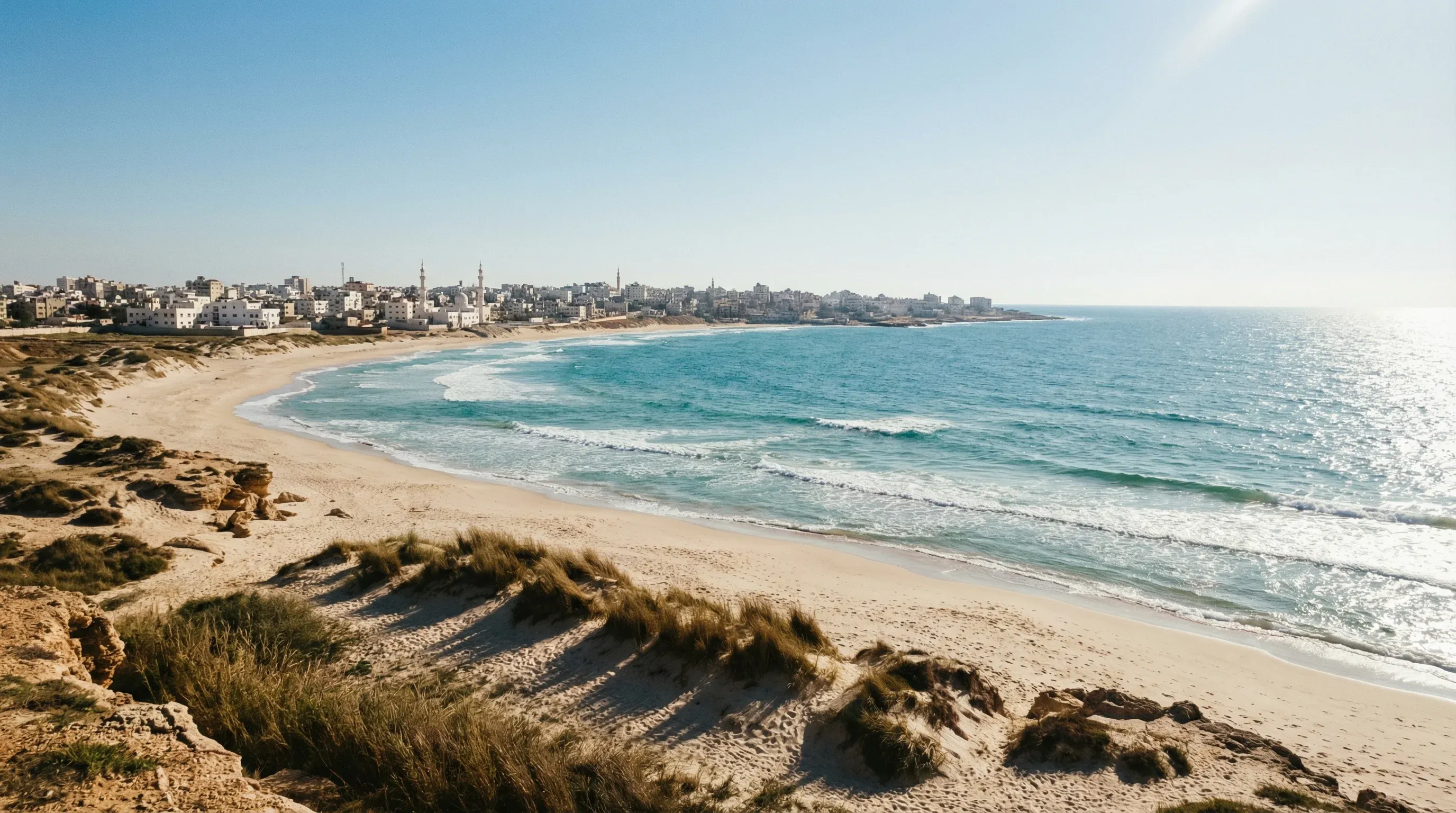

Gaza Strip (currently not accessible)
A historic coastal enclave with deep roots
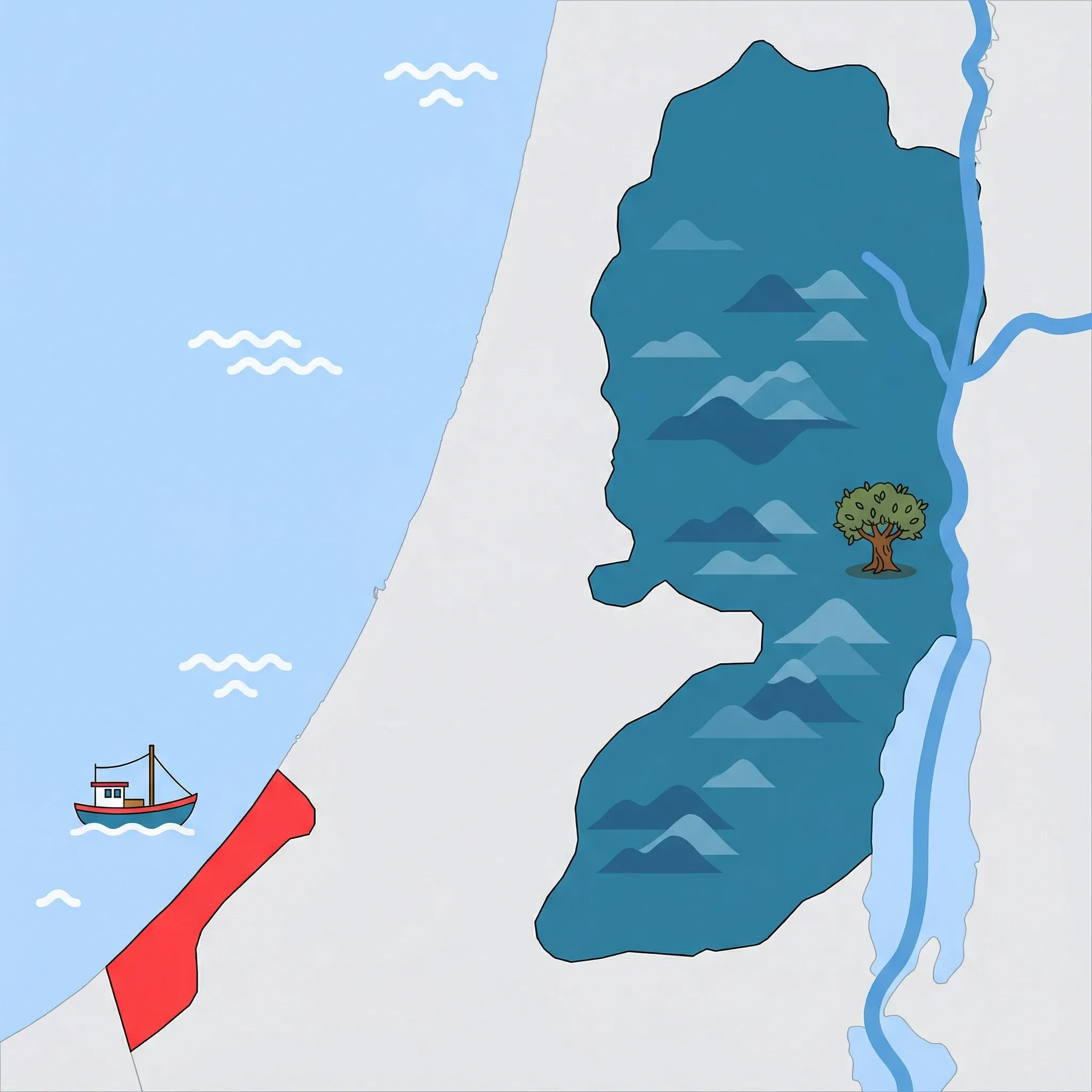
Click a region to explore
⚠️ SAFETY WARNING: Due to active military conflict, extensive infrastructure damage, and a volatile security environment, government agencies (including CA, USA, UK, AU, IE, and NZ) advise travelers to avoid all travel to the Gaza Strip. The region is currently a war zone with no functioning tourism services, and consular assistance is unavailable. Families are strongly urged to consult their own government's official travel advisory, as borders are effectively closed to civilian travel.
Overview
The Gaza Strip is a densely populated coastal band rich in history, having served as a crossroads for empires from the Pharaohs to the Ottomans. Geographically, it features a long stretch of Mediterranean coastline and a flat, semi-arid terrain that transitions into dunes near the Egyptian border. Culturally, Gaza is distinct from the West Bank, known for its specific dialect, resilience, and unique culinary traditions that heavily feature hot peppers, dill, and seafood.
Before the current conflict, family life in Gaza often revolved around the sea, with the corniche serving as a primary gathering spot for evening strolls and picnics. The region possesses significant archaeological potential, including ancient monasteries and trading ports buried beneath the sand, though these are currently inaccessible. The atmosphere is deeply traditional, and the local hospitality is renowned, even amidst extreme hardship.
Key Attractions
Note: Due to the current security situation, all tourist sites are inaccessible.
Historically, key sites of interest included the Great Omari Mosque (dating back to the Mamluk era) and the Church of Saint Porphyrius, one of the oldest active churches in the world. The Pasha's Palace Museum (Qasr al-Basha) formerly displayed artifacts from the region's diverse history. The coastline itself, with its Mediterranean sunsets, was the region's most natural attraction for local families.
Practical Advice
Access: There is currently no entry for tourists. Borders are strictly controlled by Egyptian and Israeli military forces. In stable times, summers are hot and humid, while winters are mild. Electricity and clean water shortages are chronic issues affecting daily life.
Food & Drink
Typical meal times: Lunch is the main meal, typically served from 2:00 pm to 4:00 pm. Dinners are lighter and eaten late, often after 8:00 pm.
Typical meal costs: Estimates based on pre-conflict data. A basic meal might cost 20–40 ILS (approx. $5–11 USD / €4.50–10 EUR). Prices fluctuate heavily due to supply chain blockades.
Dietary requirements: Gazan cuisine relies heavily on vegetables, legumes, and seafood. Vegetarian options like falafel and hummus are staples. Spicy food is very common compared to other Palestinian regions.
Signature dishes:
- Qidra – A spiced rice and meat dish (usually lamb) cooked with chickpeas and garlic in a heavy clay pot, traditionally baked in a communal wood-fired oven.
- Zibdieh – A spicy tomato and shrimp stew (or crab) cooked in a clay bowl, highlighting Gaza's coastal heritage.
- Rummaniyeh – A tangy vegetarian stew made from lentils, eggplant, and pomegranate molasses, served with flatbread.
Why this score?
While primarily urban, the region represents an extreme environment characterized by severe physical risk and a total lack of tourism safety nets. Navigating a zone with no functioning utilities or predictable transport constitutes a level of ruggedness reserved for the most extreme circumstances.
Why this score?
Local medical infrastructure has been largely decimated, with remaining facilities operating under extreme duress and severe supply shortages. There is virtually no accessible or reliable healthcare for foreign nationals, particularly those requiring standard emergency or pediatric care.
Why this score?
The region is currently an active conflict zone with no legal or safe entry for international leisure travelers. Even historically, the area lacked a formal tourism industry for foreigners, and the current destruction of infrastructure has reduced visitor numbers to zero.

Under normal circumstances, costs in Gaza are significantly lower than in the West Bank or Jerusalem. However, due to scarcity, prices for basic goods can spike unpredictably. Historically, a simple market meal would cost around 15–25 ILS (approx. $4–7 USD / €3.50–6 EUR). Current economic conditions make standard tourist pricing irrelevant.

Getting Here & Around
Getting Here
- Borders Closed – All civilian entry points, including the Erez Crossing (from Israel) and Rafah Crossing (from Egypt), are currently closed to tourists and subject to military control.
- Airports – The nearest international airports are Cairo International (CAI) in Egypt and Ben Gurion (TLV) in Tel Aviv, but neither offers direct access to Gaza for travelers at this time.
Getting Around
- No Tourist Transport – There is no functioning tourist transport infrastructure. Internal movement is extremely dangerous and restricted due to military operations and damaged roads.
No airports in this region. See the country flight map for nearby connections.

Packing List
Essential for visiting religious sites (mosques/churches) and conservative cities like Hebron.
Mobile data can be unreliable or expensive; Google Maps often lacks local West Bank detail.
Delays at checkpoints or long travel days are common; keep phones charged for emergencies.
Many smaller shops, taxis, and local eateries in the West Bank do not accept cards.
You need your passport for checkpoints, but keeping a copy is smart in case of loss.
Public restrooms in bus stations or remote sites often lack basic supplies.

Activities & Best Times

Spa retreats, wellness centers, peaceful getaways
The historic Hammam al-Samra provides an authentic Ottoman-era thermal experience, though wellness facilities are limited to this single significant site. Visitation is most pleasant during the cooler winter months when the steam environment is most restorative, while the intense heat and humidity of the Mediterranean summer make the experience less appealing.

Public Holidays & Calendar Next 12 months
Public holidays, festivals, cultural celebrations, and seasonal natural phenomena coming up in Gaza Strip (currently not accessible) over the next 12 months.
Loading holidays and events...

Travel Advisory
Extreme risk due to ongoing armed conflict, military operations, and severe humanitarian crises. All major agencies advise against any travel to the region and suggest immediate departure for those already present.
Safety Topics
Traveller Advice (4 groups)

Any individuals currently in the territories should prioritize their safety by sheltering in place or seeking exit routes if commercial options remain. It is critical to stay informed through local media and adhere to instructions from security officials.

Aid workers are at extreme risk in Gaza and parts of the West Bank. Coordination with regional authorities is mandatory, though access remains severely restricted and safety cannot be guaranteed even with permits.

Respecting local social norms by dressing conservatively is recommended. Women should be aware of cultural expectations in more traditional areas and the heightened risk of harassment in crowded or tense environments.

Public displays of affection should be avoided as same-sex relationships are socially stigmatized and lack legal recognition, which may lead to discrimination or safety concerns.
Agency Summaries
New Zealand advises a total travel ban for the occupied territories, citing unpredictable military operations and the potential for life-threatening violence. New Zealanders in these areas are urged to leave if safe to do so, noting that government help is severely restricted in current conditions.
Ireland maintains its highest warning level for the Palestinian Territories, advising against all travel to Gaza and most of the West Bank. The security status is tense with limited consular reach, especially in the northern governorates and areas affected by settler violence or military raids.
Australia warns its citizens to stay away from Gaza and the West Bank (excluding East Jerusalem, where a 'reconsider' warning applies) due to the extreme danger posed by military strikes, civil unrest, and terrorism. The security environment is described as unpredictable and rapidly changing.
U.S. authorities advise that travelers should not visit Gaza or the West Bank because of ongoing armed conflict and the threat of terrorism. Consular services are essentially unavailable in Gaza, and the security landscape across the territories is extremely volatile, with potential for violence without warning.
The Canadian government warns against any travel to the Palestinian Territories due to intense military actions, a severe lack of humanitarian resources, and a highly unstable security environment. Infrastructure in Gaza is heavily damaged, while the West Bank faces unpredictable violence and frequent military presence.
British officials recommend against any travel to Palestine due to the high risk of regional escalation and active hostilities. The situation remains critical with potential for borders to close suddenly and limited routes for departure. High tension and military activity pose significant safety risks to foreign nationals.
Information is provided for general guidance only and does not constitute travel, safety, medical, or legal advice. Conditions may change. Users are responsible for independently verifying information before travel.