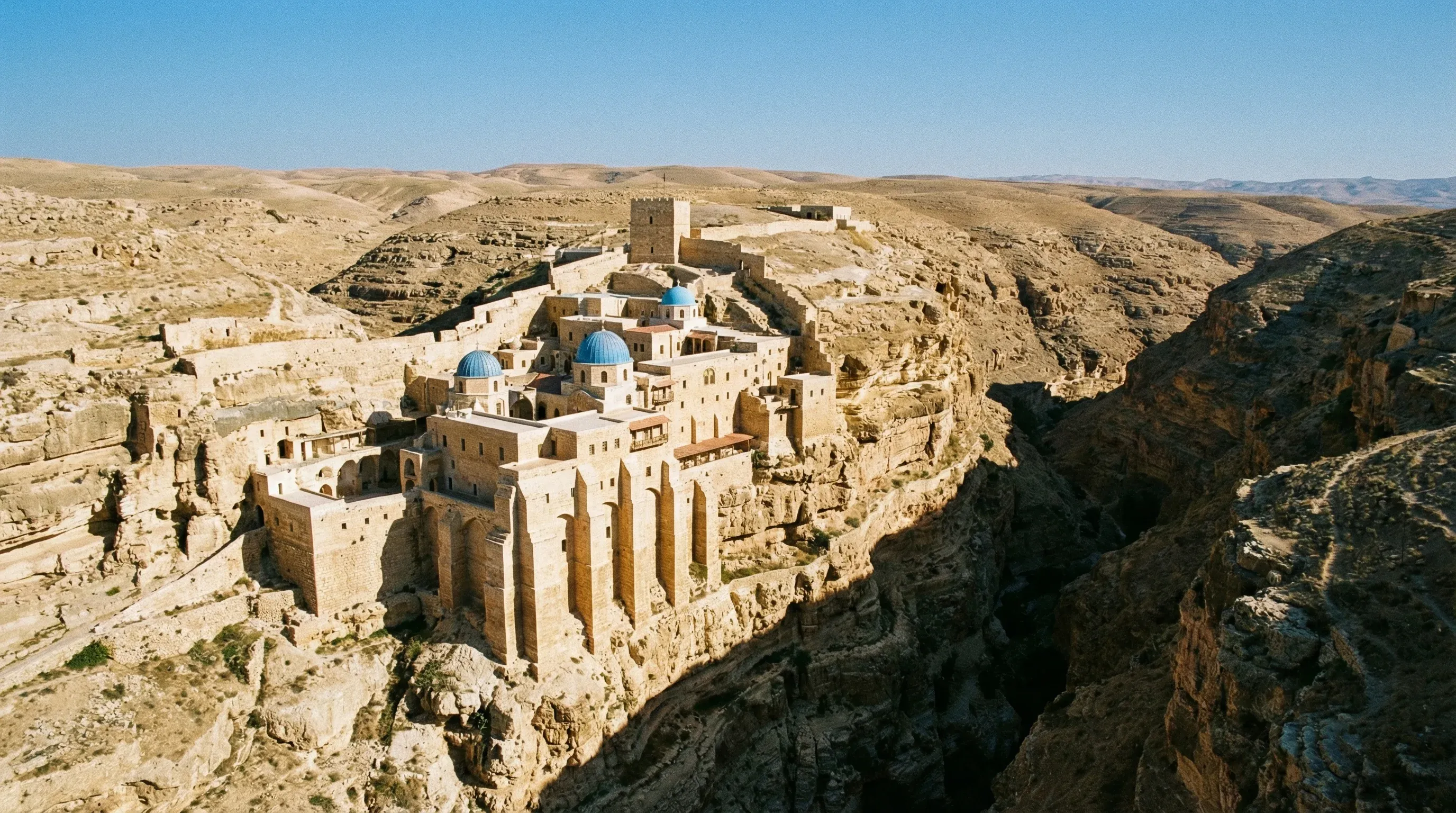

West Bank (Bethlehem, Ramallah, Hebron)
Ancient history and warm hospitality in the Judean Hills
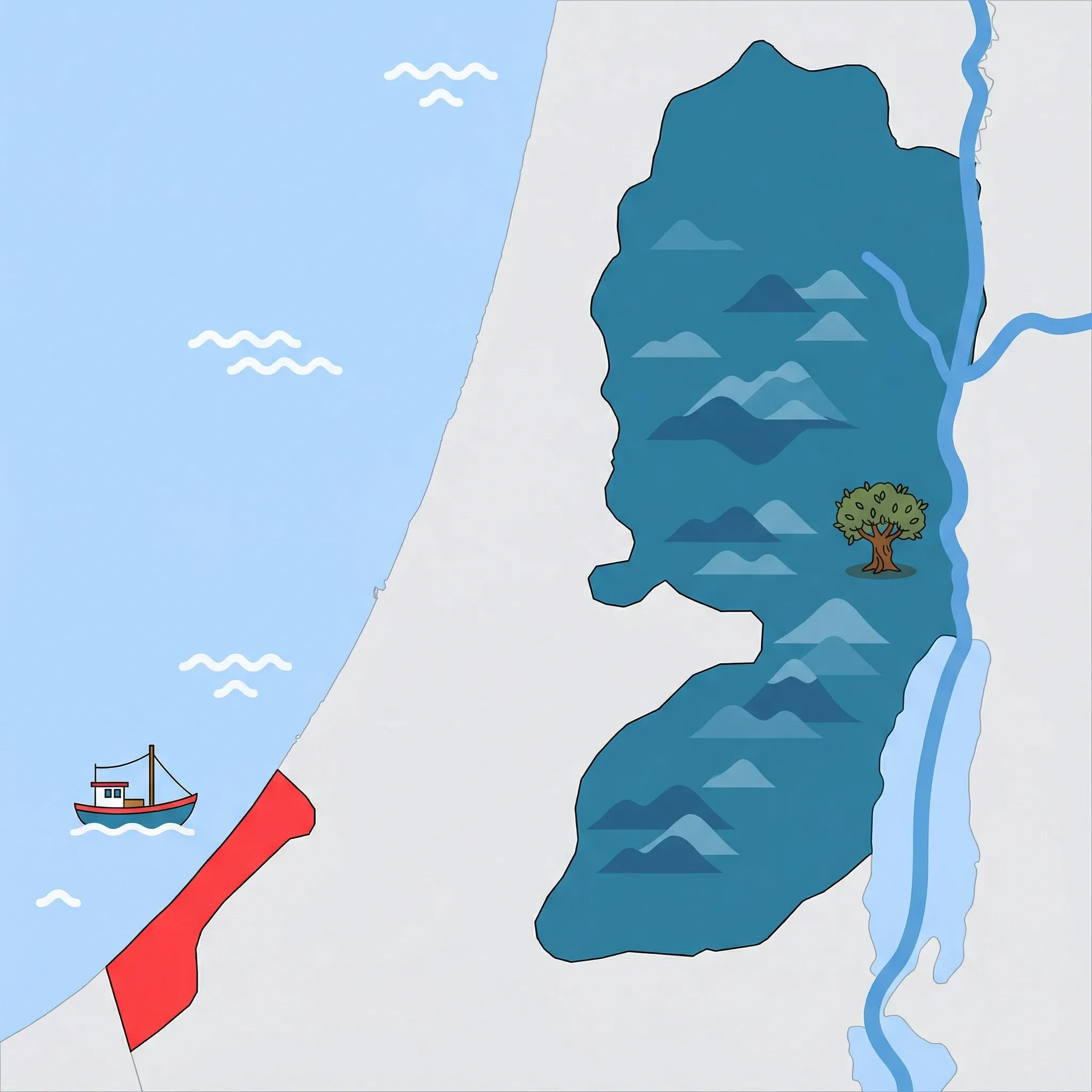
Click a region to explore
⚠️ SAFETY WARNING: Due to ongoing regional conflict and military operations, government agencies (including CA, USA, UK, AU, IE, and NZ) advise travelers to reconsider or avoid travel to the West Bank. The security situation is unpredictable, and checkpoints can close without warning. Families should avoid demonstrations, military zones, and refugee camps. While major tourist sites in Bethlehem and Jericho often remain open, travelers must consult their own government's official advisory and maintain high situational awareness.
Overview
The West Bank is a region of dramatic landscapes and immense historical weight, where olive groves terrace the limestone hills and ancient cities bustle with life. For families, the experience is a mix of educational pilgrimage and cultural immersion. The climate varies from the cool, breezy hilltops of Ramallah to the warm, sub-tropical environment of the Jordan Valley. Despite the complex political reality, the Palestinian culture of hospitality is palpable; children are often welcomed warmly in shops and restaurants, and locals are eager to share their heritage.
The region is geographically diverse. You can drive from the pine forests of the north to the desert monastaries of the south in a few hours. While navigation requires awareness of checkpoints and different administrative zones (Areas A, B, and C), organized tours or private drivers make visiting manageable. Families can explore lively souks (markets) filled with the scent of cardamom and roasted coffee, or hike in the surprisingly green reserves during spring.
Key Attractions
Bethlehem is the centerpiece for many visitors. The Church of the Nativity is essential; the low "Door of Humility" entrance is a memorable experience for children, leading to the grotto traditionally marking Jesus's birthplace. Nearby, the Herodium National Park offers a different slice of history—a fortress palace built by King Herod into a man-made mountain, featuring tunnels that kids love to explore.
In the Jordan Valley, Ancient Jericho / Tell es-Sultan provides a history lesson as the world's oldest city, with a cable car ride nearby that offers panoramic views. Just north of Jericho, Hisham's Palace showcases spectacular Umayyad architecture and one of the largest mosaic floors in the world, the "Tree of Life," which captures the imagination of young and old alike. For a modern cultural perspective, the beautifully designed The Palestinian Museum in Birzeit (near Ramallah) features landscaped gardens and rotating exhibitions on Palestinian history and art.
Practical Advice
Best time to visit: Spring (March–May) and Autumn (September–November) offer the best weather for walking. Summers can be intensely hot, especially in Jericho.
Logistics: Always carry passports and the entry slip received at Ben Gurion airport; you will need them to cross checkpoints between Jerusalem and West Bank cities. Dress modestly (shoulders and knees covered) to respect local customs and enter religious sites.
Food & Drink
Typical meal times: Lunch is the main meal, usually eaten between 1:00 pm and 3:00 pm. Dinner is often lighter or a social affair starting after 8:00 pm.
Typical meal costs: A hearty family meal in a mid-range restaurant costs 180–300 ILS (approx. $48–80 USD / €44–73 EUR). Street food like falafel sandwiches cost 10–20 ILS (approx. $2.70–5.50 USD / €2.50–5 EUR).
Dietary requirements: Vegetarian options are excellent and ubiquitous (falafel, hummus, salads, stuffed vine leaves). Vegan food is naturally common in appetizers (mezze). Gluten-free travelers should be aware that bread is served with almost everything, but grilled meats and rice dishes are widely available.
Signature dishes:
- Musakhan – The national dish consisting of roasted chicken baked with onions, sumac, allspice, and saffron, served over taboon bread.
- Maqluba – Literally "upside-down," this is a family favorite: a pot of rice, fried vegetables (cauliflower or eggplant), and meat flipped onto a serving tray.
- Kanafeh – A famous dessert, particularly in Nablus, made of shredded pastry dough layered with soft cheese and soaked in sweet syrup.
Why this score?
Outdoor enthusiasts can explore the Judean Desert and the Palestine Heritage Trail, which offers rugged hiking through terraced hills and valleys. The adventure level is further elevated by the logistical challenges of navigating checkpoints and the complex geopolitical landscape of the territory.
Why this score?
Standard medical facilities exist in major cities like Ramallah and Bethlehem, but the quality of care and availability of specialized equipment vary significantly. While some English-speaking staff are available, the system is often strained and not well-integrated with international insurance providers.
Why this score?
The region attracts religious pilgrims to world-famous sites like the Church of the Nativity in Bethlehem, but total volume remains low compared to global hubs. Ongoing geopolitical instability and travel advisories keep it a niche destination primarily for specific interest groups or day-trippers from Israel.

The West Bank is generally cheaper than Israel but more expensive than Jordan or Egypt. Accommodation ranges from budget guesthouses to high-end hotels in Bethlehem. A double room in a nice hotel costs 400–700 ILS (approx. $105–185 USD / €95–170 EUR). Transport is affordable; a sherut ride between cities costs 15–30 ILS (approx. $4–8 USD / €3.50–7 EUR).

Getting Here & Around
Getting Here
- Airports – Most travelers arrive via Ben Gurion Airport (TLV) in Tel Aviv. From there, you can take a shared taxi (sherut) or bus to Jerusalem, and then connect to West Bank cities.
- Land Crossing – The Allenby/King Hussein Bridge connects Jordan to the West Bank near Jericho. It is the only entry point for travelers coming directly from Jordan.
- Driving – Travelers can drive into the West Bank via Highway 60. Checkpoints separate the West Bank from Israel and Jerusalem. Jordan Valley Highway (Highway 90) is a scenic route running along the eastern edge.
Getting Around
- Service Taxis (Sheruts) – Shared yellow vans that run on fixed routes between cities (e.g., Ramallah to Nablus). They are cheap, fast, and a genuine local experience.
- Private Taxis – Available in all cities. Agree on a price beforehand or ensure the meter is used. Private drivers are recommended for visiting scattered sites like Herodium National Park.
- Walking – Centers of Bethlehem (near the Church of the Nativity) and Ramallah are walkable, though sidewalks can be uneven.
No airports in this region. See the country flight map for nearby connections.
Official Links

Packing List
Absolutely essential for passing through military checkpoints between cities.
Required for women to cover heads/shoulders in mosques and conservative churches.
Many smaller shops, taxis, and markets do not accept credit cards.
Roads in the Judean hills are winding and driving styles can be assertive.
Essential for visiting religious sites (mosques/churches) and conservative cities like Hebron.
Mobile data can be unreliable or expensive; Google Maps often lacks local West Bank detail.
Delays at checkpoints or long travel days are common; keep phones charged for emergencies.
Many smaller shops, taxis, and local eateries in the West Bank do not accept cards.
You need your passport for checkpoints, but keeping a copy is smart in case of loss.
Public restrooms in bus stations or remote sites often lack basic supplies.

Activities & Best Times

Urban tourism, museums, historical sites, architecture
A globally significant cultural destination home to UNESCO sites in Bethlehem and the vibrant, contemporary arts scene of Ramallah. Peak visitation aligns with religious holidays and temperate spring/autumn weather, though summer heat can be oppressive for urban exploration.

Hiking, wildlife, outdoor exploration, ecotourism
Exceptional desert trekking in Wadi Qelt and the immersive Palestinian Heritage Trail offer authentic wilderness experiences. Spring is particularly beautiful for wildflowers, while winter carries flash flood risks in the canyons.

Events, celebrations, seasonal attractions
Bethlehem's Christmas celebrations are internationally renowned and draw massive global tourism. The classification notes correctly identify this as 'globally unique' and 'a primary draw for international visitors' - this directly contradicts a 'marginal' rating. Should be 'very_good' at minimum.

Beach resorts, marine activities: diving, snorkelling, kite surfing, wind surfing, sailing
Features unique access to the Dead Sea's hypersaline waters and therapeutic muds at established sites like Kalia Beach. Spring and autumn provide ideal temperatures for floating, avoiding the dangerous extreme heat of the Jordan Valley summer.

Spa retreats, wellness centers, peaceful getaways
Dead Sea therapeutic facilities are internationally recognized for wellness tourism. While historic Turkish baths are authentic, the Dead Sea's global reputation for therapeutic mud and mineral treatments elevates this beyond 'marginal'.

Scenic drives, countryside tours, route-based travel
Iconic routes like the Sea Level Road offer dramatic elevation changes and desert vistas of the Judean wilderness. Clear spring and autumn days provide the best visibility and comfortable driving conditions across high-altitude and valley roads.

Sport tourism, fitness activities, active recreation
Provides rugged terrain for organized hiking and adventure sports at dedicated centers like Wadi Rawabi. Activities are highly dependent on moderate temperatures, making the transition seasons the only viable time for high-exertion sports.

Learning experiences, scientific sites, historical education
Home to specialized institutions like the Palestine Museum of Natural History that offer unique scientific perspectives on the region. These sites are best visited when weather allows for combining indoor learning with nearby archaeological exploration.

Amusement parks, family entertainment venues
Several regional water parks like Banana Land serve domestic demand but lack the world-class infrastructure sought by discerning international families. These facilities are primarily active and enjoyable during the warmest months.

Attractions (20 total)



Public Holidays & Calendar Next 12 months
Public holidays, festivals, cultural celebrations, and seasonal natural phenomena coming up in West Bank (Bethlehem, Ramallah, Hebron) over the next 12 months.
Loading holidays and events...

Travel Advisory
Extreme risk due to ongoing armed conflict, military operations, and severe humanitarian crises. All major agencies advise against any travel to the region and suggest immediate departure for those already present.
Safety Topics
Traveller Advice (4 groups)

Any individuals currently in the territories should prioritize their safety by sheltering in place or seeking exit routes if commercial options remain. It is critical to stay informed through local media and adhere to instructions from security officials.

Aid workers are at extreme risk in Gaza and parts of the West Bank. Coordination with regional authorities is mandatory, though access remains severely restricted and safety cannot be guaranteed even with permits.

Respecting local social norms by dressing conservatively is recommended. Women should be aware of cultural expectations in more traditional areas and the heightened risk of harassment in crowded or tense environments.

Public displays of affection should be avoided as same-sex relationships are socially stigmatized and lack legal recognition, which may lead to discrimination or safety concerns.
Agency Summaries
New Zealand advises a total travel ban for the occupied territories, citing unpredictable military operations and the potential for life-threatening violence. New Zealanders in these areas are urged to leave if safe to do so, noting that government help is severely restricted in current conditions.
Ireland maintains its highest warning level for the Palestinian Territories, advising against all travel to Gaza and most of the West Bank. The security status is tense with limited consular reach, especially in the northern governorates and areas affected by settler violence or military raids.
Australia warns its citizens to stay away from Gaza and the West Bank (excluding East Jerusalem, where a 'reconsider' warning applies) due to the extreme danger posed by military strikes, civil unrest, and terrorism. The security environment is described as unpredictable and rapidly changing.
U.S. authorities advise that travelers should not visit Gaza or the West Bank because of ongoing armed conflict and the threat of terrorism. Consular services are essentially unavailable in Gaza, and the security landscape across the territories is extremely volatile, with potential for violence without warning.
The Canadian government warns against any travel to the Palestinian Territories due to intense military actions, a severe lack of humanitarian resources, and a highly unstable security environment. Infrastructure in Gaza is heavily damaged, while the West Bank faces unpredictable violence and frequent military presence.
British officials recommend against any travel to Palestine due to the high risk of regional escalation and active hostilities. The situation remains critical with potential for borders to close suddenly and limited routes for departure. High tension and military activity pose significant safety risks to foreign nationals.
Information is provided for general guidance only and does not constitute travel, safety, medical, or legal advice. Conditions may change. Users are responsible for independently verifying information before travel.