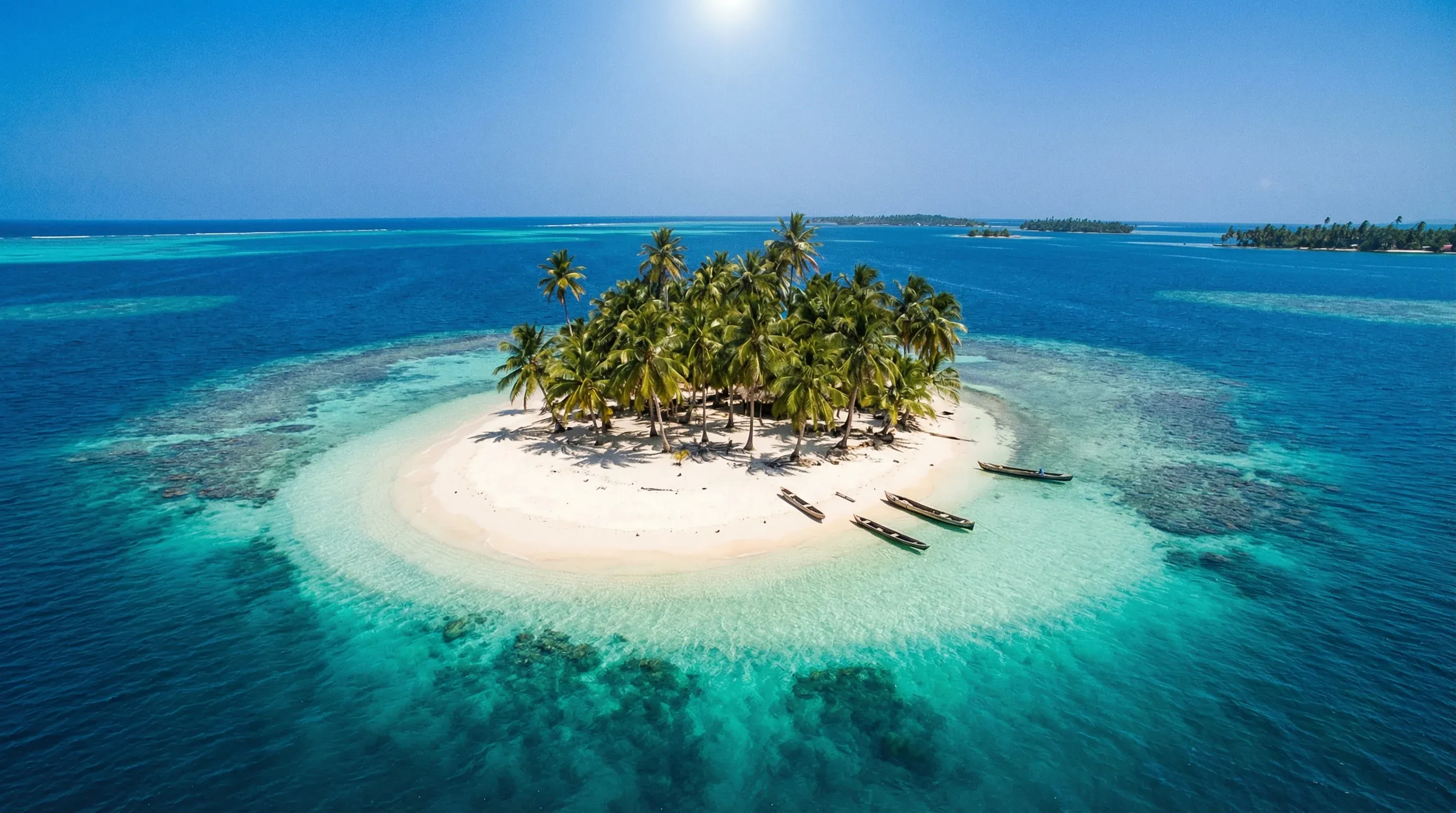

San Blas Islands
A pristine indigenous paradise where island life is simple and pure 🌴🥥
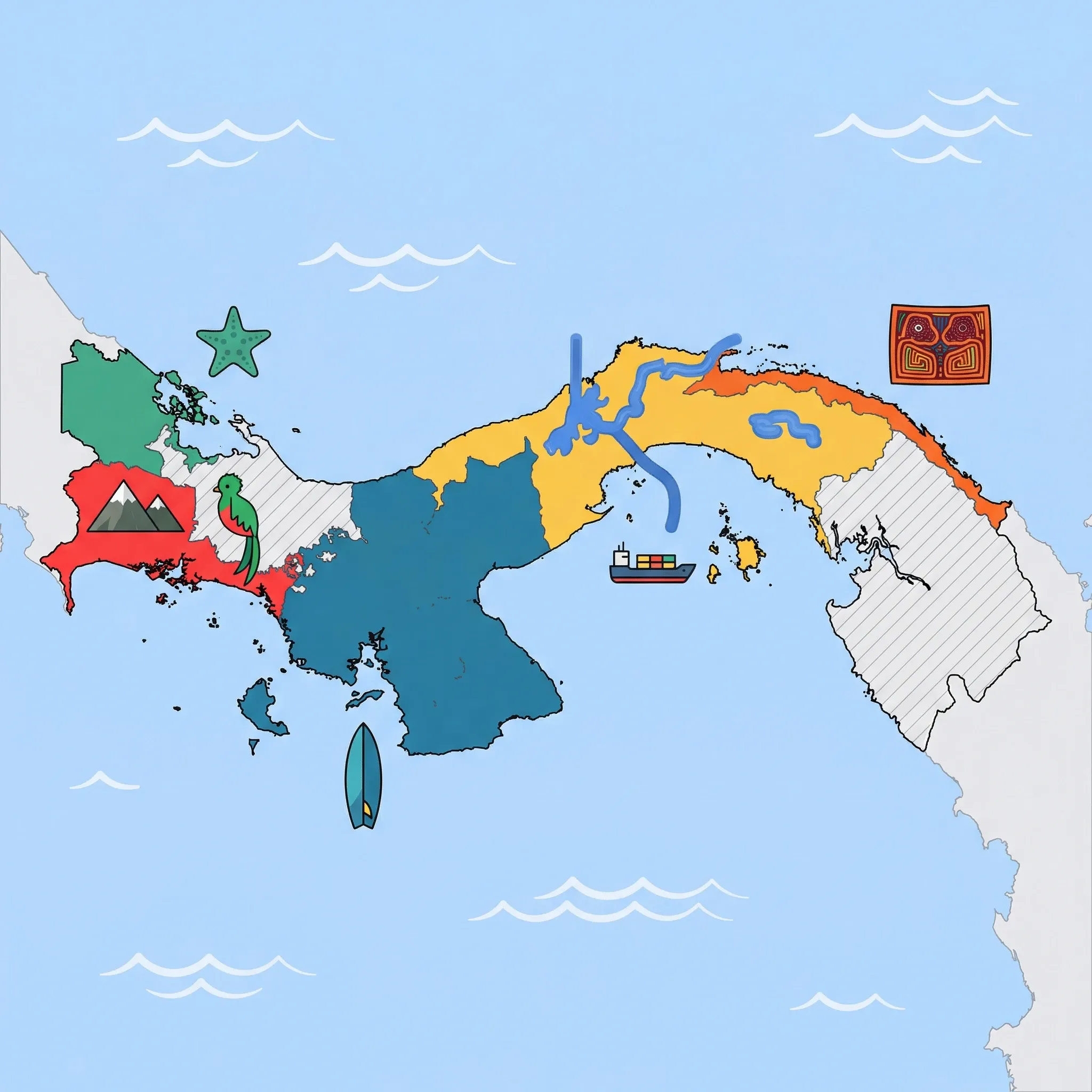
Click a region to explore
San Blas, officially known as Guna Yala, is one of the last truly pristine places in the Caribbean. Visiting here is not just a beach trip; it is an entry into an autonomous indigenous territory where the Guna people live by their own laws and traditions. For families willing to trade luxury for authenticity, it is a profound experience. The geography is the stuff of cartoons—tiny islands made of white sand and three coconut trees, surrounded by water so clear it looks like glass. There are no high-rise hotels, no swimming pools, and often no electricity after 9:00 pm. Accommodation is in traditional bamboo huts with sand floors, usually sleeping in hammocks or basic beds.
This region offers a "digital detox" that families rarely find. Without screens, children engage with the environment—chasing crabs, snorkeling in shallow reefs teeming with fish, and playing with local Guna children. The pace of life is dictated by the sun and the sea. You travel by small boat from island to island, visiting "Dog Island" for a shipwreck snorkel or the "Natural Swimming Pool," a shallow sandbar in the middle of the open ocean where you can stand waist-deep in turquoise water looking for starfish. Culturally, it is fascinating. The Guna women wear intricate, colorful clothing featuring "Molas" (hand-stitched textiles) and beaded arm wrappings. Seeing this living culture up close, rather than in a museum, is impactful for older children and teens. However, parents must be prepared: this is rustic travel. Fresh water is precious, meals are simple (usually the catch of the day), and facilities are basic shared bathrooms.
Key Attractions
The main attraction is the archipelago itself. Island hopping is the daily activity. Perro Chico (Little Dog Island) is famous for a sunken gunboat just off the shore, shallow enough for children to snorkel over and see colorful coral growing on the rusted hull. Pelican Island offers the classic deserted island aesthetic. Visitors also often take a boat to the Natural Pool, a submerged sandbank miles from shore where the water is waist-high and crystal clear—a surreal playground for kids.
A visit to a Guna Community Island (like Carti Sugdub) is essential to understand the human side of the region. Unlike the "tourist" islands which are mostly empty save for guests, these islands are densely packed with bamboo homes, schools, and medical centers, offering a glimpse into the daily life of the Guna people. It is a dense, bustling contrast to the silent beaches.
Practical Advice
This is an adventure destination. You must bring your original passports to enter the territory. The road from Panama City is paved but extremely winding and hilly (rollercoaster-style)—motion sickness medication for kids is non-negotiable. Travel is only possible via 4x4 vehicles approved by the Guna congress. There are no ATMs in San Blas; bring all the cash you need in small bills ($1 and $5 bills are best for buying coconuts or souvenirs). Electricity is solar/generator and limited.
Food & Drink
Typical meal times: Dictated by your host family/lodge. Breakfast 7:00 am to 8:30 am. Lunch 12:30 pm to 1:30 pm. Dinner 6:30 pm to 7:30 pm.
Typical meal costs: Usually included in your tour/stay package. If buying extra meals: Lobster is $15–25 USD (approx. €14–23 EUR / £12–19 GBP). Fish plates are $10–15 USD (approx. €9–14 EUR / £8–12 GBP).
Dietary requirements: Difficult. The menu is almost exclusively fresh fish, chicken, rice, patacones (fried plantain), and salad. Vegans/Vegetarians must inform tour operators in advance, but expect repetitive meals (eggs, rice, beans). Severe allergies are hard to manage here due to remoteness.
Signature dishes:
- Langosta (Lobster) – Freshly caught spiny lobster, grilled simply with garlic and butter. It is cheaper here than almost anywhere else in the world.
- Pescado Frito – Whole fried fish, usually Red Snapper caught that morning by the Guna fishermen.
- Dule Masi – A traditional Guna stew made with coconut milk, fish, plantains, and yucca. It has a distinctive, slightly sweet flavor.
Why this score?
Visiting San Blas is a true off-grid experience involving 4x4 transport over mountains and open-ocean boat transfers. The lack of electricity, internet, and luxury amenities on most islands provides a high level of rustic adventure and cultural immersion.
Why this score?
Medical facilities in Guna Yala are extremely basic, consisting of small health posts with limited supplies. In the event of a serious illness or injury, a costly and logistically difficult evacuation to Panama City is the only viable option.
Why this score?
The San Blas Islands are globally famous for their pristine beauty and indigenous Guna culture, but visitor numbers are capped by the Guna's controlled tourism model. The lack of traditional hotels and difficult access keeps it as a niche, bucket-list destination for adventurous travelers.

While accommodation is rustic (camping/huts), costs add up due to logistics. A 2-night all-inclusive package (transport + stay + meals) typically costs $250–400 USD (approx. €230–370 EUR / £195–310 GBP) per person. There is a $20 USD Guna Yala entrance fee per adult. Optional tours cost extra. It is not a 'cheap' backpacking destination despite the basic facilities.
Family Travel Notice
Be aware that local authorities strictly enforce curfews for unaccompanied minors. Minors found out late at night may be detained until parents are contacted and potentially fined.

Getting Here & Around
Getting Here
- 4x4 Jeep – The only way to reach the port by land. Jeeps pick you up at your Panama City hotel at 5:00 am. The drive is 2.5–3 hours. The last hour goes through the jungle hills and is very twisty.
- Boat – From the Carti port, Guna boatmen take you to your specific island. The ride can be 20 to 45 minutes. Be prepared to get wet from spray.
- Air – Small charter planes fly to remote airstrips like El Porvenir, but this is expensive and less common for standard family trips.
Getting Around
- Boat (Lancha) – There are no roads on the islands. All transport is by small fiberglass boats with outboard motors.
- Walking – The islands are tiny; you can walk around most of them in less than 10 minutes.
No airports in this region. See the country flight map for nearby connections.
Official Links

Packing List
Mandatory for passing the border control into the Guna Yala territory. Copies are not accepted.
Islands do not have potable water. You must haul all drinking water for your family from the city.
No ATMs exist. You need cash for drinks, coconuts, and molas. $1, $5, and $20 bills are best.
Electricity is limited to a few hours in the evening; you'll need this to charge cameras/phones.
Wastewater often goes directly into the ground or sea; eco-friendly products are essential.
Essential for keeping phones and snacks dry during open boat rides (lanchas) in Bocas or San Blas.
The best hack for removing sticky wet sand from children's legs before getting back in the car.
Malls, cinemas, and long-distance buses blast freezing air conditioning; also needed for Boquete evenings.
Many beaches have rocky or coral bottoms, and sea urchins can be present in Caribbean shallows.
Sandflies (chitras) on beaches are tiny but fierce; they ignore nets but dislike oily repellents.
Older hotels may have few outlets; thunderstorms can cause power flickers.
Wildlife like sloths and monkeys are often high in the canopy; kids will miss them without these.

Activities & Best Times

Hiking, wildlife, outdoor exploration, ecotourism
Provides immersion in an untouched archipelago and mainland rainforest featuring unique marine ecosystems. Dry season (Jan-Apr) is ideal for island-hopping, whereas Sep-Nov sees the heaviest rainfall and potential travel disruptions.

Urban tourism, museums, historical sites, architecture
A rare opportunity to experience the autonomous Guna culture and traditional village life in the Comarca. Visitation is best during the drier months (Jan-Apr) when boat transport between communities is most reliable and pleasant.

Beach resorts, marine activities: diving, snorkelling, kite surfing, wind surfing, sailing
Offers pristine Caribbean snorkeling and sailing around 365 remote coral cays with high authenticity. Peak dry season (Jan-Apr) provides the best water clarity and calmest conditions for international families.

Scenic drives, countryside tours, route-based travel
The El Llano-Carti road is a scenic but challenging route through the jungle to reach the Caribbean coast. Driving is safest and most rewarding during the dry season (Jan-Apr) to avoid tropical washouts and road hazards.




Public Holidays & Calendar Next 12 months
Public holidays, festivals, cultural celebrations, and seasonal natural phenomena coming up in San Blas Islands over the next 12 months.
Loading holidays and events...

Travel Advisory
While most of the country is relatively safe, major international agencies are split between recommending standard precautions and heightened vigilance. The primary risks involve street crime in urban areas and civil unrest. Extreme danger persists in specific border regions like the Darien Gap, though these do not dictate the country-wide level.
Safety Topics
Traveller Advice (5 groups)

Exercise high caution when walking alone after dark, particularly in poorly lit areas. Instances of harassment and sexual assault have been reported in tourist destinations.
Review guidance on accessibility standards and the availability of specialized support services in Panama prior to departure.

Be aware that local authorities strictly enforce curfews for unaccompanied minors. Minors found out late at night may be detained until parents are contacted and potentially fined.

Stay alert in crowded areas and transport hubs. Avoid all travel to the Darien Gap and the Mosquito Gulf due to severe security risks including drug trafficking and violent crime.

Consult dedicated government safety guides for detailed information on local attitudes and legal protections before travelling.
Agency Summaries
A high level of caution is advised nationwide because of the threat of crime. The border area with Colombia is extremely hazardous due to guerrilla activity and drug trafficking; travel there is strongly discouraged.
Visitors should be cautious regarding street crime and periodic protests. Specific areas near the Colombian border are considered highly dangerous and are subject to travel warnings due to the presence of armed groups.
Travellers are encouraged to follow the guidance of local authorities and stay informed of current events via local media. Ensure all entry requirements, including passport validity and proof of funds, are met before arrival.
Heightened vigilance is recommended due to crime and the potential for civil unrest. Serious safety threats, including kidnapping and violence, make the Darien Region and parts of the Mosquito Gulf off-limits to visitors.
Travellers should maintain standard safety awareness throughout most of the country. However, extreme danger exists in border regions like the Darien Gap and the Mosquito Gulf due to organized crime and drug smuggling, where all travel must be avoided.
New Zealanders should be vigilant due to the risks of violent crime and civil disturbances. Protests can occur without warning, and certain remote regions are extremely unsafe for tourists.
Information is provided for general guidance only and does not constitute travel, safety, medical, or legal advice. Conditions may change. Users are responsible for independently verifying information before travel.