
Encarnación (Carnival)
The Pearl of the South: River beaches, carnival rhythms, and ancient ruins 🏖️🎭
Click a region to explore
Overview
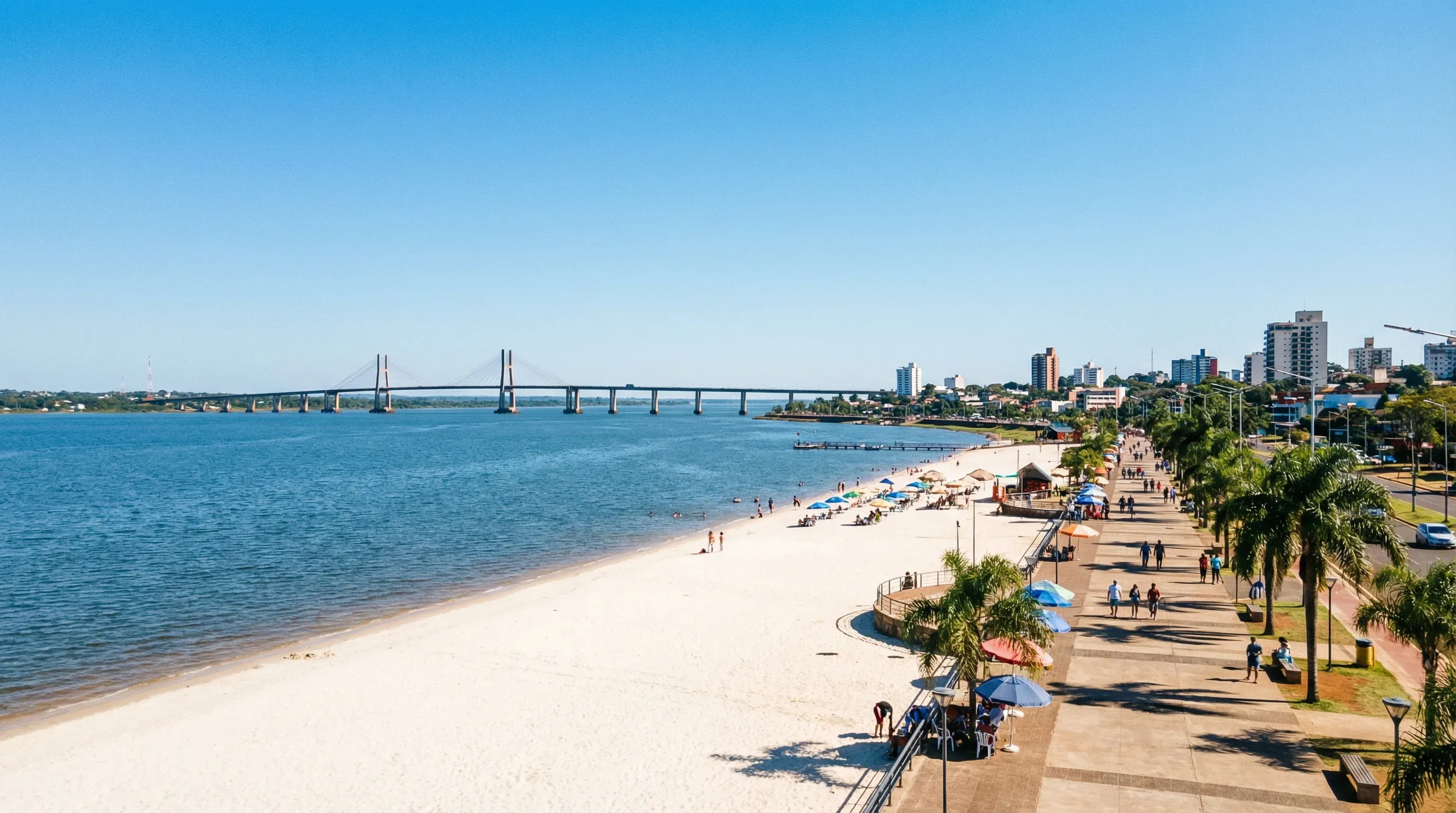
Encarnación is often cited by Paraguayans as the country's tourism capital, and for good reason. Sitting on the banks of the wide Paraná River, directly across from Posadas, Argentina, it feels more organized, cleaner, and more leisure-focused than Asunción. For families, the primary draw is the "Costanera"—a miles-long waterfront promenade that features artificial sandy beaches, playgrounds, and a constant breeze. The atmosphere here is festive and relaxed. In the summer (January/February), the city explodes with color during the country's massive Carnival celebrations, held at the dedicated Sambadrome. While the parties are loud and late, the early evening carnival parades are a spectacular display of costumes and rhythm that children will never forget.
Beyond the party atmosphere, Encarnación acts as the comfortable gateway to the Jesuit Missions. You can stay in a modern hotel with a pool in the city and take easy day trips to the ruins. The city has a high standard of living and safety, making it very walkable. The riverfront views of the San Roque González de Santa Cruz Bridge connecting the two countries are impressive, especially at sunset. It is a place where you can mix history education with genuine relaxation by the water.
Key Attractions
The heart of family life here is Playa San José. This well-maintained river beach offers calm waters, lifeguard services, and plenty of space for sandcastles. It is flanked by restaurants and ice cream parlors, making it an easy place to spend a whole day. Just a short drive out of the city are the UNESCO World Heritage sites. The Jesuit Mission of La Santísima Trinidad de Paraná is the most extensive and best-preserved, with massive red sandstone arches that are awe-inspiring for kids. Nearby, the Jesuit Mission of Jesús de Tavarangue offers a different perspective with its unfinished, Moorish-style church.
For nature lovers willing to travel a bit further, San Rafael National Park offers a glimpse of the Atlantic Forest, though it requires more planning to visit. Back in the city, simply walking the Costanera at dusk is an attraction in itself.
Practical Advice
Best time to visit: If you want to experience Carnival, visit in January or February (book months in advance). For a quieter, cooler family trip, visit April to September. The beach is usable in summer, but the heat is intense.
Logistics: The border crossing to Argentina via the bridge is notoriously slow (often hours of traffic). Avoid crossing unless you have a specific plan.
Food & Drink
Typical meal times: Similar to the capital, lunch is 12:00 pm to 2:00 pm. Dinner is late, often 9:00 pm onwards, especially in summer when the heat keeps people out late.
Typical meal costs: Slightly higher than rural areas but reasonable. Family dinner: 200,000–350,000 PYG (approx. $26–46 USD / €24–43 EUR).
Dietary requirements: River fish is a staple here. Vegetarians will find pizza and pasta easily available in the city center due to the heavy European immigrant influence in the south.
Signature dishes:
- Surubí a la Pizza – A local river fish (Surubí) fillet topped with tomato sauce and cheese, baked like a pizza. A delicious, kid-friendly way to eat fish.
- Lomito Árabe – The Paraguayan take on shawarma, reflecting the large Lebanese community. Served on a plate or in pita.
- Chipa Guazú – Similar to Sopa Paraguaya but made with fresh corn kernels, giving it a moister, soufflé-like texture.
Why this score?
The experience is centered around developed riverside beaches and urban festivities, offering a relaxed resort-like atmosphere. While it serves as a base for exploring the wider Itapúa department, the city itself is highly accessible and lacks the ruggedness associated with adventure travel. Families can enjoy the paved Costanera cycling circuits and safe swimming areas without significant physical difficulty.
Why this score?
The city offers adequate medical services for a regional center, with several public and private clinics capable of treating common ailments and minor emergencies. While it is one of the better-equipped cities outside the capital, specialized care or complex procedures often require a transfer to Asunción. English-speaking staff are rare, making communication a potential hurdle for non-Spanish speakers.
Why this score?
Known as the 'Pearl of the South,' this city is a major regional hub that draws massive crowds from within Paraguay and neighboring Argentina, particularly during the summer Carnival and at Playa San José. However, it remains relatively unknown to international tourists from outside South America. Its popularity is highly seasonal, peaking during the vibrant foam-filled carnival parades in January and February.

During Carnival (Jan-Feb), accommodation prices triple and availability vanishes—book months ahead. Outside of this season, it is very affordable. A nice hotel near the beach costs 350,000–600,000 PYG (approx. $46–80 USD / €43–75 EUR). Entry to the Jesuit Missions is a one-ticket-for-three-sites deal costing around 25,000 PYG (approx. $3.30 USD / €3.10 EUR) for foreigners, which is incredible value.

Getting Here & Around
Getting Here
- Bus – High-quality double-decker buses run frequently from Asunción. The journey takes 5–7 hours. Look for "Ejecutivo" class for better seats.
- Train – There is a short international commuter train that runs across the San Roque González de Santa Cruz Bridge to Posadas, Argentina. It is a novelty and much faster than driving across the border.
- Airports – Encarnación has a small airport (Teniente Amin Ayub Gonzalez) with limited flights from Asunción, though flight schedules can be erratic.
Getting Around
- Walking – The Costanera and the area around Playa San José are very pedestrian-friendly and paved, perfect for strollers.
- Car – Renting a car is recommended if you plan to visit the Jesuit Mission of La Santísima Trinidad de Paraná on your own schedule.
- Taxis/Remis – Taxis are readily available. "Remises" (private hire cars) are common for trips to the ruins and can be hired for a half-day at a negotiated rate.
No airports in this region. See the country flight map for nearby connections.
Official Links

Packing List
The river beach is the main daytime activity; water shoes are helpful for river mud.
If visiting during Carnival season, the music and fireworks can be extremely loud.
The red earth at the Jesuit ruins stains white fabric permanently.
The ruins and beach offer very little shade; a personal umbrella is a lifesaver.
Essential for the extreme heat; locals carry large thermos flasks everywhere for ice water.
The humidity is intense; it's common practice to carry a small cloth to wipe sweat from your face.
Dengue fever is a genuine risk in cities and rural areas; local brands may differ in strength.
Paraguay uses a mix of Europlug (Type C) and the unique Type L (three pins in a row).
English is rarely spoken outside luxury hotels; basic phrases are necessary for daily interactions.

Activities & Best Times

Hiking, wildlife, outdoor exploration, ecotourism
Home to the unique Dunes of San Cosme and Damian and the biodiversity of San Rafael National Park. Best visited in milder transitional months to avoid the extreme humidity and heat of the peak summer.

Urban tourism, museums, historical sites, architecture
Gateway to the UNESCO-listed Jesuit Missions of Trinidad and Jesús, and home to the country's premier Sambadrome. Peak months coincide with the major Carnival events and cooler winter break for heritage exploration.

Scenic drives, countryside tours, route-based travel
The Ruta Jesuítica provides a well-defined cultural driving circuit through historic missions and rural landscapes. Cooler winter months offer the most comfortable driving conditions and best visibility for scenic exploration.

Sport tourism, fitness activities, active recreation
The Costanera Republica del Paraguay offers a major dedicated cycling circuit and outdoor activity centers. Peak periods avoid the intense summer heat while providing pleasant conditions for riverside exercise.

Amusement parks, family entertainment venues
Offers regional water parks like El Dorado which provide family entertainment during the hot summer months. Facilities are smaller in scale compared to international benchmarks, catering primarily to domestic travelers.




Public Holidays & Calendar Next 12 months
Public holidays, festivals, cultural celebrations, and seasonal natural phenomena coming up in Encarnación (Carnival) over the next 12 months.
Loading holidays and events...

Travel Advisory
While several agencies maintain a baseline level for the country as a whole, half of the reporting agencies advise increased caution due to a significant rise in violent crime. A split consensus exists between standard precautions and elevated vigilance, with specific warnings consistently issued for border regions and northern departments.
Safety Topics
Traveller Advice (3 groups)

Carry identification at all times as police may request it. Avoid displaying wealth or using expensive mobile phones in public. In the event of a robbery, do not resist as assailants are likely to be armed.

Female travellers should exercise standard safety protocols, particularly when travelling alone. While major cities are generally safe during the day, extra caution is needed in poorly lit areas or when using public transport at night.

While there are no legal restrictions on same-sex relationships, Paraguay is a socially conservative country where public displays of affection may attract negative attention or discrimination outside of specialized venues in Asunción.
Agency Summaries
Travellers should be more vigilant than usual due to rising crime rates across the country. Violent crime incidents, often involving armed groups, have been noted more frequently in recent years. Specific risks exist in the Tri-border region and northern areas near Brazil where drug and weapons trafficking is prevalent.
Heightened vigilance is recommended due to the prevalence of violent crimes such as armed robbery and kidnapping. Crime is especially concentrated in northern departments and border cities. Public protests can occur and may lead to transport disruptions.
Most visits are incident-free, but caution is advised in specific regional 'hotspots' near the Brazilian border. Armed groups and criminal networks operate in departments like Concepción and Amambay. Petty theft is common in major urban centers.
General safety awareness is advised. Visitors should be conscious of their personal belongings and monitor local media for potential civil unrest or demonstrations in the capital and other large cities.
There is no specific high-level travel advisory, but travellers should maintain standard security awareness. Comprehensive medical insurance is essential as local medical facilities vary greatly in quality and accessibility.
While general travel is considered safe under normal safety protocols, certain departments including Alto Paraná, Amambay, and San Pedro carry a higher risk. In these border zones, transnational criminal groups are active, and the police presence is noticeably weaker.
Information is provided for general guidance only and does not constitute travel, safety, medical, or legal advice. Conditions may change. Users are responsible for independently verifying information before travel.