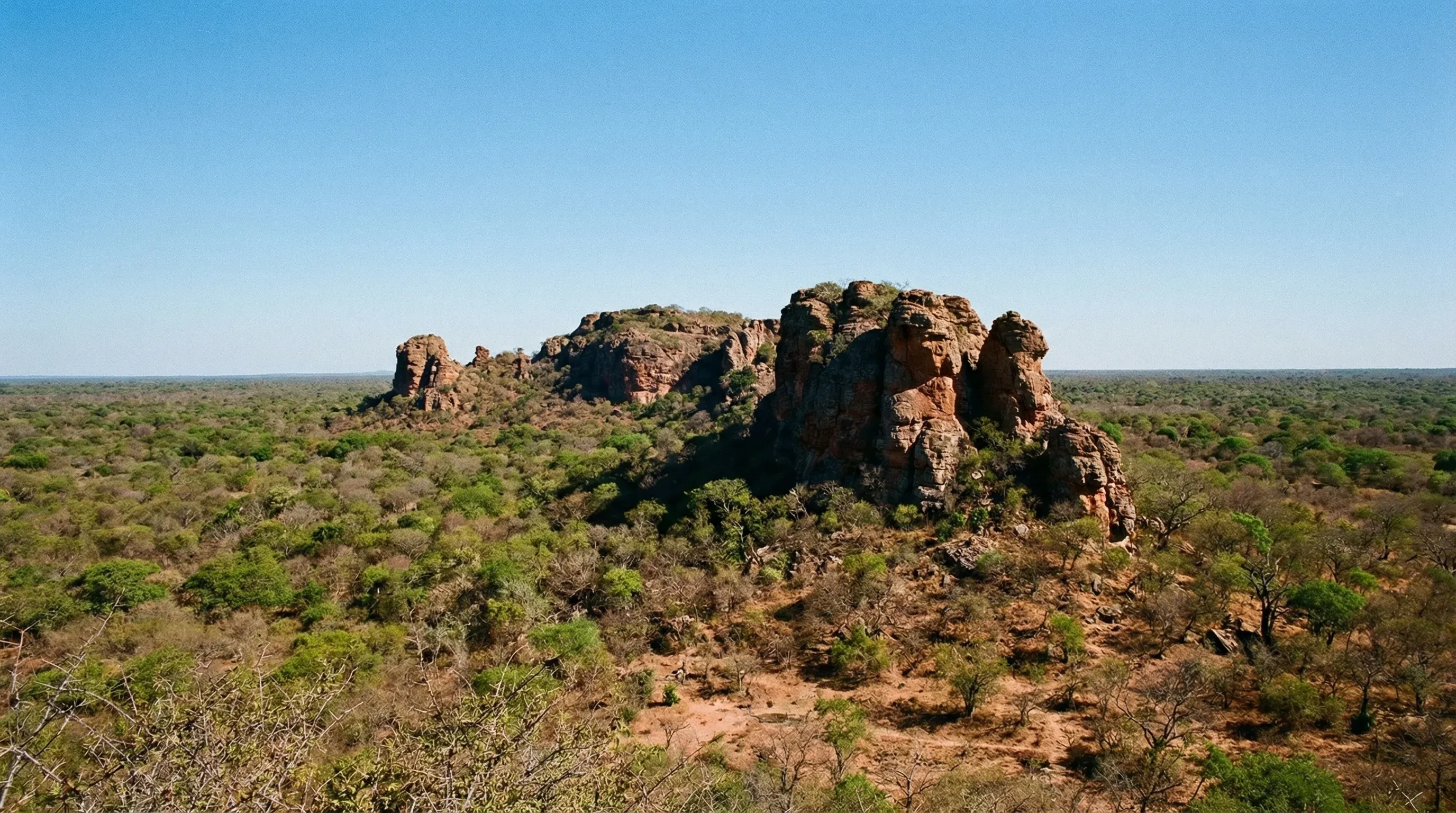

Gran Chaco (west)
A wild frontier of thorny forests, jaguars, and endless skies 🌵🐆
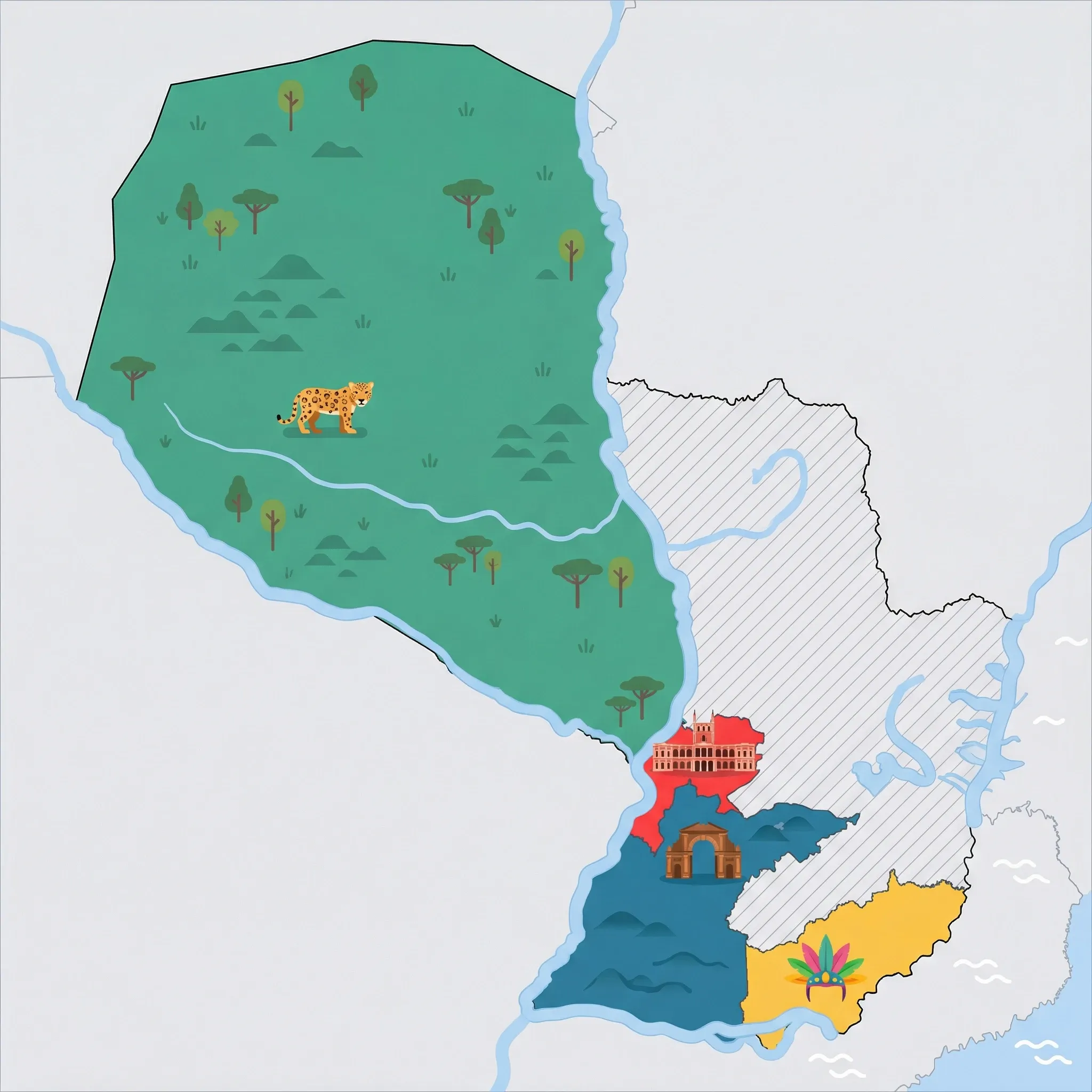
Click a region to explore
Important Travel Advisory: The Chaco is a remote wilderness environment. Extreme heat, lack of water, and isolation are real risks. Do not attempt to explore off the main paved roads without a 4x4 vehicle, ample extra water (gallons per person), and reliable communication. Medical facilities are scarce outside the Mennonite colonies.
Overview
The Gran Chaco is one of South America's last great frontiers—a vast, flat plain of dry forest and thorny scrub that covers the western half of Paraguay. It is a destination for families who love nature, adventure, and road trips, rather than traditional sightseeing. The landscape is stark and forbidding, yet teeming with life. This is the best place in the country to spot wildlife, including giant anteaters, tapirs, pumas, and (with great luck) the elusive jaguar. The region is also home to fascinating cultural contrasts, hosting both indigenous communities and prosperous, German-speaking Mennonite colonies that have turned the arid scrub into productive farmland.
Visiting the Chaco is an education in resilience. Families typically base themselves in the "central Chaco" towns like Filadelfia or Loma Plata. These towns feel like a mirage—ordered, clean, and modern—surrounded by hundreds of miles of wilderness. Here, you can learn about the cooperative movement and the history of settlement in the museums. The Chaco is not for toddlers or those who need luxury resorts; it is for intrepid families ready to handle dust, heat, and long car rides in exchange for starry skies and the thrill of the wild.
Key Attractions
The journey itself is the attraction here, primarily via the Trans-Chaco Highway (Ruta PY09). While upgrading works are ongoing, this legendary road cuts through the heart of the wilderness. Birdwatching families will be amazed by the lagoons (tajamares) along the road, often filled with storks and spoonbills.
For a true wilderness experience, Defensores del Chaco National Park is the crown jewel. It is a massive protected area where the dense forest opens up. Cerro León, a geological formation within the park, offers hiking opportunities with panoramic views over the endless green canopy. In the town of Filadelfia, the Jakob Unger Museum offers excellent context on the local flora, fauna, and Mennonite history, making the harsh environment understandable for children.
Practical Advice
Best time to visit: Winter (June to August) is essential. The summer heat (45°C+) is dangerous and uncomfortable for children. Winter days are pleasant and dry.
Logistics: Fuel is only available in major towns. Always fill up when you can. Mobile signal is non-existent between towns.
Food & Drink
Typical meal times: Mennonite colonies follow early European schedules. Lunch is strictly 11:30 am to 1:00 pm. Dinner is earlier than in Asunción, around 7:00 pm.
Typical meal costs: Prices in the colonies are reasonable. A hearty buffet lunch costs 60,000–90,000 PYG (approx. $8–12 USD / €7–11 EUR). Imported goods in supermarkets are expensive.
Dietary requirements: The colonies produce excellent dairy and beef. This is steak and potatoes country. Vegetarians may struggle outside of home-cooking or simple salads.
Signature dishes:
- Asado Chaqueño – Beef raised in the Chaco is famous for its quality. A barbecue here is mandatory.
- German Pastries – In Filadelfia, you will find traditional German bakeries selling cakes and breads that seem totally out of place in the South American scrub.
- Queso Paraguay – While common nationwide, the fresh cheese produced in the Chaco dairies is particularly fresh and mild.
Why this score?
Often referred to as the 'Green Hell,' this region offers significant adventure through its thorny dry forests, unpaved roads, and extreme temperatures. Exploring the Defensores del Chaco National Park requires self-sufficiency and preparation for a truly off-the-beaten-path experience. The presence of jaguars, giant anteaters, and remote outposts provides a high level of ruggedness for intrepid families.
Why this score?
Medical facilities in the Chaco are extremely limited and concentrated in the Mennonite colonies like Filadelfia and Loma Plata. These clinics are clean and efficient for basic care, but the vast distances between settlements make emergency response times very slow. Serious medical issues almost always necessitate a multi-hour drive or an expensive medical evacuation to Asunción.
Why this score?
The Chaco is a remote wilderness that sees very few foreign visitors, mostly consisting of specialized birdwatchers, history enthusiasts, and those visiting the Mennonite colonies. Its vast distances and harsh climate keep it off the itinerary for the average traveler. Infrastructure is limited to specific settlement hubs like Filadelfia, making it one of the least-visited regions in the country.

Accommodation in the Mennonite colonies is mid-range, with clean, functional hotels costing 300,000–500,000 PYG (approx. $40–66 USD / €37–62 EUR) per night. The main cost driver in the Chaco is transport—fuel is expensive, and if you hire a private driver/guide for wildlife viewing (highly recommended), expect to pay $100–200 USD per day.

Getting Here & Around
Getting Here
- Driving – The primary way to reach the Chaco is driving the Trans-Chaco Highway from Asunción. It is roughly a 5–6 hour drive to Filadelfia. The road condition varies from brand new tarmac to potholed sections, so an SUV is highly recommended.
- Bus – Long-distance buses run from Asunción to Filadelfia daily (NASA is a major operator). The journey takes 7–9 hours. It is cheap but tiring for young children.
Getting Around
- Car – A private vehicle is essential. Without one, you are stuck in the town centers. To visit Defensores del Chaco National Park, a high-clearance 4x4 is mandatory due to sandy and muddy tracks.
- Tours – Due to the navigational challenges, hiring a local guide with their own 4x4 in Filadelfia is a great investment for families to see wildlife safely.
No airports in this region. See the country flight map for nearby connections.
Official Links

Packing List
The fine red dust ('talcal') gets everywhere; essential for protecting airways on dirt roads.
Wildlife is often seen from the car; kids will need these to see birds in the lagoons.
GPS and Google Maps are unreliable and often wrong in the deep Chaco.
Street lighting is minimal; essential for navigating hotel grounds or spotting animals at night.
Essential for the extreme heat; locals carry large thermos flasks everywhere for ice water.
The humidity is intense; it's common practice to carry a small cloth to wipe sweat from your face.
Dengue fever is a genuine risk in cities and rural areas; local brands may differ in strength.
Paraguay uses a mix of Europlug (Type C) and the unique Type L (three pins in a row).
English is rarely spoken outside luxury hotels; basic phrases are necessary for daily interactions.

Activities & Best Times

Hiking, wildlife, outdoor exploration, ecotourism
The region offers raw, authentic wilderness across massive national parks like Defensores del Chaco, ideal for wildlife tracking and birdwatching. Peak winter months provide the only comfortable temperatures and dry roads for accessing remote trails that become impassable during the muddy, sweltering summer.

Urban tourism, museums, historical sites, architecture
Features a unique cultural landscape defined by Mennonite colonies and historic Chaco War fortifications like Fortín Boquerón. Visitation is best during the cooler dry season when cultural festivals occur and the heat is manageable for walking tours of historical sites.

Scenic drives, countryside tours, route-based travel
The legendary Trans-Chaco Highway and Bioceanic Corridor offer a world-class frontier driving experience for adventurous families. Travel is restricted to the dry winter months to ensure road stability and vehicle safety against the extreme heat and flooding typical of the summer.

Sport tourism, fitness activities, active recreation
Rugged trails like Cerro León and specialized biological stations provide infrastructure for hiking and scientific exploration. Peak season avoids the dangerous heat of the tropical summer, which makes strenuous outdoor activity high-risk for families.

Learning experiences, scientific sites, historical education
Niche museums like the Jakob Unger provide high-quality insights into Mennonite history and local biodiversity for curious families. These are best visited during the cooler months when the significant travel time required to reach these remote facilities is more pleasant.




Public Holidays & Calendar Next 12 months
Public holidays, festivals, cultural celebrations, and seasonal natural phenomena coming up in Gran Chaco (west) over the next 12 months.
Loading holidays and events...

Travel Advisory
While several agencies maintain a baseline level for the country as a whole, half of the reporting agencies advise increased caution due to a significant rise in violent crime. A split consensus exists between standard precautions and elevated vigilance, with specific warnings consistently issued for border regions and northern departments.
Safety Topics
Traveller Advice (3 groups)

Carry identification at all times as police may request it. Avoid displaying wealth or using expensive mobile phones in public. In the event of a robbery, do not resist as assailants are likely to be armed.

Female travellers should exercise standard safety protocols, particularly when travelling alone. While major cities are generally safe during the day, extra caution is needed in poorly lit areas or when using public transport at night.

While there are no legal restrictions on same-sex relationships, Paraguay is a socially conservative country where public displays of affection may attract negative attention or discrimination outside of specialized venues in Asunción.
Agency Summaries
Travellers should be more vigilant than usual due to rising crime rates across the country. Violent crime incidents, often involving armed groups, have been noted more frequently in recent years. Specific risks exist in the Tri-border region and northern areas near Brazil where drug and weapons trafficking is prevalent.
Heightened vigilance is recommended due to the prevalence of violent crimes such as armed robbery and kidnapping. Crime is especially concentrated in northern departments and border cities. Public protests can occur and may lead to transport disruptions.
Most visits are incident-free, but caution is advised in specific regional 'hotspots' near the Brazilian border. Armed groups and criminal networks operate in departments like Concepción and Amambay. Petty theft is common in major urban centers.
General safety awareness is advised. Visitors should be conscious of their personal belongings and monitor local media for potential civil unrest or demonstrations in the capital and other large cities.
There is no specific high-level travel advisory, but travellers should maintain standard security awareness. Comprehensive medical insurance is essential as local medical facilities vary greatly in quality and accessibility.
While general travel is considered safe under normal safety protocols, certain departments including Alto Paraná, Amambay, and San Pedro carry a higher risk. In these border zones, transnational criminal groups are active, and the police presence is noticeably weaker.
Information is provided for general guidance only and does not constitute travel, safety, medical, or legal advice. Conditions may change. Users are responsible for independently verifying information before travel.