
Jesuit Missions & South
Walk through history on the red earth road of the Jesuit Missions 🏛️🌿
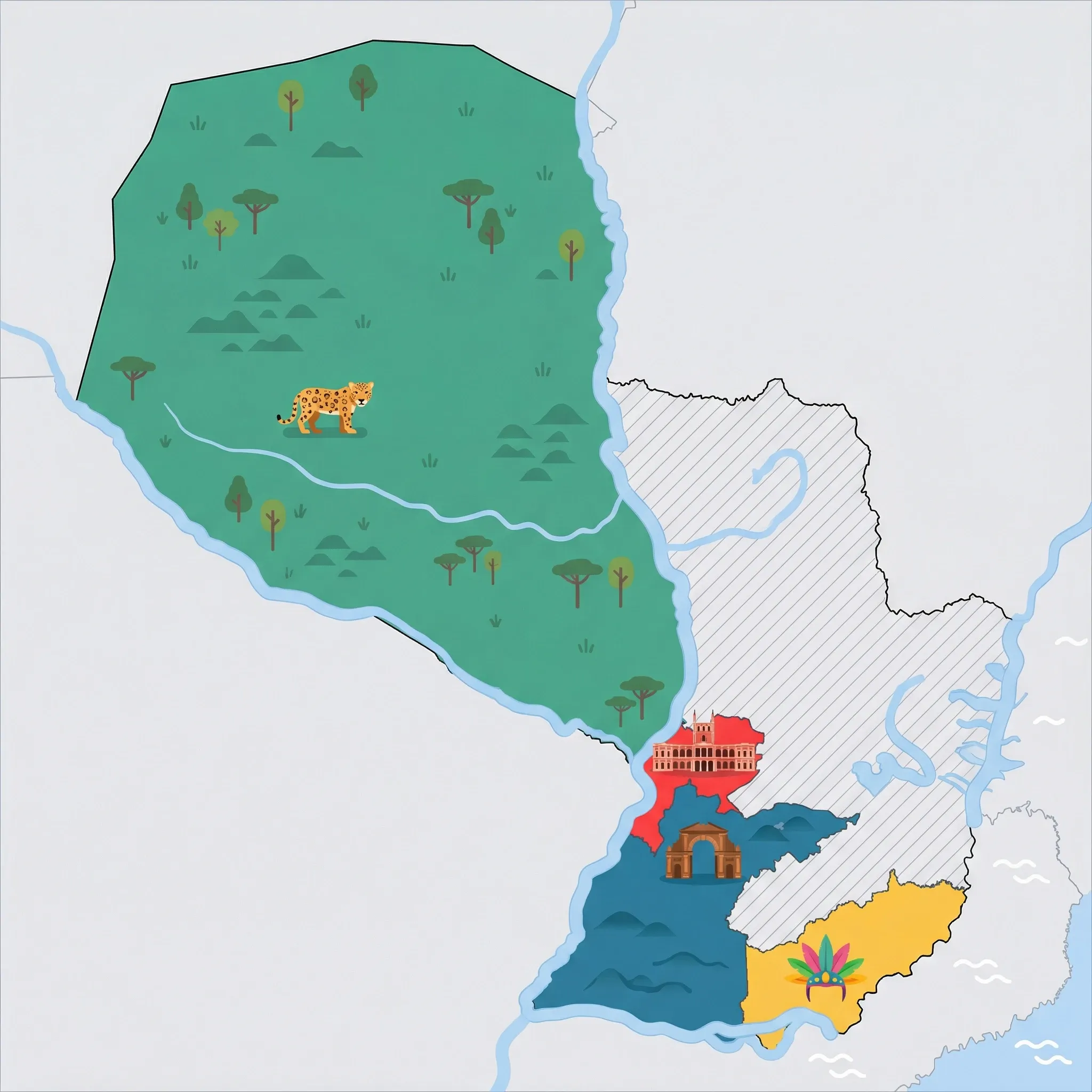
Click a region to explore
Overview
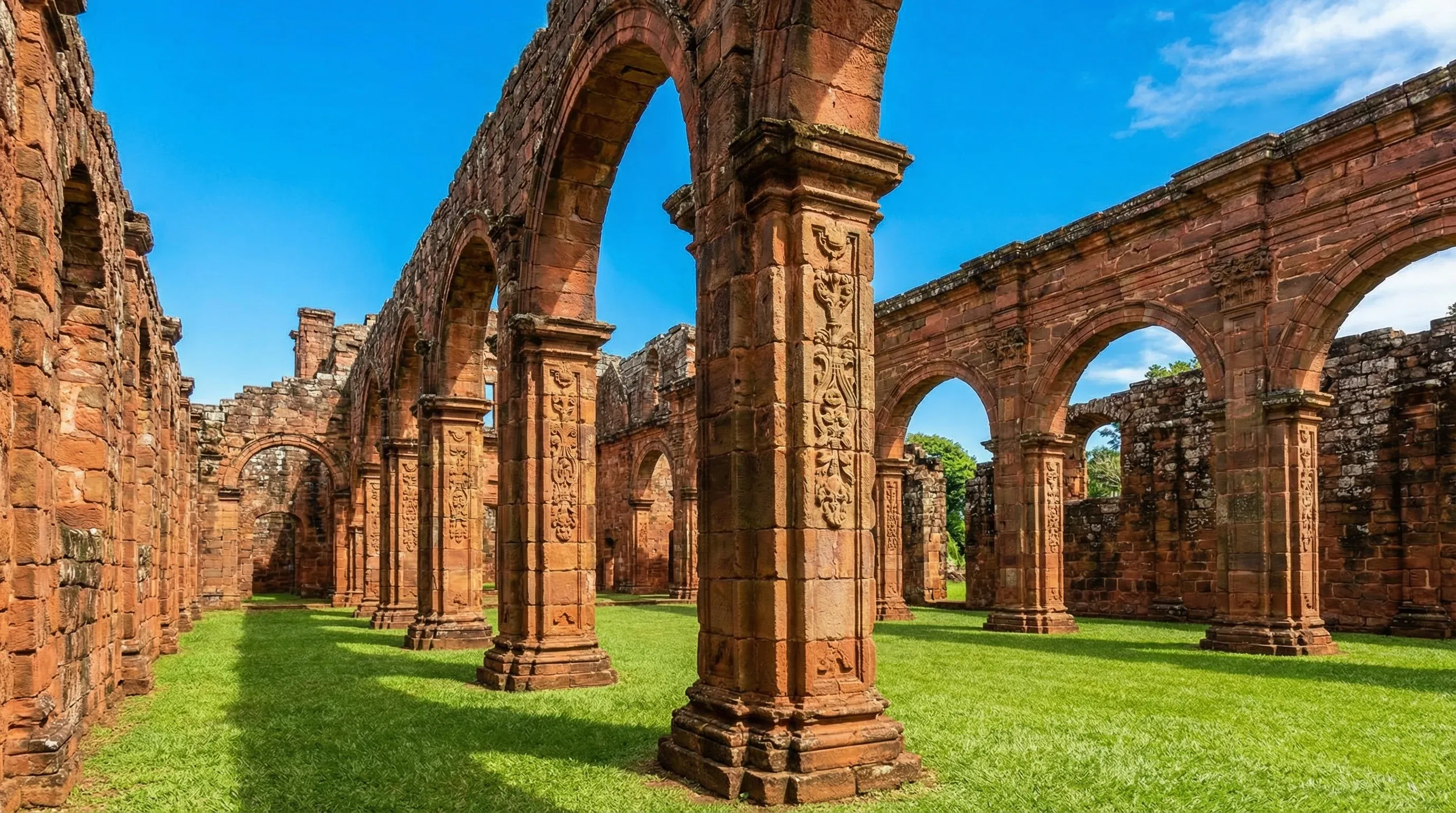
The South of Paraguay is visually striking: the soil is a deep, vibrant red, the vegetation is emerald green, and the history is profound. This region is home to the UNESCO World Heritage Jesuit Missions, remnants of a utopian social experiment from the 17th and 18th centuries where Jesuit priests and Guaraní indigenous people lived together in organized towns ("reducciones"). For families, this is not dry, dusty history; the ruins are open-air parks where children can explore massive stone churches, climb ancient steps, and run across grassy plazas. The scale of the architecture is humbling, resembling a tropical version of Roman ruins.
Beyond the ruins, the region is a cultural melting pot. Known as the "Gringo Gaucho" territory, it was settled by waves of immigrants from Germany, Ukraine, Poland, and Japan. You are as likely to find excellent sauerkraut and yerba mate plantations as you are traditional Paraguayan stews. The towns are tidy and garden-filled. Bella Vista, north of the ruins, is the capital of Yerba Mate (the national tea), where you can visit plantations to see how the leaf is processed—a fascinating industrial tour for older kids.
Key Attractions
The absolute must-see is the Jesuit Mission of La Santísima Trinidad de Paraná. It is the most complete of the ruins, featuring a massive church nave and intricate stone carvings of angels playing indigenous instruments. Visit just before sunset to catch the stone glowing gold, or book the "Luces y Sonido" (Light and Sound) night tour, which brings the ruins to life with music and illumination—a magical experience for children.
A few kilometers away lies the Jesuit Mission of Jesús de Tavarangue. It was never finished before the Jesuits were expelled, so it offers a unique look at how these massive structures were built. The Moorish-style arches here are distinct and photogenic. While staying in the area, you can easily access Playa San José in Encarnación for downtime.
Practical Advice
Best time to visit: Spring and Autumn are ideal. If visiting in summer, go to the ruins early in the morning (opens 7:00 am) to avoid the midday sun, which reflects off the red stone intensely.
Logistics: The ticket for the ruins (approx. 25,000 PYG) is valid for three different sites (Trinidad, Jesús, and San Cosme) and lasts for 3 days. Keep your ticket safe!
Food & Drink
Typical meal times: Lunch 12:00 pm – 2:00 pm. In the small towns around the missions, restaurants may close early in the evening (by 9:00 pm), so do not leave dinner too late.
Typical meal costs: Very affordable. A hearty lunch buffet in a town like Hohenau or Bella Vista costs 40,000–70,000 PYG (approx. $5–9 USD / €5–8 EUR).
Dietary requirements: This is an agricultural heartland. Fresh vegetables are common, but meat is the center of the plate. The immigrant influence means good breads and dairy are widely available.
Signature dishes:
- So'o Apua – A meatball soup that is hearty and mild, perfect for kids.
- Milanesa – Breaded meat cutlets (beef or chicken/fish), a staple survival food for picky eaters in this region.
- Mate Doce – While mate is usually bitter, in some immigrant communities, you might find sweetened versions or mate with milk (cocido).
Why this score?
The region offers a mix of rural exploration and heritage sightseeing, with red earth roads and rolling hills providing a pleasant outdoor experience. While not extreme, activities like night tours of ruins and visits to yerba mate plantations involve some light hiking and rural travel. The terrain is accessible for most families, providing a gentle sense of discovery without high-risk elements.
Why this score?
Healthcare in this rural region is basic, with small-town clinics and health centers primarily designed for local needs. Most visitors rely on the nearby city of Encarnación for more reliable medical services, as sophisticated diagnostic equipment is largely absent in the mission towns. Travelers should carry basic supplies and be prepared to travel to a larger city for any significant medical concerns.
Why this score?
This region contains Paraguay's only UNESCO World Heritage sites, such as the ruins of La Santísima Trinidad de Paraná, which represent the country's main cultural draw for international tourists. Despite their historical significance, visitor numbers remain modest compared to similar Jesuit sites in neighboring Argentina or Brazil. The area is increasingly popular for its 'Mate Route' plantations, but it remains a quiet, emerging destination.

This region offers exceptional value. Entrance to three UNESCO world heritage sites costs a total of roughly 25,000 PYG (approx. $3.30 USD / €3.10 EUR) for foreigners. Simple, clean posadas (guesthouses) near the ruins charge around 150,000–250,000 PYG (approx. $20–33 USD / €18–31 EUR) for a family room.

Getting Here & Around
Getting Here
- Bus – Frequent buses run from Encarnación to the entrance of the Trinidad ruins (approx. 30–40 mins). Conductors are used to tourists and will shout when you need to get off.
- Driving – Route 6 is a paved, decent road connecting Encarnación to the missions and Bella Vista. It is an easy drive, though watch for motorbikes.
Getting Around
- Walking – Within the mission sites (La Santísima Trinidad de Paraná), you will be walking on grass and dirt. It is stroller accessible but bumpy.
- Taxi – To get between Trinidad and Jesuit Mission of Jesús de Tavarangue (about 12km apart), it is best to hire a local taxi waiting at the entrance, as buses between them are infrequent.
No airports in this region. See the country flight map for nearby connections.
Official Links

Packing List
The red soil (tierra colorada) stains shoes permanently; do not wear white trainers.
The ruins are open-air with little shade; the midday sun is unforgiving.
Better than a stroller for navigating the uneven grassy terrain of the ruins.
Useful if you attend the night tours, as the paths can be dark between light shows.
Essential for the extreme heat; locals carry large thermos flasks everywhere for ice water.
The humidity is intense; it's common practice to carry a small cloth to wipe sweat from your face.
Dengue fever is a genuine risk in cities and rural areas; local brands may differ in strength.
Paraguay uses a mix of Europlug (Type C) and the unique Type L (three pins in a row).
English is rarely spoken outside luxury hotels; basic phrases are necessary for daily interactions.

Activities & Best Times

Urban tourism, museums, historical sites, architecture
Home to UNESCO-listed Jesuit Missions which offer a globally unique architectural and historical fusion of European and Guarani cultures. Best explored from May to September to avoid the punishing subtropical heat and humidity of the Paraguayan summer.

Hiking, wildlife, outdoor exploration, ecotourism
Offers authentic rural and wilderness experiences through historical trails and the Ka'a Rape (Yerba Mate) plantation routes. The milder winter months provide optimal conditions for families to explore the trails and farm parks without the seasonal peak in humidity and insects.

Learning experiences, scientific sites, historical education
Features specialized facilities like the Buenaventura Suárez Astronomy Center, reflecting the Jesuit legacy of scientific research in the region. These sites serve as excellent educational supplements to the main cultural ruins during the mild, clear-sky months of winter.

Scenic drives, countryside tours, route-based travel
The Route of the Missions provides a culturally rich driving circuit through rolling agricultural landscapes and historic towns. Travel is most comfortable and scenic during the dry winter season when road visibility and outdoor site visits are at their best.

Sport tourism, fitness activities, active recreation
Features organized pilgrimage and cycling routes like the Camino de las Misiones, though infrastructure is more geared toward adventure than high-performance sport. Sustained physical activity is most feasible during the cooler southern winter window.
Amusement parks, family entertainment venues
Local water parks such as Manantial provide family entertainment during the peak of the tropical summer. These are regional-scale facilities that offer a welcome cooling break for families traveling during the hottest months of the year.




Public Holidays & Calendar Next 12 months
Public holidays, festivals, cultural celebrations, and seasonal natural phenomena coming up in Jesuit Missions & South over the next 12 months.
Loading holidays and events...

Travel Advisory
While several agencies maintain a baseline level for the country as a whole, half of the reporting agencies advise increased caution due to a significant rise in violent crime. A split consensus exists between standard precautions and elevated vigilance, with specific warnings consistently issued for border regions and northern departments.
Safety Topics
Traveller Advice (3 groups)

Carry identification at all times as police may request it. Avoid displaying wealth or using expensive mobile phones in public. In the event of a robbery, do not resist as assailants are likely to be armed.

Female travellers should exercise standard safety protocols, particularly when travelling alone. While major cities are generally safe during the day, extra caution is needed in poorly lit areas or when using public transport at night.

While there are no legal restrictions on same-sex relationships, Paraguay is a socially conservative country where public displays of affection may attract negative attention or discrimination outside of specialized venues in Asunción.
Agency Summaries
Travellers should be more vigilant than usual due to rising crime rates across the country. Violent crime incidents, often involving armed groups, have been noted more frequently in recent years. Specific risks exist in the Tri-border region and northern areas near Brazil where drug and weapons trafficking is prevalent.
Heightened vigilance is recommended due to the prevalence of violent crimes such as armed robbery and kidnapping. Crime is especially concentrated in northern departments and border cities. Public protests can occur and may lead to transport disruptions.
Most visits are incident-free, but caution is advised in specific regional 'hotspots' near the Brazilian border. Armed groups and criminal networks operate in departments like Concepción and Amambay. Petty theft is common in major urban centers.
General safety awareness is advised. Visitors should be conscious of their personal belongings and monitor local media for potential civil unrest or demonstrations in the capital and other large cities.
There is no specific high-level travel advisory, but travellers should maintain standard security awareness. Comprehensive medical insurance is essential as local medical facilities vary greatly in quality and accessibility.
While general travel is considered safe under normal safety protocols, certain departments including Alto Paraná, Amambay, and San Pedro carry a higher risk. In these border zones, transnational criminal groups are active, and the police presence is noticeably weaker.
Information is provided for general guidance only and does not constitute travel, safety, medical, or legal advice. Conditions may change. Users are responsible for independently verifying information before travel.