
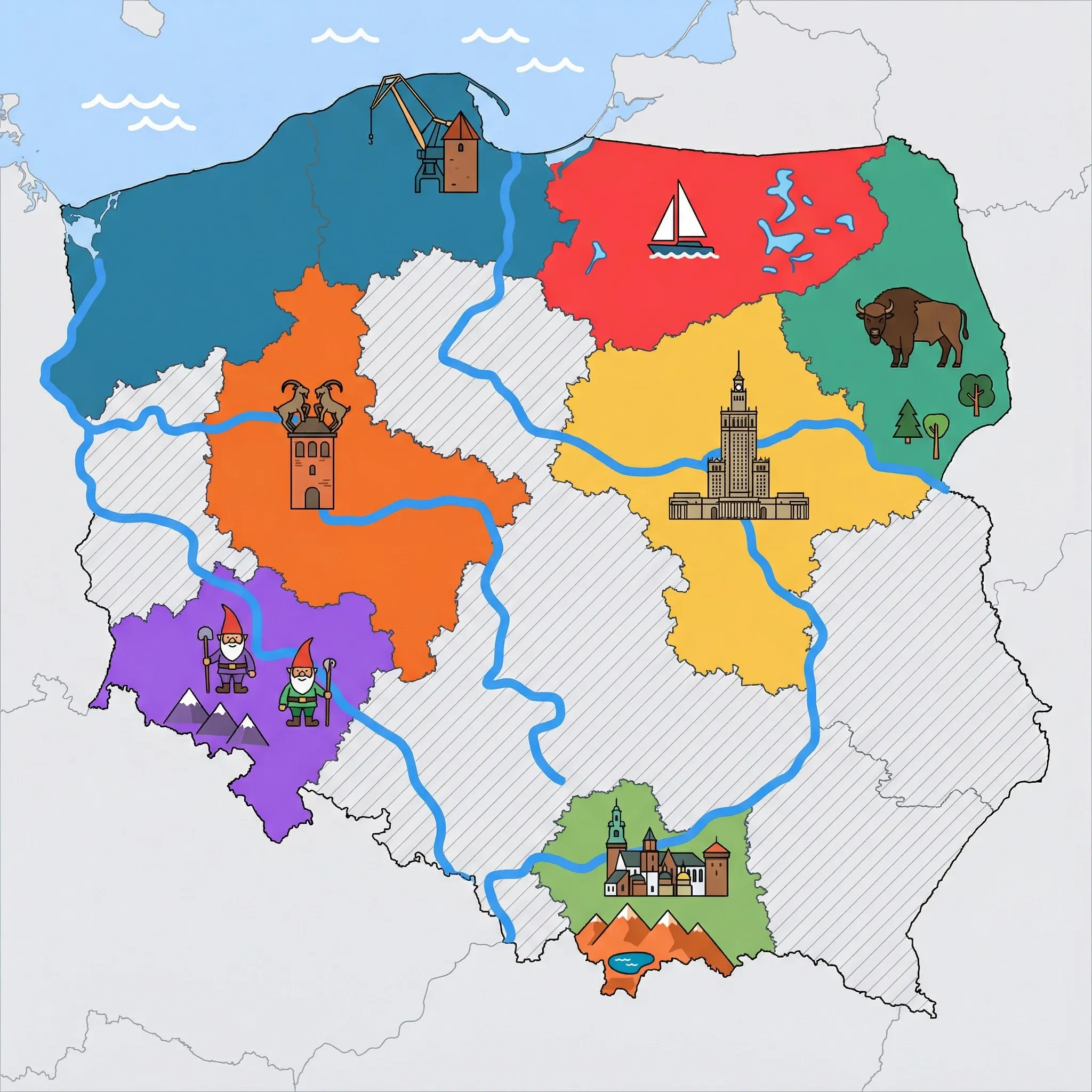
Click a region to explore
The Tatra Mountains are the crown jewel of Poland's natural landscape, offering true alpine scenery with jagged granite peaks, glacial lakes, and cascading waterfalls. At the foot of these giants lies Zakopane, the "Winter Capital of Poland," which is equally popular in summer. For families, this region is an adventure playground. The culture here is distinct—the "Górale" (Highlanders) have their own dialect, music, and distinct wooden architecture characterized by steep roofs and intricate carvings. Walking down Krupówki Street, you'll hear folk music and smell smoked cheese grilling on street corners.
While the high peaks like Rysy are for serious climbers, the valleys are wonderfully accessible for families. You can hike into deep valleys with strollers or take horse-drawn carriages to famous spots. After a day of hiking or skiing, the region offers a huge number of thermal bath complexes (Termy) fed by natural geothermal waters. These aren't just spas; they are full-blown water parks with outdoor pools that steam in the winter snow, slides, and kids' zones. It creates a perfect rhythm for a family holiday: active mornings in the mountains and relaxing afternoons in the warm water.
Key Attractions
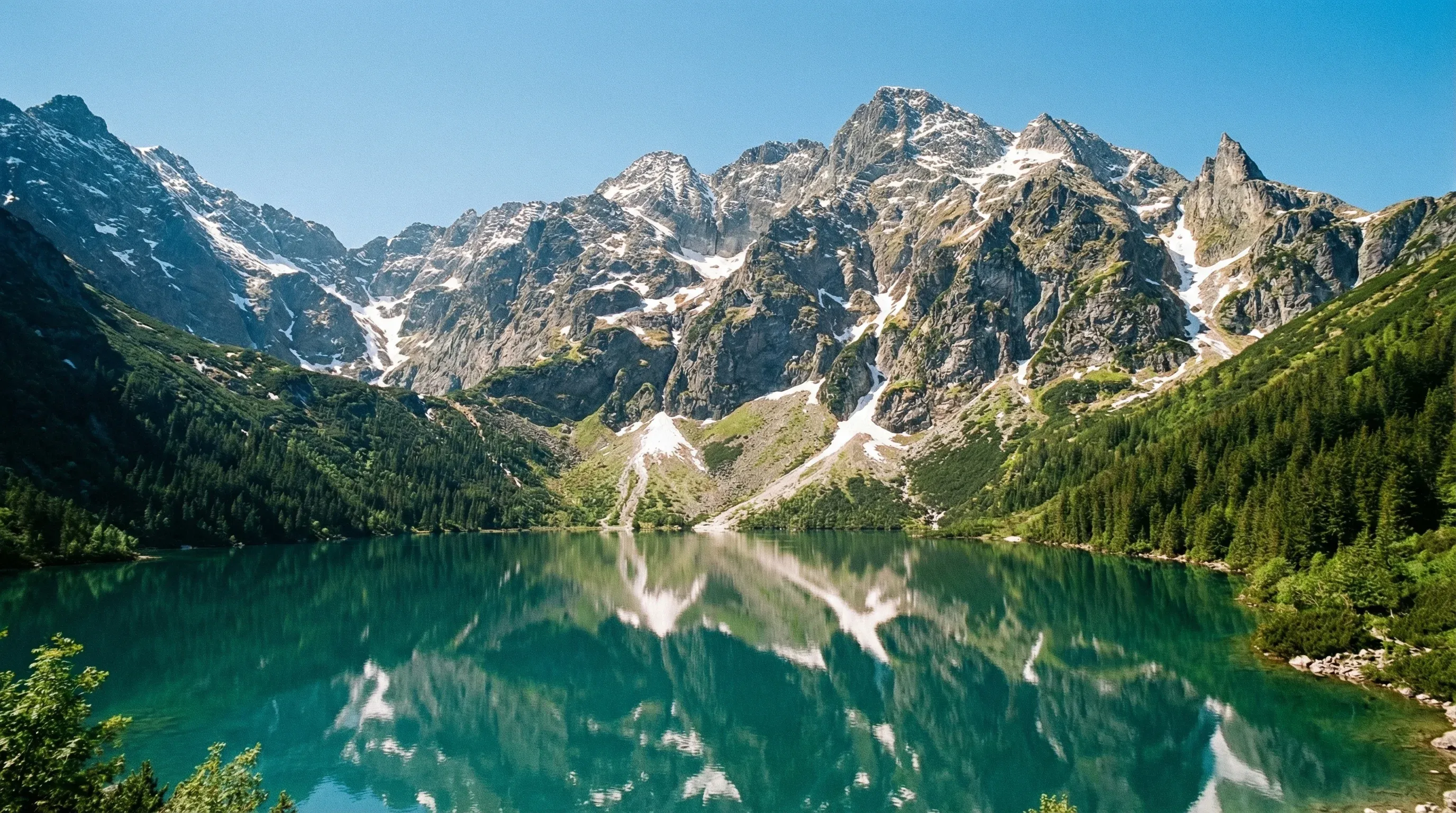
The most iconic family hike is the paved route to Morskie Oko ("Eye of the Sea"), a stunning emerald lake surrounded by peaks. It is long (9km each way) but stroller-friendly, or you can take a horse carriage for most of the way. For views without the sweat, take the funicular railway up Gubałówka Hill for a panorama of the Tatras and a gravity slide that kids adore. Alternatively, the cable car to Kasprowy Wierch gets you into the high mountains in minutes (book tickets in advance!). To unwind, Termy Bukovina or Chochołowskie Termy provide world-class thermal pool experiences.
Practical Advice
The weather in the mountains is unpredictable. It can be sunny in the valley and snowing at the peaks even in late spring. Always pack layers. Crowds in July, August, and winter holidays (February) can be immense.
Food & Drink
Typical meal times: hearty meals served all day to feed hungry hikers. Dinner peak is 6:00 pm – 9:00 pm.
Typical meal costs: Tourist prices apply. Mains 45–80 PLN (approx. $11–20 USD / €10–19 EUR). Street snacks (cheese) are cheap.
Dietary requirements: Heavy on meat, cheese, and cabbage. Vegans may struggle in traditional inns (Karczma) and rely on dumplings or potato pancakes.
Signature dishes:
- Oscypek – Smoked sheep's milk cheese, spindle-shaped with decorative patterns. Served grilled with cranberry jam. The taste of the Tatras.
- Kwaśnica – A sour, smoky sauerkraut soup made with sheep rib stock. Intense and warming.
- Moskole – Traditional oat pancakes baked on a griddle, served with garlic butter.
Why this score?
This region offers Poland's most challenging terrain, featuring high-alpine peaks, technical hiking trails, and serious winter sports opportunities. While the town of Zakopane is very commercialized, the actual Tatra National Park provides genuine mountain adventures for physically active families.
Why this score?
The region is well-equipped for mountain-related trauma and sports injuries, with specialized clinics in Zakopane. However, for complex medical issues or major surgeries, patients are often transferred to larger, more sophisticated facilities in nearby Kraków.
Why this score?
Zakopane is a massive domestic destination that also draws significant crowds from Central and Eastern Europe for skiing and hiking. Its status as Poland's premier mountain resort ensures high international visibility, though it remains a regional rather than global alpine hub.

Zakopane is one of the most expensive places in Poland due to its popularity. Parking is pricey, and entrance fees to the National Park and cable cars add up. Expect to pay 400–700 PLN (approx. $100–175 USD / €93–163 EUR) per night for a nice family apartment.

Getting Here & Around
Getting Here
- Bus – The most popular way. Buses run constantly from Kraków to Zakopane (approx. 2–2.5 hours, but traffic can double this on weekends).
- Train – The train from Kraków is scenic but slow (3+ hours), though track upgrades are ongoing.
- Driving – The "Zakopianka" road is famous for traffic jams. Avoid driving on Friday afternoons or Sunday evenings.
Getting Around
- Minibus (Busiki) – Privately operated minibuses go everywhere (trailheads, thermal baths) for a few Złoty. They are the primary public transport here.
- Walking – Zakopane is walkable, but distances to trailheads require transport.
No airports in this region. See the country flight map for nearby connections.
Official Links

Packing List
Even easy trails can be slippery or rocky; flip-flops are dangerous.
Many private minibuses and small cheese stands strictly do not accept cards.
Mountain storms come suddenly; umbrellas are useless in wind.
Forests and parks in Poland have a high tick prevalence; checking kids after hikes is essential.
It is customary to remove shoes when entering Polish homes; some hosts provide guest slippers.
Foreign school IDs are often rejected; an international ISIC card is needed for student transport discounts.
Public toilets in parks or stations often use coin-operated turnstiles and may not take cards.
Summer weather is changeable with sudden showers common, especially in the mountains.
Essential if visiting the Masurian Lake District or forests where bugs can be intense in summer.

Activities & Best Times

Hiking, wildlife, outdoor exploration, ecotourism
The High Tatras offer unique alpine landscapes and glacial lakes like Morskie Oko; summer provides the only safe window for families to explore high-altitude wilderness trails.

Urban tourism, museums, historical sites, architecture
The unique Zakopane wooden architecture and vibrant Goral highlander culture are world-class; peak periods coincide with festive Christmas traditions and the lively summer atmosphere.

Sport tourism, fitness activities, active recreation
Home to world-renowned high-alpine trekking routes like Orla Perc; peak conditions are strictly limited to the dry summer months when granite surfaces are safest for active families.

Scenic drives, countryside tours, route-based travel
The Oswald Balzer Road and Great Tatra Loop offer spectacular mountain vistas; peak visibility occurs in summer and during the iconic autumn color change in October.

Winter sports, ski resorts, snow activities
Traditional alpine culture with reliable snow and modern facilities at Kasprowy Wierch and Bialka Tatrzanska; the season is compact compared to the Alps but offers authentic charm.

Amusement parks, family entertainment venues
Features high-quality thermal water parks like Chocholowskie Termy which are globally competitive; these facilities are particularly appealing during winter snow or summer family breaks.

Learning experiences, scientific sites, historical education
Strong regional institutions like the Tatra Museum provide insight into Carpathian ecology and heritage; best as a secondary activity during peak domestic and international holiday windows.

Attractions (25 total)



Public Holidays & Calendar Next 12 months
Public holidays, festivals, cultural celebrations, and seasonal natural phenomena coming up in Tatra Mountains (Zakopane) over the next 12 months.
Loading holidays and events...

Travel Advisory
All major agencies maintain Poland at their lowest risk tier, recommending standard safety awareness without any country-wide elevated warnings.
Safety Topics
Traveller Advice (3 groups)

Dual citizens holding both Polish and another nationality must enter and exit the country using their Polish passport or national ID card. Failure to do so may result in travel delays or detention at the border.

While same-sex relations are legal, public displays of affection may attract negative attention or hostility in certain areas; travelers are encouraged to be discreet and aware of local attitudes.

Solo female travelers should avoid visiting bars or nightclubs alone and stick to well-lit, populated streets when walking at night.
Agency Summaries
Poland is considered a low-risk destination. Visitors are advised to follow routine safety measures, particularly in crowded tourist areas where petty crime occurs. Dual citizens must comply with specific entry and exit document requirements.
Standard precautions apply across the country. Travelers should be aware of new European Union entry/exit registration requirements and exercise caution when visiting districts adjacent to the borders with Russia, Belarus, and Ukraine.
The overall risk level is low. Travelers should remain alert to the potential for civil demonstrations in major cities and the broader moderate threat of terrorism affecting the European region.
Travelers should maintain standard safety awareness. Vigilance is specifically recommended in regions bordering Ukraine due to potential risks from stray debris or projectiles related to the ongoing conflict.
Irish citizens can travel freely for up to three months without a visa. The security environment is generally stable, though travelers are reminded that dual citizens must utilize Polish passports for border crossings.
No major travel restrictions are in place. However, authorities may restrict access to areas within 20km of the border with Ukraine without prior notice. British-Polish dual nationals should ensure they use correct documentation.
Information is provided for general guidance only and does not constitute travel, safety, medical, or legal advice. Conditions may change. Users are responsible for independently verifying information before travel.