
Alentejo
Golden plains, dark starry skies, and slow-paced family adventures 🌾✨
Click a region to explore
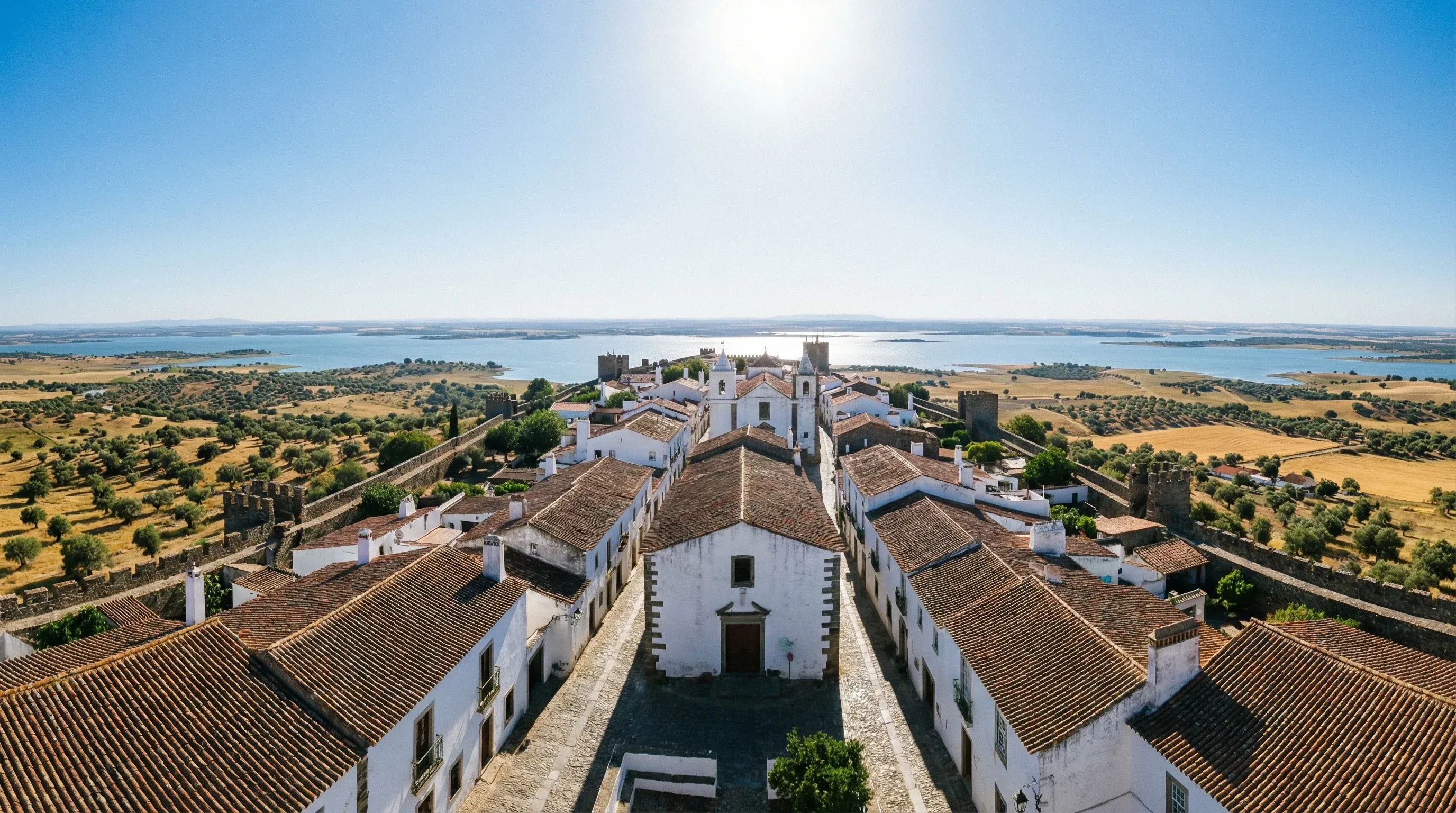
The Alentejo is Portugal's largest region, covering a third of the country but housing only a fraction of its population. For families, this translates into a destination defined by space, tranquility, and a connection to the land that is increasingly hard to find in modern Europe. The landscape is a patchwork of golden wheat fields, cork oak forests (montados), and olive groves that stretch to the horizon. Unlike the bustling Algarve to the south, the Alentejo moves at a slower rhythm. It is a place where lunch is a lingering affair, siestas are respected to escape the midday heat, and the history feels incredibly tangible—from Roman temples to medieval castles guarding the Spanish border. The climate here is distinct; summers are dry and intensely hot, often reaching 40°C (104°F) inland, making spring and autumn the ideal times for active families. However, the region's coastline, the Costa Vicentina, enjoys cooling Atlantic breezes, and the vast Alqueva Lake provides a massive inland oasis for water sports.
Culturally, the Alentejo is deeply traditional. Families will find a warm welcome, though English is less widely spoken in the tiny whitewashed villages than in the coastal resorts. It is an educational goldmine for children; they can learn where cork comes from (Portugal produces half the world's supply), explore megalithic stone circles older than Stonehenge, and run free in fortified towns that look like film sets. The region is also the world's first certified Starlight Tourism Destination, meaning the light pollution is so low that families can see the Milky Way with the naked eye—a magical experience for city-dwelling kids.
Key Attractions
The region offers a mix of wildlife, history, and water fun. A highlight for younger children is the Badoca Safari Park, where families can take a raft trip or a tractor safari to see giraffes, zebras, and ostriches roaming in an environment similar to the African savannah. For a brush with history that teenagers particularly enjoy for its macabre factor, the Historic Centre of Évora is home to the Chapel of Bones, where the walls are lined with thousands of human skulls and bones—a spooky but fascinating history lesson. On hot days, the Alqueva Lake is indispensable; you can rent houseboats (no license required), go kayaking, or enjoy the river beaches. Further south, the Southwest Alentejo and Costa Vicentina Natural Park offers wild, unspoiled beaches like Praia da Zambujeira do Mar, perfect for bodyboarding and cliff walks. For military history enthusiasts, the Garrison Border Town of Elvas and its Fortifications boasts massive star-shaped walls that are exciting to explore.
Practical Advice
Summer heat in the interior is serious—plan activities for the morning (8:00 am to 11:00 am) and late afternoon (after 5:00 pm), spending the middle of the day at a pool or museum. Renting a car is mandatory here; public transport is sparse between villages. The roads are generally excellent and empty, making for stress-free driving.
Food & Drink
Typical meal times: Lunch is a major event, served from 12:30 pm to 3:00 pm. Dinner is typically eaten between 7:30 pm and 9:30 pm.
Typical meal costs: The Alentejo is one of the best-value regions in Western Europe. A hearty family meal costs around €40–70 (approx. $43–76 USD / £35–60 GBP).
Dietary requirements: The cuisine relies heavily on bread, pork, and coriander. Vegetarian options are becoming common in tourist hubs like Évora but can be limited to omelets and salads in rural taverns (tascas). Gluten-free travellers must be careful with soups, which often contain soaked bread.
Signature dishes:
- Açorda Alentejana – A comforting garlic and coriander bread soup, usually topped with a poached egg. It is mild and often loved by children.
- Porco Preto – Black pork from pigs that roam free eating acorns; the meat is incredibly tender and flavorful, often served grilled.
- Sericaia – A traditional egg pudding with cinnamon, renowned in the town of Elvas and usually served with a sugar plum.
Why this score?
The region offers moderate adventure through the rugged Rota Vicentina coastal trails and vast, sparsely populated plains. While the terrain is manageable, the isolation of the interior and the exposure of the Fishermen's Trail provide a sense of wilderness without extreme physical risk.
Why this score?
Medical facilities in Alentejo are reliable in urban centers like Évora and Beja, though rural areas may have limited clinic hours. For specialized or complex emergencies, patients are often transferred to larger, more advanced hospitals in the Lisbon metropolitan area via well-established protocols. English-speaking staff are generally available in larger centers but less common in the deep interior villages.
Why this score?
While famous for its farm stays and the historic city of Évora, Alentejo remains a quieter, more rural alternative to the busy coastal hubs. It attracts a mix of domestic travelers and international 'slow travel' enthusiasts, but lacks the massive year-round visitor volumes seen in Lisbon or the Algarve.

The Alentejo offers exceptional value. Hotel prices are significantly lower than in Lisbon or the Algarve. A high-quality family room in a rural tourism estate (Agroturismo) costs €90–150 (approx. $98–163 USD / £78–130 GBP). Coffee costs under €1 (approx. $1.10 USD / £0.85 GBP) and a glass of local wine is often €2–3 (approx. $2.20–3.25 USD / £1.70–2.60 GBP).
Family Travel Notice
Minors travelling alone or with an adult who is not their legal parent or guardian should carry a formal letter of authorization. Failure to present this documentation may result in significant delays or refusal of entry at the border.

Getting Here & Around
Getting Here
- Airports – The closest major airport is Lisbon (LIS). From Lisbon, it is a 1.5-hour drive to Évora or 2 hours to the coast. Faro Airport (FAO) is also an option for reaching the southern Baixo Alentejo area.
- Driving – The A6 motorway connects Lisbon to Évora and Elvas (near the Spanish border). The A2 connects Lisbon to the Algarve, passing through the western Alentejo.
- Train – Direct Intercity trains run from Lisbon to the Historic Centre of Évora (approx. 1.5 hours) and Beja, though connections to smaller towns are non-existent.
Getting Around
- Car – Essential. The region is vast and rural. Exploring the Alqueva Lake area or the Southwest Alentejo and Costa Vicentina Natural Park is nearly impossible without a vehicle.
- Cycling – The flat terrain around Évora is excellent for family cycling, though avoid the midday sun in summer.
No airports in this region. See the country flight map for nearby connections.
Official Links

Packing List
Mosquitoes can be prevalent near the rice paddies and inland lakes during summer evenings.
To take full advantage of the Alqueva Dark Sky Reserve, one of the best stargazing spots in Europe.
Essential for keeping water and snacks cool during long drives across the hot plains.
The sun is intense and shelter is scarce in the open countryside; extra protection is vital for kids.
Strollers struggle on Portugal's ubiquitous cobblestones and steep hills; a carrier is essential.
The limestone 'calçada' pavements become incredibly slippery when wet or worn smooth.
The Atlantic Ocean is surprisingly cold (often 18°C/64°F) even in the height of summer.
Roads in the Douro Valley, Madeira, and Sintra are famously winding and can induce nausea.
Many small family-run 'tascas' and kiosks do not accept foreign cards; cash is king.

Activities & Best Times

Hiking, wildlife, outdoor exploration, ecotourism
Home to the world-class Dark Sky Alqueva reserve and the stunning Rota Vicentina coastal trails, Alentejo excels in low-impact nature immersion. Spring and autumn offer ideal temperatures for exploration, while the intense summer heat can make daytime outdoor activity challenging for families.

Urban tourism, museums, historical sites, architecture
The UNESCO World Heritage city of Évora and the historic marble towns of Vila Viçosa and Estremoz offer deep, authentic Portuguese heritage. The interior reaches extreme temperatures in July and August, making city walking uncomfortable for children, though spring and autumn are perfect for exploring.

Sport tourism, fitness activities, active recreation
The Rota Vicentina's Fishermen's Trail and Historical Way provide world-renowned hiking and cycling infrastructure that attracts international endurance tourists. The strenuous nature of these trails makes the moderate temperatures of spring and early autumn the only viable peak windows for families.

Beach resorts, marine activities: diving, snorkelling, kite surfing, wind surfing, sailing
The Costa Vicentina offers dramatic, wild Atlantic beaches and high-quality coastal scenery, though water temperatures remain cool year-round. Peak visitation occurs during the warm summer months, while the Atlantic swell makes winter months less suitable for casual family beach visits.

Learning experiences, scientific sites, historical education
Features unique educational assets like the Dark Sky Alqueva Observatory and the Fluviário de Mora, providing specialized scientific engagement. Clear skies are most reliable in late spring and autumn, while winter months see increased cloud cover affecting astronomical observations.

Spa retreats, wellness centers, peaceful getaways
Rooted in Roman tradition, the region offers authentic thermal experiences and high-end rural retreats focused on 'slow living.' These are best enjoyed in cooler transitional months; the peak summer heat typically discourages the use of thermal baths and saunas.

Scenic drives, countryside tours, route-based travel
Excellent driving conditions through rolling cork forests and along the scenic EN2, often compared to the California coast or Tuscany. Peak summer is avoided by savvy travelers due to the heat and parched landscape, with spring offering the most vibrant green vistas.

Amusement parks, family entertainment venues
Limited to regional aquatic centers and river-based recreational areas that primarily serve domestic tourists during the height of summer. These facilities lack the international scale of major theme parks but provide necessary cooling relief during the peak heat.

Attractions (22 total)



Public Holidays & Calendar Next 12 months
Public holidays, festivals, cultural celebrations, and seasonal natural phenomena coming up in Alentejo over the next 12 months.
Loading holidays and events...

Travel Advisory
All major agencies agree that Portugal is a safe destination requiring only standard safety awareness. There are no elevated country-wide risks, though petty crime and seasonal weather events remain the primary concerns.
Safety Topics
Traveller Advice (3 groups)

Minors travelling alone or with an adult who is not their legal parent or guardian should carry a formal letter of authorization. Failure to present this documentation may result in significant delays or refusal of entry at the border.

When hiking in the Azores or Madeira, choose trails suited to your experience level and check local weather conditions beforehand. Heavy rain can make paths slippery and unstable, increasing the risk of accidents.

It is a legal requirement in Portugal to carry photographic identification at all times. Additionally, be prepared for biometric registration (fingerprints and photos) when entering or exiting the Schengen Area.
Agency Summaries
The country is generally secure for tourists. Basic safety awareness is advised to avoid petty crimes like theft in high-traffic tourist zones and on public transit systems.
There is currently no specific travel advisory for the country, indicating a stable security situation. New Zealanders are advised to maintain typical safety measures and secure comprehensive medical insurance.
Travellers should use common sense and stay aware of their surroundings. Be mindful of the significant national terrorism alert and the possibility of transport delays caused by public strikes or environmental factors like wildfires and floods.
Portugal offers a safety environment comparable to Ireland. Visitors are encouraged to research local entry regulations for minors and ensure their travel documents are valid for the duration of their stay.
Portugal is considered safe for visitors, though standard vigilance is recommended. Travellers should be alert for pickpocketing in Lisbon, particularly on popular tram routes, and stay informed about local weather alerts and the national terrorism threat level.
While crime rates are relatively low, visitors should protect their belongings from opportunistic thieves in major cities. Recent updates highlight mandatory identification requirements and potential travel disruptions from seasonal weather conditions.
Information is provided for general guidance only and does not constitute travel, safety, medical, or legal advice. Conditions may change. Users are responsible for independently verifying information before travel.