
Central Portugal (Coimbra, Sintra)
Fairytale castles, giant waves, and living history 🏰🌊
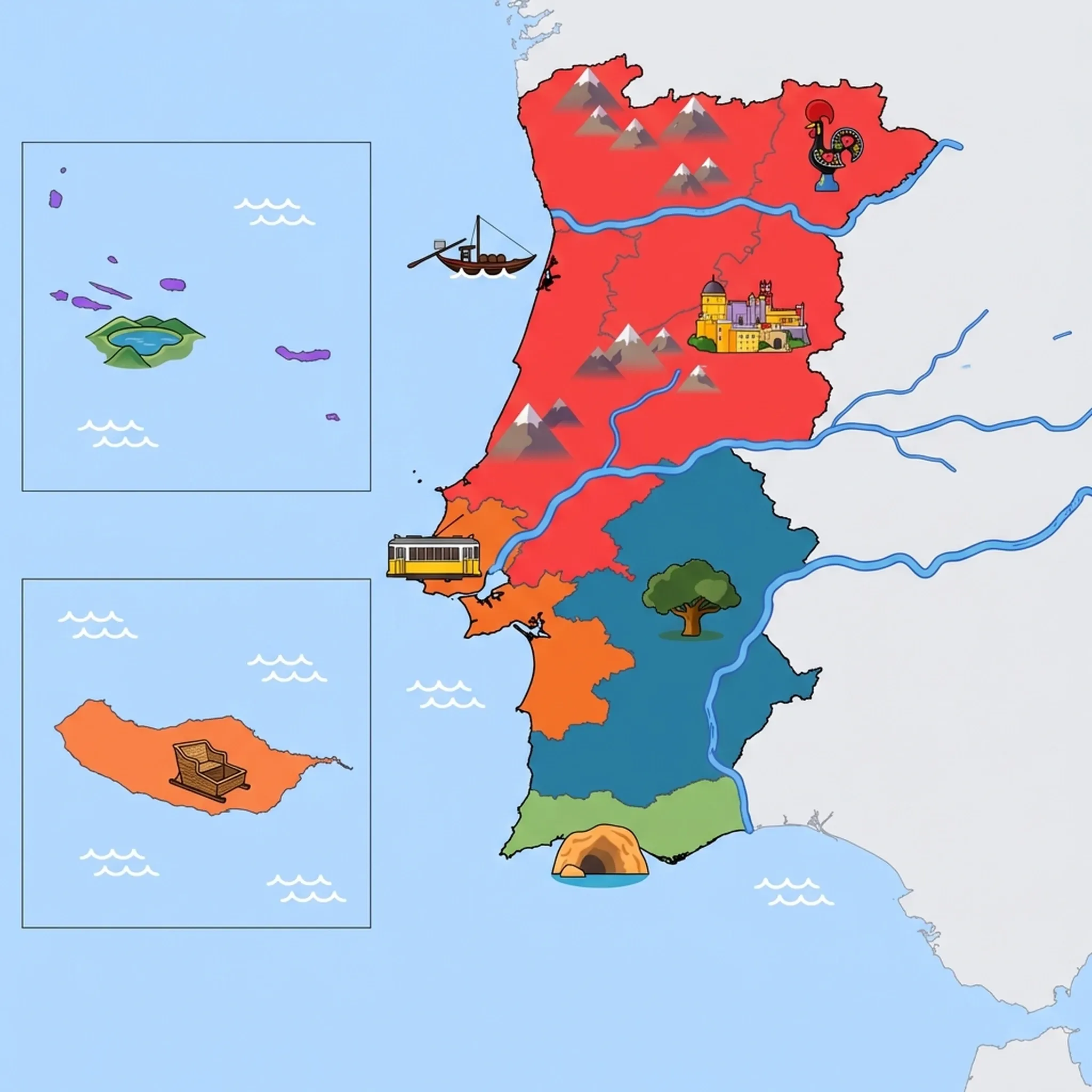
Click a region to explore
Central Portugal is the country's historical heartland, a region where legends of knights, kings, and bakers come to life. It offers an incredible diversity of landscapes, from the silver coast's surfing beaches to the granite peaks of Serra da Estrela (the only place in Portugal where you can ski in winter). For families, the headline act is undoubtedly Sintra, a UNESCO landscape of mist-soaked forests and palaces that look like they were drawn by Disney. But beyond Sintra, the region is packed with manageable, walkable adventures. You can visit Aveiro, the "Venice of Portugal," to ride colorful Moliceiro boats, or head to Coimbra, where the university students wear black capes that inspired the costumes in Harry Potter.
This region is ideal for families who want a mix of education and activity. The history here is visual and interactive—walking the complete circuit of castle walls, exploring monasteries with gargoyles, or visiting "Portugal dos Pequenitos" in Coimbra (a park with miniature houses). The climate is varied: Sintra has its own humid microclimate (often cooler and mistier than Lisbon), the coast is breezy, and the interior can get very hot in summer and cold in winter.
Key Attractions
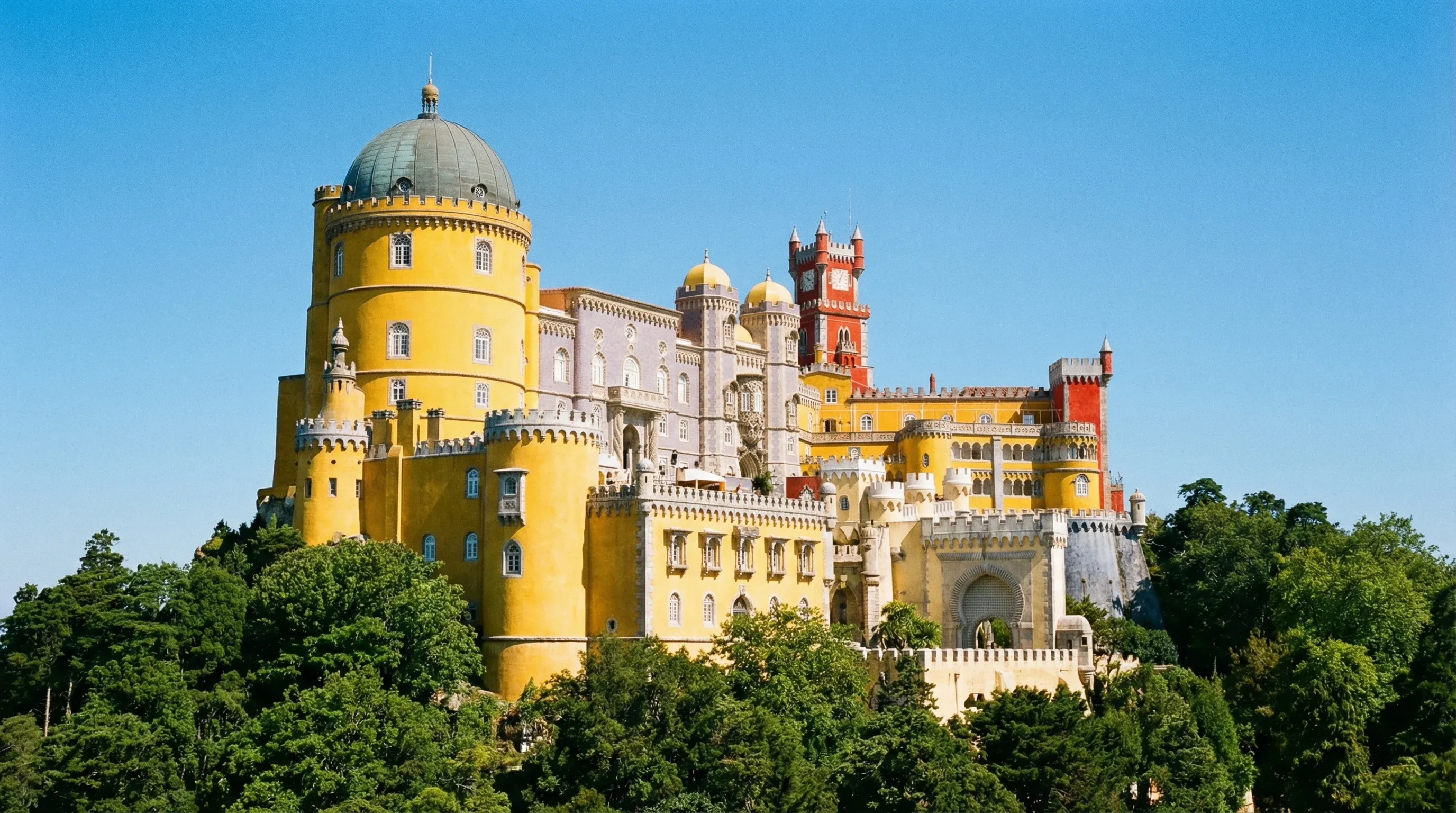
Sintra is unmissable. The Pena Palace, with its vivid yellow and red towers, is the most famous sight; it's a steep walk, so take the shuttle bus with small kids. Just down the hill, the Castle of the Moors offers "Great Wall of China" style walking along ancient ramparts with stunning views. Further north, the Óbidos Historic Town is a highlight—a completely walled village where you can walk the perimeter (careful, no handrails!) and drink cherry liqueur (parents) in chocolate cups. The Castle of Óbidos itself is now a hotel, but the atmosphere remains medieval. For a unique cultural stop, the Museu do Pão (Bread Museum) in Seia offers a fantastic sensory experience for kids about the cycle of wheat and bread. History buffs will be awed by the Monastery of Batalha, an architectural masterpiece that looks like stone lace.
Practical Advice
Sintra gets dangerously overcrowded. Visit Pena Palace as soon as the gates open (9:30 am) or late in the afternoon. Avoid bringing a stroller to Sintra or Óbidos; the cobblestones and stairs are brutal. A baby carrier is essential. Spring and autumn are the best times to visit to avoid the crowds and the inland heat.
Food & Drink
Typical meal times: Lunch 12:00 pm to 2:00 pm; Dinner 7:30 pm to 9:30 pm.
Typical meal costs: Moderate. Expect to pay €50–90 (approx. $55–98 USD / £43–78 GBP) for a family meal. Coastal towns (Nazaré) charge more for seafood.
Dietary requirements: Generally good. Aveiro and Coimbra have modern options. In rural mountain areas, dishes are heavy on pork and starches.
Signature dishes:
- Leitão da Bairrada – Suckling pig with crispy, glass-like skin and tender meat, arguably Portugal's most famous meat dish.
- Ovos Moles de Aveiro – Sweet egg yolk cream encased in communion wafer shapes (shells, fish); a sugar-rush favorite for kids.
- Chanfana – Goat meat slow-cooked in red wine in black pottery clay pots, typical of the mountain regions.
Why this score?
The region offers a balance of accessible cultural sites and more rugged terrain in the Serra da Estrela, Portugal's highest mountain range. Families can transition from paved palace walks in Sintra to more demanding hiking and winter skiing in the rocky, granite landscapes of the interior.
Why this score?
Coimbra is one of Portugal's primary medical hubs, home to one of the oldest and most prestigious university hospitals in Europe. Access to high-quality healthcare is excellent throughout the region's main cities, with a high density of specialists and English-speaking medical staff.
Why this score?
This region is home to world-class attractions like the fairytale palaces of Sintra and the historic university city of Coimbra, ensuring a strong and steady international flow. While the interior mountains are quieter, the heavy concentration of UNESCO World Heritage sites makes it a core part of the Portuguese tourism circuit.

Sintra is priced at a premium (entrance fees for palaces are high, e.g., ~€50 for a family to enter Pena Palace). The rest of the region is very affordable. A coffee and pastry in Coimbra might cost €2.50 (approx. $2.75 USD / £2.15 GBP). Tolls on the A1 and A8 motorways are significant, so factor this into your budget.
Family Travel Notice
Minors travelling alone or with an adult who is not their legal parent or guardian should carry a formal letter of authorization. Failure to present this documentation may result in significant delays or refusal of entry at the border.

Getting Here & Around
Getting Here
- Train – Excellent rail links from Lisbon to Sintra (40 mins) and Coimbra (1.5 hours via Alpha Pendular). Aveiro is also on the main north-south line.
- Driving – The A1 motorway is the spine of the country. Driving is the best way to see the monasteries (Batalha, Alcobaça) and mountains.
- Bus – Frequent express buses connect Lisbon to towns like Nazaré and Óbidos (which has no train station near the center).
Getting Around
- Walking – The historic centers of Sintra, Óbidos, and Guimarães are pedestrian-focused. Be prepared for hills.
- Car – Recommended for touring the "Monastery Triangle" and Serra da Estrela. Avoid driving *in* Sintra town center (parking is a nightmare); park on the outskirts or take the train.
- Tuk-tuk – Popular in Sintra and Coimbra for saving tired legs on steep hills.
No airports in this region. See the country flight map for nearby connections.
Official Links

Packing List
The 'calçada' (pavement) in Sintra and Coimbra becomes incredibly slippery when misty or wet.
The roads up to Pena Palace and through the Serra da Estrela mountains are very winding.
Sintra has a microclimate and is often 5-10 degrees cooler and foggier than Lisbon just 30km away.
Strollers are useless on the cobbles of Óbidos and the steep steps of Sintra's palaces.
Strollers struggle on Portugal's ubiquitous cobblestones and steep hills; a carrier is essential.
The Atlantic Ocean is surprisingly cold (often 18°C/64°F) even in the height of summer.
Many small family-run 'tascas' and kiosks do not accept foreign cards; cash is king.

Activities & Best Times

Urban tourism, museums, historical sites, architecture
Home to the UNESCO-listed University of Coimbra and the fairytale palaces of Sintra, this region offers world-class heritage and authentic Portuguese identity. Peak visitation occurs during the mild spring and autumn, while the peak summer heat and winter rains make those months less ideal for walking historic quarters.

Hiking, wildlife, outdoor exploration, ecotourism
The Serra da Estrela mountains and the unique schist villages like Piódão provide deep immersion into rugged landscapes and traditional rural life. Optimal conditions for exploring these trails and remote villages are in the transitional months, avoiding mountain snow or extreme summer heat.

Sport tourism, fitness activities, active recreation
Boasts world-renowned surfing at Nazaré and a dense network of historical hiking and cycling routes (GR22, GR33). May to October offers the best conditions for outdoor sports, though professional surfing tourists flock to the coast in winter for the giant swells.
Amusement parks, family entertainment venues
Featuring unique, high-quality parks like Dino Parque Lourinhã and the heritage-focused Portugal dos Pequenitos, the region excels in educational entertainment for children. Summer and school holiday periods see the highest demand and full facility availability.

Beach resorts, marine activities: diving, snorkelling, kite surfing, wind surfing, sailing
Dramatic Atlantic coastline destinations like Nazaré and Costa Nova offer iconic scenery and wide beaches, though water temperatures remain cool. The summer months provide the only reliable window for beach recreation before the heavy Atlantic swells and winds of winter arrive.

Learning experiences, scientific sites, historical education
Centred around the historic University of Coimbra's science museums and Sintra's scientific centers, the region offers significant destination-level learning. These facilities are largely indoor and accessible year-round, though visitor numbers drop significantly during the wettest month of December.

Spa retreats, wellness centers, peaceful getaways
Renowned for historic spa towns like Luso and Termas de São Pedro do Sul, which feature traditional thermal bath culture. These destinations are most appealing during the cooler, damp shoulder seasons when the thermal waters provide a contrast to the outside weather.

Scenic drives, countryside tours, route-based travel
The N2 highway and the Zêzere Glacier Valley drive offer some of Europe's most scenic inland touring through varied topography. Driving conditions are best in late spring and early autumn; winter brings heavy rain and mountain fogs that obscure the dramatic views.

Events, celebrations, seasonal attractions
Driven by the major international pilgrimages to Fátima in May and October, and the unique Boom Festival in August. Outside of these specific event windows, the region lacks the consistent international festival calendar required for a higher rating.

Winter sports, ski resorts, snow activities
Contains Portugal's only ski resort in the Serra da Estrela, providing a unique but limited alpine experience compared to major European ranges. The season is short and highly dependent on erratic winter snowfall, typically peaking in January and February.

Attractions (38 total)



Public Holidays & Calendar Next 12 months
Public holidays, festivals, cultural celebrations, and seasonal natural phenomena coming up in Central Portugal (Coimbra, Sintra) over the next 12 months.
Loading holidays and events...

Travel Advisory
All major agencies agree that Portugal is a safe destination requiring only standard safety awareness. There are no elevated country-wide risks, though petty crime and seasonal weather events remain the primary concerns.
Safety Topics
Traveller Advice (3 groups)

Minors travelling alone or with an adult who is not their legal parent or guardian should carry a formal letter of authorization. Failure to present this documentation may result in significant delays or refusal of entry at the border.

When hiking in the Azores or Madeira, choose trails suited to your experience level and check local weather conditions beforehand. Heavy rain can make paths slippery and unstable, increasing the risk of accidents.

It is a legal requirement in Portugal to carry photographic identification at all times. Additionally, be prepared for biometric registration (fingerprints and photos) when entering or exiting the Schengen Area.
Agency Summaries
The country is generally secure for tourists. Basic safety awareness is advised to avoid petty crimes like theft in high-traffic tourist zones and on public transit systems.
There is currently no specific travel advisory for the country, indicating a stable security situation. New Zealanders are advised to maintain typical safety measures and secure comprehensive medical insurance.
Travellers should use common sense and stay aware of their surroundings. Be mindful of the significant national terrorism alert and the possibility of transport delays caused by public strikes or environmental factors like wildfires and floods.
Portugal offers a safety environment comparable to Ireland. Visitors are encouraged to research local entry regulations for minors and ensure their travel documents are valid for the duration of their stay.
Portugal is considered safe for visitors, though standard vigilance is recommended. Travellers should be alert for pickpocketing in Lisbon, particularly on popular tram routes, and stay informed about local weather alerts and the national terrorism threat level.
While crime rates are relatively low, visitors should protect their belongings from opportunistic thieves in major cities. Recent updates highlight mandatory identification requirements and potential travel disruptions from seasonal weather conditions.
Information is provided for general guidance only and does not constitute travel, safety, medical, or legal advice. Conditions may change. Users are responsible for independently verifying information before travel.