
Northern Forests (gorillas)
Deep rainforest adventures and gorilla encounters 🦍🌿
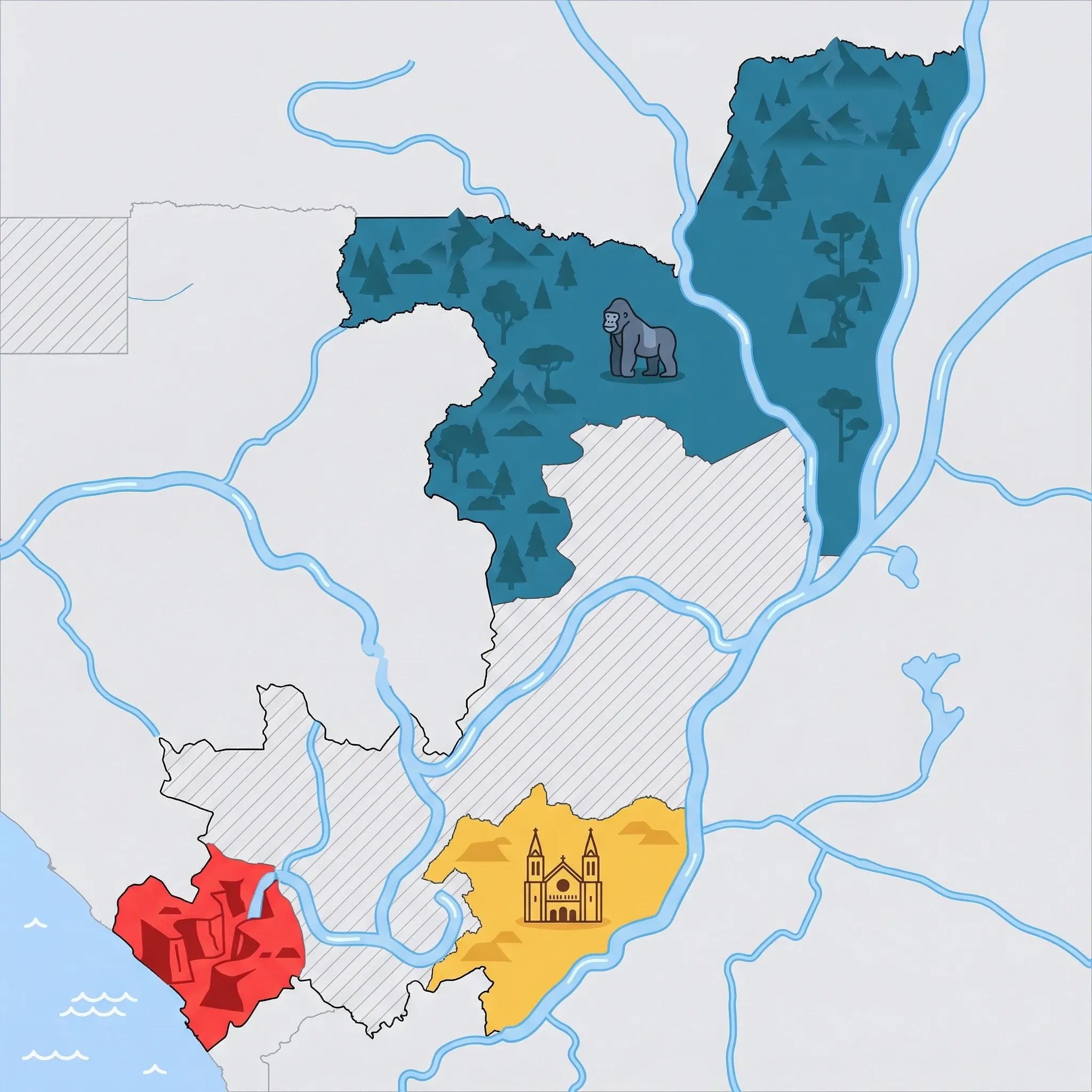
Click a region to explore
Overview
The Northern Forests of the Republic of the Congo represent one of the last great wildernesses on Earth. This is the heart of the Congo Basin, a place of towering mahogany trees, humid mists, and rich biodiversity. For families with older children (usually 15+ for trekking), this region offers a safari experience unlike the open savannas of East Africa. Here, the adventure is on foot, tracking wildlife through dense foliage and wading through shallow streams. The atmosphere is prehistoric and profound, offering a disconnection from the modern world that is increasingly rare.
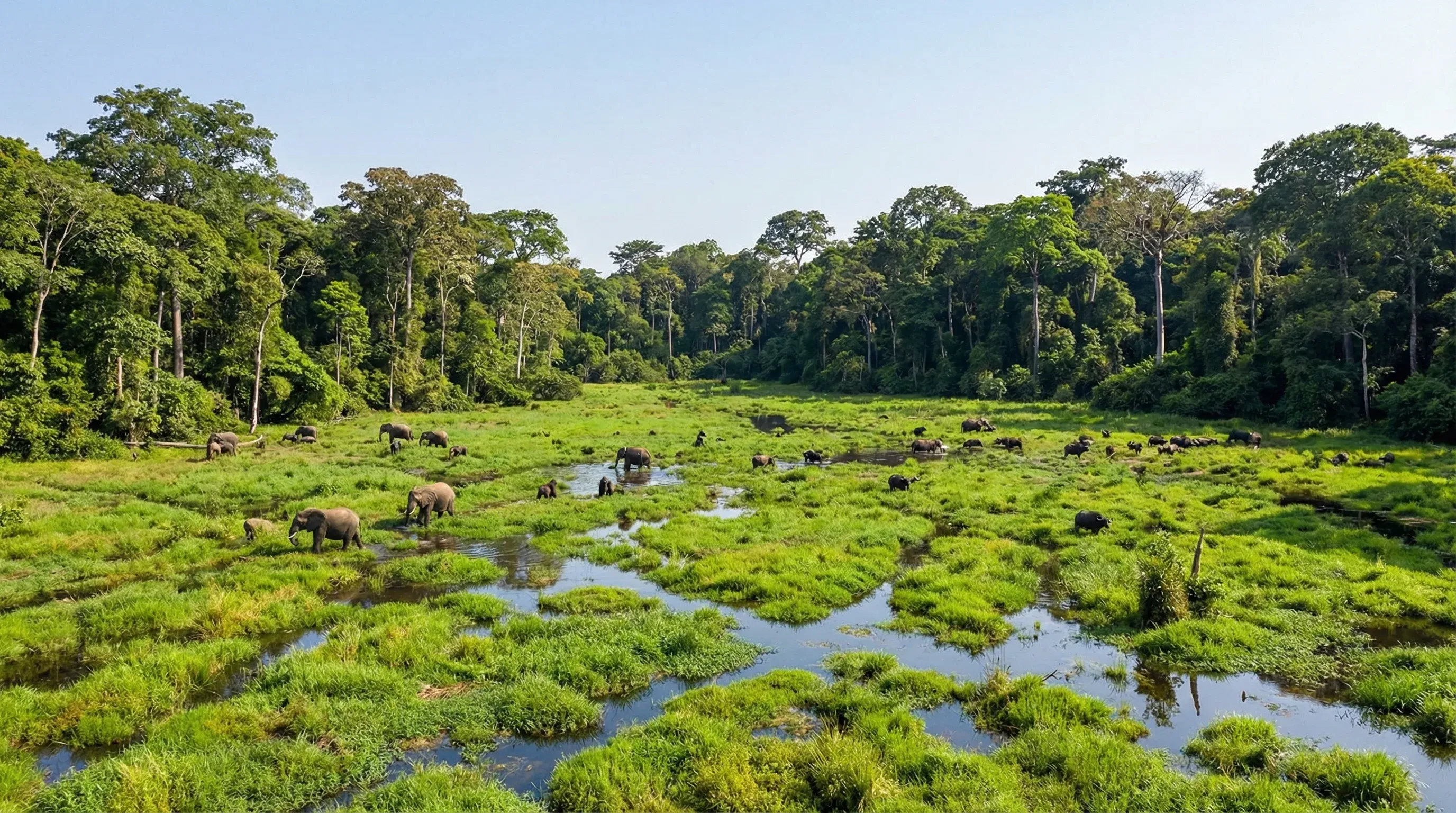
This is not a zoo; it is a raw ecosystem. The region is famous for its "bais"—swampy forest clearings where forest elephants, buffalo, and flocks of African grey parrots gather to drink mineral-rich water. Watching these interactions from a hide is a magical, patient experience that teaches children about the rhythm of nature. While logistics are challenging and costs are high, the reward is an intimate connection with one of the planet's most important lungs.
Key Attractions
The primary draw is Odzala-Kokoua National Park. Known for its luxury eco-lodges, it provides the most accessible infrastructure for families to see Western Lowland Gorillas. Unlike mountain gorillas, these primates are often found in the open bais, eating sedge and roots. The park is also home to curious forest buffalo and over 400 bird species.
Further north, the Nouabalé-Ndoki National Park is arguably even more pristine. It is part of the Sangha Tri-National (UNESCO World Heritage Site), a transboundary protected area shared with Cameroon and CAR. Here, the Mbeli Bai is famous for gorilla sightings where visitors can watch social groups interact in the water without the need for strenuous hiking, making it slightly more accessible for observation, though getting there is an expedition in itself.
Practical Advice
Note on Geography: This region borders the Central African Republic (CAR) and Cameroon. While the parks are managed securely, families should stay strictly within the care of reputable lodge operators and fly directly into park airstrips rather than traveling by road near the borders. The best time to visit is the short dry season (January–February) or the long dry season (June–September) to avoid the worst of the mud and leeches.
Food & Drink
Typical meal times: In lodges, breakfast is early (6:00 am) before treks. Lunch is 1:00 pm, and dinner is 7:30 pm to 9:00 pm.
Typical meal costs: Almost exclusively all-inclusive within lodge packages (often $1,000+ per night). In the town of Ouesso, local meals cost 3,000–6,000 XAF (approx. $5–10 USD / €4.50–9 EUR).
Dietary requirements: High-end lodges in Odzala and Ndoki can cater to all allergies and dietary needs if notified in advance. Outside lodges, options are limited to local starch and fish.
Signature dishes:
- Maboké – Freshwater fish spiced with piri-piri chili and steamed in Marantaceae leaves; a staple of the river communities.
- Safou – A native fruit (African pear) that is boiled or roasted, tasting like tangy butter; often served as a side dish.
- Ngulo – Wild boar or bush pig, often smoked (common in local towns, but eco-lodges will serve farmed meats to discourage bushmeat trade).
Why this score?
Visiting this region involves immersion in the deep Congo Basin rainforest, often requiring small charter planes or multi-day river journeys. Activities like tracking gorillas on foot and navigating dense jungle terrain represent a high level of physical challenge and environmental exposure. It is a true wilderness experience where travelers are far removed from modern conveniences and traditional safety nets.
Why this score?
Medical infrastructure in the northern rainforest is virtually non-existent, consisting only of basic first-aid supplies at remote lodges. The nearest hospitals in towns like Ouesso are very basic and ill-equipped for international standard trauma or illness. All visitors are strictly advised to have comprehensive medical evacuation insurance as professional care is hours or days away.
Why this score?
This region is a world-class bucket-list destination for wildlife enthusiasts, yet it sees extremely low visitor volumes due to the high cost of luxury eco-lodges and difficult logistics. It is known internationally for Western Lowland Gorillas in Odzala-Kokoua, but total annual visitors are measured in the hundreds or low thousands. It remains one of the most exclusive and least-visited conservation areas in Africa.

This is a high-cost, low-impact tourism destination. Visiting <a data-attraction-id="47386">Odzala-Kokoua National Park</a> typically requires booking all-inclusive packages that cost 600,000–1,200,000 XAF (approx. $1,000–2,000 USD / €900–1,800 EUR) per person, per night. These costs cover conservation fees, charter flights, and high-security guiding. Budget travel is virtually impossible here due to remoteness.

Getting Here & Around
Getting Here
- Airports – Most travelers arrive via charter flights directly from Brazzaville to airstrips in Odzala-Kokoua National Park or Kabo (for Ndoki). These are arranged by lodge operators.
- Air (Commercial) – ECAir and other local carriers fly from Brazzaville to Ouesso (the regional hub). From Ouesso, it is a long drive and boat ride to the parks.
Getting Around
- Lodge Vehicles & Boats – Inside Odzala-Kokoua National Park, transport is provided by the lodges using 4x4s and motorized pirogues (dugout canoes).
- Walking – The primary mode of exploration is on foot. Trekking to see gorillas requires a moderate level of fitness and is strictly regulated (usually min. age 15).
No airports in this region. See the country flight map for nearby connections.
Official Links

Packing List
Bright blues and blacks attract painful tsetse flies; stick to khaki, olive, and tan.
Essential for rainforest trekking, especially during the wet season or near streams.
To protect cameras and electronics during pirogue (canoe) transfers and sudden downpours.
If you plan to visit clear streams; contact lenses are risky in humid, muddy conditions.
Absolutely mandatory for entry; you will be refused borders without the original card.
English is rarely spoken outside luxury lodges; basic French is vital for taxis and markets.
Sudden, heavy tropical downpours occur frequently, even in drier months.
Power cuts are common in cities and electricity can be limited in eco-lodges.
Essential for boat safaris to see gorillas and chimps on sanctuary islands from a distance.
Bright blues and blacks attract painful tsetse flies in forest areas; wear khaki or tan.

Activities & Best Times

Hiking, wildlife, outdoor exploration, ecotourism
This region contains THREE major national parks including the UNESCO Trinational Sangha site, plus Odzala-Kokoua and Nouabale-Ndoki. It offers world-class gorilla trekking comparable to Rwanda and Uganda. This is internationally recognized as a premier wilderness destination and deserves 'excellent' rating, not just 'good'.

Urban tourism, museums, historical sites, architecture
Features UNESCO-listed heritage and opportunities to experience the living culture of the Ba'Aka people. Seasonal accessibility to remote cultural areas is significantly better during the drier months when regional infrastructure is more reliable.

Scenic drives, countryside tours, route-based travel
Adventurous transit via the Route du Nord offers a unique glimpse of the deep interior, though infrastructure remains basic. Travel is highly seasonal as heavy equatorial rains frequently make unpaved forest sections impassable for families.

Sport tourism, fitness activities, active recreation
Infrastructure for active sports is limited to guided river kayaking and trekking programs within the national parks. These activities require specific equipment and guides, with peak conditions during the months of lowest rainfall.




Public Holidays & Calendar Next 12 months
Public holidays, festivals, cultural celebrations, and seasonal natural phenomena coming up in Northern Forests (gorillas) over the next 12 months.
Loading holidays and events...

Travel Advisory
The majority of international agencies advise travellers to exercise a high degree of caution in the Republic of the Congo. While the capital Brazzaville is generally stable, risks from crime and regional insecurity in border areas require increased vigilance.
Safety Topics
Traveller Advice (3 groups)

Female travellers should review general safety guidelines for solo or group travel in the region.

While homosexuality is not illegal, social attitudes may be conservative, and travellers should be aware of local sensitivities.
Infrastructure for individuals with disabilities is limited; travellers should prepare for significant accessibility challenges.
Agency Summaries
Visitors should maintain high vigilance due to general crime levels and unstable security conditions near certain borders. Specific warnings advise avoiding travel to the Pool region and areas bordering the Central African Republic.
Travellers are urged to be more careful due to the presence of crime. Violent incidents like armed robbery occur, and the government has a limited capacity to assist citizens outside the capital.
There are notable safety concerns, particularly regarding violent crime and regional instability. Specific areas like the Pool department and the border with the CAR have higher risk levels and should be avoided.
The advisory recommends high vigilance due to the threat of violent crime and the potential for rapid changes in the local security environment, especially in rural areas and near border zones.
Irish citizens are advised to be very cautious regarding personal safety. Travel to areas within 50km of the border with the Central African Republic is strongly discouraged due to security concerns.
Authorities recommend avoiding all travel to regions within 50km of the border with the Central African Republic. Safety and security risks vary, and travellers should ensure they have proper insurance and documentation.
Information is provided for general guidance only and does not constitute travel, safety, medical, or legal advice. Conditions may change. Users are responsible for independently verifying information before travel.