
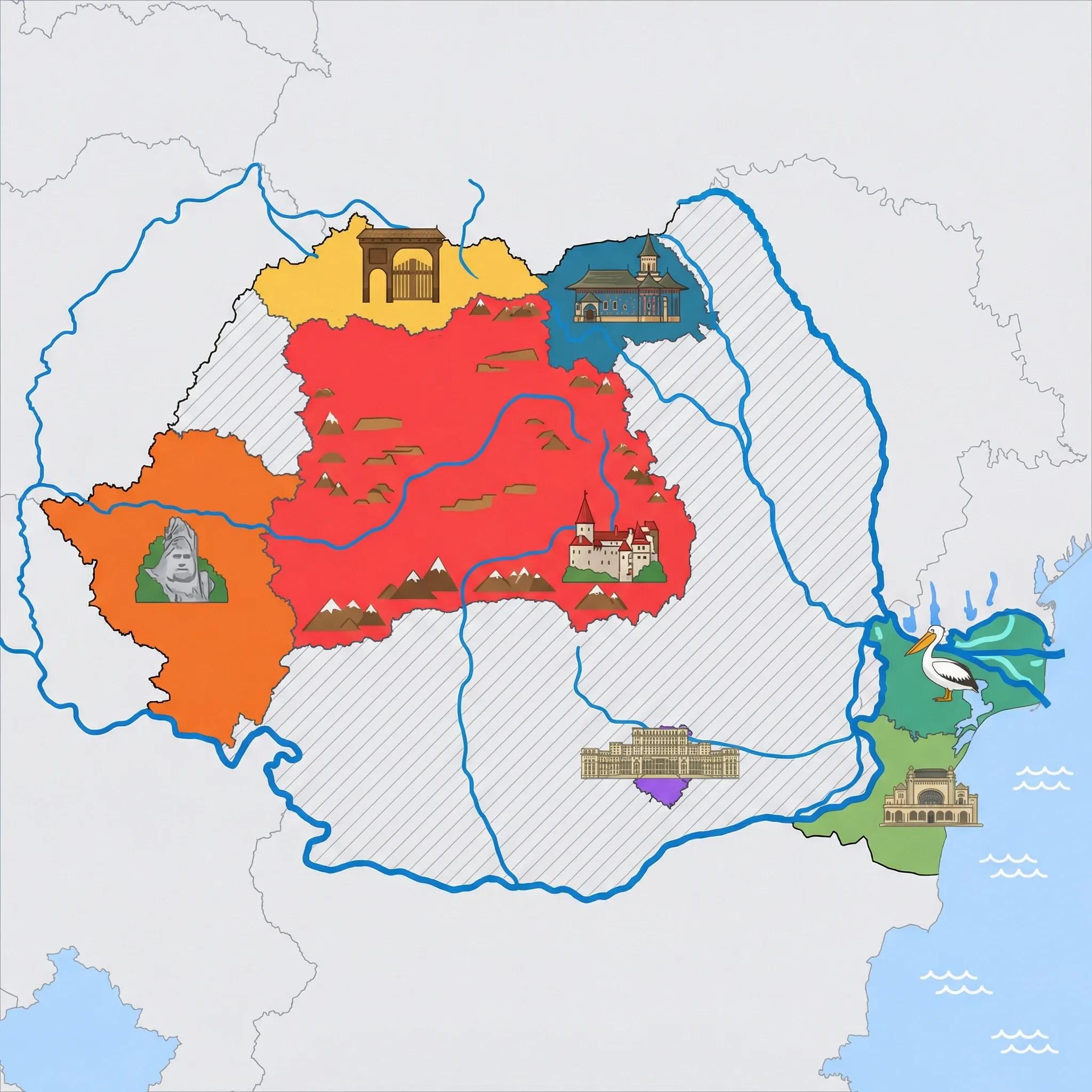
Click a region to explore
Overview
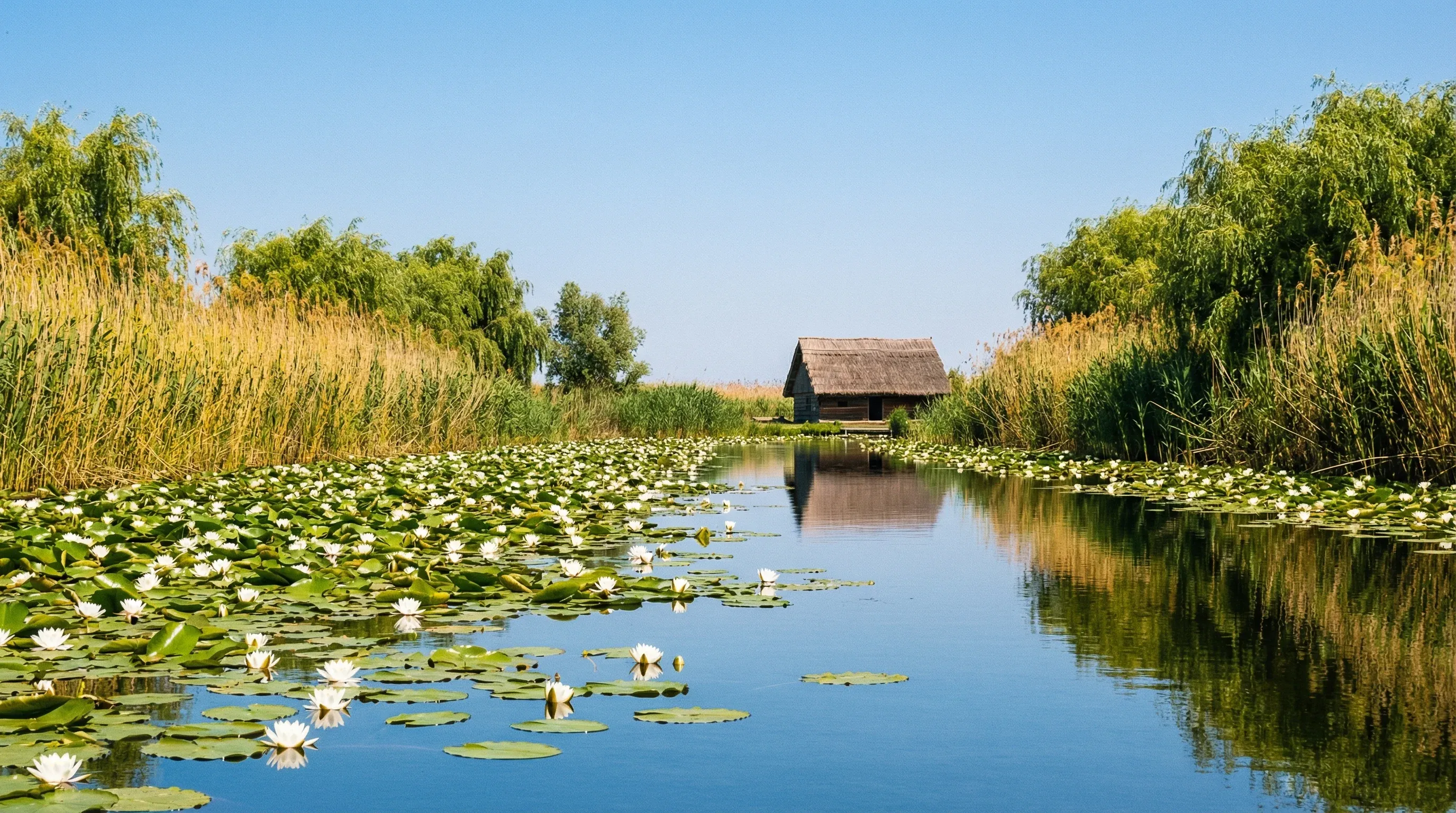
The Danube Delta is unique in Europe—a vast, living labyrinth of water, reeds, and sandbanks that feels completely detached from the modern world. For families, this is a true adventure. There are almost no cars here; everything happens by boat. The silence of the slow-moving channels, interrupted only by the call of egrets or the splash of a frog, is mesmerizing. It is a premier destination for birdwatching, fishing, and seeing nature in its rawest form. Children are fascinated by the novelty of taking a "water bus" to their hotel and seeing cows grazing on riverbanks next to pelicans.
The region is best visited from May to September. Spring brings the birds returning from migration and vibrant greenery, while summer offers water lilies in full bloom. It can be hot and humid, and mosquitoes are a fact of life here, but the experience of watching the sunset over the water is worth the itch. The culture is a mix of Romanian and Lipovan (Russian Old Believers), reflected in the blue-painted houses and fish-based cuisine.
Key Attractions
The primary activity is boat tours. Families should opt for slow boats rather than speedboats to disturb the wildlife less and see more. A top destination is the Letea Forest, the oldest natural reservation in Romania. Here, you can take a safari-style jeep tour (driven by locals) to see wild horses roaming among ancient oak trees and sand dunes—a surreal landscape that kids love.
On the mainland edge of the Delta, before you get on a boat, Enisala Fortress is a must-visit. It is one of the only medieval fortresses in Dobrogea still standing, offering panoramic views over the lagoons that are perfect for sunset photos. Nearby, the Histria Archaeological Site offers a deep dive into ancient Greek history, with ruins of temples and baths that are fun to explore on foot.
Practical Advice
This region requires planning. You cannot just "show up" and expect easy transport. Book boats and accommodation in advance. Tulcea is the gateway city where you park your car. For families with small children, choose a hotel in a main village like Crișan or Sulina rather than a remote fishing hut for better access to supplies. Safety warning: Life jackets are essential for children on all boat transfers.
Food & Drink
Typical meal times: Meals are governed by the catch of the day. Lunch is 1:00 pm to 3:00 pm.
Typical meal costs: Higher than the mainland due to transport logistics. A fish dinner costs 80–120 RON (approx. $17–26 USD / €16–24 EUR).
Dietary requirements: This is difficult terrain for non-fish eaters. Chicken is usually available, but vegetables can be scarce in remote lodges. Vegan options are limited to salads and side dishes.
Signature dishes:
- Borș de pește – The iconic Delta fish soup. Uniquely, the fish is boiled in the soup but served on a separate platter, while the broth is drunk first.
- Storceag – A cross between a soup and a stew, made with sturgeon and sour cream. It is rich, delicate, and unlike any other fish soup.
- Plachie de pește – Fish baked in the oven with a thick sauce of onions, tomatoes, and red peppers.
Why this score?
The delta is a true wilderness area where many locations are only accessible by boat, providing a high sense of isolation and adventure. Families must navigate a maze of waterways, deal with remote village conditions, and experience a landscape that is wild, mosquito-prone, and largely untamed.
Why this score?
Medical access is extremely difficult once deep within the delta, often requiring hours of boat transport to reach the nearest hospital in Tulcea. While basic first aid is available in some villages, any serious medical emergency requires complex evacuation logistics, making it a challenging environment for families with health concerns.
Why this score?
This UNESCO Biosphere Reserve is a world-renowned destination for birdwatchers and nature enthusiasts, yet its logistical challenges limit the total number of visitors. It remains an exotic, specialized destination rather than a high-volume tourist region for the general public.

While the accommodation can be simple, the costs add up due to boat transfers. A return fast boat from Tulcea to a village costs 160–200 RON (approx. $35–44 USD / €32–40 EUR) per person. Accommodation ranges from 200 RON ($44) for a guesthouse to 800 RON ($175) for a 4-star resort. Fish meals are priced like premium steak due to freshness.
Family Travel Notice
Minors who are Romanian citizens or travelling with Romanian parents may require notarized parental consent and specific documentation to exit the country. There is also a noted history of complex international parental child abduction cases.

Getting Here & Around
Getting Here
- Driving – You must drive or take a bus to Tulcea. From Bucharest, it is about a 4-hour drive. Secure parking is available at the port in Tulcea.
- Airports – The nearest airport is Constanța (CND), about 1.5 hours drive from Tulcea. Alternatively, fly to Bucharest (OTP) and rent a car.
- Ferry – From Tulcea, NAVROM passenger ferries (slow) and private speedboats connect to the Delta villages (Sulina, Sfântu Gheorghe).
Getting Around
- Boat – The only way to move. Public ferries are cheap but slow (4 hours to Sulina). Water taxis are fast but expensive.
- Walking – Once in a village like Sulina, you can walk everywhere. Sulina also has a long sandy beach on the Black Sea, reachable by minibus or a long walk.
- Tours – To see Letea Forest or bird colonies, you must hire a local boatman or join a guided excursion.
No airports in this region. See the country flight map for nearby connections.

Packing List
Mosquitoes are aggressive, especially at dusk. Natural sprays often don't work here.
Essential for spotting pelicans, herons, and kingfishers from the boat.
Spray from speedboats gets everything wet; protect phones and cameras.
ATMs are rare (only in Sulina/Sf. Gheorghe) and card payments fail in remote lodges.
Wind on the boats will blow loose hats away instantly.
Essential for the Danube Delta and rural lakes where mosquitoes can be aggressive in summer.
Ticks are common in the Carpathian tall grass and forests; check kids after every hike.
Street lighting in rural villages is often minimal or non-existent after dark.
Mountain roads like the Transfăgărășan are incredibly winding and can affect children.
Required for women and girls to cover heads/shoulders when entering painted monasteries.
Many rural guesthouses and village shops do not accept cards; small change is vital.

Activities & Best Times

Hiking, wildlife, outdoor exploration, ecotourism
A globally unique UNESCO Biosphere Reserve offering world-class birdwatching and wilderness exploration in Europe's largest wetland. Peak months align with the height of bird nesting, migrations, and full accessibility of the labyrinthine canal systems.

Beach resorts, marine activities: diving, snorkelling, kite surfing, wind surfing, sailing
Offers unique, wild beaches at Sulina and Sfântu Gheorghe where the river meets the sea, far removed from commercial tourism. The season is limited to the warmest summer months when the Black Sea water reaches comfortable swimming temperatures.

Urban tourism, museums, historical sites, architecture
The Danube Delta is a wilderness region without major cultural cities. Tulcea is a functional gateway town and Sulina a historic port, but neither constitutes a very_good cultural destination. The Lipovan fishing culture is authentic but niche. good is appropriate for cultural interest without urban cultural infrastructure.

Scenic drives, countryside tours, route-based travel
The Dobrogea Lagoon Highway and drives to Enisala offer spectacular scenic routes through ancient landscapes and coastal wetlands. Best experienced from May to September for maximum daylight and ideal visibility of the diverse lagoon ecosystems.

Sport tourism, fitness activities, active recreation
Features dedicated cycling routes through the delta and organized rowing/kayaking infrastructure such as Centrul Rowmania. Optimal conditions occur during the dry, warm months, avoiding the winter freeze and high spring humidity.

Learning experiences, scientific sites, historical education
The Danube Delta Aquarium and the Ivan Patzaichin Museum offer high-quality, niche insights into the region's unique biodiversity and traditions. These facilities are primarily visited as educational complements to the delta's nature-based tourism during the peak travel season.




Public Holidays & Calendar Next 12 months
Public holidays, festivals, cultural celebrations, and seasonal natural phenomena coming up in Danube Delta over the next 12 months.
Loading holidays and events...

Travel Advisory
All major agencies agree that Romania is generally safe for travellers, requiring only standard safety awareness and adherence to local regulations.
Safety Topics
Traveller Advice (3 groups)

Specialized safety guides are available for solo or independent female travellers to help manage general safety and personal security while visiting.

While legal, travellers should be aware of local social attitudes and refer to specialized government resources for detailed guidance on safety and rights within the country.

Minors who are Romanian citizens or travelling with Romanian parents may require notarized parental consent and specific documentation to exit the country. There is also a noted history of complex international parental child abduction cases.
Agency Summaries
No significant travel warnings are in effect. Irish citizens should ensure their passports are valid for the full length of their visit. Stays exceeding three months require formal registration with Romanian immigration authorities.
Security risks are comparable to those found in Australian cities. New European Entry/Exit System (EES) protocols require biometric registration for non-EU visitors. Standard vigilance against suspicious behavior and petty theft is recommended.
General safety conditions are stable. Travellers should be aware of seismic risks, particularly in Bucharest, which is prone to earthquakes. Legal complexities regarding dual nationality and parental child abduction cases are noted, particularly for those with Romanian heritage.
While the country is safe for visitors, awareness of the military situation in neighboring Ukraine is advised. Demonstrations occur occasionally in major cities and are typically peaceful. Petty street crime remains a concern in crowded tourist areas and on public transit.
Travellers should maintain standard safety awareness. Entry is governed by Schengen area rules, allowing 90 days of visa-free travel. Local laws require carrying valid photo identification at all times. Restrictions apply to photographing sensitive government or military sites.
General security is stable. Recent health notices advise ensuring vaccinations are up to date due to measles outbreaks. Comprehensive medical insurance that includes evacuation coverage is strongly encouraged for all visitors.
Information is provided for general guidance only and does not constitute travel, safety, medical, or legal advice. Conditions may change. Users are responsible for independently verifying information before travel.