
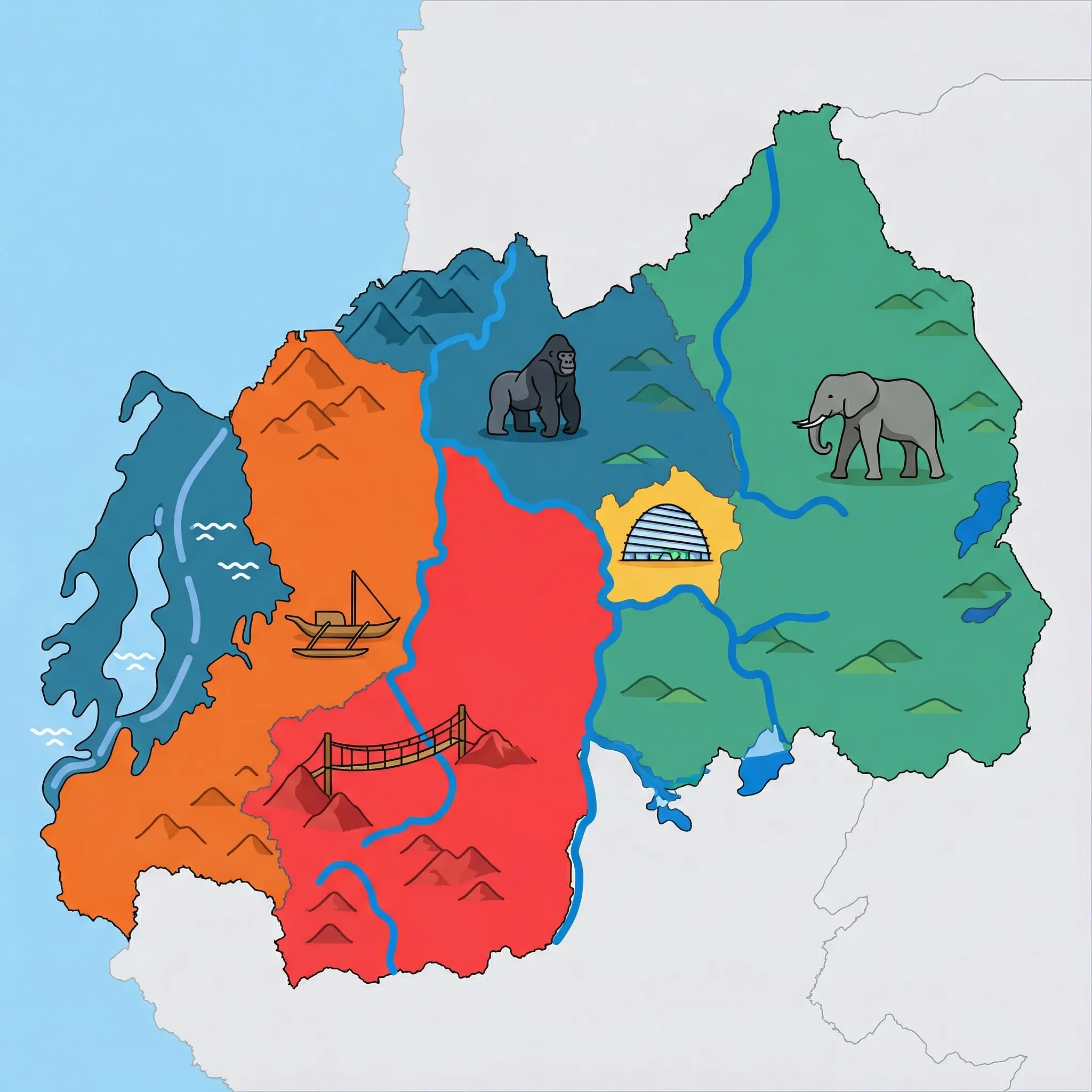
Click a region to explore
Overview
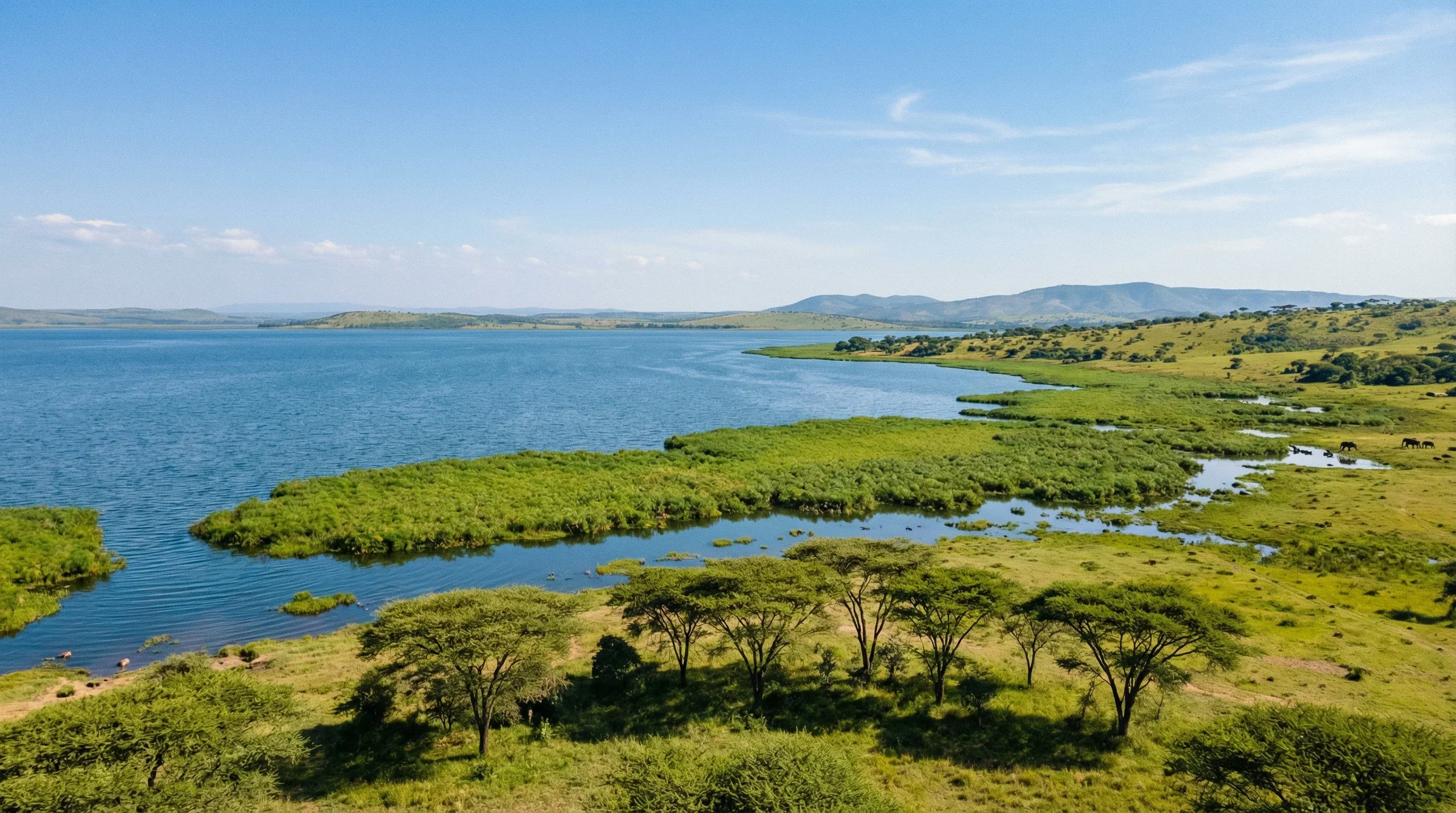
Akagera National Park represents a remarkable conservation success story and offers families a classic safari experience distinct from the rainforests of the west. Located in eastern Rwanda along the border with Tanzania, this region transforms from the steep cultivated hills typical of Rwanda into a vast, sun-baked expanse of savannah, acacia woodlands, and papyrus swamps. For children, the landscape feels like the Africa of storybooks—wide open skies, golden grass, and herds of zebras grazing in the distance. Unlike the strenuous hiking required for gorilla trekking, Akagera allows families to view wildlife from the comfort and safety of a vehicle or a boat, making it accessible for toddlers and grandparents alike. The park is home to the Big Five (lion, leopard, elephant, rhino, and buffalo), but the sheer density of hippos and crocodiles in the lakes is often what captivates young travelers the most.
Culturally and atmospherically, the East feels different. It is warmer, lower in altitude, and generally sunnier than the misty Virungas. The pace is slower here. Families can spend mornings tracking giraffes and afternoons watching fish eagles swoop over Lake Ihema. The region has bounced back from a turbulent history to become a beacon of eco-tourism, and guides are eager to share stories of how the wildlife populations have been restored. Accommodations range from fenced campsites where you can hear the roar of lions at night to luxury tented lodges with swimming pools overlooking the wetlands, catering to various levels of adventure comfort.
Key Attractions
The undisputed highlight is Akagera National Park itself. For families, the diversity of activities sets it apart from other small safari destinations. Beyond standard game drives, the boat trips on Lake Ihema are a must-do; they are calm, safe, and allow children to see hippos and crocodiles up close without the fatigue of being in a car seat for hours. The park's southern sector is lush and game-rich, perfect for shorter drives, while the northern Kilala Plains offer wide-open vistas where spotting predators is more likely.
While the focus is firmly on the park, the journey there through the eastern province offers glimpses of pastoral life, with long-horned Inyambo cattle often seen grazing near the park boundaries. Inside the park, the visitor centre provides excellent educational displays about the park's ecology and the complex anti-poaching efforts that keep the animals safe, which can be a fascinating real-world lesson for older children interested in conservation.
Practical Advice
The dry seasons (June to September and mid-December to mid-February) are best for game viewing as animals congregate around water sources. However, the scenery is greenest and most beautiful during the wet seasons. Malaria prophylaxis is essential here as the region is lower and warmer than Kigali. Bring plenty of insect repellent and wear long sleeves in the evening. Binoculars for the kids are a great investment to keep them engaged during drives.
Food & Drink
Typical meal times: Breakfast is often served early (5:30 am to 7:00 am) before game drives. Lunch is typically 12:30 pm to 2:00 pm, and dinner is served from 7:00 pm to 9:00 pm.
Typical meal costs: Inside the park lodges, meals are often set-menu or buffet style, costing around 15,000–35,000 RWF (approx. $12–28 USD / €11–26 EUR) per person. Local restaurants in nearby Kayonza are much cheaper, around 3,000–6,000 RWF (approx. $2.50–5 USD / €2.20–4.50 EUR).
Dietary requirements: Lodges inside the park are well-versed in international dietary needs and can cater to vegetarian, gluten-free, and kid-friendly requests (pasta, chicken) if notified in advance.
Signature dishes:
- Grilled Tilapia – Fresh freshwater fish caught in the local lakes, often served whole with lemon and herbs.
- Brochettes – Skewered meat (goat or beef) or fish grilled over charcoal, a Rwandan staple available almost everywhere.
- Urwagwa – A traditional banana beer, though this is an acquired taste mostly for the adults to try!
Why this score?
The region offers traditional savannah adventures including game drives and boat safaris in a wild, uncrowded environment. While the terrain is flatter and more accessible than the volcanic north, the presence of large predators and the remote border location provide a genuine sense of wilderness.
Why this score?
Medical facilities in this remote eastern region are extremely limited and geared toward basic local needs. In the event of a serious illness or injury on safari, travelers would require a lengthy evacuation back to Kigali for any specialized care.
Why this score?
While it is Rwanda's only Big Five safari destination, it sees significantly fewer visitors than more famous parks in neighboring Tanzania or Kenya. It primarily serves as a secondary destination for travelers already visiting Rwanda for gorillas, resulting in a niche international profile.

Park fees are priced internationally. Entry is roughly 125,000 RWF (approx. $100 USD / €92 EUR) per adult per day, with discounts for children. Accommodation ranges from budget camping at 25,000 RWF (approx. $20 USD / €18 EUR) to luxury lodges charging over 600,000 RWF (approx. $480 USD / €440 EUR) per night.

Getting Here & Around
Getting Here
- Driving – Akagera is approximately a 2.5 to 3-hour drive from Kigali on well-paved roads up to the park gate. The southern gate (Kiyonza) is the main entry point.
- Air – Akagera Aviation offers helicopter transfers from Kigali International Airport directly to the park lodges, taking about 20–25 minutes.
- Bus – Public buses run from Kigali to Kayonza or Kibungo, but you will need to arrange a private 4x4 transfer for the final leg to the park entrance and for game drives.
Getting Around
- Car – A 4x4 vehicle is mandatory for driving inside Akagera National Park. Self-drive is permitted, but hiring a community freelance guide at the reception is highly recommended for spotting wildlife.
- Boat – Scheduled boat trips operate on Lake Ihema, which must be booked through the park authorities.
No airports in this region. See the country flight map for nearby connections.
Official Links

Packing List
Avoid blue and black which attract painful tsetse flies in the park.
Game drives with open windows or pop-up roofs can be very dusty.
Keeps kids engaged during long drives when animals are distant.
Acacia thorns can pierce soft sneakers if walking at designated stops.
Plastic bags are strictly banned and confiscated at the airport; pack reusable totes for shopping and laundry.
Essential for grabbing stinging nettles and thorny branches during jungle treks or nature walks.
Prevents safari ants and mud from entering your boots during forest hikes in Nyungwe or Volcanoes NP.
Rwanda is the 'Land of a Thousand Hills'—roads are endlessly winding and can affect kids easily.
Mornings in the mountains (Volcanoes/Nyungwe) are surprisingly cold (10°C/50°F) despite being near the equator.
Physical proof of vaccination is often requested at the airport border control.

Activities & Best Times

Hiking, wildlife, outdoor exploration, ecotourism
Offers a high-quality Big Five savannah experience and unique boat safaris on Lake Ihema, expertly managed by African Parks. Wildlife viewing is optimal during the dry seasons when animals congregate near permanent water sources, while heavy rain makes many tracks difficult.

Urban tourism, museums, historical sites, architecture
Provides authentic cultural engagement through the unique Imigongo art form and significant archaeological sites like Ryamurari. Peak visitation aligns with dry periods to ensure reliable road access to rural art centers and heritage locations for sophisticated travelers.

Sport tourism, fitness activities, active recreation
Dedicated infrastructure like the 'Walk the Line' boundary hike and Lake Muhazi cycling circuits offer high-quality active exploration. These activities are best enjoyed in the dry season to ensure safe trail conditions and clear visibility across the park's diverse topography.

Scenic drives, countryside tours, route-based travel
Features named scenic routes like the North-South Traverse, offering spectacular savannah views and lakeside driving. The driest months are essential for navigating the unpaved park interior safely, as heavy rains can render tracks impassable for standard safari vehicles.




Public Holidays & Calendar Next 12 months
Public holidays, festivals, cultural celebrations, and seasonal natural phenomena coming up in Akagera NP & East (safari) over the next 12 months.
Loading holidays and events...

Travel Advisory
While half of the major agencies consider Rwanda safe for standard travel, the other half recommend increased caution due to persistent regional tensions and border risks. This split assessment suggests a need for heightened situational awareness.
Safety Topics
Traveller Advice (3 groups)

Rwanda is generally considered safe for women, including solo travellers; however, standard precautions should be taken when walking alone at night, and conservative dress is often respected in rural areas.

While consensual same-sex acts are not criminalized and discrimination is constitutionally prohibited, local society remains conservative. Public displays of affection may attract negative attention or harassment.

Visitors should always carry identification, follow local authority directives, and avoid night-time travel outside of major urban centers. It is recommended to stay informed through local media regarding border status.
Agency Summaries
Travellers should maintain standard safety awareness throughout the country, though specific border regions require significantly higher vigilance.
The general security environment is stable, though conflict in neighboring DRC may occasionally impact safety near the western border.
A high level of vigilance is advised because of the volatile situation in the wider Great Lakes region and potential for rapid changes in security.
Travellers should remain alert in public spaces and monitor border conditions which can deteriorate with little warning.
Increased caution is recommended due to potential armed violence, particularly in districts bordering the Democratic Republic of the Congo.
No country-wide warnings are in place, but visitors are advised to avoid certain border areas due to regional instability.
Information is provided for general guidance only and does not constitute travel, safety, medical, or legal advice. Conditions may change. Users are responsible for independently verifying information before travel.