
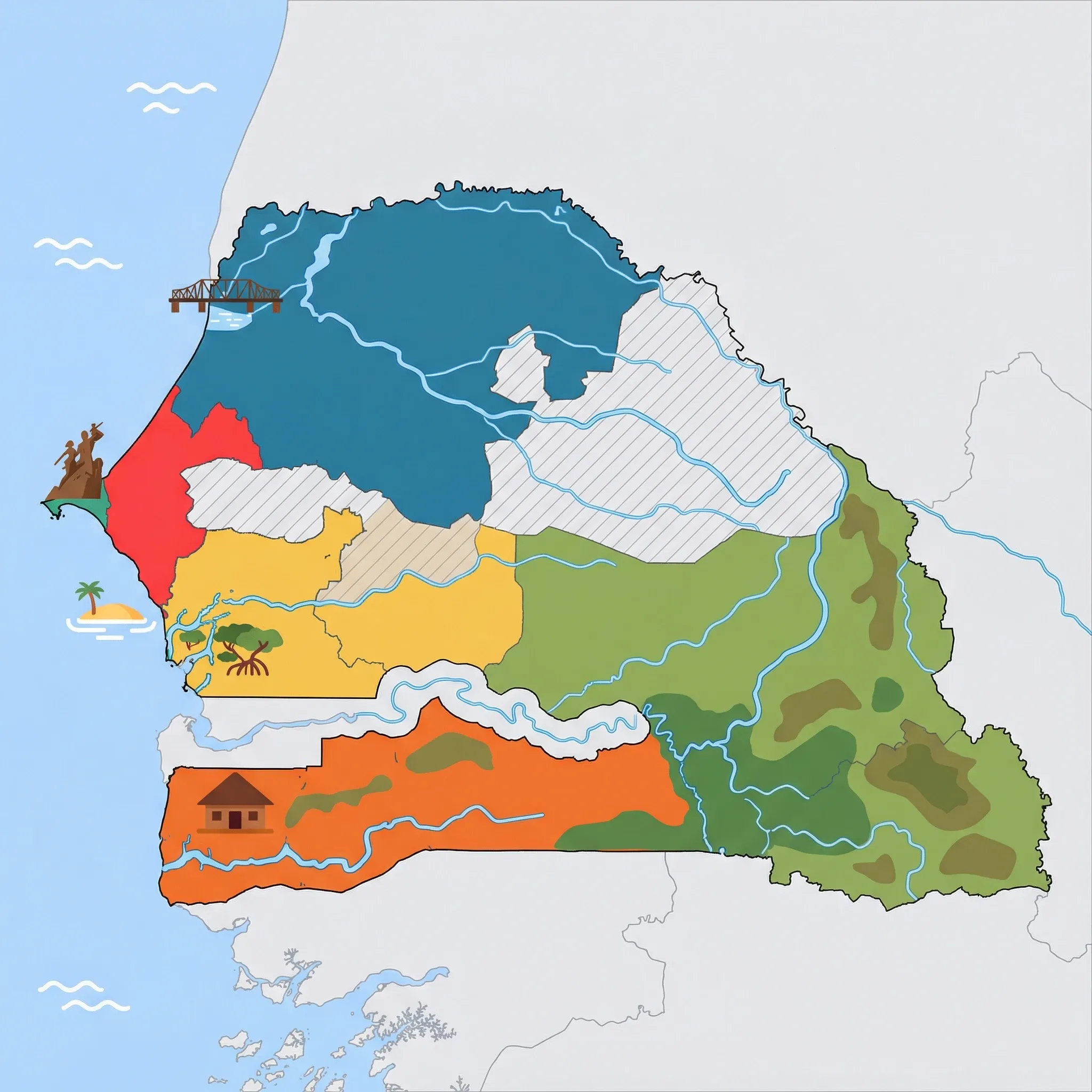
Click a region to explore
Overview
The north of Senegal offers a distinct change in atmosphere and landscape. The crown jewel is the city of Saint-Louis (Ndar), a UNESCO World Heritage site that served as the capital of French West Africa. With its faded colonial villas, narrow sandy streets, and vibrant fishing culture, it feels like a movie set. Families will love the unique transport method here: decorated horse-drawn carts are used as taxis, delighting children and saving tired legs.
Beyond the city, the landscape turns to arid Sahel and desert. This is a region for nature and adventure. It hosts one of the world's most important bird sanctuaries and offers the chance to experience desert dunes at Lompoul (technically just south, but often visited from here). The pace is slower than Dakar, and the history is palpable. It provides a fantastic educational opportunity about the colonial era and the ecological diversity of the Senegal River delta.
Key Attractions
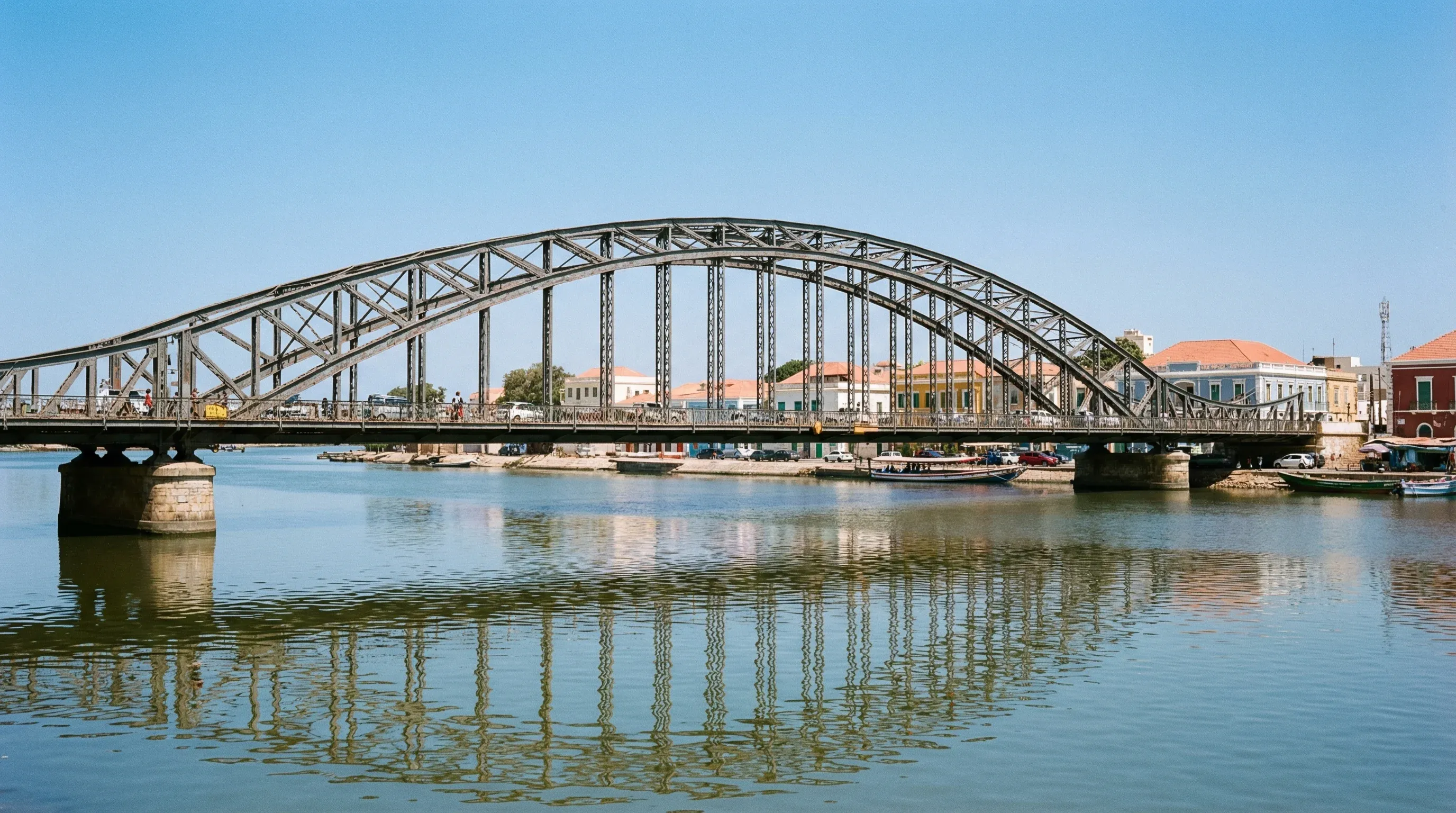
The most iconic landmark is the Faidherbe Bridge, a massive metal structure designed by Eiffel's protégé that connects the island city to the mainland. Walking across it gives you a sense of the river's scale.
For wildlife enthusiasts, the Djoudj National Bird Sanctuary is a world-class attraction. From November to April, millions of migratory birds, including a massive colony of pelicans, descend here. A boat trip into the sanctuary puts you right in the middle of the flock—a noisy, smelly, but awe-inspiring spectacle that children will never forget. Exploring the Island of Saint-Louis by horse cart is also a must-do activity.
Practical Advice
Saint-Louis is cooler than the interior due to ocean breezes, but the sun is fierce. The Djoudj sanctuary is only open from November to April (when the birds are there). Travel to the Mauritanian border areas should be avoided due to security risks, but Saint-Louis city itself is generally stable.
Food & Drink
Typical meal times: Lunch 1:00 pm to 3:00 pm; Dinner 8:00 pm to 10:00 pm.
Typical meal costs: Meals are generally cheaper than Dakar. A good dinner costs 5,000–9,000 XOF (approx. $8–15 USD / €7.50–13.50 EUR).
Dietary requirements: Rice and fish dominate. The region is famous for its version of the national dish. Vegetarians may find options limited to salads or omelets in smaller establishments.
Signature dishes:
- Thieboudienne Penda Mbaye – A variant of the national dish created in Saint-Louis, using tomato paste for a red color and specific local fish.
- Thiébou Guerté – Rice cooked with peanuts, a rich and savory dish common in this groundnut-growing region.
- Crepes – A lingering French influence means decent crepes are often available for breakfast or dessert.
Why this score?
The north offers moderate adventure through the Lompoul Desert's sand dunes and the vast wetlands of the Senegal River delta. Travel here involves long drives and exposure to more arid, challenging environments than the coastal resort areas.
Why this score?
Saint-Louis has regional hospitals that can handle basic medical issues, but infrastructure is aging and specialized care is scarce. For any serious condition or surgery, patients are typically transferred via a multi-hour drive back to Dakar.
Why this score?
Saint-Louis is a major cultural draw for its colonial architecture and world-renowned Jazz Festival, though it sees fewer leisure tourists than the beach resorts. The Djoudj National Bird Sanctuary is a significant draw for specialized eco-tourists but lacks mass-market appeal.

Saint-Louis offers excellent value. Historic hotels on the island can be mid-range, costing 40,000–70,000 XOF (approx. $65–115 USD / €60–105 EUR). Food and transport are cheaper than the Petite Côte. A horse cart tour of the city should cost around 5,000–8,000 XOF (approx. $8–13 USD / €7.50–12 EUR) depending on your negotiation skills.

Getting Here & Around
Getting Here
- Driving – The drive from Dakar takes 4-5 hours on generally good roads. It's a long journey for small kids, so plan stops.
- Airports – Saint-Louis has an airport (XLS) but commercial flights are irregular; check current schedules carefully. Most arrive by road.
Getting Around
- Horse Cart – The most fun way for families to explore the Island of Saint-Louis.
- Taxi – Standard yellow taxis are available for trips to the mainland or hotels outside the historic center.
- Boat – Essential for visiting Djoudj National Bird Sanctuary; tours are organized from the park entrance.
No airports in this region. See the country flight map for nearby connections.

Packing List
Nights in the desert or on the river can be surprisingly cool/windy compared to the day.
Useful for protection against dust/sand if visiting the Lompoul dunes or riding open carts.
Phone cameras struggle to capture the birds at Djoudj; a decent zoom makes a huge difference.
The air can be very dry and dusty (Harmattan wind), which irritates children's eyes.
Power cuts are common even in hotels; red light keeps bugs away.
Hotel nets often have small holes; a needle and thread or patches ensure safety.
English is rarely spoken outside major hotels; basic French is essential for drivers.
Essential for spotting wildlife at Bandia and birds at Djoudj.
Useful for wet bathrooms and dusty, sandy streets where shoes are removed often.

Activities & Best Times

Urban tourism, museums, historical sites, architecture
The Island of Saint-Louis is a UNESCO World Heritage site offering an authentic, world-class colonial atmosphere and vibrant street life. Peak visitation occurs during the cooler dry season, while the humid rainy months of July to September are less comfortable for walking tours.

Hiking, wildlife, outdoor exploration, ecotourism
Home to the Djoudj National Bird Sanctuary, one of the world's premier ornithological sites, and the Lompoul Desert dunes. Optimal conditions for wildlife viewing and desert trekking are in the cooler winter months; Djoudj becomes largely inaccessible during the peak rainy season.

Scenic drives, countryside tours, route-based travel
Established scenic routes like the Route du Fleuve offer unique vistas of the Senegal River and rural landscapes. Driving conditions are best when the weather is dry and visibility is high; seasonal rains in August and September can impede access to secondary rural roads.

Sport tourism, fitness activities, active recreation
Offers internationally recognized cycling routes through the delta and guided desert treks in Lompoul. Activity is highly seasonal, restricted to the coolest months to avoid the extreme interior heat of May and June and the heavy late-summer rains.

Beach resorts, marine activities: diving, snorkelling, kite surfing, wind surfing, sailing
Langue de Barbarie provides a unique coastal experience where the river meets the sea, though infrastructure is modest compared to global resort standards. Best visited during the dry season for calm waters and comfortable coastal breezes.

Events, celebrations, seasonal attractions
Features the internationally renowned Saint-Louis International Jazz Festival in May and the peak of the global bird migration at Djoudj. These specific events drive international interest, while the rest of the year has fewer high-profile cultural gatherings.




Public Holidays & Calendar Next 12 months
Public holidays, festivals, cultural celebrations, and seasonal natural phenomena coming up in Saint-Louis & North over the next 12 months.
Loading holidays and events...

Travel Advisory
The majority of international agencies recommend exercising a high degree of caution throughout Senegal. While the country is generally stable, risks from street crime, civil unrest, and regional instability near borders warrant increased vigilance.
Safety Topics
Traveller Advice (5 groups)

Be aware that quality medical facilities are largely concentrated in the capital, Dakar. Access to specialized healthcare is extremely limited in rural and inland regions.

Local customs are conservative; it is recommended to dress modestly and avoid walking alone after dark, particularly in isolated areas.

Ensure you have comprehensive travel insurance that covers medical evacuation. Register your travel plans with your national consulate and maintain a high level of personal security awareness in public spaces.

Same-sex relations are criminalized and can lead to imprisonment. Societal discrimination is significant, and discretion is advised as public displays of affection may attract negative attention or legal consequences.

Extreme caution is required in remote border regions near Mali and Mauritania, where there is a documented risk of kidnapping by extremist groups targeting Westerners.
Agency Summaries
A high level of caution is advised because of the risk of civil unrest and common crime. Public health concerns also exist, including a reported outbreak of Rift Valley Fever in multiple regions, including Dakar.
Visitors should be particularly alert to street crime in urban areas like Dakar. It is recommended to avoid travel within 25 kilometers of the borders with Mali and Mauritania due to the threat of extremist activity and kidnapping.
The overall security situation is stable, but there is an underlying threat of terrorism and potential for civil unrest. Authorities advise against travel to certain border regions and the Casamance province due to ongoing security risks.
Travellers should remain highly vigilant due to prevalent crime. There are specific regional warnings advising against non-essential travel to the Casamance region (excluding Ziguinchor and Cap Skirring) and areas near the border with Mali due to security concerns.
Increased vigilance is required due to the risk of violent crime, including armed robberies, and the frequency of public demonstrations that can turn violent. Regional restrictions are in place for the eastern border and Casamance.
While the country is generally safe, visitors should be aware of heightened risks in certain areas. Increased caution is recommended in the Casamance region due to crime and the presence of landmines. Avoid showing signs of wealth to minimize the risk of petty theft.
Information is provided for general guidance only and does not constitute travel, safety, medical, or legal advice. Conditions may change. Users are responsible for independently verifying information before travel.