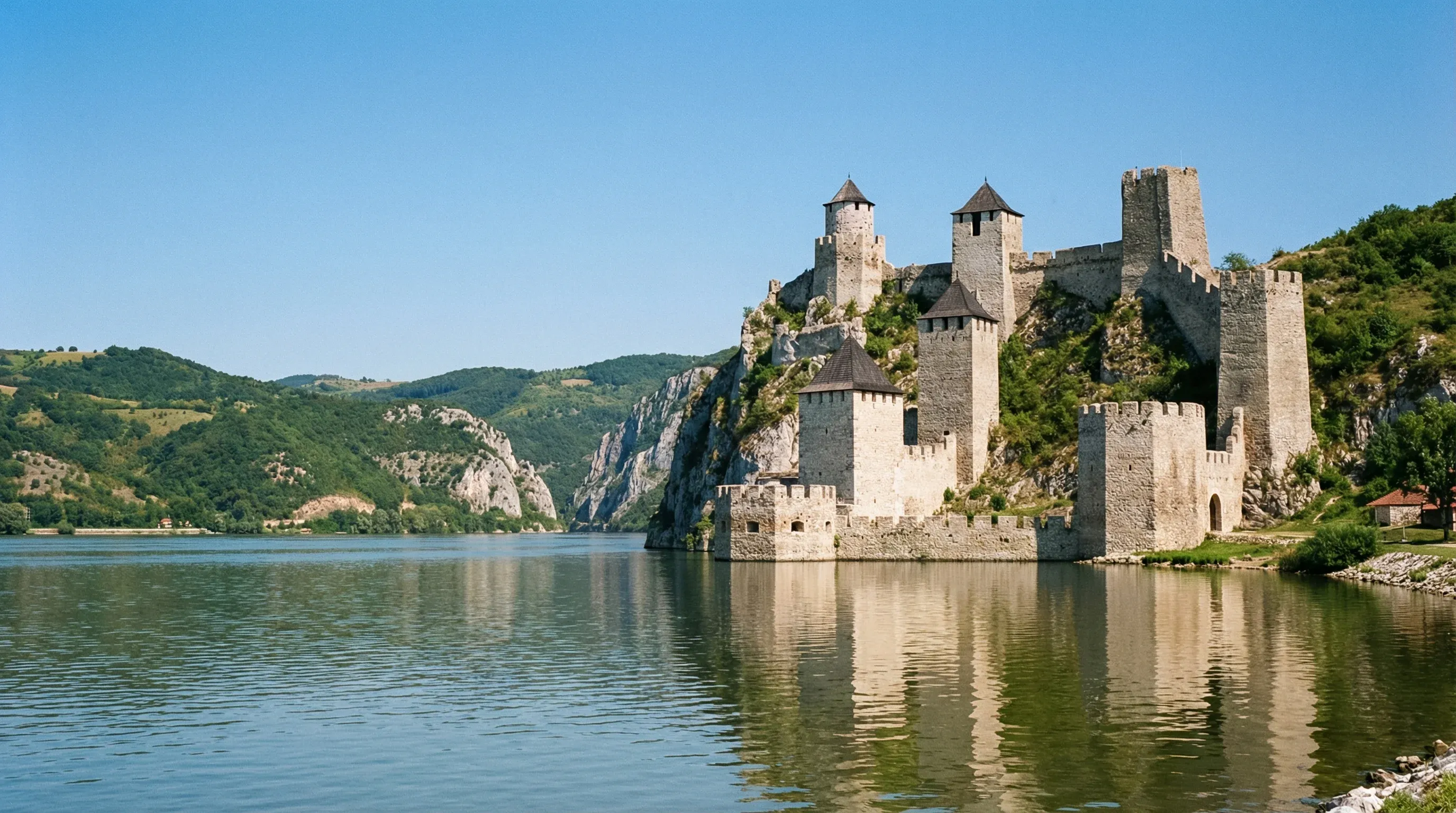

Eastern Serbia (Đerdap Gorge, spa towns)
Where the Danube is deepest and legends are born 🐉🛶
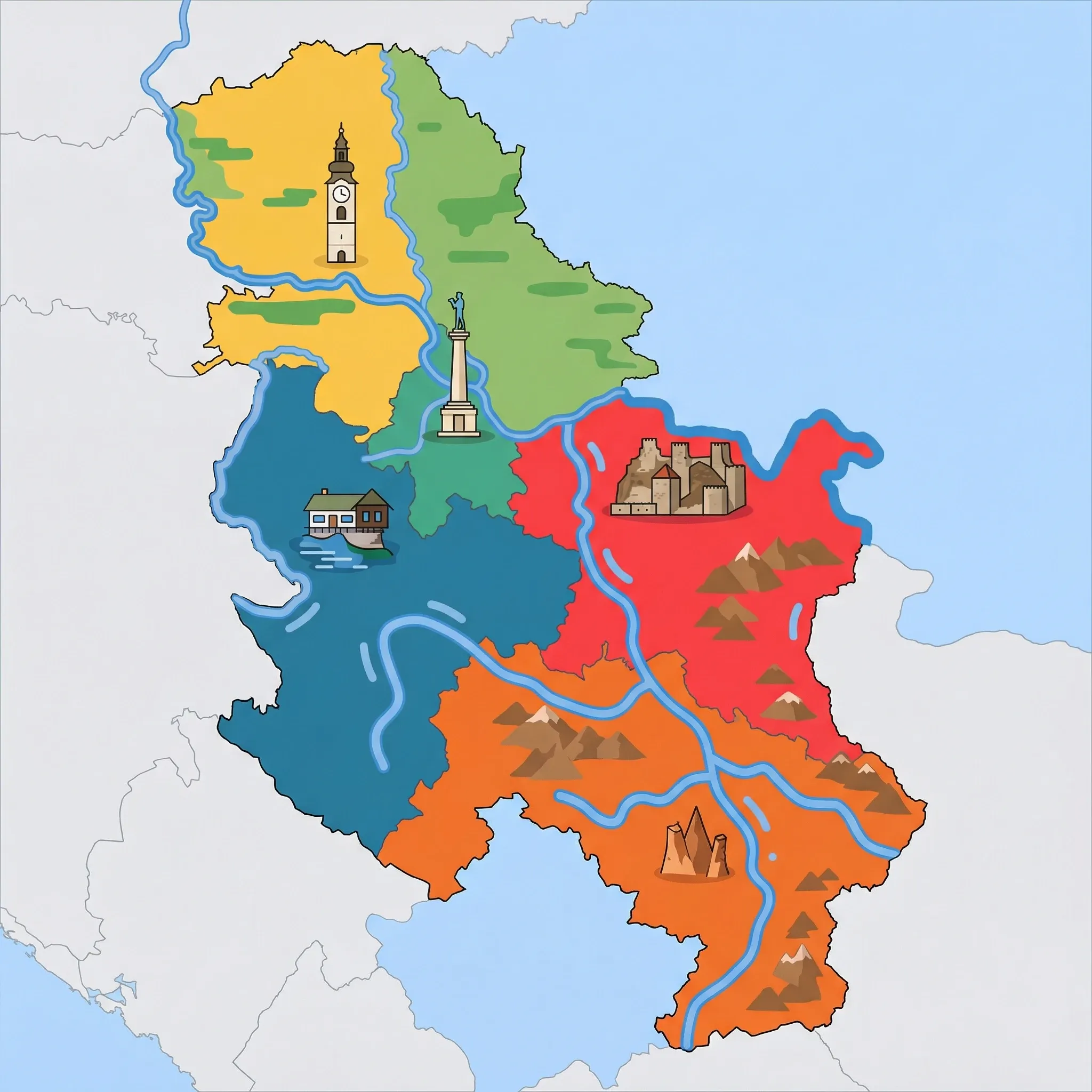
Click a region to explore
Eastern Serbia is a treasure trove for families who love road trips, nature, and ancient history. Dominated by the Danube River, which forms the natural border with Romania, this region contains the dramatic Đerdap Gorge (Iron Gates), where the mighty river narrows between towering cliffs. The landscape is lush, wild, and steeped in myths of dragons and fairies. For children, the sheer visual impact of the scenery is awe-inspiring—the road winds right along the water's edge, passing through tunnels cut directly into the rock. Unlike the flat plains of the north, this area offers rugged hills, mysterious caves, and deep forests. It is a quieter, slower-paced region compared to Belgrade, perfect for families wanting to disconnect and explore the outdoors.
Culturally, this area is unique due to its Vlach heritage, which influences the local folklore, music, and food. The region is also an archaeological heavyweight. It was the frontier of the Roman Empire, and you can still see the remnants of Trajan's Bridge and various fortifications. The climate here can be slightly different from the rest of the country; the gorge has its own microclimate, often windy but scenic. Families visiting here usually base themselves near Silver Lake or in the town of Donji Milanovac to explore the national park. It is an adventurous destination—expect winding roads and raw nature rather than polished resort luxury, but the payoff is seeing some of Europe's oldest civilizations and most stunning river views.
Key Attractions
The visual icon of the region is Golubac Fortress. Recently reconstructed, its ten towers stand guard at the very entrance of the gorge. It is incredibly photogenic and has accessible walking paths (though the upper towers are steep and better for older kids). Just down the river lies Lepenski Vir, one of the most important prehistoric archaeological sites in Europe. It is housed under a modern, climate-controlled dome that preserves 8,000-year-old stone sculptures. The attached museum is excellent and visual enough to keep children interested in the story of these ancient fishermen.
For a day of relaxation, head to Silver Lake (Srebrno Jezero). It’s an oxbow lake of the Danube with calm waters, pebbled beaches, and plenty of ice cream stands—ideal for younger children who might find the main river currents too strong. Further east, deep within the national park, a boat tour through the Đerdap National Park (The Iron Gates) is essential. Seeing the giant rock sculpture of King Decebalus (on the Romanian side) from the water is a highlight for kids. History buffs should not miss Viminacium Archaeological Park near Kostolac, a massive Roman complex with a mammoth park that features a skeleton of a woolly mammoth discovered on-site.
Practical Advice
A car is absolutely essential here as public transport between sights is sparse. The road along the Danube (Djerdap Highway) is scenic but very curvy; if your children suffer from motion sickness, prepare accordingly. The best time to visit is late spring or early autumn. Summers can be hot and humid near the water.
Food & Drink
Typical meal times: Similar to the rest of Serbia, lunch is 1:00 pm to 5:00 pm. In rural guest houses (domaćinstvo), meals might be served whenever you arrive, but traditional restaurant kitchens close around 10:00 pm.
Typical meal costs: Very affordable. A hearty meal for a family of four costs 3,000–5,500 RSD (approx. $28–50 USD / €25–47 EUR). Local fish dishes are priced by weight and can be slightly higher.
Dietary requirements: This is river country, so freshwater fish is dominant. Vegetarians will find grilled mushrooms, peppers, and salads. Dairy is huge here—local cheeses are excellent but unavoidable unless requested otherwise.
Signature dishes:
- Riblja Čorba – A spicy, paprika-rich fish soup made from various Danube river fish. A staple of the region.
- Vlaška Plašinta – A traditional Vlach pancake/fried dough stuffed with egg and cheese, similar to a heavy crepe.
- Grilled Catfish (Som) – Freshly caught from the Danube, often served simply with a potato salad and lemon.
Why this score?
The Iron Gates provide a dramatic and somewhat rugged backdrop for activities like boat tours and hiking in the Đerdap National Park. The terrain is hilly and forested, offering more physical challenge than northern Serbia, though many primary sites are accessible by well-maintained roads. It offers a moderate sense of discovery for families away from urban crowds.
Why this score?
Medical facilities in towns like Kladovo and Majdanpek are basic and may struggle with complex cases or language barriers. While primary care and emergency stabilize-and-transfer services exist, international travelers would likely need to return to Belgrade for significant medical issues. Access to specialized care is limited in this more sparsely populated border region.
Why this score?
This region is an emerging niche destination primarily known for the spectacular Đerdap Gorge and the restored Golubac Fortress. While it attracts day-trippers and Danube river cruises, overnight stays by international tourists remain low compared to the capital. The infrastructure is still developing, with many areas catering mostly to domestic travelers visiting local spas.

Eastern Serbia is cheaper than Belgrade. Accommodation in private guest houses (apartmani) is excellent value, often costing 3,000–5,000 RSD (approx. $28–46 USD / €25–42 EUR) per night for a family. Entrance fees to major sites like <a data-attraction-id="55662">Golubac Fortress</a> are reasonable, around 600–800 RSD (approx. $5.50–7.40 USD / €5.10–6.80 EUR) for adults, with discounts for children.

Getting Here & Around
Getting Here
- Driving – The primary way to reach the region. From Belgrade, it is about a 1.5 to 2-hour drive to Golubac Fortress via Požarevac. The drive is scenic but requires attention.
- Bus – Buses run from Belgrade to major towns like Donji Milanovac and Kladovo, but they are slow and do not stop at the specific sights along the gorge.
- Boat – Several tour operators run Danube cruises from Belgrade to the Iron Gates, though these are typically full-day or multi-day excursions.
Getting Around
- Car – Essential for moving between Golubac Fortress, Lepenski Vir, and the viewing points. The distances are significant.
- Boat Rental – Small private boats can be hired at Golubac or Donji Milanovac for river excursions, which is the best way to see the gorge walls.
- Cycling – The EuroVelo 6 route runs along the Danube here. It is popular, but parts of the road share traffic with cars, so it is better for older, experienced cycling families.
No airports in this region. See the country flight map for nearby connections.
Official Links

Packing List
The Danube highway is incredibly winding and can induce nausea in children.
Essential for spotting birds and the Decebalus rock sculpture on the Romanian side of the river.
The gorge creates a wind tunnel effect; it can be blustery even on sunny days.
Danube beaches and Silver Lake are often pebbly or muddy, not sandy.
River beaches at Ada Ciganlija and Silver Lake often have pebbles or stony bottoms.
Indoor smoking is common in restaurants; this keeps smoky clothes separate in your luggage.
Public restrooms (especially at bus stations) occasionally run out of toilet paper.
Essential for children on the winding scenic roads of Western Serbia.
If visiting local homes, it is strict custom to remove shoes at the door.
The rich, meat-heavy local cuisine can sometimes be heavy for unaccustomed stomachs.

Activities & Best Times

Hiking, wildlife, outdoor exploration, ecotourism
Đerdap National Park offers world-class canyon scenery and significant biodiversity along the Danube's Iron Gates. The peak season provides optimal conditions for hiking the limestone cliffs and exploring the wilderness areas.

Urban tourism, museums, historical sites, architecture
The region features exceptional heritage sites including the Golubac Fortress and the UNESCO-listed Felix Romuliana. May through September offers the best weather for exploring these expansive outdoor archaeological and historical complexes.

Sport tourism, fitness activities, active recreation
Features a major section of the EuroVelo 6 cycling path and high-quality hiking trails like Veliki Štrbac. The activity season is centered around the dry, warm months to ensure safety and comfort for active family exploration.

Learning experiences, scientific sites, historical education
The Mesolithic site of Lepenski Vir is an internationally significant archaeological discovery with high educational value for families. Facilities are best experienced during the main tourist season when interpretive services are fully operational.

Spa retreats, wellness centers, peaceful getaways
Established spa towns like Soko Banja offer authentic thermal bath experiences and historic hammams in scenic settings. While charming and restorative, they represent traditional Balkan spa culture rather than modern luxury wellness resorts.

Scenic drives, countryside tours, route-based travel
The Iron Gates scenic drive is a premier Balkan touring route, winding through dramatic river gorges and karst landscapes. Late spring to early autumn ensures safe road conditions and the best visibility of the Danube's spectacular vistas.

Winter sports, ski resorts, snow activities
Basic regional ski centers like Crni Vrh offer limited terrain and facilities that serve local needs rather than international standards. The season is highly variable and restricted to the core winter months.

Amusement parks, family entertainment venues
Regional aqua parks and the Viminacium adventure grounds provide basic family entertainment but lack the scale of global theme park destinations. These facilities are primarily summer-focused due to the continental climate.

Attractions (11 total)



Public Holidays & Calendar Next 12 months
Public holidays, festivals, cultural celebrations, and seasonal natural phenomena coming up in Eastern Serbia (Đerdap Gorge, spa towns) over the next 12 months.
Loading holidays and events...

Travel Advisory
Five of the six major agencies assess the country as requiring only standard safety awareness. While specific regional risks exist near the Kosovo border and urban crime is noted, the general safety environment remains stable for most visitors.
Safety Topics
Traveller Advice (4 groups)
Accessibility infrastructure is inconsistent; many older buildings and public transport systems may not be fully equipped for those with limited mobility.

While same-sex relationships are legal, social acceptance remains limited in many areas. Public displays of affection may attract negative attention or harassment.

Solo female travellers should follow standard security protocols, particularly when navigating nightlife districts or using public transportation late at night.

Foreigners must register their presence with the local police within 24 hours of arrival, a service typically provided by hotels. It is also recommended to carry a photocopy of your passport at all times and use ATMs located within secure buildings.
Agency Summaries
No major travel restrictions are in place. Visitors are advised to monitor local news for protests and remain vigilant against the general threat of terrorism common across Europe.
Most visits are trouble-free. Major concerns include frequent public protests in Belgrade, the risk of unexploded landmines in southern border regions, and potential medical evacuation needs due to variable healthcare standards.
General safety awareness is sufficient for most travellers. Visitors should ensure their passports are valid for at least 90 days beyond their stay and keep photocopies of identification.
Standard precautions apply. Key risks noted include petty theft in tourist hubs and potential disruptions from civil demonstrations. Avoid off-road travel near the Kosovo border due to legacy munitions.
Increased vigilance is recommended due to the prevalence of organized crime and violence often associated with major sporting events. Travellers should remain aware of their surroundings in urban areas.
Travellers should maintain standard safety awareness similar to what they would practice at home. A higher degree of caution is advised specifically within 10km of the Kosovo border due to political tensions and potential for unrest.
Information is provided for general guidance only and does not constitute travel, safety, medical, or legal advice. Conditions may change. Users are responsible for independently verifying information before travel.