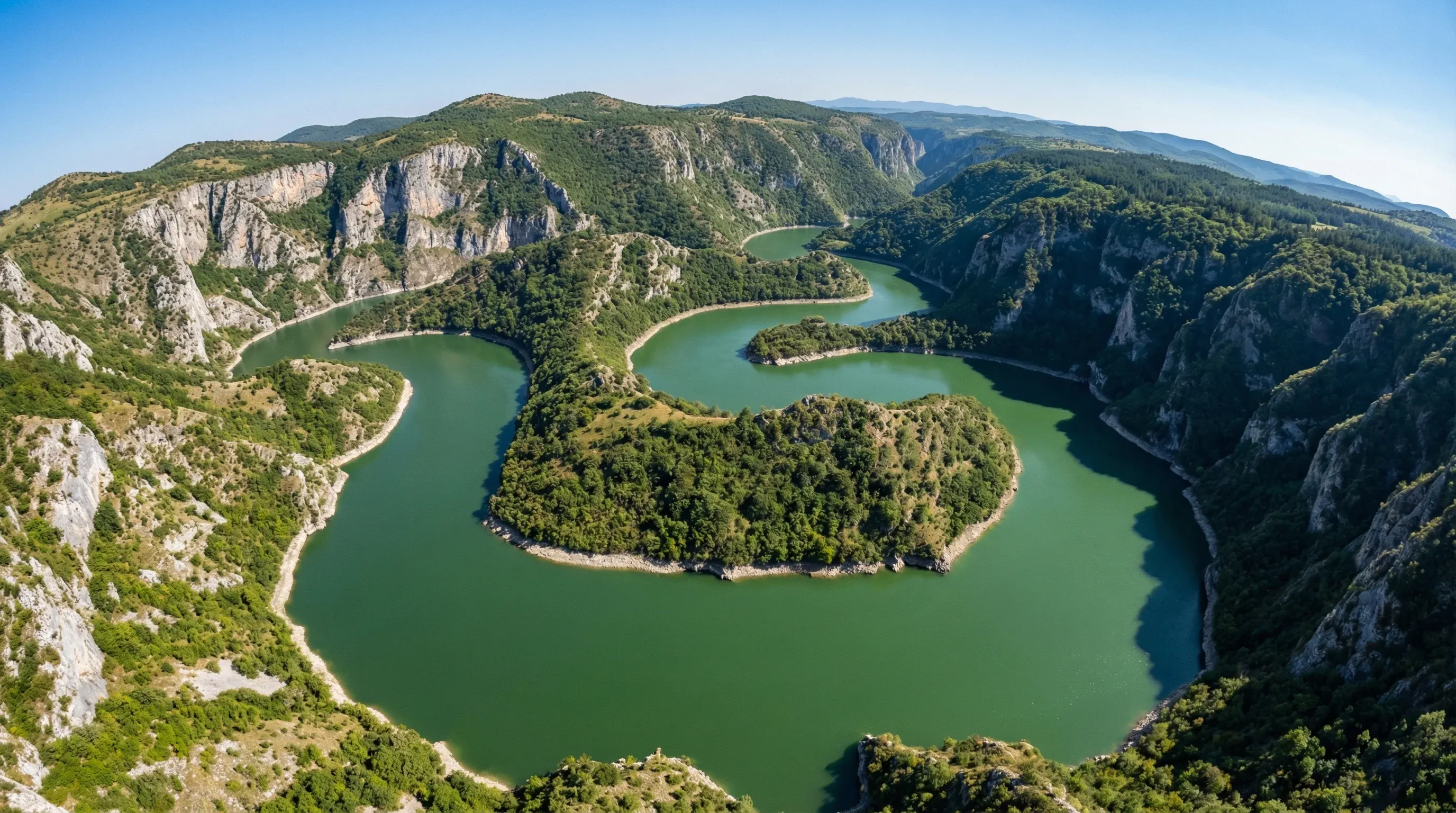

Western Serbia (Zlatibor, Tara, Mokra Gora)
Steam trains, pine forests, and mountain adventures 🚂🌲
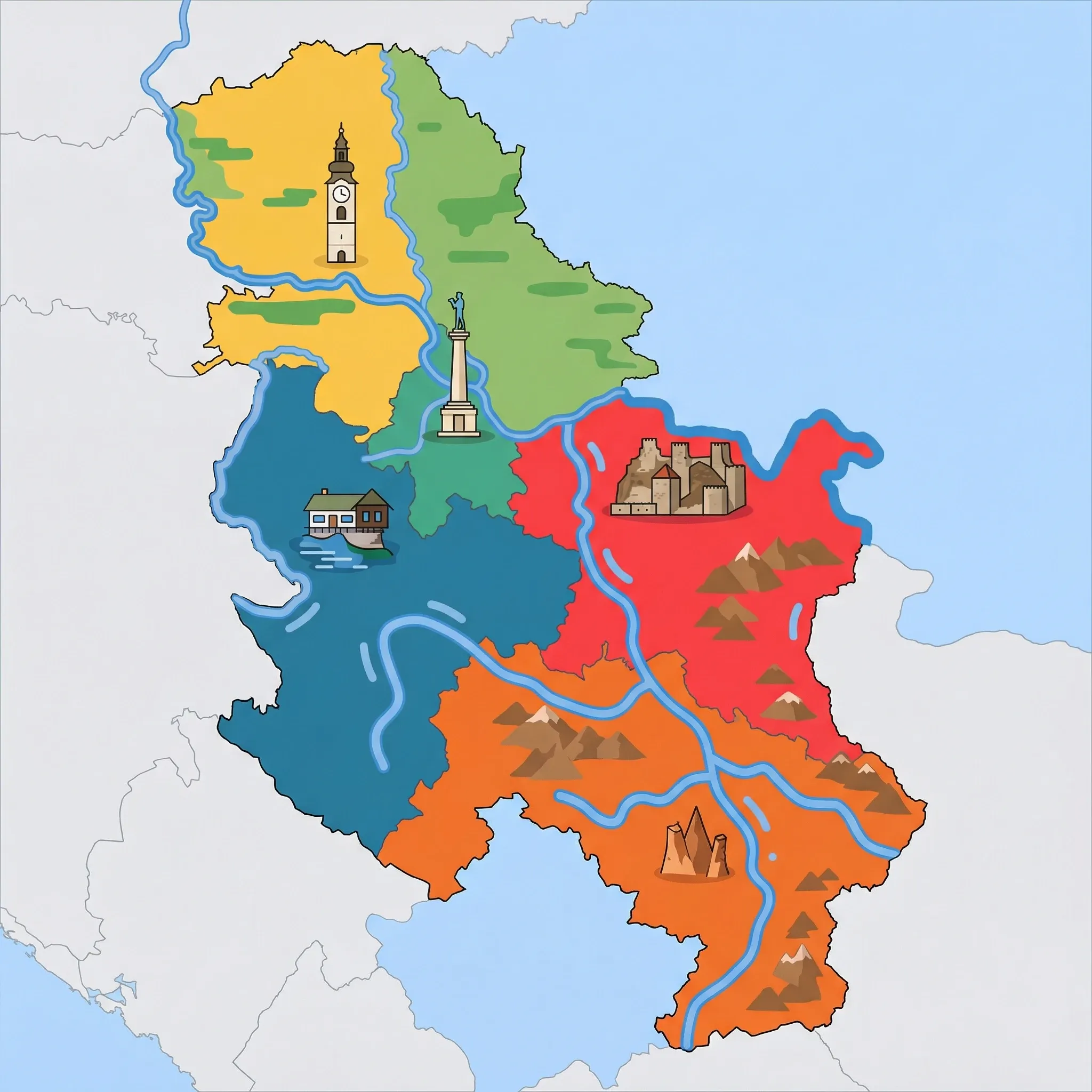
Click a region to explore
Western Serbia is the country's playground for nature lovers. It is defined by rolling green mountains, deep river canyons, and traditional wooden architecture. For families, this is arguably the most fun region in Serbia because it combines outdoor activity with unique, whimsical attractions. The star of the show is the Mokra Gora area, which feels like a film set (because parts of it are). Riding a steam train through the mountains is an experience every child remembers. Unlike the stark stone of the south or the flat plains of the north, this region is lush, green, and smells of pine resin.
There are two main mountain hubs: Zlatibor and Tara. Zlatibor is highly developed, almost urban, with adventure parks, dino parks, and hotels with pools—it's busy and touristy but very convenient for families. Tara National Park, nearby, is the opposite: wild, preserved, and home to brown bears (don't worry, they stay deep in the forest). Between them flows the Drina River, famous for its house perched on a rock. The region preserves tradition well; you will see old wooden cottages and eat food that was cooked under a "sač" (iron bell) over an open fire. It is a year-round destination: skiing and sledding in winter, and hiking, swimming, and train rides in summer.
Key Attractions
The Šargan Eight (Šarganska osmica) is a must-do. It is a narrow-gauge heritage railway that twists in a figure-eight shape up the mountain. The open windows, the steam (or diesel) engine noise, and the stops at scenic viewpoints make it a thrilling 2.5-hour round trip for kids. Nearby is Drvengrad (Mećavnik), a wooden village built by director Emir Kusturica. It has quirky streets named after Bruce Lee and Che Guevara, a cinema, and a cake shop. It’s pedestrianized and safe for kids to explore.
In Tara National Park, drive to Zaovine Lake. It is a stunningly blue artificial lake where you can swim or kayak. Stop at the famous Drina River House near Bajina Bašta for a quick photo—kids are fascinated by the house balancing on a rock in the middle of the river. For a history lesson, the Kadinjača Memorial Complex offers a futuristic-looking monument that kids love to run around, set against a beautiful backdrop.
Practical Advice
Zlatibor is the best base for amenities (supermarkets, doctors, pharmacies), while Tara or Mokra Gora are better for nature and quiet. The roads are mountainous and winding. If visiting in winter, snow chains for your car are often mandatory and necessary.
Food & Drink
Typical meal times: Mountain air makes people hungry. Breakfast is heavy and eaten early. Lunch is 1:00 pm to 5:00 pm.
Typical meal costs: Moderate. Tourist prices apply in central Zlatibor. A meal for four costs 4,000–7,000 RSD (approx. $37–65 USD / €34–60 EUR).
Dietary requirements: This is dairy and cured meat country. Vegetarians can enjoy excellent pies (pita) with cheese, greens, or potato. Gluten-free is difficult due to the prevalence of bread-based dishes.
Signature dishes:
- Komplet Lepinja – The calorie bomb of the region. A flatbread cut open, smeared with kajmak (cream) and egg, baked, and then drenched in "pretop" (roast meat drippings). Kids love dipping the lid in the sauce.
- Pršuta – Air-dried ham, similar to prosciutto but smokier, produced in the local village of Mačkat.
- Lamb under Sač – Lamb slow-cooked under a metal bell with potatoes until it falls off the bone.
Why this score?
The region offers significant adventure through the dense forests of Tara National Park and the dramatic meanders of the Uvac Special Nature Reserve. While Zlatibor is highly developed, Tara and Uvac provide more rugged, off-the-beaten-path experiences with steep terrain and diverse wildlife. It is the best region in Serbia for families seeking a balance of accessible attractions and genuine outdoor challenge.
Why this score?
Medical services are available in regional centers like Užice, but the mountainous terrain can make emergency access slower from remote parts of Tara or Uvac. Local clinics in resort towns like Zlatibor can handle minor injuries, but serious medical emergencies often require a multi-hour transfer to Belgrade. For international families, the medical infrastructure is functional but noticeably more limited than in the major cities.
Why this score?
This is Serbia's premier mountain tourism region, with Zlatibor serving as a major year-round resort for domestic and regional visitors. Sites like the Drina River House and the Sargan Eight railway have gained international visibility through social media and film. Despite its local fame, it remains a secondary destination on a global scale, primarily attracting visitors from the Balkans and Eastern Europe.

Zlatibor is the most expensive mountain resort in Serbia. Hotels can rival Belgrade prices, around 8,000–15,000 RSD (approx. $74–138 USD / €68–128 EUR) per night. However, staying in nearby Mokra Gora or Tara is cheaper, with cabins costing 4,000–7,000 RSD (approx. $37–65 USD / €34–60 EUR).

Getting Here & Around
Getting Here
- Driving – The primary way to access the mountains. It takes about 3.5 to 4 hours from Belgrade via the Miloš Veliki highway and then regional roads.
- Bus – Frequent buses run from Belgrade to Zlatibor (approx. 4 hours).
- Train – The train line goes to Užice (nearby city), but you will need a transfer (taxi/bus) to reach Zlatibor or Tara.
Getting Around
- Car – Essential. Attractions like Zaovine Lake and the Šargan Eight station are spread out.
- Gold Gondola – A massive panoramic gondola connects Zlatibor center to the Tornik ski peak—a fun transport method in itself.
- Walking – Zlatibor center is walkable, but the region requires wheels.
No airports in this region. See the country flight map for nearby connections.
Official Links

Packing List
The roads in Western Serbia are constantly curving up and down mountains.
Mountain evenings get chilly quickly, even if it was 30°C during the day.
If driving in winter (Nov-Mar), these are legally required and essential for safety.
Trails in Tara can be muddy and wet even in good weather.
River beaches at Ada Ciganlija and Silver Lake often have pebbles or stony bottoms.
Indoor smoking is common in restaurants; this keeps smoky clothes separate in your luggage.
Public restrooms (especially at bus stations) occasionally run out of toilet paper.
Essential for children on the winding scenic roads of Western Serbia.
If visiting local homes, it is strict custom to remove shoes at the door.
The rich, meat-heavy local cuisine can sometimes be heavy for unaccustomed stomachs.

Activities & Best Times

Hiking, wildlife, outdoor exploration, ecotourism
Features pristine wilderness in Tara National Park and the unique Uvac canyon, offering high-quality hiking and wildlife observation. Peak summer and late spring provide optimal trail access, while harsh mountain winters make exploration difficult.

Urban tourism, museums, historical sites, architecture
Unique heritage sites like the Šargan Eight railway and Kusturica’s Drvengrad provide a distinct blend of history and cinematic artistry. Best visited in warmer months when open-air ethnographic museums and village sites are fully operational.

Spa retreats, wellness centers, peaceful getaways
Historic spa towns like Banja Koviljaāa offer traditional thermal treatments in a tranquil, classic setting. While facilities are mostly indoor, the experience is enhanced by the surrounding parks in the warmer shoulder and peak months.

Scenic drives, countryside tours, route-based travel
Scenic routes through the Drina Valley and Tara offer dramatic landscapes and well-paved mountain passes for driving enthusiasts. Winter conditions pose safety risks and road closures, making late spring through early autumn the ideal window.

Winter sports, ski resorts, snow activities
The region hosts established resorts like Tornik and Iver which offer reliable infrastructure for intermediate skiing. The season is concentrated in mid-winter when snow cover is most consistent for alpine activities.

Sport tourism, fitness activities, active recreation
Offers well-developed infrastructure for hiking and active outdoor pursuits like adventure courses in Zlatibor. The peak summer months ensure all facilities are open and mountain conditions are safe for active families.

Learning experiences, scientific sites, historical education
Niche scientific and historical appeal through sites like the pioneer hydroelectric plant and the narrow-gauge museum. Best experienced during the primary tourism season when guided tours and site accessibility are maximized.

Events, celebrations, seasonal attractions
Home to the world-renowned Guāa Trumpet Festival in August and the niche Kustendorf Film Festival in January. These specific months are the only times to experience these high-impact cultural events.
Amusement parks, family entertainment venues
Includes localized adventure and water parks that provide family entertainment but lack the scale of major international chains. Operating seasons are restricted to the peak summer months due to the mountain climate.

Attractions (18 total)



Public Holidays & Calendar Next 12 months
Public holidays, festivals, cultural celebrations, and seasonal natural phenomena coming up in Western Serbia (Zlatibor, Tara, Mokra Gora) over the next 12 months.
Loading holidays and events...

Travel Advisory
Five of the six major agencies assess the country as requiring only standard safety awareness. While specific regional risks exist near the Kosovo border and urban crime is noted, the general safety environment remains stable for most visitors.
Safety Topics
Traveller Advice (4 groups)
Accessibility infrastructure is inconsistent; many older buildings and public transport systems may not be fully equipped for those with limited mobility.

While same-sex relationships are legal, social acceptance remains limited in many areas. Public displays of affection may attract negative attention or harassment.

Solo female travellers should follow standard security protocols, particularly when navigating nightlife districts or using public transportation late at night.

Foreigners must register their presence with the local police within 24 hours of arrival, a service typically provided by hotels. It is also recommended to carry a photocopy of your passport at all times and use ATMs located within secure buildings.
Agency Summaries
No major travel restrictions are in place. Visitors are advised to monitor local news for protests and remain vigilant against the general threat of terrorism common across Europe.
Most visits are trouble-free. Major concerns include frequent public protests in Belgrade, the risk of unexploded landmines in southern border regions, and potential medical evacuation needs due to variable healthcare standards.
General safety awareness is sufficient for most travellers. Visitors should ensure their passports are valid for at least 90 days beyond their stay and keep photocopies of identification.
Standard precautions apply. Key risks noted include petty theft in tourist hubs and potential disruptions from civil demonstrations. Avoid off-road travel near the Kosovo border due to legacy munitions.
Increased vigilance is recommended due to the prevalence of organized crime and violence often associated with major sporting events. Travellers should remain aware of their surroundings in urban areas.
Travellers should maintain standard safety awareness similar to what they would practice at home. A higher degree of caution is advised specifically within 10km of the Kosovo border due to political tensions and potential for unrest.
Information is provided for general guidance only and does not constitute travel, safety, medical, or legal advice. Conditions may change. Users are responsible for independently verifying information before travel.