
Tiwai Island & East
A jungle island adventure for little explorers 🐒🌿
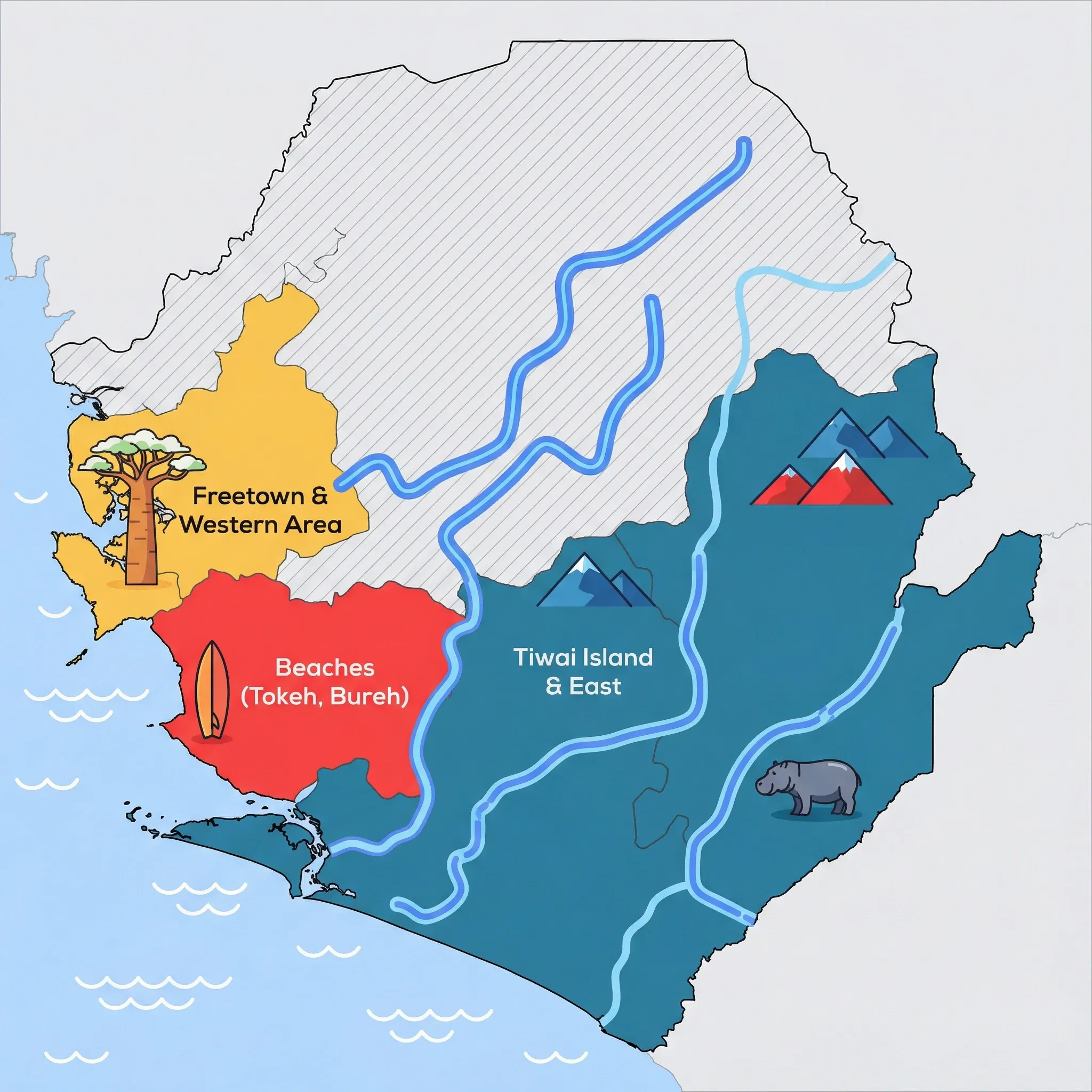
Click a region to explore
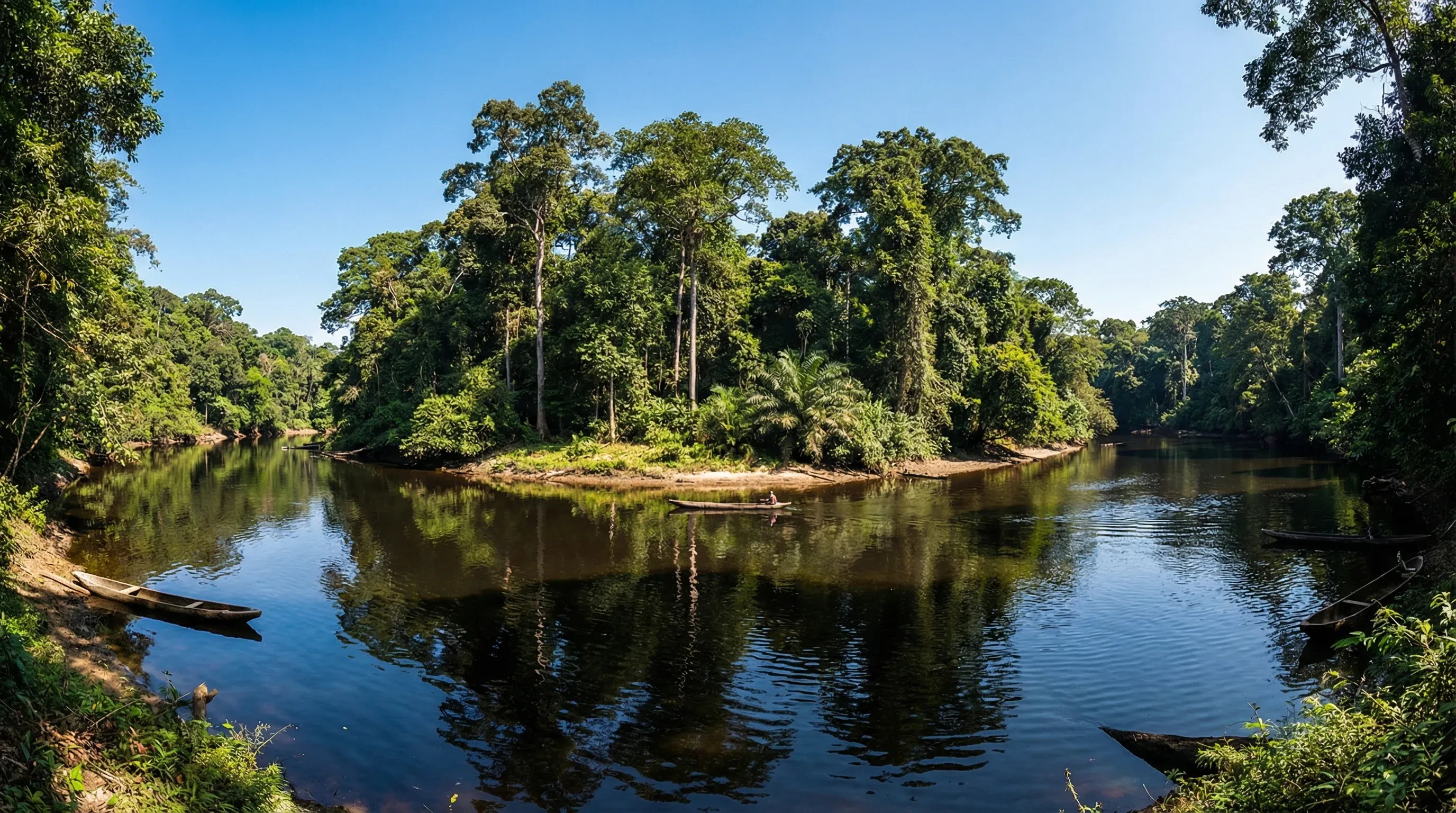
This region is the frontier of eco-tourism in Sierra Leone and is best suited for families with a spirit of adventure and older children who can appreciate nature in its rawest form. The journey here takes you away from the coast and deep into the country's green heart. Life centers around the Moa River, a wide, slow-moving waterway that encircles the jewel of the region: Tiwai Island Wildlife Sanctuary. This is not a zoo; it is a wild, protected ecosystem where nature rules. The experience is rustic—electricity is solar, accommodation is often in tents on raised platforms, and the soundtrack is the call of hornbills and monkeys.
For children interested in biology and wildlife, this is a paradise. The forest is dense and ancient, feeling like a scene from a storybook. It is one of the few places on earth where you might spot the elusive pygmy hippo. The local Mende culture is strong here, and community-based tourism means your visit directly supports the villages surrounding the sanctuary. Be prepared for basic living conditions; this is 'glamping' without the glam, but the reward is waking up to the sound of the Diana monkey and seeing the rainforest mist rise over the river at dawn.
Key Attractions
The absolute highlight is the Tiwai Island Wildlife Sanctuary. Access is by a small motorboat from the village of Kambama. Once on the island, local guides take families on nature walks to spot the famous 11 primate species, including chimpanzees and the beautiful red colobus monkey. Night walks are particularly exciting for brave kids, offering a chance to see nocturnal bushbabies and perhaps the glowing eyes of a crocodile in the river. River tours by canoe are also available, providing a silent, peaceful way to view kingfishers and otters along the banks.
While Tiwai is the main draw, the drive through Kenema offers a look at a busy provincial trading town known for its diamond trade history. Further east lies the Gola Rainforest National Park, a vast tract of primary forest that is a UNESCO tentative site, offering even deeper trekking opportunities for very active families.
Practical Advice
This is a remote region. Travel during the dry season (November to April) is strongly recommended as roads can become impassable mud baths in the rains. Malaria risk is higher here than in the city; long sleeves and pants are essential at dawn and dusk. Bring plenty of cash (small bills) as ATMs are non-existent near the sanctuary.
Food & Drink
Typical meal times: Meals on Tiwai are prepared by community cooks and served at set times: Breakfast 7:30 am, Lunch 1:00 pm, Dinner 7:00 pm. In Kenema, standard hours apply.
Typical meal costs: Meals at the sanctuary are simple and affordable, typically included in packages or costing around SLE 100–180 (approx. $4.50–8 USD / €4–7 EUR). In Kenema, a local meal is SLE 50–100 (approx. $2.20–4.50 USD / €2–4 EUR).
Dietary requirements: Options are very limited. You will mostly eat rice with spicy sauces, fresh pineapple, and bananas. If you have picky eaters or specific allergies (like gluten or nuts), you must bring your own supplies from Freetown.
Signature dishes:
- Benachin (Jollof Rice) – One-pot rice dish cooked with tomatoes, onions, and spices, often served with chicken or fish.
- Pepper Soup – A very spicy, broth-like soup usually made with goat meat or fish; ask for a 'mild' version for children, though it may still be hot.
- Fresh River Fish – Tilapia or catfish caught directly from the Moa River, usually fried or stewed.
Why this score?
Tiwai Island offers a high level of adventure, requiring river crossings and overnight stays in basic solar-powered tents within a primary rainforest. The search for rare pygmy hippos and the rugged trek into the Gola Rainforest National Park place this firmly in the category of significant, remote wilderness exploration.
Why this score?
Medical services in this remote eastern region are minimal and consist of basic rural health centers that are ill-equipped for serious emergencies. Any significant medical issue would require a long and difficult evacuation to Kenema or Freetown, making it a high-risk area for families with health concerns.
Why this score?
This region is a remote eco-tourism site that attracts a very small number of dedicated wildlife enthusiasts and researchers each year. The low visitor volume is due to its significant distance from Freetown and the specialized nature of its jungle-based attractions like the Gola Rainforest.

Once you reach the region, costs are low. Accommodation on Tiwai is basic and cheap, often SLE 450–900 (approx. $20–40 USD / €18–36 EUR) per night. The main expense is the vehicle hire and fuel to get here from Freetown, which can cost SLE 2,300–3,400 (approx. $100–150 USD / €90–135 EUR) per day.

Getting Here & Around
Getting Here
- Driving – It is a long drive from Freetown (5-6 hours) via Bo and Kenema. The road to Bo is good tarmac; the final stretch from Potoru to the river is a rough dirt track requiring a sturdy 4x4 vehicle.
- Public Transport – Buses run to Kenema, but reaching Tiwai requires a private taxi or motorbike taxi (okada) from there, which is difficult for families. A private hired vehicle from Freetown is highly recommended.
Getting Around
- Boat – Access to Tiwai Island Wildlife Sanctuary is solely by boat across the Moa River.
- Walking – On the island, all travel is on foot along forest trails. The terrain is generally flat but can be rooty and muddy.
- Canoe – Traditional dugout canoes are used for river excursions around the island.
No airports in this region. See the country flight map for nearby connections.
Official Links

Packing List
Electricity is limited/non-existent; red light preserves night vision for spotting nocturnal animals.
Wastewater often drains into the ecosystem; eco-friendly toiletries are a must.
Charging facilities are unreliable or solar-dependent; bring your own backup power.
Essential for spotting monkeys high in the canopy; one pair per child prevents arguments.
Banks and exchanges often refuse bills with even tiny tears, ink marks, or dates older than 2009.
Power cuts are frequent even in hotels; street lighting is rare outside main roads.
High-risk zone; medication is essential, not just bug spray.
Digital copies are not always accepted or easy to show if phone battery dies or internet fails.
Essential for the airport water taxi transfer to keep luggage dry from sea spray.

Activities & Best Times

Hiking, wildlife, outdoor exploration, ecotourism
Tiwai Island and Gola Rainforest offer exceptional primate viewing and rare pygmy hippo sightings in an authentic, low-density setting. The dry season (Nov-Mar) is essential for navigable trails and optimal wildlife spotting before the heavy monsoon rains begin.

Urban tourism, museums, historical sites, architecture
Kenema provides a glimpse into the regional diamond trade and local Mende culture, though urban infrastructure remains basic for international standards. Visit during the peak dry months of December and January to avoid extreme humidity and travel-disrupting rainfall.

Learning experiences, scientific sites, historical education
Dedicated research stations at Tiwai and Gola offer specialized insights into tropical conservation and rare species monitoring. These facilities are most accessible and active during the dry season when field work is at its peak.

Sport tourism, fitness activities, active recreation
The region features rugged trails for hiking and primate trekking through dense rainforest and hilly terrain. These routes are effectively impassable for active tourism during the peak rainy season due to deep mud and high river levels.




Public Holidays & Calendar Next 12 months
Public holidays, festivals, cultural celebrations, and seasonal natural phenomena coming up in Tiwai Island & East over the next 12 months.
Loading holidays and events...

Travel Advisory
Consensus among major agencies indicates that while travel is possible, visitors must exercise a high degree of vigilance due to prevalent violent crime, political volatility, and inadequate infrastructure.
Safety Topics
Traveller Advice (3 groups)

Follow conservative dress and behavior standards to align with local social traditions and minimize the risk of harassment.

Do not travel outside of the Freetown peninsula after dark due to extreme safety risks. Always carry identification and keep vehicle doors locked and windows closed while in transit.

Be aware that same-sex relationships are illegal in Sierra Leone. Public displays of affection could lead to legal repercussions or social hostility.
Agency Summaries
The risk of violent crime such as armed robbery is elevated, especially after dark. Political tensions may lead to protests, and medical services are extremely limited.
Visitors are advised to check local security and health guidelines. Key focus areas include safety protocols, mandatory entry fees, and differing local legal standards.
Increased vigilance is suggested because of the risk of demonstrations and violent crime. Travellers must adhere to strict entry requirements, including a security fee and vaccination proofs.
Heightened awareness is required because of frequent violent crime, including assault and robbery, alongside potential civil unrest. Healthcare facilities are considerably below Western standards.
Travellers should remain highly vigilant due to significant crime rates and safety concerns on the roads. Movement outside the capital after sunset is discouraged because of hazardous driving conditions and limited emergency support.
Caution is recommended due to the threat of violent crime and civil disturbances. New health screening measures for Mpox have been implemented at entry points.
Information is provided for general guidance only and does not constitute travel, safety, medical, or legal advice. Conditions may change. Users are responsible for independently verifying information before travel.