
Click a region to explore
Travel Advisory
Malaita is remote with very basic infrastructure. Medical facilities are extremely limited (basic clinics only). Visitors should be self-sufficient with medical kits and essential supplies. Travel schedules can be unpredictable due to weather and boat availability.
Overview
Malaita is a province of rugged mountains, deep lagoons, and fiercely guarded traditions. It is less developed for tourism than the Western Province, which makes it a challenging but rewarding destination for adventurous families with older children. The region is renowned for its "shell money"—small discs of polished shell that are still used as currency for bride prices and conflict resolution. This cultural continuity offers a fascinating lesson in anthropology and value systems for young travelers.
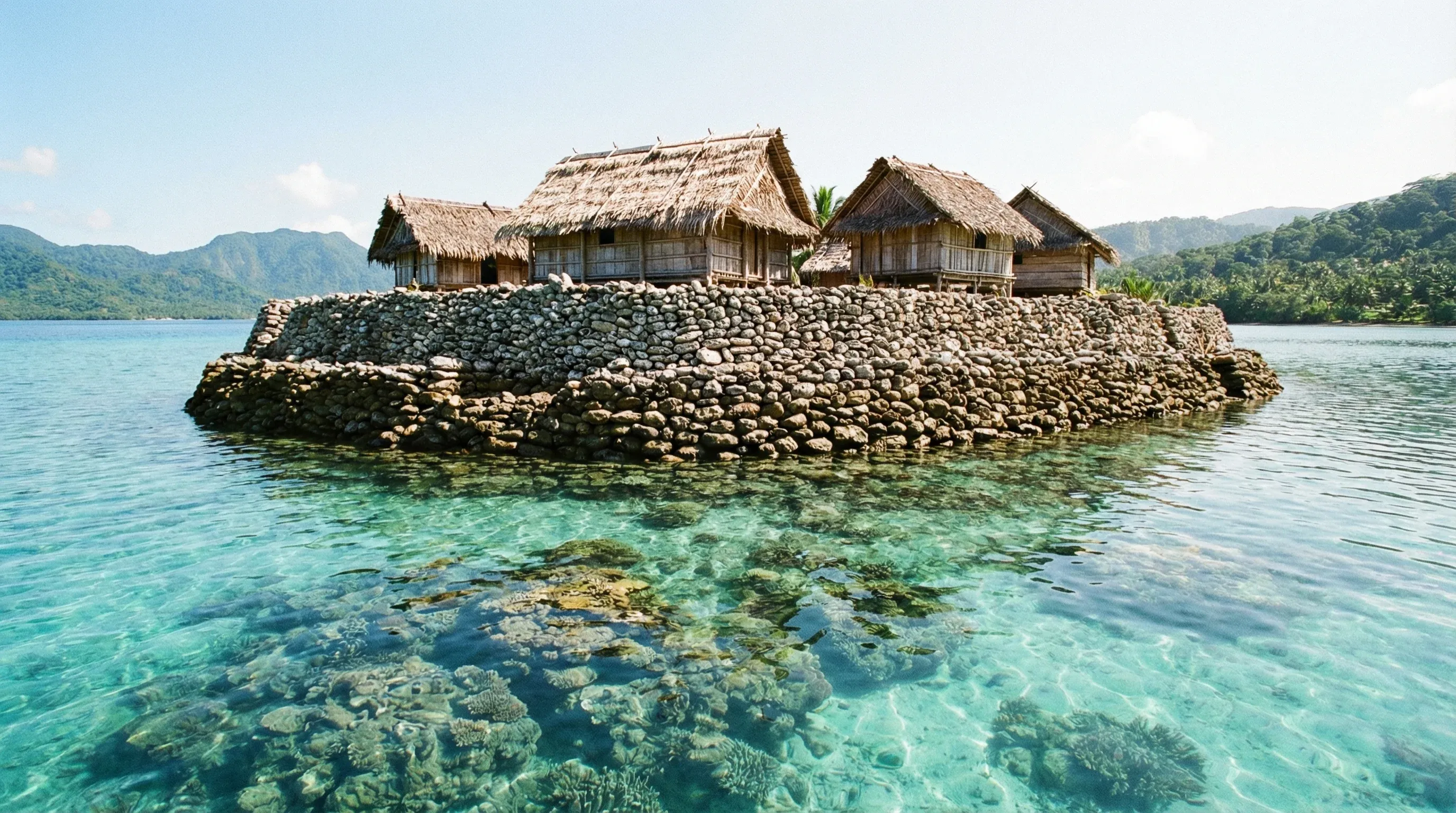
The geography is defined by its lagoons—Langa Langa and Lau—where people live on artificial islands built by hand from coral stones over centuries. Life here moves at the pace of the paddle; there are few roads, and travel is almost exclusively by banana boat. For families, the experience is about immersion: staying in eco-lodges built on stilts over the water, watching traditional carving, and witnessing a way of life that relies entirely on the sea and the forest.
Key Attractions
The primary attraction in Malaita is the Langa Langa Lagoon. While not a singular "ticketed" site, the lagoon is a living museum where families can visit the artificial islands. Here, you can watch villagers craft the famous shell money, a process that involves breaking, smoothing, and drilling shells with immense precision. The experience is hands-on and deeply educational.
Another highlight is the provincial capital, Auki. It is a bustling, dusty town with a vibrant market that serves as the trading hub for the hill tribes and the saltwater people. It offers a raw look at local commerce, though families should be prepared for heat and crowds.
Practical Advice
Malaita is best suited for families who are comfortable with "roughing it." The best time to visit is May to October to avoid the cyclone season, which can disrupt the small boat travel essential for getting around. Cash (SBD) is king here; credit cards are rarely accepted outside of perhaps one or two spots in Auki.
Food & Drink
Typical meal times: Meals in guesthouses are set: Breakfast 7:00 am to 8:30 am, Lunch 12:00 pm to 1:00 pm, Dinner 6:30 pm to 7:30 pm.
Typical meal costs: Guesthouses usually include meals in the room rate. If paying separately, a simple dinner costs SBD 60–100 (approx. $7–12 USD / €6.50–11 EUR).
Dietary requirements: Options are very limited. Meals rely heavily on fish, rice, and root crops. Vegetarians will eat a lot of pumpkin, kumara, and slippery cabbage. Notify hosts in advance.
Signature dishes:
- Swamp Taro – A coarse, heavy root vegetable grown in the wetlands, often roasted or boiled.
- Fresh Mud Crab – Caught in the mangroves of the lagoon and simply boiled or cooked with coconut/chilli.
- Ngali Nuts – Indigenous nuts (similar to almonds) often used to crust fish or eaten as a snack.
Why this score?
Visiting Malaita is a high-adventure experience characterized by deep cultural immersion and very limited modern amenities. Navigating the Langa Langa or Lau Lagoons requires local dugout canoes, and the mountainous interior near Mount Veve is virtually untouched by tourism. The lack of reliable transport and the persistence of traditional Melanesian lifestyles make it a challenging but rewarding destination for experienced travelers.
Why this score?
Medical services on Malaita are centered at Kilu'ufi Hospital in Auki, which provides only very basic primary care and has limited diagnostic capabilities. There are almost no facilities geared toward international travelers, and language barriers can exist in more remote villages. In any emergency situation, a patient would need to be transported back to Honiara via a small propeller plane or boat, which can be delayed by weather.
Why this score?
Malaita receives a negligible number of international tourists, with most visitors being intrepid travelers or researchers interested in its unique cultural practices like shell money and artificial islands. The tourism infrastructure is extremely limited, consisting of only a few basic guesthouses and homestays. It is one of the least visited populated islands in a country that is already among the world's least-visited nations.

Malaita is generally cheaper than Honiara or the Western Province because there are few luxury options. Accommodation is mostly in basic eco-lodges or village homestays costing SBD 400–800 (approx. $47–95 USD / €43–87 EUR) per night including meals. Transport by private charter boat is the biggest expense, costing SBD 500–1,000+ per trip.
Family Travel Notice
Ensure children are vaccinated against rotavirus before travel, as fatal outbreaks have occurred locally.

Getting Here & Around
Getting Here
- Airports – Auki (Gwaunaru'u) Airport receives flights from Honiara. The airstrip is a grass field, and flights are weather-dependent.
- Ferry – The "Pelican Express" or similar passenger catamarans run between Honiara and Auki. The journey takes 3–4 hours and can be rough; seasickness pills are advised.
Getting Around
- Boat – The primary mode of transport. Fiberglass "banana boats" with outboard motors connect Auki to the lagoons. Life jackets are not always provided automatically—insist on them for children.
- Truck – Public transport on the few roads consists of flatbed trucks with wooden benches. It is bumpy, dusty, and uncomfortable for long distances with kids.
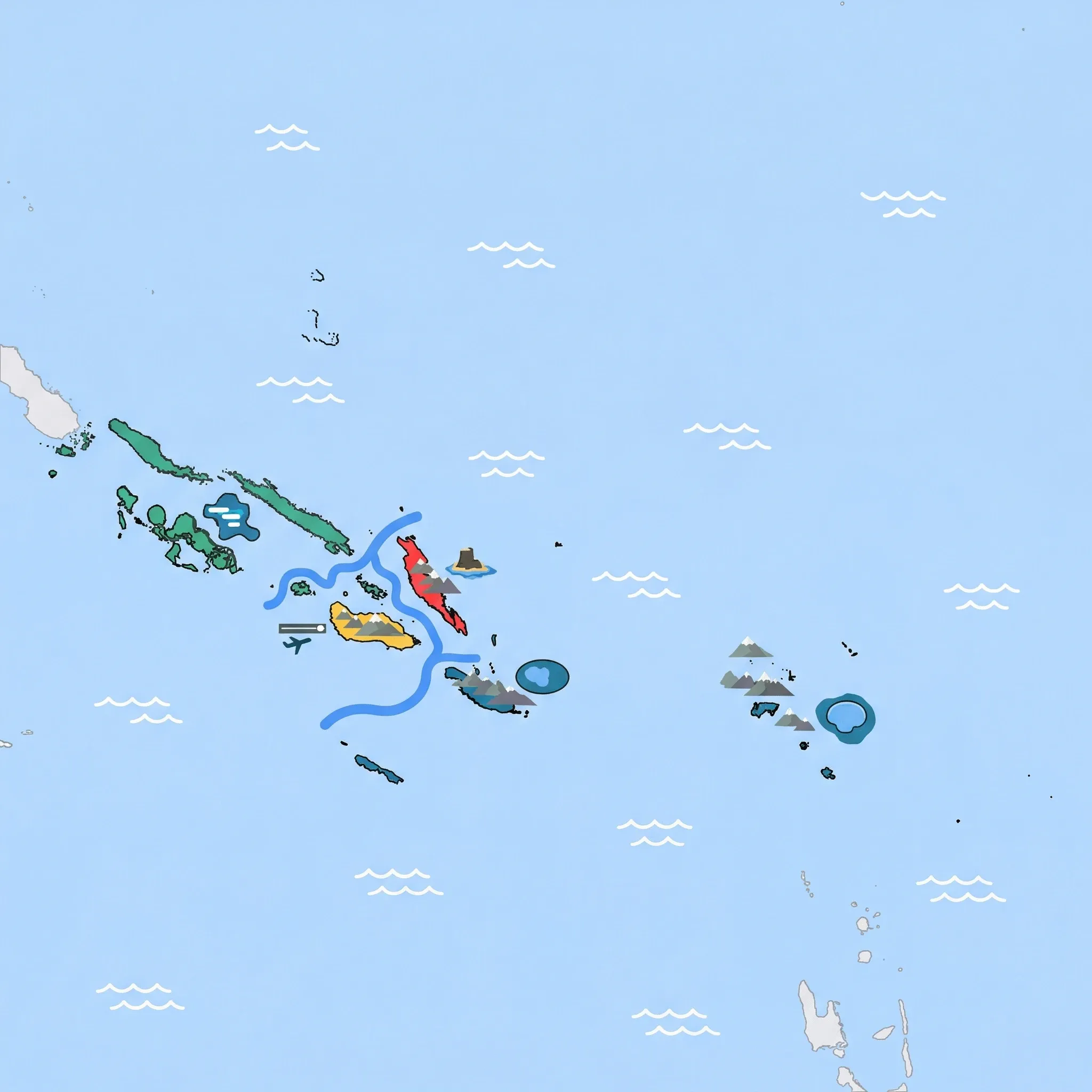
No airports in this region. See the country flight map for nearby connections.
Official Links

Packing List
Travel is mostly by small open boats; luggage will get wet from spray.
Electricity in villages is rare or generator-dependent (limited hours).
Walking around the lagoons and artificial islands involves sharp coral.
Small items like exercise books or tea are appreciated in homestays.
Essential for 'wet landings' from banana boats and protecting feet from sharp coral on beaches.
Rental equipment is often unavailable or poor quality in remote areas; bring masks for the kids.
Power outages are common in Honiara and electricity is limited or non-existent in village stays.
ATMs are virtually non-existent outside Honiara; villages often cannot change large notes.
Remote clinics may lack supplies; treat coral cuts immediately to prevent serious infection.

Activities & Best Times

Hiking, wildlife, outdoor exploration, ecotourism
Features authentic jungle trekking, Riba Cave exploration, and scenic waterfalls for families seeking raw wilderness. Heavy tropical rainfall from December to April makes interior trails difficult and cave exploration potentially hazardous.

Beach resorts, marine activities: diving, snorkelling, kite surfing, wind surfing, sailing
Home to the iconic Langa Langa and Lau Lagoons, offering unique stays on artificial islands with clear waters for snorkeling. Peak season aligns with the drier months when sea conditions are calmest and visibility is highest.

Urban tourism, museums, historical sites, architecture
A globally unique cultural destination centered on the artificial islands and shell money traditions of the Langa Langa and Lau peoples. Best visited during the mid-year window when outdoor cultural demonstrations and village visits are less likely to be disrupted by monsoonal rain.

Scenic drives, countryside tours, route-based travel
The Malaita North and East roads provide a rugged, scenic driving experience through rural coastal villages. However, infrastructure is basic and roads are often impassable during the heavy rain season (December to April).

Sport tourism, fitness activities, active recreation
Active exploration is centered on rugged hiking trails like the Bina-Talakali route, requiring high fitness and local guides. The drier months of June through September provide the most stable footing on otherwise muddy and slippery terrain.




Public Holidays & Calendar Next 12 months
Public holidays, festivals, cultural celebrations, and seasonal natural phenomena coming up in Malaita over the next 12 months.
Loading holidays and events...

Travel Advisory
A majority of international agencies consider the Solomon Islands safe for travel with standard security awareness, though many highlight specific regional risks in Honiara and Malaita.
Safety Topics
Traveller Advice (4 groups)

Female visitors have reported incidents of sexual harassment and assault. It is advised to avoid walking alone after dark and to dress conservatively to respect local customs.

Ensure children are vaccinated against rotavirus before travel, as fatal outbreaks have occurred locally.

Same-sex sexual activity remains illegal and is a criminal offense punishable by imprisonment. Local society is generally conservative and does not recognize same-sex relationships.

Scuba divers should be aware that local hyperbaric facilities have limited life-support capabilities. Hikers and divers must be extremely cautious of unexploded World War II ordnance still present in forests and coastal waters.
Agency Summaries
Travel is generally permitted with standard precautions; however, visitors should avoid political demonstrations and be mindful of safety risks in Honiara.
While general safety precautions are sufficient for the country overall, visitors should exercise a high degree of caution in Honiara due to potential security issues.
Irish citizens are advised to follow standard safety measures and keep informed of local news while visiting, as there is no local embassy presence.
Increased caution is recommended due to significant security concerns, including the risk of civil unrest, crime targeting foreigners, and natural disaster hazards.
Travellers should maintain standard security awareness throughout the islands, though higher vigilance is required during cyclone season and in areas with unexploded ordnance.
Heightened vigilance is advised due to health concerns, the presence of unexploded World War II munitions, petty crime, and potential for sudden civil unrest.
Information is provided for general guidance only and does not constitute travel, safety, medical, or legal advice. Conditions may change. Users are responsible for independently verifying information before travel.