
Eastern Highlands (Eastern Equatoria State)
Rugged mountains and vibrant tribal culture on the savannah edge
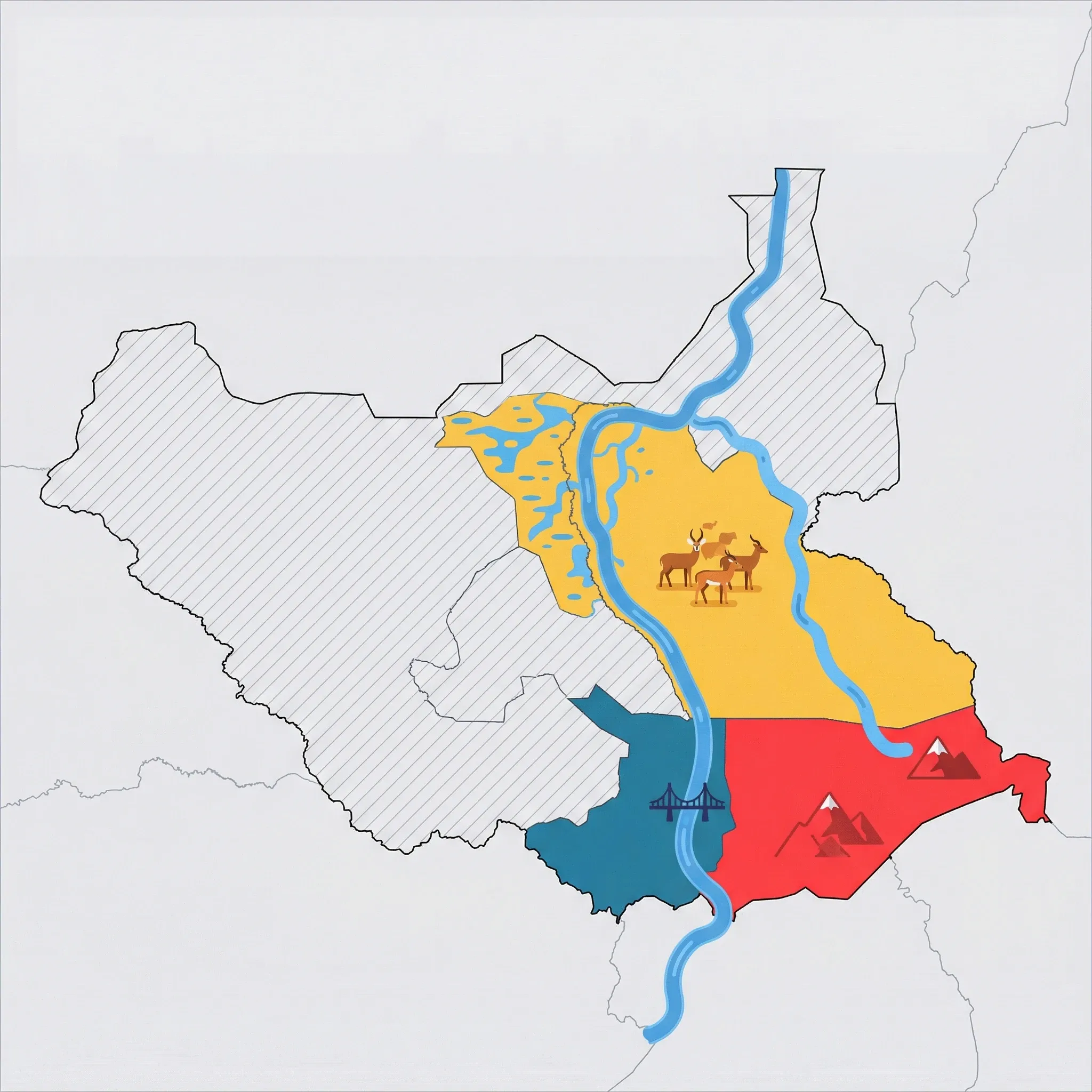
Click a region to explore
⚠️ SAFETY WARNING: Due to armed conflict, banditry, and intercommunal violence, government agencies (including the US, UK, CA, AU, IE, and NZ) advise travelers to avoid all travel (L3/L4) to Eastern Equatoria. Border areas near Kenya and Uganda are especially dangerous, and medical infrastructure is non-existent. Families are strongly urged to consult their own government's official travel advisory before considering a trip, as circumstances and risk assessments vary.
Overview
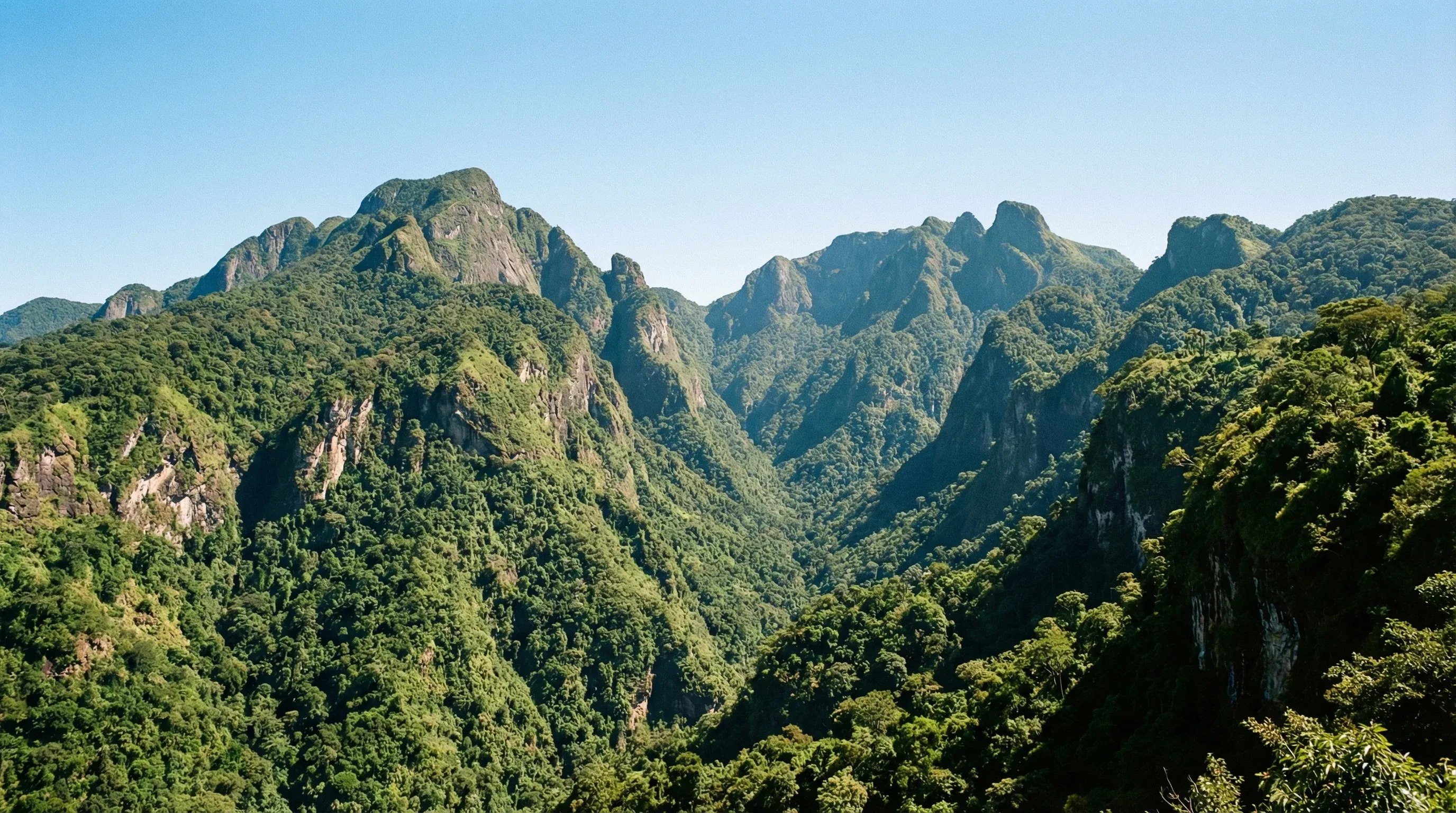
The Eastern Highlands represent the topographical ceiling of South Sudan, a region defined by the dramatic rise of the Imatong Mountains. Unlike the flat wetlands to the north, this area offers cool, misty forests and rushing waterfalls, culminating in Mount Kinyeti. The landscape shifts from the lush green slopes around Torit to the arid, acacia-dotted savannahs of Kapoeta, creating a visually striking backdrop for intrepid travelers. For families interested in geography, it serves as a fascinating example of how elevation shapes climate and vegetation in East Africa.
Culturally, this is one of the most diverse regions in the nation. The area is home to the Lotuko (Latooka) people, known for their unique hillside villages and stone terracing, and the Toposa pastoralists around Kapoeta, who maintain traditional dress and cattle-centric lifestyles similar to the Maasai. While the lack of infrastructure makes travel here an expedition rather than a holiday, the raw beauty of the highlands and the resilience of its communities offer a profound educational perspective on traditional African life away from urbanization.
Key Attractions
Kidepo Valley Reserve shares an ecosystem with Uganda's famous national park of the same name. While the South Sudan side lacks the lodges and roads of its neighbor, it offers a true wilderness experience where families might spot ostriches and antelopes moving freely across the border. The isolation guarantees a sense of solitude that is impossible to find in more developed safari destinations.
The Imatong Forest Reserve is a biodiversity hotspot perfect for birdwatching enthusiasts. The dense montane forests are home to unique species like the spotted ground thrush. Hiking here is challenging and requires local guides, but the views from the upper slopes provide a breathtaking panorama of the vast African plains stretching out below.
Practical Advice
Best time to visit: The dry season from December to March is the only viable time for travel; during the rains (April to October), the dirt roads become impassable mud traps.
Family logistics: Travel here requires a fully self-sufficient convoy with 4x4 vehicles, camping gear, and fuel supplies. There are no family-friendly hotels outside of very basic guesthouses in major towns. Malaria prophylaxis is essential.
Food & Drink
Typical meal times: Lunch is usually taken from 1:00 pm to 2:00 pm, while dinner is served later, typically 7:30 pm to 9:00 pm.
Typical meal costs: In local guesthouses, a basic meal costs SSP 6,500–13,000 (approx. $5–10 USD / €4.50–9 EUR). Imported food is scarce and expensive.
Dietary requirements: Options are extremely limited. The diet is heavy on grains and meat. Vegetarians will rely on beans and greens, but cross-contamination is common. Gluten-free travelers must bring their own supplies.
Signature dishes:
- Asida – A stiff porridge made from sorghum or maize flour, served as the staple carbohydrate with virtually every meal.
- Kudra – A green leafy vegetable stew, often made from jute leaves, cooked with peanut paste and served over Asida.
- Goat Stew – Freshly butchered goat meat slow-cooked in a simple broth, a sign of hospitality in local homesteads.
Why this score?
Scaling Mount Kinyeti and exploring the Imatong Mountains represents extreme expedition territory with no marked trails or mountain rescue services. The rugged terrain combined with the isolation of the Toposa cultural areas requires self-sufficient travel and high-level security planning.
Why this score?
Medical facilities in this remote mountainous region are virtually non-existent or limited to extremely basic local clinics. Any serious medical issue would require a complex and expensive private emergency evacuation to Juba or neighboring Kenya.
Why this score?
This region sees almost no international tourism outside of a handful of extreme adventure travelers and ethnographic photographers visiting the Toposa people. There is virtually no tourism infrastructure, and the area remains largely inaccessible to the general public due to logistical and security challenges.

While local ingredients are cheap, the cost of safe logistics for a family is very high. Hiring a reliable 4x4 vehicle with a driver and fuel can cost SSP 195,000–325,000 (approx. $150–250 USD / €140–230 EUR) per day. Accommodation in basic secure compounds costs SSP 100,000–160,000 (approx. $75–125 USD / €70–115 EUR) per night.

Getting Here & Around
Getting Here
- Airports – Small charter planes can land at the airstrips in Torit or Kapoeta. Flights typically originate from Juba International Airport (JUB).
- Driving – The region is connected to Juba by a rough road (approx. 3–5 hours to Torit). The road from the Kenyan border at Nadapal is a major trade route but suffers from poor conditions and security risks.
Getting Around
- Car – A high-clearance 4x4 with a driver is mandatory. Roads are unpaved and frequently washed out. Self-driving is not recommended due to security checkpoints.
- Walking – Walking is only safe within the immediate vicinity of towns or villages during daylight hours, always with a local guide.
No airports in this region. See the country flight map for nearby connections.

Packing List
Mobile network coverage is non-existent in the mountains and rural areas.
Local currency fluctuates wildy; only pristine USD bills are accepted for major payments.
Bottled water is unavailable outside main towns; tap water is unsafe.
Electricity is rare and generator-dependent; keep devices charged for emergencies.
Credit cards rarely work; cash is king, but bills must be new and unblemished to be accepted.
Mandatory for entry; you will be refused borders entry without physical proof of vaccination.
Street lighting is non-existent in most areas; critical for navigating safely after sunset.

Activities & Best Times

Hiking, wildlife, outdoor exploration, ecotourism
While the Imatong Mountains offer genuine ecological significance and unique montane biodiversity, the rating should be 'good' rather than 'very_good' when calibrated internationally. Very_good ratings should be reserved for adventure destinations with established infrastructure, guiding services, and international recognition. The lack of tourism infrastructure and limited accessibility prevents this from reaching very_good on a global scale.

Urban tourism, museums, historical sites, architecture
Offers raw and authentic cultural immersion into Toposa and Lotuko traditions in areas like Kapoeta and Illieu. Visitation is restricted to the peak dry months (Dec-Feb) when remote unpaved tracks remain passable for international travelers seeking authentic heritage.

Sport tourism, fitness activities, active recreation
Centered on the challenging trek to the summit of Mount Kinyeti, South Sudan's highest peak. Optimal trekking occurs during the driest months (Dec-Feb) to ensure safe trail conditions and visibility; the monsoon season creates hazardous, slippery terrain and dense cloud cover.

Attractions (2 total)



Public Holidays & Calendar Next 12 months
Public holidays, festivals, cultural celebrations, and seasonal natural phenomena coming up in Eastern Highlands (Eastern Equatoria State) over the next 12 months.
Loading holidays and events...

Travel Advisory
Unanimous consensus across all major international agencies indicates an extreme risk environment. Travel is strongly discouraged due to active armed conflict, pervasive violent crime, and the inability of foreign governments to provide emergency assistance.
Safety Topics
Traveller Advice (3 groups)

There is a significant threat of sexual assault and gender-based violence, particularly in areas of conflict or rural locations. Independent travel is strongly discouraged.

Humanitarian staff have been frequently targeted in attacks and kidnappings. Organizations must employ professional security details and maintain strict contingency plans for emergency evacuation.

Media professionals face high risks of harassment, arrest, and violence. It is mandatory to obtain official accreditation from the Media Authority; working without proper documentation is illegal and extremely dangerous.
Agency Summaries
The United States warns that the risk of abduction, violent crime, and armed warfare is critical throughout the country. Federal assistance is extremely limited, and government staff are restricted by curfews and must use armored transport for movement.
The FCDO recommends against all travel to the nation due to the severe threat of criminality and armed violence. The political landscape is volatile, and embassy support for British nationals is severely constrained.
Australia warns of a dangerous security situation with a high risk of armed conflict and violence. Consular services are very difficult to access, and the situation can worsen without any notice.
Canada strongly advises against visiting South Sudan due to a highly unstable security environment characterized by persistent civil conflict, ethnic violence, and extreme crime rates. Citizens currently in the country should depart while commercial options remain available.
New Zealand cites ongoing warfare and high levels of violent crime as primary reasons for its do-not-travel advisory. Law and order are not maintained in many regions, posing significant personal risk.
Ireland maintains its highest level of warning, advising citizens to avoid the country entirely and leave immediately if safe to do so. Security is fragile, and the embassy has limited power to assist.
Information is provided for general guidance only and does not constitute travel, safety, medical, or legal advice. Conditions may change. Users are responsible for independently verifying information before travel.